
ᐅ Windows – Installation / Insulation / Sealing / Execution
Created on: 4 Dec 2019 13:03
A
alive&kickingA
alive&kicking4 Dec 2019 13:03A friendly hello to everyone,
we are currently building a single-family house (100% concrete construction with external thermal insulation composite system, ETICS), the shell and roof are finished, windows and doors on the ground floor are already installed.
Yesterday, I took the time to check the installation of the floor-to-ceiling windows (aluminum frames, some with frame extensions). Regarding the heights (to the planned floor level) and vertical/horizontal alignment, the company has generally done a really good job, I must say. However, the entrance door threshold seems too high to me; I have a question about that later.
When it comes to sealing and insulation, I am honestly shocked. In addition, in some places the frames touch the reveal and/or the floor.
Some of these "deficiencies" are somewhat clear to me, but confirmation or assessment from you would still be helpful before I ask the company for corrections or involve an expert.
My questions:
1. In some cases, the frame extensions of the floor-to-ceiling windows/doors rest on the raw floor or almost touch the reveal at the top. I have read that window frames can expand due to temperature changes; in the case of aluminum, I calculated: over a temperature range from -20°C to +40°C (4°F to 104°F) on 2.5m (8 ft 2 in), this would be 3.5 mm (0.14 inches).
Can frame extensions compensate for length changes due to temperature?
Even with an exterior ETICS, shouldn’t the “functional plane” be insulated? (How else would that be done?)
2. For a lift-and-slide door element (about 18 cm (7 inches) deep), compressible tape was used on both the outer and inner areas (permissible?), but there is a cavity in between; shouldn’t that also be insulated?
On one side of this element, a gap of about 3.5 cm (1.4 inches) was bridged with compressible tape. Is that still correct?
3. The entrance door threshold will be about 3.5 cm (1.4 inches) high unless some of it is raised above the screed. According to the plan, it should be 1.8 cm (0.7 inches). That seems like quite a big deviation, doesn’t it?
4. The sealing tapes on the inside and outside were applied very poorly. There was no smooth layer (skim coat) at the floor no, my site manager says it’s not a problem... the adhesive and tape will handle it! But it doesn’t look like it. Just for my understanding: the inner sealing tape is supposed to provide airtightness. Does that mean 100% airtightness, or am I mistaken?
The outer sealing tape is meant to provide protection against driving rain, which to me means not 100% waterproof. Correct? But shouldn’t it still be installed so that no water can enter from above, despite the ETICS?
In some places, the foil adhesive (greenteq) has not set and is still sticky. What could be the reason for this?
5. Insulation of the functional plane. Does this have to be fully foamed? Or is a certain dimension sufficient?
I found PE foam cords on site. I assume these were inserted into the frame extensions, as these do not have their own sealing lip. Is this a correct method?
I would be very grateful for any answers.
(still) alive&kicking
we are currently building a single-family house (100% concrete construction with external thermal insulation composite system, ETICS), the shell and roof are finished, windows and doors on the ground floor are already installed.
Yesterday, I took the time to check the installation of the floor-to-ceiling windows (aluminum frames, some with frame extensions). Regarding the heights (to the planned floor level) and vertical/horizontal alignment, the company has generally done a really good job, I must say. However, the entrance door threshold seems too high to me; I have a question about that later.
When it comes to sealing and insulation, I am honestly shocked. In addition, in some places the frames touch the reveal and/or the floor.
Some of these "deficiencies" are somewhat clear to me, but confirmation or assessment from you would still be helpful before I ask the company for corrections or involve an expert.
My questions:
1. In some cases, the frame extensions of the floor-to-ceiling windows/doors rest on the raw floor or almost touch the reveal at the top. I have read that window frames can expand due to temperature changes; in the case of aluminum, I calculated: over a temperature range from -20°C to +40°C (4°F to 104°F) on 2.5m (8 ft 2 in), this would be 3.5 mm (0.14 inches).
Can frame extensions compensate for length changes due to temperature?
Even with an exterior ETICS, shouldn’t the “functional plane” be insulated? (How else would that be done?)
2. For a lift-and-slide door element (about 18 cm (7 inches) deep), compressible tape was used on both the outer and inner areas (permissible?), but there is a cavity in between; shouldn’t that also be insulated?
On one side of this element, a gap of about 3.5 cm (1.4 inches) was bridged with compressible tape. Is that still correct?
3. The entrance door threshold will be about 3.5 cm (1.4 inches) high unless some of it is raised above the screed. According to the plan, it should be 1.8 cm (0.7 inches). That seems like quite a big deviation, doesn’t it?
4. The sealing tapes on the inside and outside were applied very poorly. There was no smooth layer (skim coat) at the floor no, my site manager says it’s not a problem... the adhesive and tape will handle it! But it doesn’t look like it. Just for my understanding: the inner sealing tape is supposed to provide airtightness. Does that mean 100% airtightness, or am I mistaken?
The outer sealing tape is meant to provide protection against driving rain, which to me means not 100% waterproof. Correct? But shouldn’t it still be installed so that no water can enter from above, despite the ETICS?
In some places, the foil adhesive (greenteq) has not set and is still sticky. What could be the reason for this?
5. Insulation of the functional plane. Does this have to be fully foamed? Or is a certain dimension sufficient?
I found PE foam cords on site. I assume these were inserted into the frame extensions, as these do not have their own sealing lip. Is this a correct method?
I would be very grateful for any answers.
(still) alive&kicking
A
alive&kicking4 Dec 2019 14:29@ Lumpi
I know, but I made a great effort in the description since the photos do not show much.
I know, but I made a great effort in the description since the photos do not show much.
A
alive&kicking4 Dec 2019 14:36Here are a few impressions of the masterpiece
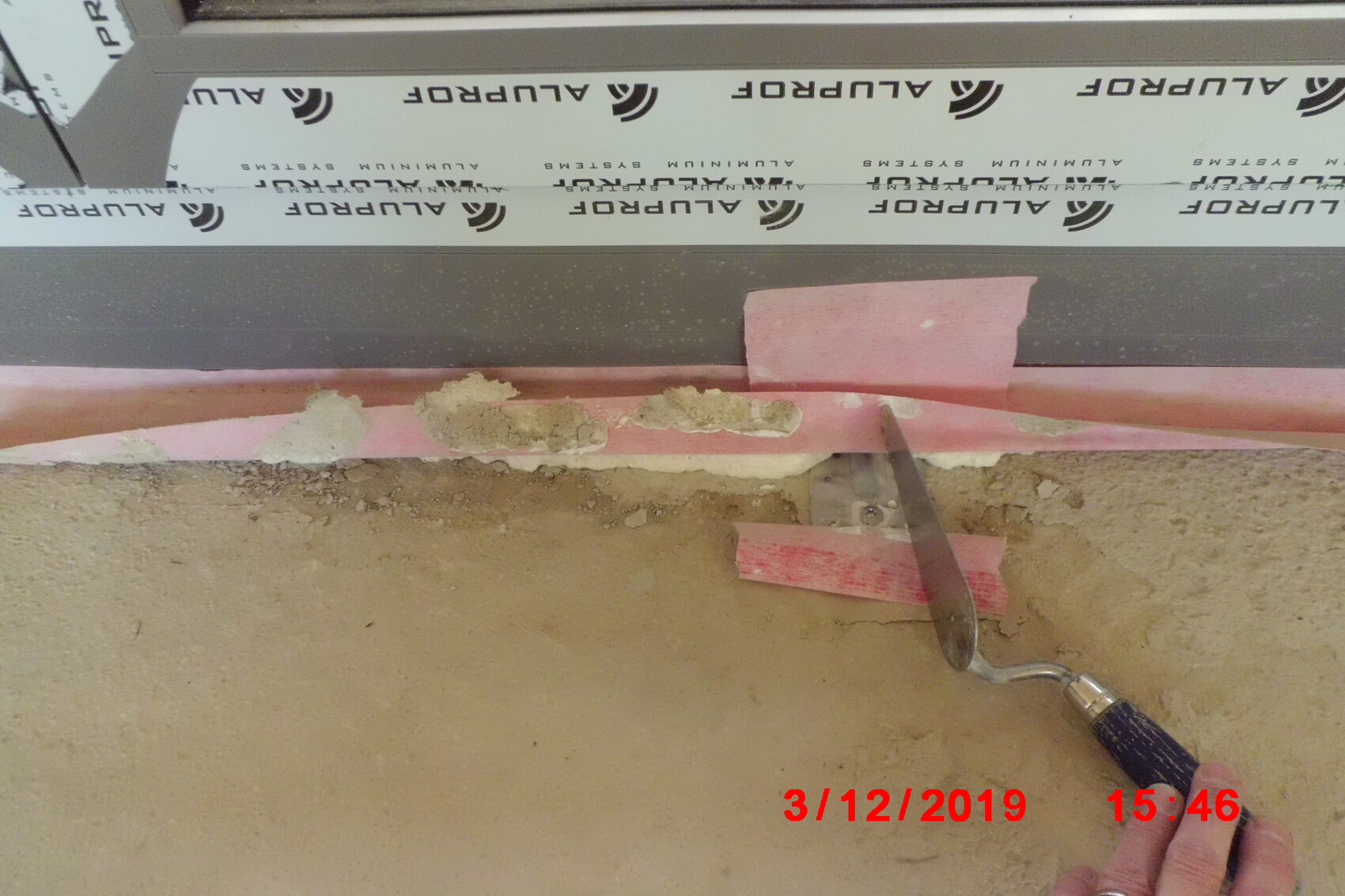
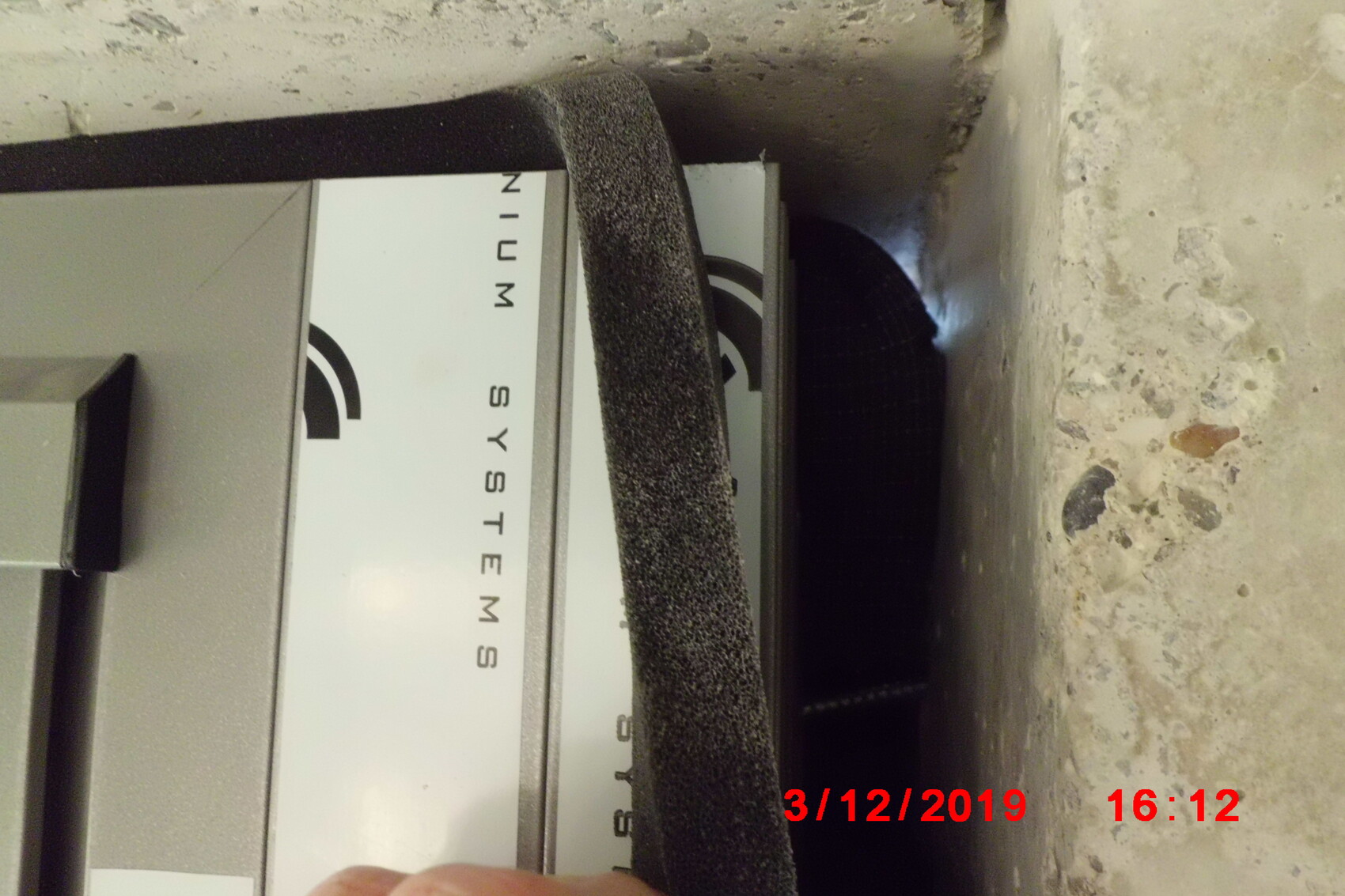
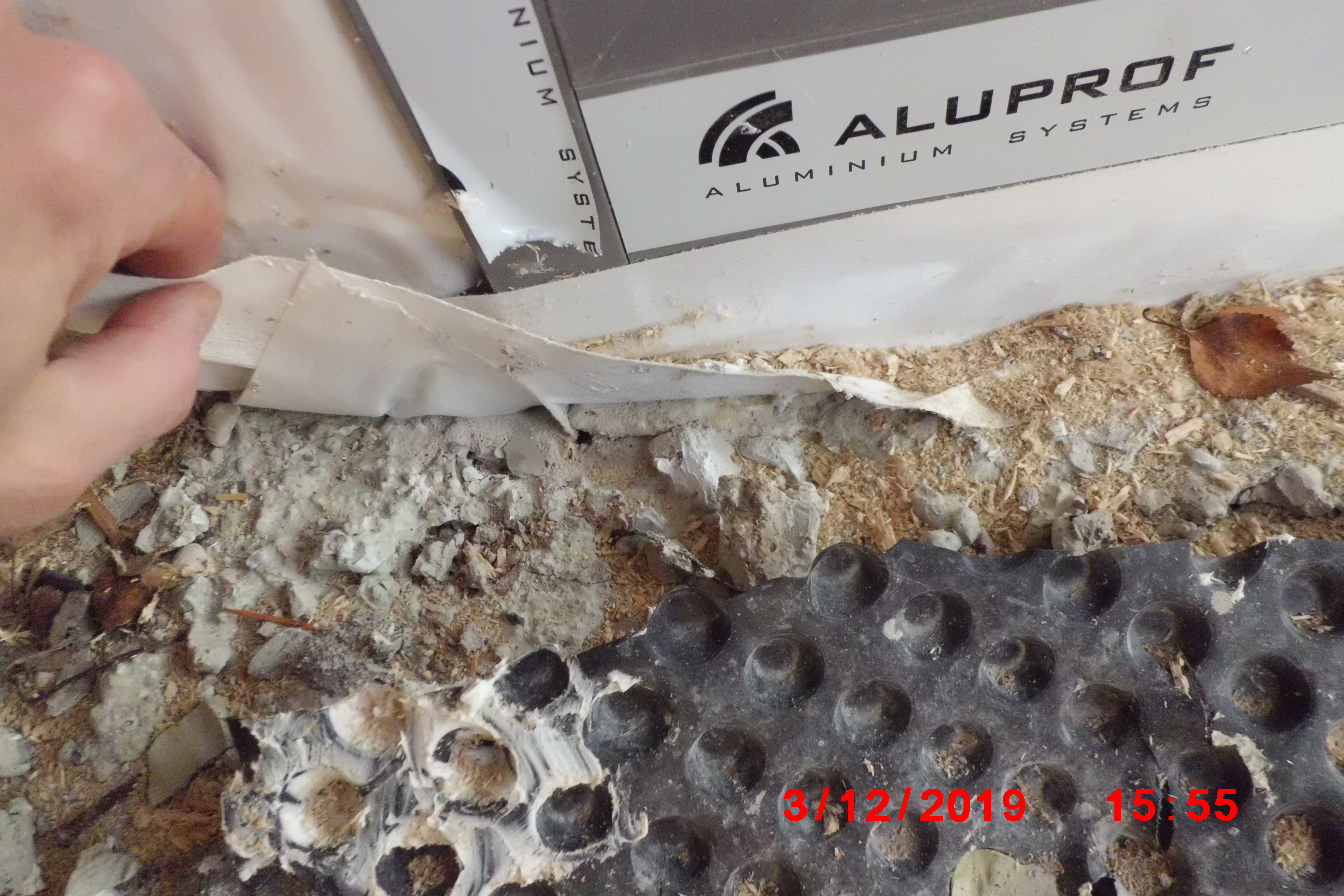
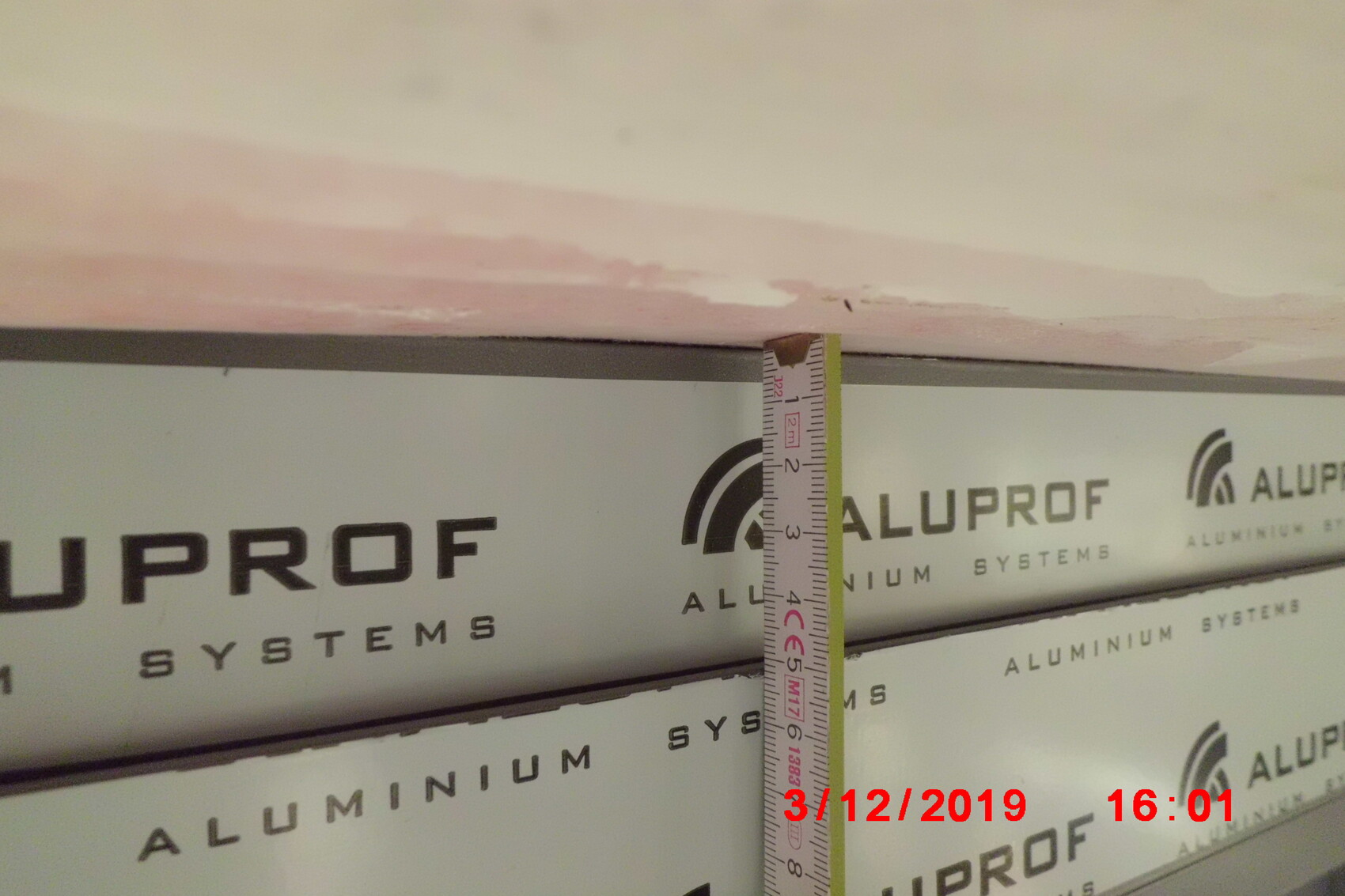
Well, I can confirm your assumptions: it looks very sloppy. Our windows were installed perfectly cleanly.
Foam should not be used around windows. Compression tapes are sufficient, but only if they are properly sealed. In picture 2, you can see they were installed incorrectly—bent around the corner. I would like to see picture 3 in a wider context; what kind of junkyard is that..?
Foam should not be used around windows. Compression tapes are sufficient, but only if they are properly sealed. In picture 2, you can see they were installed incorrectly—bent around the corner. I would like to see picture 3 in a wider context; what kind of junkyard is that..?

It looks like many (or maybe all) of the windows will need to be removed and reinstalled.
I don’t even know where to start. As @Lumpi_LE already mentioned, it doesn’t necessarily have to be foam, but the alternative triple-compression sealing tapes obviously were not used either. These tapes are as wide as the frame is deep and come as a single piece because otherwise, hollow spaces would logically occur (which must be avoided!).
Personally, I’m not aware of any triple-compression sealing tapes that are intended for use in gaps smaller than 6mm (1/4 inch).
In this regard, I would definitely take a closer look at the materials you used. For example, you mention a 35mm (1 3/8 inch) gap. There might be suitable sealing tapes for that size (though again, I don’t know of any triple-compression tapes for that), but you wouldn’t be the first to install 5 or 10mm (1/5 or 2/5 inch) tapes in a much larger gap. Nobody notices because most tapes expand significantly, but that is not compliant or approved.
The same applies to the types of tapes used.
PE backer rods are used to reduce the cavity in the middle layer that needs to be insulated before filling it with PU foam or, for example, hemp or mineral wool. They are not suitable as the sole insulation.
The substrate for the adhesive tapes must be absolutely clean; ideally, a primer is applied as well (see photo 1). In photo 3, the substrate itself is already unsuitable.
If you upload more photos, more issues will surely be found (e.g., fixing methods). Sorry for your situation, but you should not let this poor workmanship be accepted!
I don’t even know where to start. As @Lumpi_LE already mentioned, it doesn’t necessarily have to be foam, but the alternative triple-compression sealing tapes obviously were not used either. These tapes are as wide as the frame is deep and come as a single piece because otherwise, hollow spaces would logically occur (which must be avoided!).
Personally, I’m not aware of any triple-compression sealing tapes that are intended for use in gaps smaller than 6mm (1/4 inch).
In this regard, I would definitely take a closer look at the materials you used. For example, you mention a 35mm (1 3/8 inch) gap. There might be suitable sealing tapes for that size (though again, I don’t know of any triple-compression tapes for that), but you wouldn’t be the first to install 5 or 10mm (1/5 or 2/5 inch) tapes in a much larger gap. Nobody notices because most tapes expand significantly, but that is not compliant or approved.
The same applies to the types of tapes used.
PE backer rods are used to reduce the cavity in the middle layer that needs to be insulated before filling it with PU foam or, for example, hemp or mineral wool. They are not suitable as the sole insulation.
The substrate for the adhesive tapes must be absolutely clean; ideally, a primer is applied as well (see photo 1). In photo 3, the substrate itself is already unsuitable.
If you upload more photos, more issues will surely be found (e.g., fixing methods). Sorry for your situation, but you should not let this poor workmanship be accepted!
Similar topics