
Hello dear forum,
I am new here and have a question for you! We are currently building a house and the foundation slab is already in place.
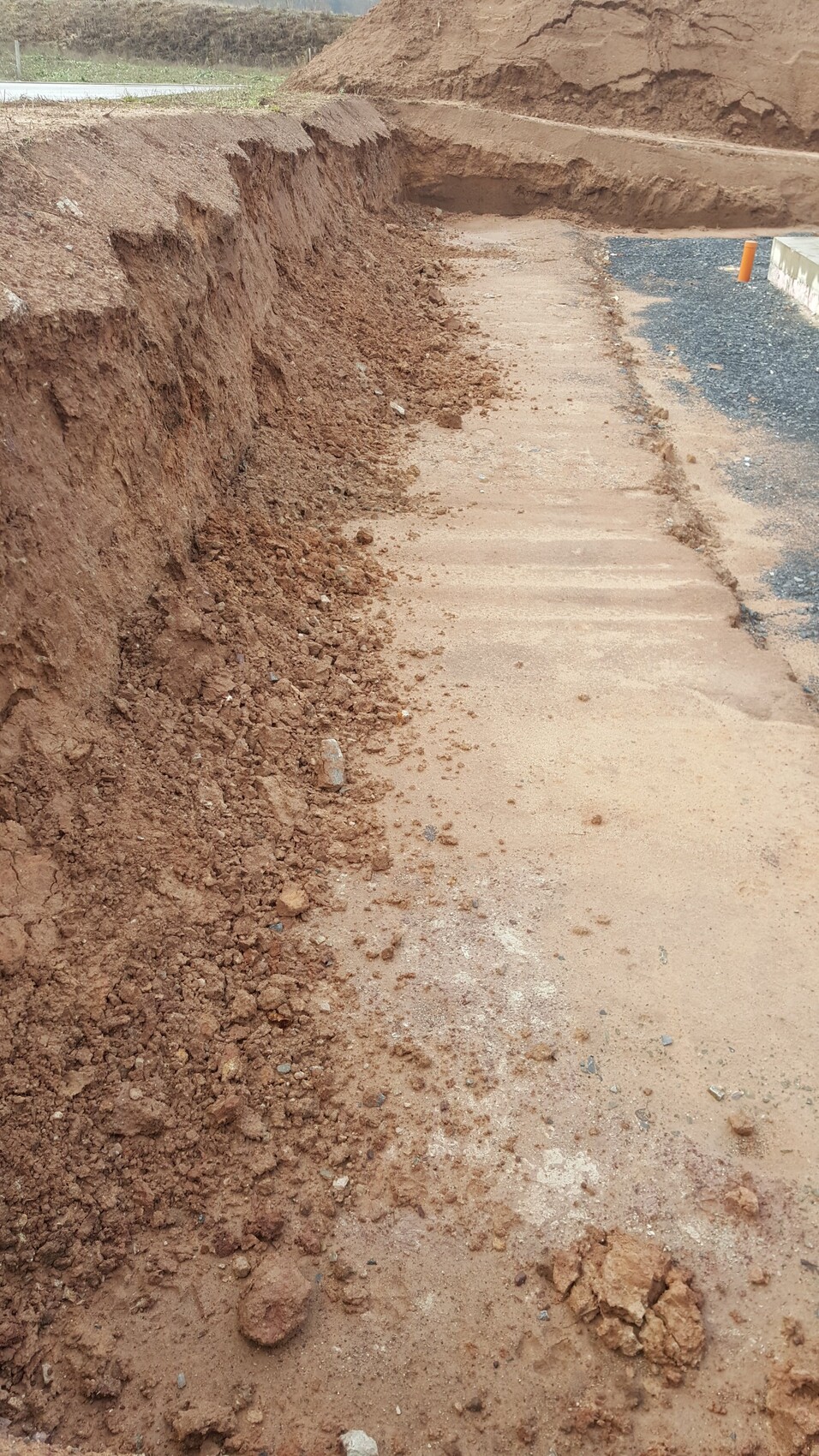
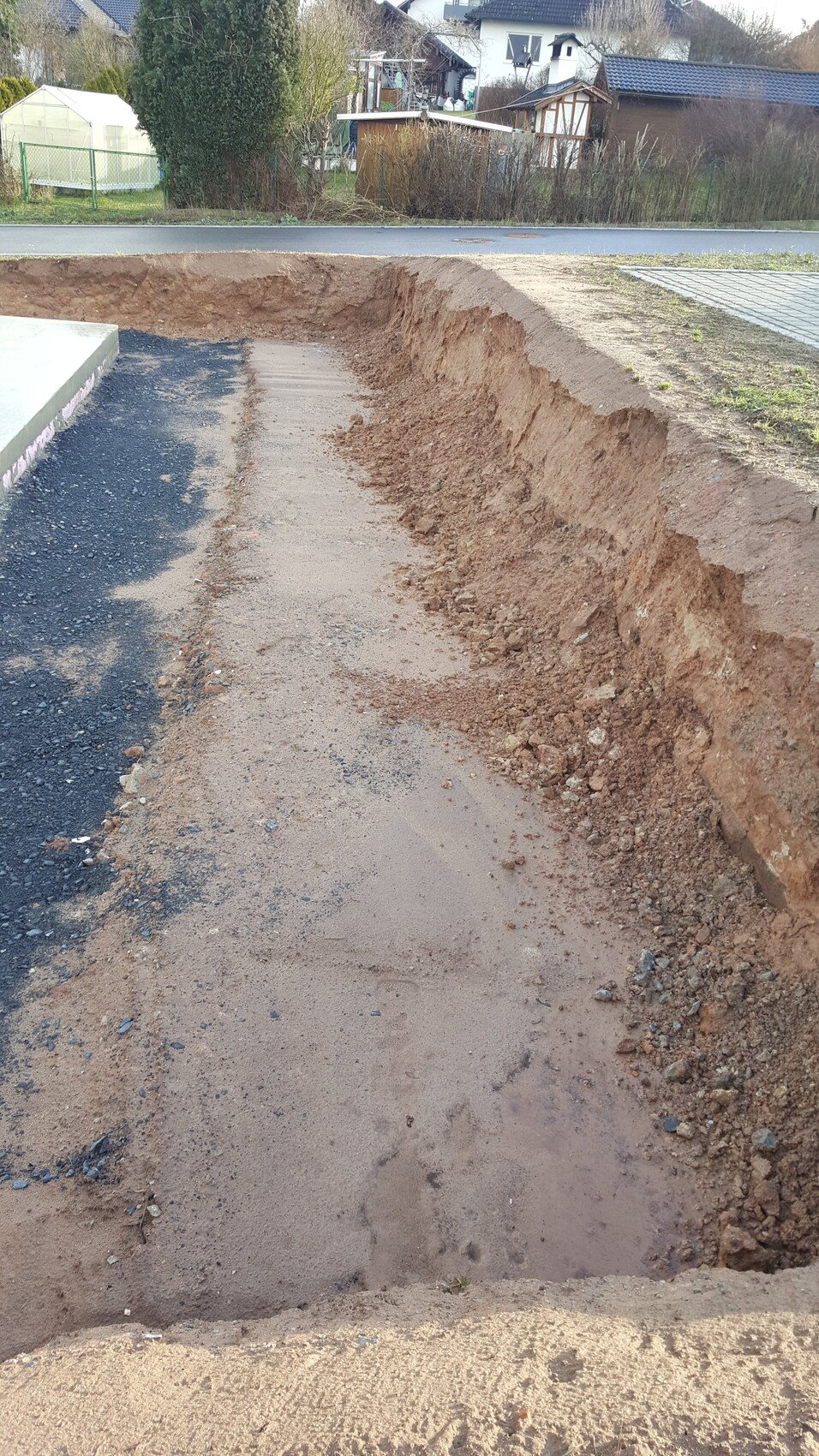
Our land has a slight slope, so there is an earth wall on one side of the property. Of course, there will be a retaining wall built there later. But now I am worried because some soil is breaking away. Is this normal? The wall is about 1.4 meters (4.6 feet) high and 15 meters (49 feet) wide.
Is it possible to build such a wall yourself, or is it better to hire a professional? It is not a retaining wall.
Best regards,
Silent802
I am new here and have a question for you! We are currently building a house and the foundation slab is already in place.
Our land has a slight slope, so there is an earth wall on one side of the property. Of course, there will be a retaining wall built there later. But now I am worried because some soil is breaking away. Is this normal? The wall is about 1.4 meters (4.6 feet) high and 15 meters (49 feet) wide.
Is it possible to build such a wall yourself, or is it better to hire a professional? It is not a retaining wall.
Best regards,
Silent802
S
Silent80227 Dec 2018 15:37Yes, that does worry me. I mean, there is about a 1.7-meter (5.5-foot) wide strip between the house and the ground... but the house wall will still get splattered.
You’re right.
Were you able to clean the house wall again? It should be possible with a steam cleaner...
You’re right.
Were you able to clean the house wall again? It should be possible with a steam cleaner...
H
hemali200327 Dec 2018 18:52Silent802 schrieb:
Did you manage to clean the exterior wall? It should be possible with a steam cleaner...I removed most of it with the garden hose. The rest stayed on, and I didn’t try anything else. However, it was only one spot where the fleece had blown down. It doesn’t bother us there.
In many places, the base coat plaster got dirty just because there was some dirt on the fleece (from dirty shoes). You really have to be careful with that—you wouldn’t believe how much it splashes when it rains heavily!
Natural Stone Wall
It depends on which stones you use and the amount of labor involved.
As a rough estimate, our costs were around 6,000 EUR plus expenses for
excavating the foundation, concrete, building the walls, excavator hours (which serve as a lifting aid for larger stones), stones, and backfilling with soil.
You might want to check locally with demolition sites or earthworks for leftover stones that you can collect. We also gave away natural stones from the excavation free of charge. Every stone that is removed doesn’t have to be disposed of at a cost. If there are any cut sandstone blocks left over, they can usually be sold.
It depends on which stones you use and the amount of labor involved.
As a rough estimate, our costs were around 6,000 EUR plus expenses for
excavating the foundation, concrete, building the walls, excavator hours (which serve as a lifting aid for larger stones), stones, and backfilling with soil.
You might want to check locally with demolition sites or earthworks for leftover stones that you can collect. We also gave away natural stones from the excavation free of charge. Every stone that is removed doesn’t have to be disposed of at a cost. If there are any cut sandstone blocks left over, they can usually be sold.
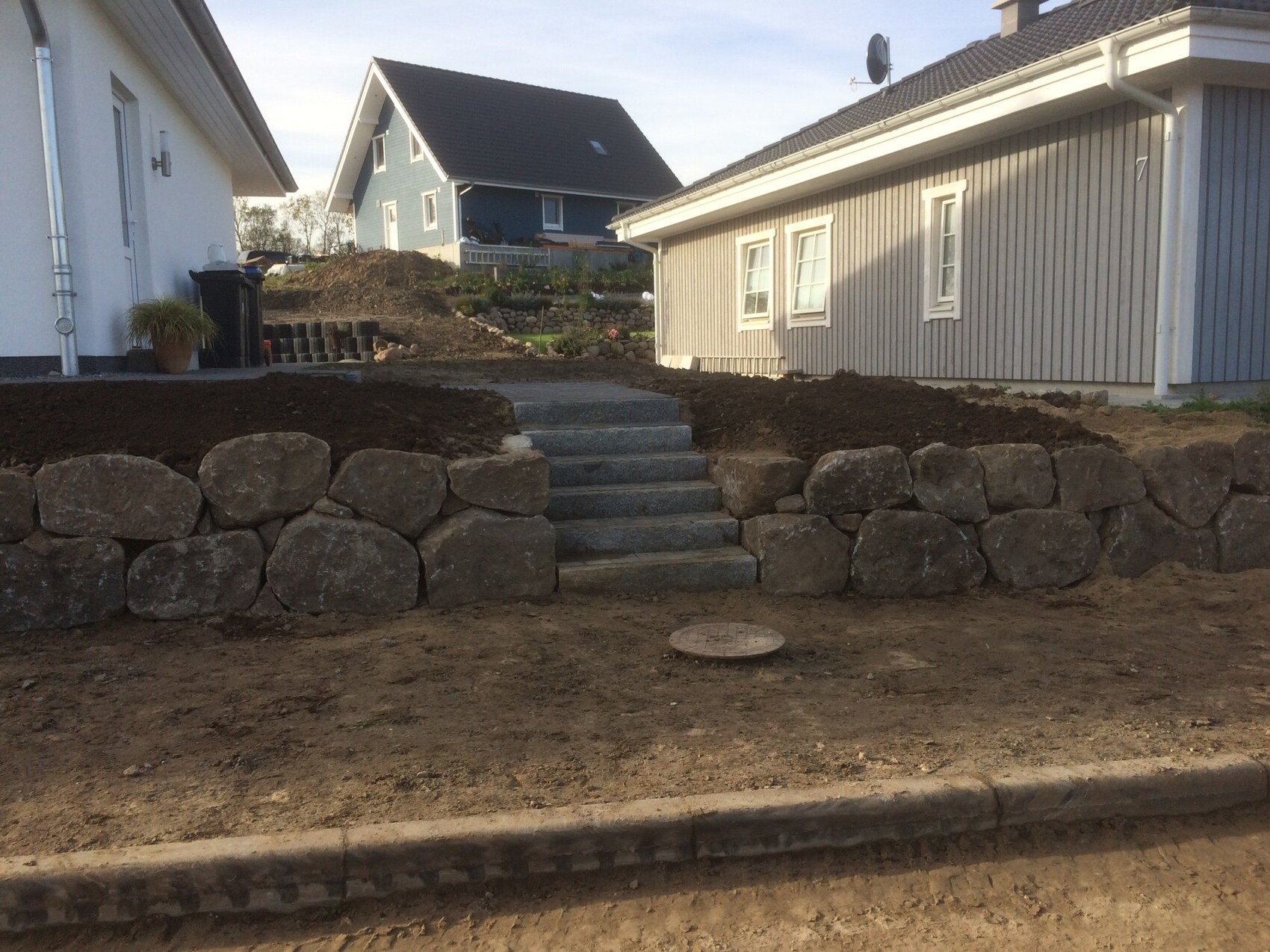
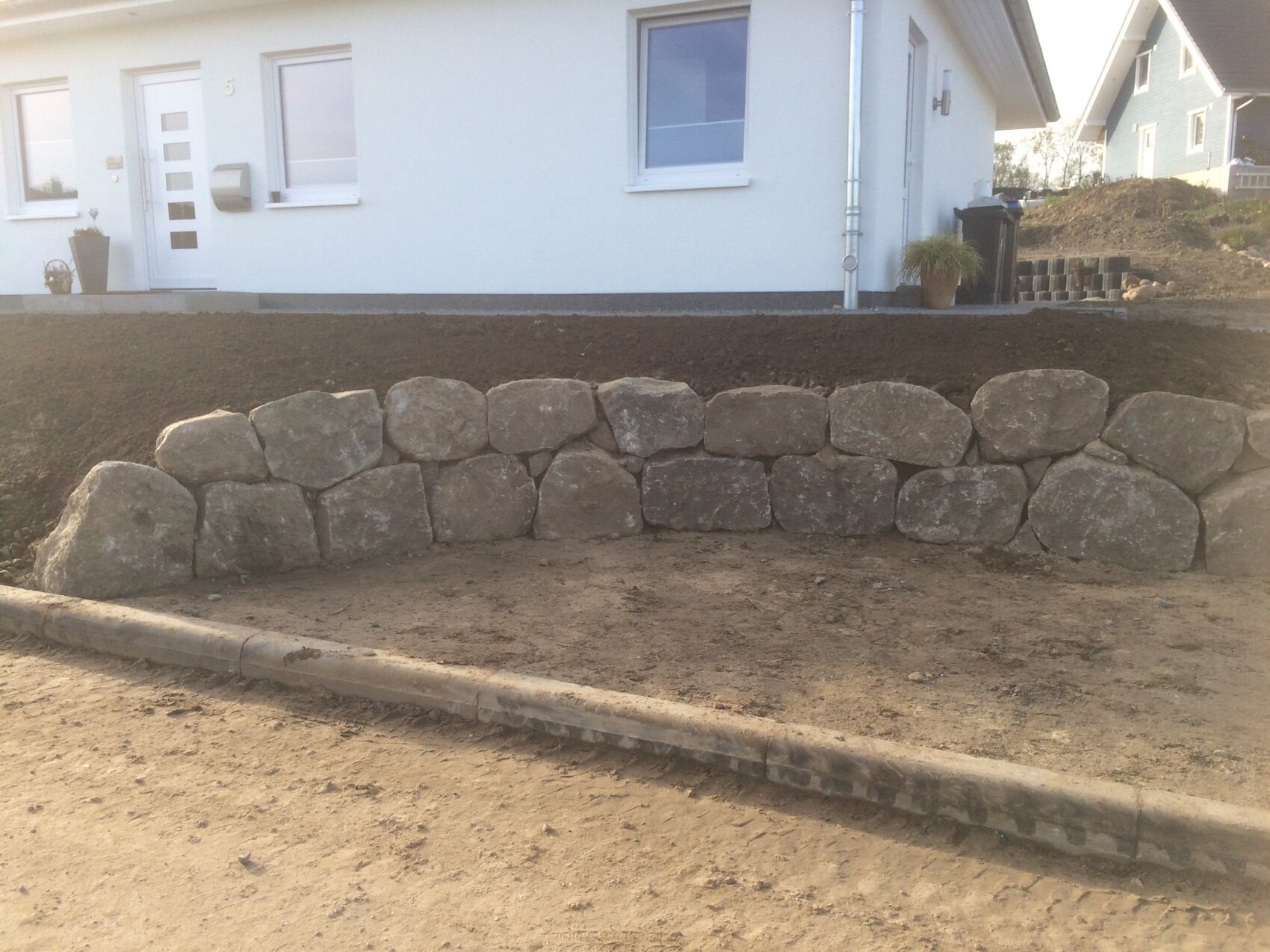
We had this wall, approximately 10 meters (33 feet) long, built for a labor cost of 3000. We bought the stones from the cemetery administration, who had some from an old wall. 15 each per block if picked up by ourselves. The landscaping contractor picked them up for us for 200. The work requires two men and an excavator operator for two full days. That amounts to 48 man-hours and 16 machine hours.
Hello Silent,
Buy some stakes, the yellow formwork panels from the hardware store, and some mesh tarp. Drive the stakes into the ground, spacing them as wide as the formwork panels. Then lay the mesh tarp on the ground and pull it over the soil. Place the formwork panels between the stakes and the soil, then cover the formwork panels with the mesh tarp and secure it. The best way is to fix it with battens and some screws. You might also want to support the stakes with battens. This setup should last one to two years.
Steven
Buy some stakes, the yellow formwork panels from the hardware store, and some mesh tarp. Drive the stakes into the ground, spacing them as wide as the formwork panels. Then lay the mesh tarp on the ground and pull it over the soil. Place the formwork panels between the stakes and the soil, then cover the formwork panels with the mesh tarp and secure it. The best way is to fix it with battens and some screws. You might also want to support the stakes with battens. This setup should last one to two years.
Steven
Similar topics