
Hello everyone,
I couldn’t find any calculation on whether better-insulated bricks are really worth it, so I calculated it myself using Ubakus:
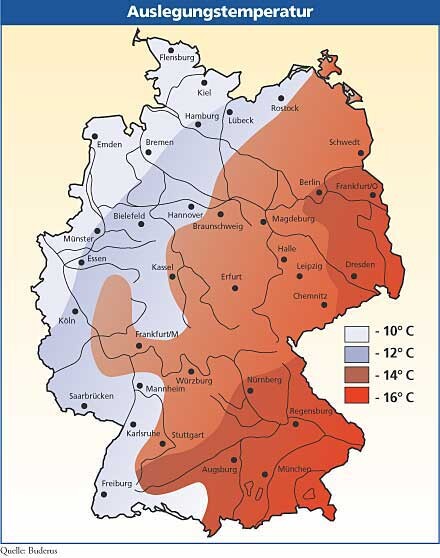
House data: Ground area 10 m x 9.5 m (33 ft x 31 ft); room height 2.5 m (8 ft); location Munich (cold region); wall area: 221 m² (2,378 ft²)
Energy loss of the wall with the following U-values:
U = 0.23 = 4135 W/year
U = 0.21 = 3809 W/year
U = 0.18 = 3320 W/year
U = 0.17 = 3163 W/year
Assuming a heat pump with a seasonal coefficient of performance (COP) of 4 and electricity cost of 0.27€ (per kWh), the differences in energy costs compared to the least efficient bricks (0.23) are:
0.23 = -
0.21 = 22 € / year; 880 € / 40 years
0.18 = 55 € / year; 2200 € / 40 years
0.17 = 65 € / year; 2620 € / 40 years
Example bricks: Poroton Wienerberger List prices 36.5 cm (14.4 inches)
Required bricks: 3500 pieces
0.23 = 5.6 € per piece
0.21 = 6 € per piece; total extra cost: 2100 €
0.18 = 6.3 € per piece; total extra cost: 2450 €
0.17 = 6.7 € per piece; total extra cost: 3850 €
So somehow, I don’t see a significant advantage in using better bricks, especially if you live in a warmer region.
I couldn’t find any calculation on whether better-insulated bricks are really worth it, so I calculated it myself using Ubakus:
House data: Ground area 10 m x 9.5 m (33 ft x 31 ft); room height 2.5 m (8 ft); location Munich (cold region); wall area: 221 m² (2,378 ft²)
Energy loss of the wall with the following U-values:
U = 0.23 = 4135 W/year
U = 0.21 = 3809 W/year
U = 0.18 = 3320 W/year
U = 0.17 = 3163 W/year
Assuming a heat pump with a seasonal coefficient of performance (COP) of 4 and electricity cost of 0.27€ (per kWh), the differences in energy costs compared to the least efficient bricks (0.23) are:
0.23 = -
0.21 = 22 € / year; 880 € / 40 years
0.18 = 55 € / year; 2200 € / 40 years
0.17 = 65 € / year; 2620 € / 40 years
Example bricks: Poroton Wienerberger List prices 36.5 cm (14.4 inches)
Required bricks: 3500 pieces
0.23 = 5.6 € per piece
0.21 = 6 € per piece; total extra cost: 2100 €
0.18 = 6.3 € per piece; total extra cost: 2450 €
0.17 = 6.7 € per piece; total extra cost: 3850 €
So somehow, I don’t see a significant advantage in using better bricks, especially if you live in a warmer region.
Prerequisite: electricity prices do not increase faster than the interest rate you pay on the additional costs. Then, depending on the situation, the breakeven point will be reached.
And: If you just manage to break through the KFW-55 threshold with a different type of brick, money will be flowing in.
And: If you just manage to break through the KFW-55 threshold with a different type of brick, money will be flowing in.

I don’t think it justifies the additional cost, but a possible advantage could be that a smaller heat pump is feasible, lower supply temperatures are possible (better seasonal performance factor), and this might help qualify for BAFA funding. I believe this is a very individual matter. Just saying that better insulation will lead to savings probably won’t pay off at the moment.
Scout schrieb:
The prerequisite is that electricity prices do not rise faster than the interest rate you pay on the additional costs. Then, depending on that, the breakeven point will be reached.
And: If you manage to break through the KfW 55 threshold just by using a different type of brick, you'll receive financial incentives. Since January 24, 2020, this has been accurate.
face26 schrieb:
I don’t think this offsets the extra cost, but a possible advantage could be that a smaller heat pump is feasible, lower supply temperatures are possible (better seasonal performance factor), and thus you might qualify for BAFA funding. I think it’s a very individual case. Simply saying that better insulation leads to savings doesn’t really make financial sense right now. The problem is that there are hardly any heat pumps with such low capacity.
For my house, 4–5 kW (kilowatts) is enough when using 0.21 bricks.
Unfortunately, heat pumps are often oversized due to lack of knowledge.
But I agree that it always needs to be considered individually, although the trend tends to lean toward being uneconomical.
L
ludwig88sta30 Jan 2020 21:24Scout schrieb:
And: If you manage to meet the KfW-55 standard just by switching to a different brick, money will come pouring in You mean the repayment from KfW on the 100,000 loan, right?
Similar topics