
Hello everyone,
I couldn’t find any calculation on whether better-insulated bricks are really worth it, so I calculated it myself using Ubakus:
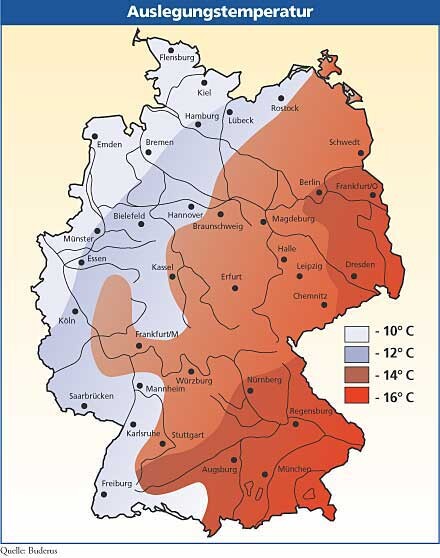
House data: Ground area 10 m x 9.5 m (33 ft x 31 ft); room height 2.5 m (8 ft); location Munich (cold region); wall area: 221 m² (2,378 ft²)
Energy loss of the wall with the following U-values:
U = 0.23 = 4135 W/year
U = 0.21 = 3809 W/year
U = 0.18 = 3320 W/year
U = 0.17 = 3163 W/year
Assuming a heat pump with a seasonal coefficient of performance (COP) of 4 and electricity cost of 0.27€ (per kWh), the differences in energy costs compared to the least efficient bricks (0.23) are:
0.23 = -
0.21 = 22 € / year; 880 € / 40 years
0.18 = 55 € / year; 2200 € / 40 years
0.17 = 65 € / year; 2620 € / 40 years
Example bricks: Poroton Wienerberger List prices 36.5 cm (14.4 inches)
Required bricks: 3500 pieces
0.23 = 5.6 € per piece
0.21 = 6 € per piece; total extra cost: 2100 €
0.18 = 6.3 € per piece; total extra cost: 2450 €
0.17 = 6.7 € per piece; total extra cost: 3850 €
So somehow, I don’t see a significant advantage in using better bricks, especially if you live in a warmer region.
I couldn’t find any calculation on whether better-insulated bricks are really worth it, so I calculated it myself using Ubakus:
House data: Ground area 10 m x 9.5 m (33 ft x 31 ft); room height 2.5 m (8 ft); location Munich (cold region); wall area: 221 m² (2,378 ft²)
Energy loss of the wall with the following U-values:
U = 0.23 = 4135 W/year
U = 0.21 = 3809 W/year
U = 0.18 = 3320 W/year
U = 0.17 = 3163 W/year
Assuming a heat pump with a seasonal coefficient of performance (COP) of 4 and electricity cost of 0.27€ (per kWh), the differences in energy costs compared to the least efficient bricks (0.23) are:
0.23 = -
0.21 = 22 € / year; 880 € / 40 years
0.18 = 55 € / year; 2200 € / 40 years
0.17 = 65 € / year; 2620 € / 40 years
Example bricks: Poroton Wienerberger List prices 36.5 cm (14.4 inches)
Required bricks: 3500 pieces
0.23 = 5.6 € per piece
0.21 = 6 € per piece; total extra cost: 2100 €
0.18 = 6.3 € per piece; total extra cost: 2450 €
0.17 = 6.7 € per piece; total extra cost: 3850 €
So somehow, I don’t see a significant advantage in using better bricks, especially if you live in a warmer region.
I am generally in favor of insulation, but I like to play the devil’s advocate.
Disadvantage: If you consider the external volume as fixed, the living space decreases by 1 m² (11 sq ft) for every 2.5 cm (1 inch) increase in wall thickness. This applies per floor, of course.
For a two-story building, that means 2 m² (22 sq ft) less living area, or roughly 2400 euros more in construction costs in a general calculation... with a 5 cm (2 inch) thicker wall, it would be twice as much, and so on.
Disadvantage: If you consider the external volume as fixed, the living space decreases by 1 m² (11 sq ft) for every 2.5 cm (1 inch) increase in wall thickness. This applies per floor, of course.
For a two-story building, that means 2 m² (22 sq ft) less living area, or roughly 2400 euros more in construction costs in a general calculation... with a 5 cm (2 inch) thicker wall, it would be twice as much, and so on.
Specki schrieb:
Some arguments have already been mentioned as to why this could still be worthwhile.
- KfW funding!!!
- Resale value
- Smaller heat pump
- Possibly less underfloor heating piping
- etc.
I’d like to add another point.
Your financial loss calculated over 40 years is only €1230. That’s negligible! For me, that alone would be worth paying for the extra cost in terms of ecological conscience.
And finally, I can tell you that your calculation is probably incorrect. I would assume an annual electricity price increase of 1 to 1.5%. That makes the situation look even better.
So, from my perspective, a clear recommendation in this case: The block with the lower U-value pays off!
Regards
Specki The heating load savings are only 372 watts. For 150m² (1600 sq ft), that’s 2.5 W/m² (0.23 W/sq ft).
0.17 → 1056 W
0.23 → 1428 W
You won’t save much either on underfloor heating or on the heat generator.
The energy cost increase becomes irrelevant if you finance and have to pay 1% interest on the additional costs.
Scout schrieb:
I’m generally in favor of insulation, but I like to play devil’s advocate.
Disadvantage: If you assume the external volume is fixed, the living area decreases by 1 m² (11 sq ft) for every 2.5 cm (1 inch) thicker block—per floor, of course.
For two stories, that means 2 m² (22 sq ft) less living space, or about €2400 more building costs in rough calculation… with a 5 cm (2 inch) thicker block, it’s double that, and so on. All U-values are based on 36.5 cm (14 inch) blocks. You don’t necessarily have to switch to larger ones.