
Hello everyone,
I couldn’t find any calculation on whether better-insulated bricks are really worth it, so I calculated it myself using Ubakus:
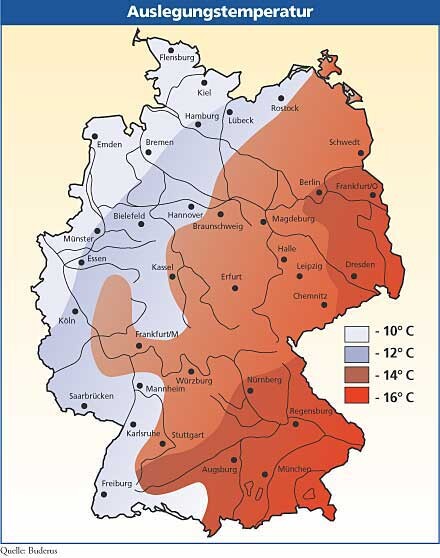
House data: Ground area 10 m x 9.5 m (33 ft x 31 ft); room height 2.5 m (8 ft); location Munich (cold region); wall area: 221 m² (2,378 ft²)
Energy loss of the wall with the following U-values:
U = 0.23 = 4135 W/year
U = 0.21 = 3809 W/year
U = 0.18 = 3320 W/year
U = 0.17 = 3163 W/year
Assuming a heat pump with a seasonal coefficient of performance (COP) of 4 and electricity cost of 0.27€ (per kWh), the differences in energy costs compared to the least efficient bricks (0.23) are:
0.23 = -
0.21 = 22 € / year; 880 € / 40 years
0.18 = 55 € / year; 2200 € / 40 years
0.17 = 65 € / year; 2620 € / 40 years
Example bricks: Poroton Wienerberger List prices 36.5 cm (14.4 inches)
Required bricks: 3500 pieces
0.23 = 5.6 € per piece
0.21 = 6 € per piece; total extra cost: 2100 €
0.18 = 6.3 € per piece; total extra cost: 2450 €
0.17 = 6.7 € per piece; total extra cost: 3850 €
So somehow, I don’t see a significant advantage in using better bricks, especially if you live in a warmer region.
I couldn’t find any calculation on whether better-insulated bricks are really worth it, so I calculated it myself using Ubakus:
House data: Ground area 10 m x 9.5 m (33 ft x 31 ft); room height 2.5 m (8 ft); location Munich (cold region); wall area: 221 m² (2,378 ft²)
Energy loss of the wall with the following U-values:
U = 0.23 = 4135 W/year
U = 0.21 = 3809 W/year
U = 0.18 = 3320 W/year
U = 0.17 = 3163 W/year
Assuming a heat pump with a seasonal coefficient of performance (COP) of 4 and electricity cost of 0.27€ (per kWh), the differences in energy costs compared to the least efficient bricks (0.23) are:
0.23 = -
0.21 = 22 € / year; 880 € / 40 years
0.18 = 55 € / year; 2200 € / 40 years
0.17 = 65 € / year; 2620 € / 40 years
Example bricks: Poroton Wienerberger List prices 36.5 cm (14.4 inches)
Required bricks: 3500 pieces
0.23 = 5.6 € per piece
0.21 = 6 € per piece; total extra cost: 2100 €
0.18 = 6.3 € per piece; total extra cost: 2450 €
0.17 = 6.7 € per piece; total extra cost: 3850 €
So somehow, I don’t see a significant advantage in using better bricks, especially if you live in a warmer region.
L
ludwig88sta30 Jan 2020 22:11Yes, that is quite a lot, especially if the bricks were the deciding factor. And you are definitely better prepared for the future!

Achieving subsidy levels has recently become particularly attractive. KFW 18-20k, BAFA also already around 4-5k last year for heat pumps.
Better insulation leads to a lower heating load. For example, if you use a ground-source heat pump, this reduction might be enough to step down to a smaller, and therefore less expensive, heat pump investment. Eventually, a replacement for the heat generator will be needed, which further reinforces this effect.
The drilling cost is also per meter, which corresponds to heat extraction capacity, so this can quickly save around a thousand euros.
You can also hope to improve the resale value with this.
The overall concept is what matters.
Better insulation leads to a lower heating load. For example, if you use a ground-source heat pump, this reduction might be enough to step down to a smaller, and therefore less expensive, heat pump investment. Eventually, a replacement for the heat generator will be needed, which further reinforces this effect.
The drilling cost is also per meter, which corresponds to heat extraction capacity, so this can quickly save around a thousand euros.
You can also hope to improve the resale value with this.
The overall concept is what matters.
Some arguments have already been mentioned as to why this could be financially worthwhile.
- KFW grant!!!
- Resale value
- Smaller heat pump
- Possibly less underfloor heating piping
- etc.
I’d like to add another point.
Your financial loss calculated over 40 years comes to €1230. That’s negligible! For me, that alone would justify paying the extra cost for ecological reasons.
Finally, I can also tell you that your calculation is probably not accurate. I would assume an annual electricity price increase of 1 to 1.5%. That makes the investment look even better.
So, from my point of view, a clear recommendation in this case: The brick with the lower U-value pays off!
Best regards,
Specki
- KFW grant!!!
- Resale value
- Smaller heat pump
- Possibly less underfloor heating piping
- etc.
I’d like to add another point.
Your financial loss calculated over 40 years comes to €1230. That’s negligible! For me, that alone would justify paying the extra cost for ecological reasons.
Finally, I can also tell you that your calculation is probably not accurate. I would assume an annual electricity price increase of 1 to 1.5%. That makes the investment look even better.
So, from my point of view, a clear recommendation in this case: The brick with the lower U-value pays off!
Best regards,
Specki
Similar topics