
ᐅ What type of bricks or blocks are these, and do they serve a structural purpose?
Created on: 30 Mar 2019 22:59
D
DaDude1992
Hello, I am the proud owner of a timber-framed house and have recently noticed that three bricks on the ceiling are broken. My question is which bricks these are and whether they play a structural role or are only for cladding? The problem is that in the bathroom above, very little water is coming from the flush tank inlet, and I suspect there might be a leak there. Therefore, I want to investigate the issue more closely and wanted to ask here before the ceiling potentially collapses on me. Thanks in advance.
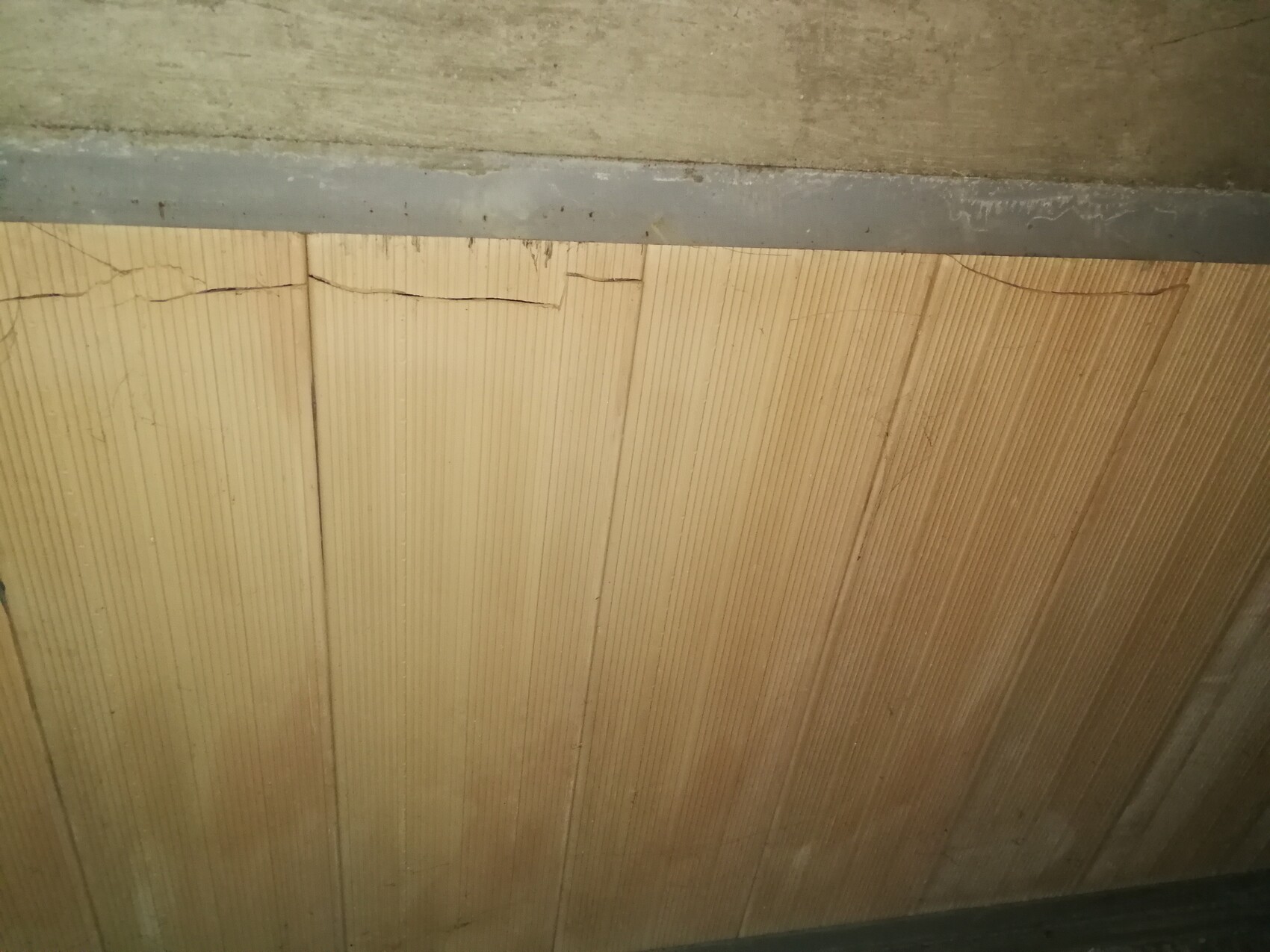
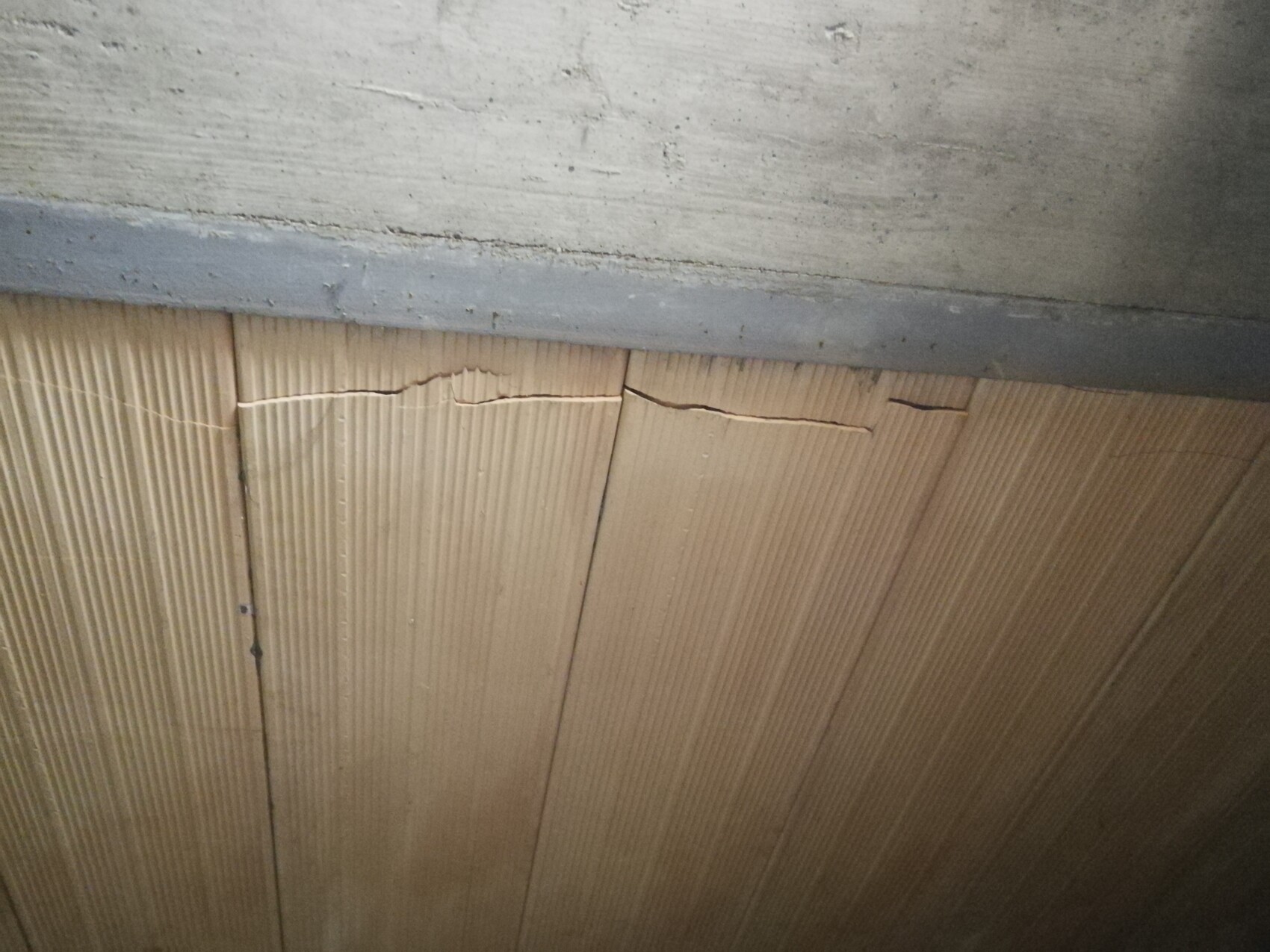
D
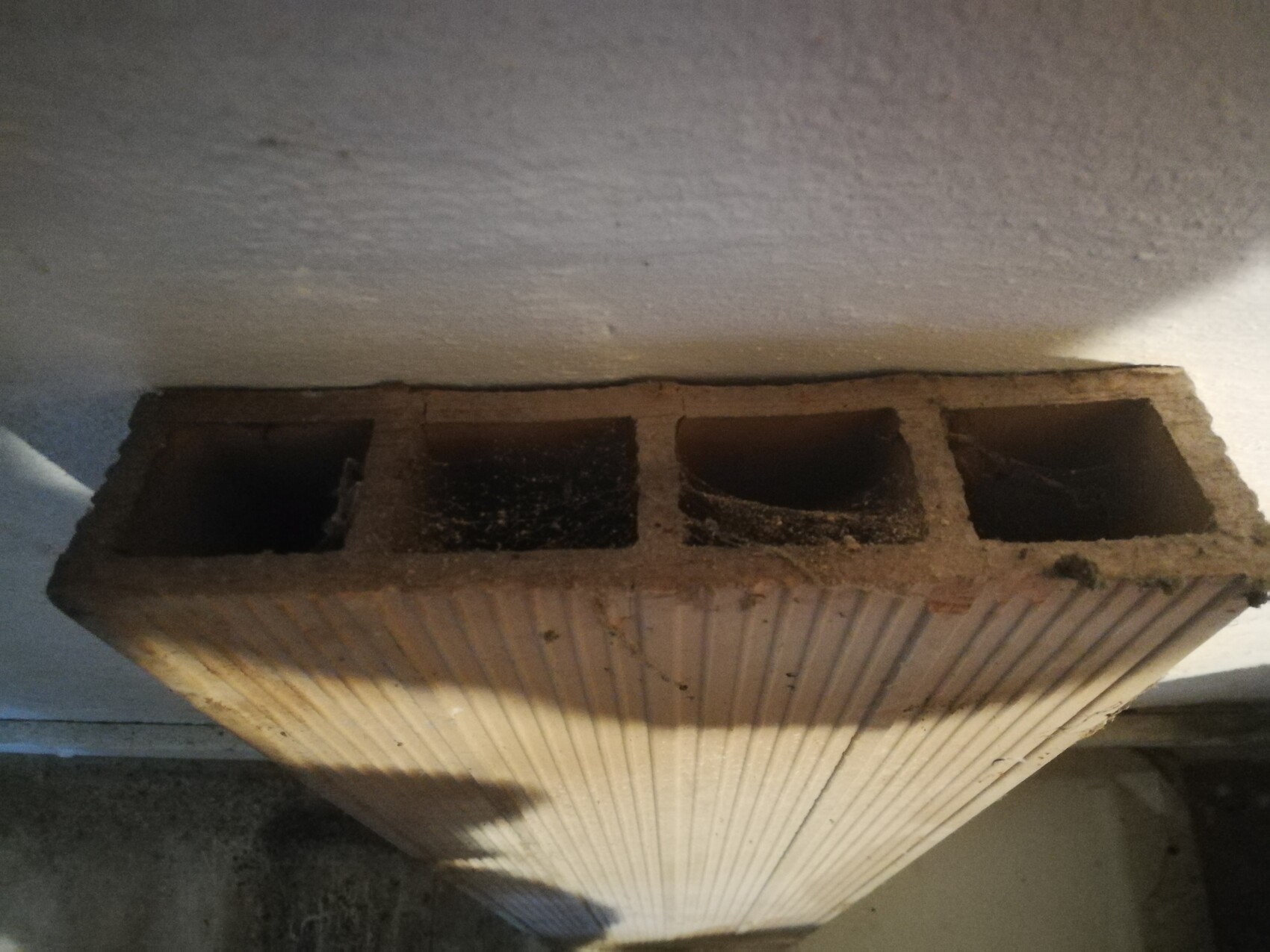
DaDude19921 Apr 2019 19:0824 by 100 cm (39 by 39 inches), hanging from the ceiling. I found a few more of these but still don’t know what they are or what role these parts play.


DaDude1992 schrieb:
24 by 100 cm (24 by 39 inches), hanging from the ceiling, Here it seems more like: leaning against the wall. The measurement likely refers to width and length, with a height of about 6 cm (2.4 inches).
DaDude1992 schrieb:
still don’t know what it is Neither do I—because you haven’t addressed my earlier questions about what exactly can be seen in the pictures.
You probably recognize the porous clay bricks as the material. At first, I thought of ceiling elements: those would be clamped, reinforced, and covered with cast-in-place concrete. And that would rather not happen in timber-framed houses.
As shown in the new photo, these don’t seem to be that type—but they also don’t really suit precast flat lintels, although the dimensions could fit above a 76 cm (30 inch) door in a 24 cm (9.5 inch) wall. For non-load-bearing interior walls, these bricks don’t make much sense to me either.
I’m afraid this looks like a DIY builder who simply used parts that seemed “right” according to the dimensions, without considering their intended purpose. How lucky this will turn out to be in the long run, I won’t speculate.
To me, this smells like “home builder without an architect (and without a structural engineer) got cheap materials” :-(
https://www.instagram.com/11antgmxde/
https://www.linkedin.com/company/bauen-jetzt/

@11ant
As far as I know, it’s exactly as you described. However, if you do some digging online, you’ll come across the term "Hourdis floor." These were apparently simply laid between steel beams (without reinforcement like in a conventional concrete slab) and then covered with concrete.
Why are you still bothering after the explanation in #5?
As far as I know, it’s exactly as you described. However, if you do some digging online, you’ll come across the term "Hourdis floor." These were apparently simply laid between steel beams (without reinforcement like in a conventional concrete slab) and then covered with concrete.
Why are you still bothering after the explanation in #5?
Dr Hix schrieb:
Why do you even bother after the comment in #5? I am as friendly as I am unfriendly – both almost to a pathological extent ,-)
Dr Hix schrieb:
If you do some digging with a search engine, you can find the term "Hourdis slab". I was simply not familiar with that term...
Dr Hix schrieb:
Apparently, these were just placed between steel beams (without reinforcement like a “regular” stone slab) and then covered with concrete. ...and in this case, I wasn’t even familiar with the technique itself: according to what I found online, it was even done on wooden joists, which I actually didn’t know.
Most likely, a) the previous owner read about it somewhere, or b) it was done that way in this house before and he replicated it – concerning the shown blocks, based on the photos, I still believe 1. they are not original from the timber-framed house period, and 2. they date from the 1960s or even later. But my feeling could be wrong, as the photos are, as mentioned, evidence of unknown reliability.
https://www.instagram.com/11antgmxde/
https://www.linkedin.com/company/bauen-jetzt/
M
Mottenhausen2 Apr 2019 09:44Could it be that this is about the ceiling of a masonry basement level? The timber-framed house starts only above that?
Regarding the clay tile elements, I would suspect they were installed as some kind of lost formwork. A proven concrete slab was then poured on top. This should take on all the structural functions. The clay tiles with the cracks no longer carry any load, as they are completely broken through.
As for the toilet cistern: simply turn off the valve inside the cistern and check whether the water level in the tank holds over time or not. If the leak is elsewhere along the line, you won’t detect it this way, but in any case, I would start looking from the top rather than from below.
That said, water damage should cause stains and not broken clay tiles. But as mentioned, it’s unclear what’s above. Rotten beams, etc., could be pressing down from above, no idea.
Regarding the clay tile elements, I would suspect they were installed as some kind of lost formwork. A proven concrete slab was then poured on top. This should take on all the structural functions. The clay tiles with the cracks no longer carry any load, as they are completely broken through.
As for the toilet cistern: simply turn off the valve inside the cistern and check whether the water level in the tank holds over time or not. If the leak is elsewhere along the line, you won’t detect it this way, but in any case, I would start looking from the top rather than from below.
That said, water damage should cause stains and not broken clay tiles. But as mentioned, it’s unclear what’s above. Rotten beams, etc., could be pressing down from above, no idea.
Mottenhausen schrieb:
Water damage is supposed to cause stains, not broken clay tiles. Yes and no: I do think an explosive effect that turns hairline cracks into visible fractures is quite possible.
https://www.instagram.com/11antgmxde/
https://www.linkedin.com/company/bauen-jetzt/
Similar topics