
ᐅ Retaining a 2-meter slope: L-shaped concrete blocks, dry stone wall, or other solutions?
Created on: 22 Apr 2022 15:02
H
hausamfeld
Hello dear house building forum,
we are currently planning the preparation for the foundation slab with our earthworks contractor. Now we also need to decide how to retain the slope behind the house, which drops about 185cm (73 inches).
The setup (which can be seen quite well in the "slope idea" picture) is currently planned as follows: street/sidewalk/5 meters (16 feet) front yard, approximately 11 meters (36 feet) house, 4 meters (13 feet) terrace, and then we have about 10 meters (33 feet) left if we were to retain the whole area directly with L-shaped retaining blocks. These are quite hefty blocks, and 2-meter (6.5 feet) tall L-blocks are apparently very expensive. Including labor and concrete pouring, for the 15 meters (49 feet) wide area, the cost would be around €11,000.
Now the question is, what other options do we have?
Thanks for your help 🙂
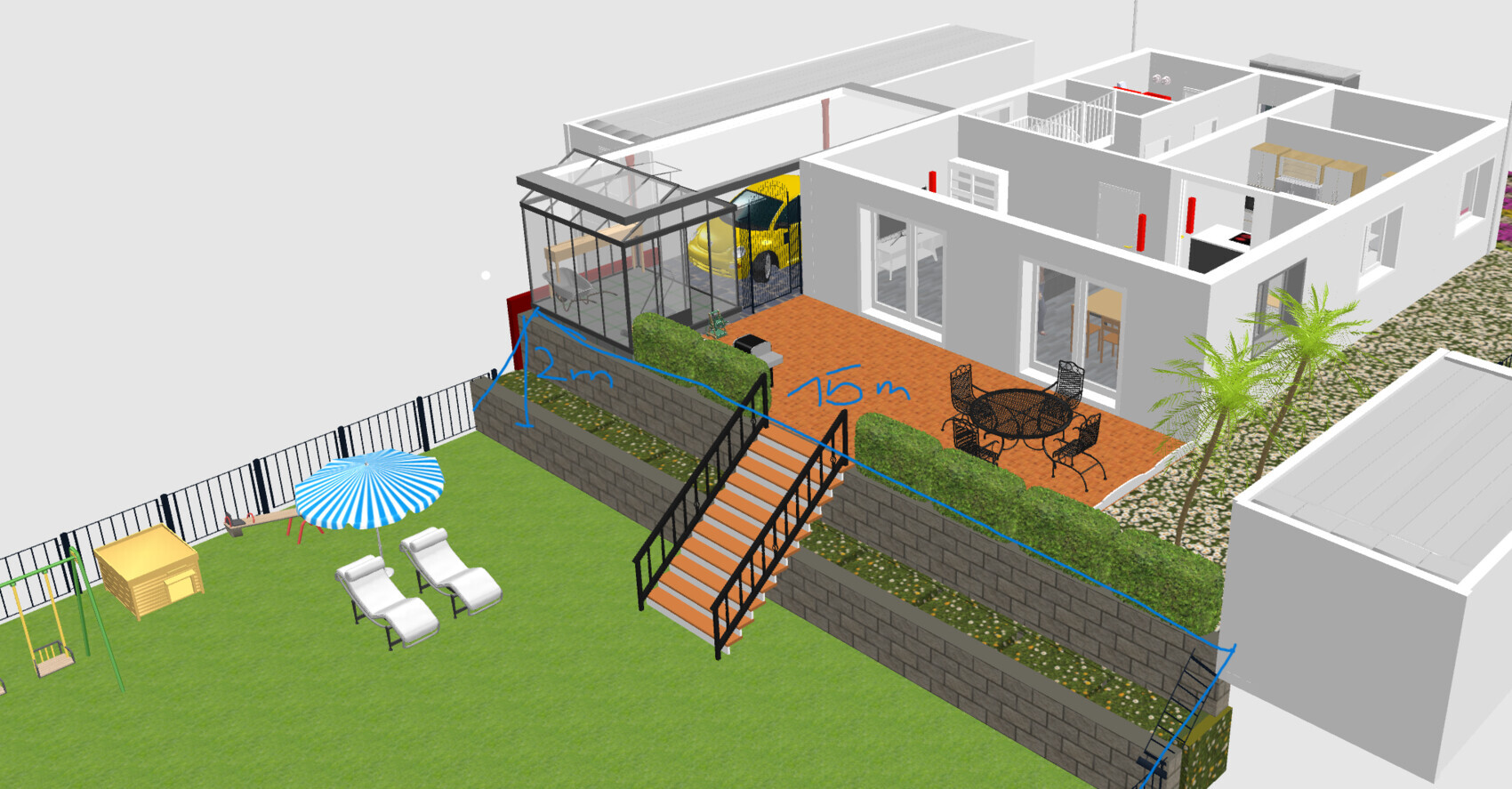
we are currently planning the preparation for the foundation slab with our earthworks contractor. Now we also need to decide how to retain the slope behind the house, which drops about 185cm (73 inches).
The setup (which can be seen quite well in the "slope idea" picture) is currently planned as follows: street/sidewalk/5 meters (16 feet) front yard, approximately 11 meters (36 feet) house, 4 meters (13 feet) terrace, and then we have about 10 meters (33 feet) left if we were to retain the whole area directly with L-shaped retaining blocks. These are quite hefty blocks, and 2-meter (6.5 feet) tall L-blocks are apparently very expensive. Including labor and concrete pouring, for the 15 meters (49 feet) wide area, the cost would be around €11,000.
Now the question is, what other options do we have?
- Letting the slope gently taper off would certainly be the cheapest option, but we would probably lose a lot of usable garden space. I don’t know how steep I can make this slope so that the terrace remains stable on it.
- Use L-shaped retaining blocks but decorate the front with a natural stone raised bed, so we wouldn’t have a two-meter (6.5 feet) concrete wall visible? That would certainly mean additional costs, so €11,000 plus the cost of the raised bed?
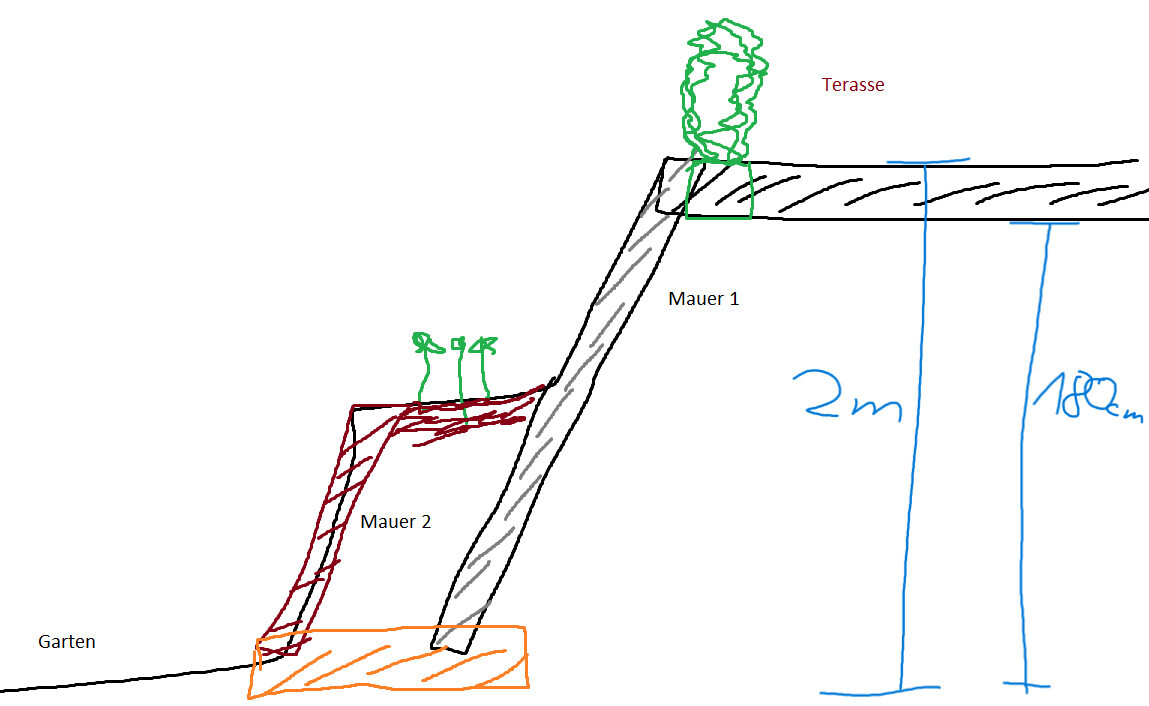
- Dry stone wall (maybe like in the cross-section double wall idea)? I have read different opinions about this; some say dry stone walls over 150cm (59 inches) might no longer be reliably load-bearing or cost-effective, while others suggest concreting this structure. However, I couldn’t find any pricing information on that. Maybe someone here has experience with this.
- Gabions or other options? The classic "flower stones" look too outdated for us, and gabions aren’t exactly the most attractive option either, but possibly if planted with stone plants, they might still be an option?
Thanks for your help 🙂
N
NatureSys24 Apr 2022 14:09There are quite a few options. For example, about 15 houses on our street have a 2–3 meter (6.5–10 feet) high slope in their gardens. What you decide to do depends, among other things, on how you want to use the garden.
For instance, we have three terraces:
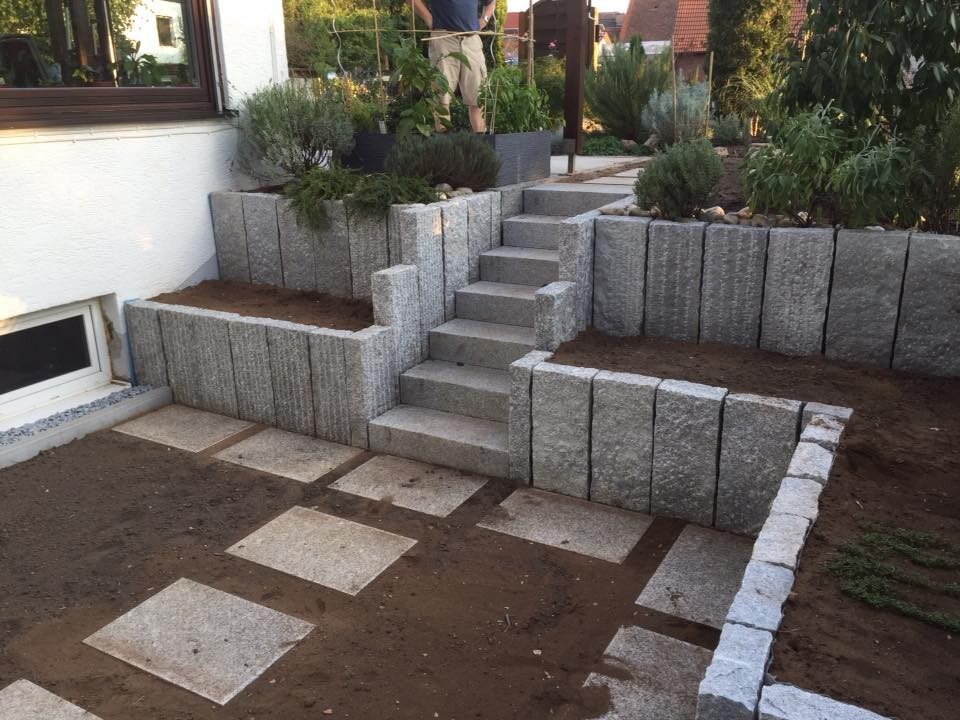
The first terrace is made with 50 cm (20 inches) L-shaped retaining wall blocks, which extend about 40 cm (16 inches) above the garden level. On top of that, we placed a wide natural stone window sill (about 40 cm (16 inches) deep and a total of 6 meters (20 feet) long, divided into one piece of 4 meters (13 feet) and another piece of 2 meters (6.5 feet)), creating a nice bench that runs several meters along the garden. Above this are two more terraces (each about 60 cm (24 inches) high steps with an additional 20 cm (8 inches) of built-up soil), which we planted with perennials and shrubs.
Other neighbors use their terraces, for example, to grow vegetables. Depending on the orientation (ours faces south), vegetables thrive especially well there.
We also have a centrally located staircase with 15 cm (6 inches) high steps, 14 in total.
Therefore, I recommend considering whether your priority is to have the largest possible lower part of the property (for playing soccer, badminton, etc.) or if you prefer to make the lower area smaller and use the terraces for garden design. Personally, I wouldn’t find a 2-meter (6.5 feet) high wall attractive.
For instance, we have three terraces:
The first terrace is made with 50 cm (20 inches) L-shaped retaining wall blocks, which extend about 40 cm (16 inches) above the garden level. On top of that, we placed a wide natural stone window sill (about 40 cm (16 inches) deep and a total of 6 meters (20 feet) long, divided into one piece of 4 meters (13 feet) and another piece of 2 meters (6.5 feet)), creating a nice bench that runs several meters along the garden. Above this are two more terraces (each about 60 cm (24 inches) high steps with an additional 20 cm (8 inches) of built-up soil), which we planted with perennials and shrubs.
Other neighbors use their terraces, for example, to grow vegetables. Depending on the orientation (ours faces south), vegetables thrive especially well there.
We also have a centrally located staircase with 15 cm (6 inches) high steps, 14 in total.
Therefore, I recommend considering whether your priority is to have the largest possible lower part of the property (for playing soccer, badminton, etc.) or if you prefer to make the lower area smaller and use the terraces for garden design. Personally, I wouldn’t find a 2-meter (6.5 feet) high wall attractive.
W
WilderSueden25 Apr 2022 16:25I would definitely create two levels to manage this. It will take up a bit of ground area, but at the same time, it creates a raised bed. Also, planting between the levels helps visually reduce the height. I would always prefer a natural stone wall over a concrete wall, as it simply looks much better.
I wouldn’t recommend just sloping the ground, as it requires a lot of space, is difficult to use, and hard to maintain. The option of combining a wall with a slope combines these disadvantages with the cost of a wall.
I wouldn’t recommend just sloping the ground, as it requires a lot of space, is difficult to use, and hard to maintain. The option of combining a wall with a slope combines these disadvantages with the cost of a wall.
 hausamfeld25 Apr 2022 19:58
Thanks to all of you already for the information and tips. 🙂
There is no development plan / zoning plan. Most neighbors have basements and then made the basement level accessible at ground level on the downslope side. That was no longer financially feasible for us, so no basement underground level.
In the application, the slope simply continues with about 35° (degrees).
The basement is currently being filled in and will initially look like this so everything is prepared for the foundation slab:
Garden side ___________/‾‾‾‾‾‾‾‾‾‾‾‾‾ House/street side.
So the garden is level again and flush with the neighbors.
Three terraces would certainly reduce the "bulkiness" of the whole design. Are all three terraces made from L-shaped stones? Or are the upper two made of a different material?
I would be worried that if the L-stones are only 50 cm (20 inches) high, they might be pushed away from the terrace. Have you had no issues with that? If I understood your setup correctly, it’s similar to the attached cross-section I included here?
We also planned a staircase, probably just installed as stepping stones.
And using the terraces facing south as planting beds is also our plan. 🙂
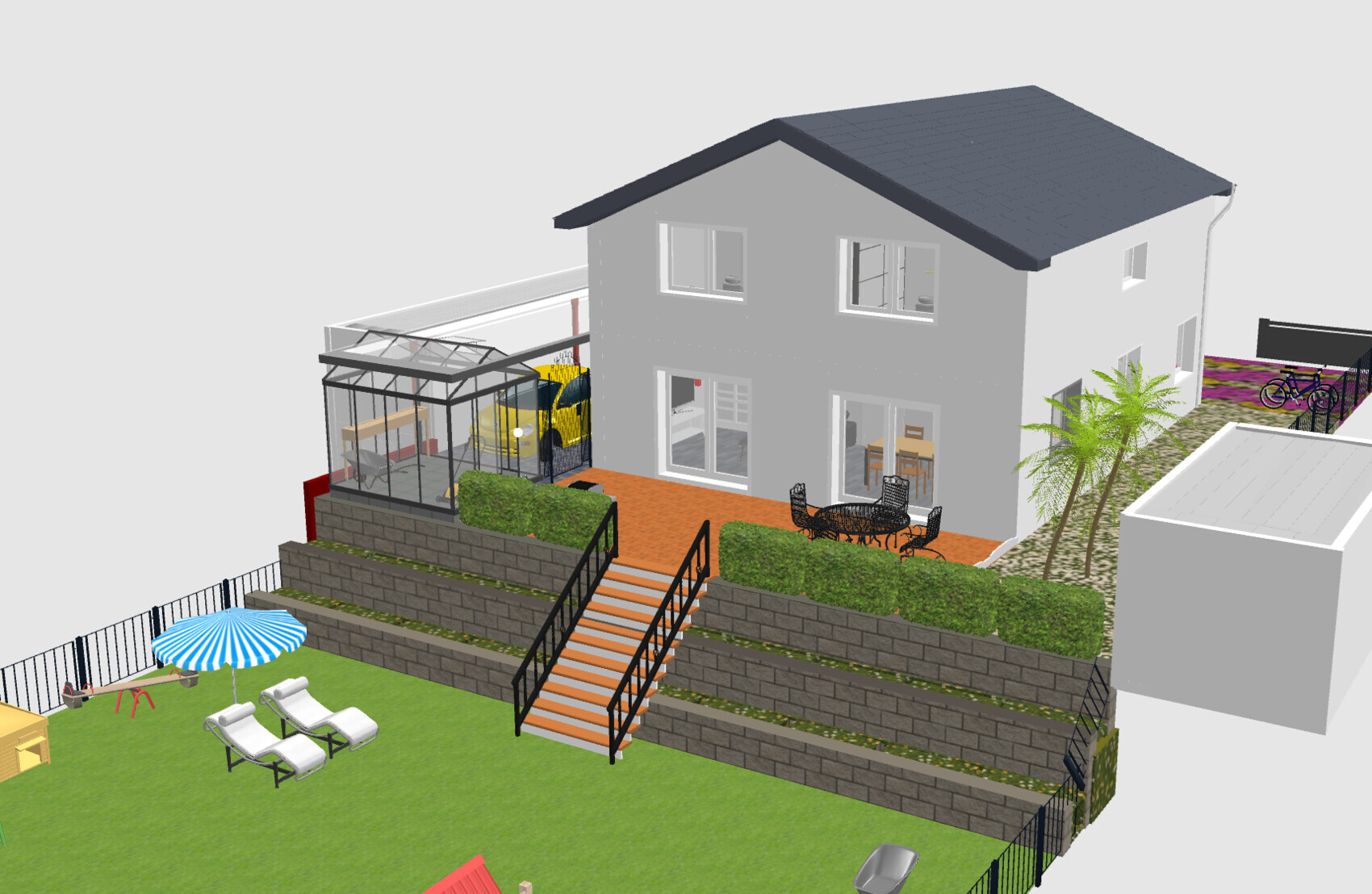
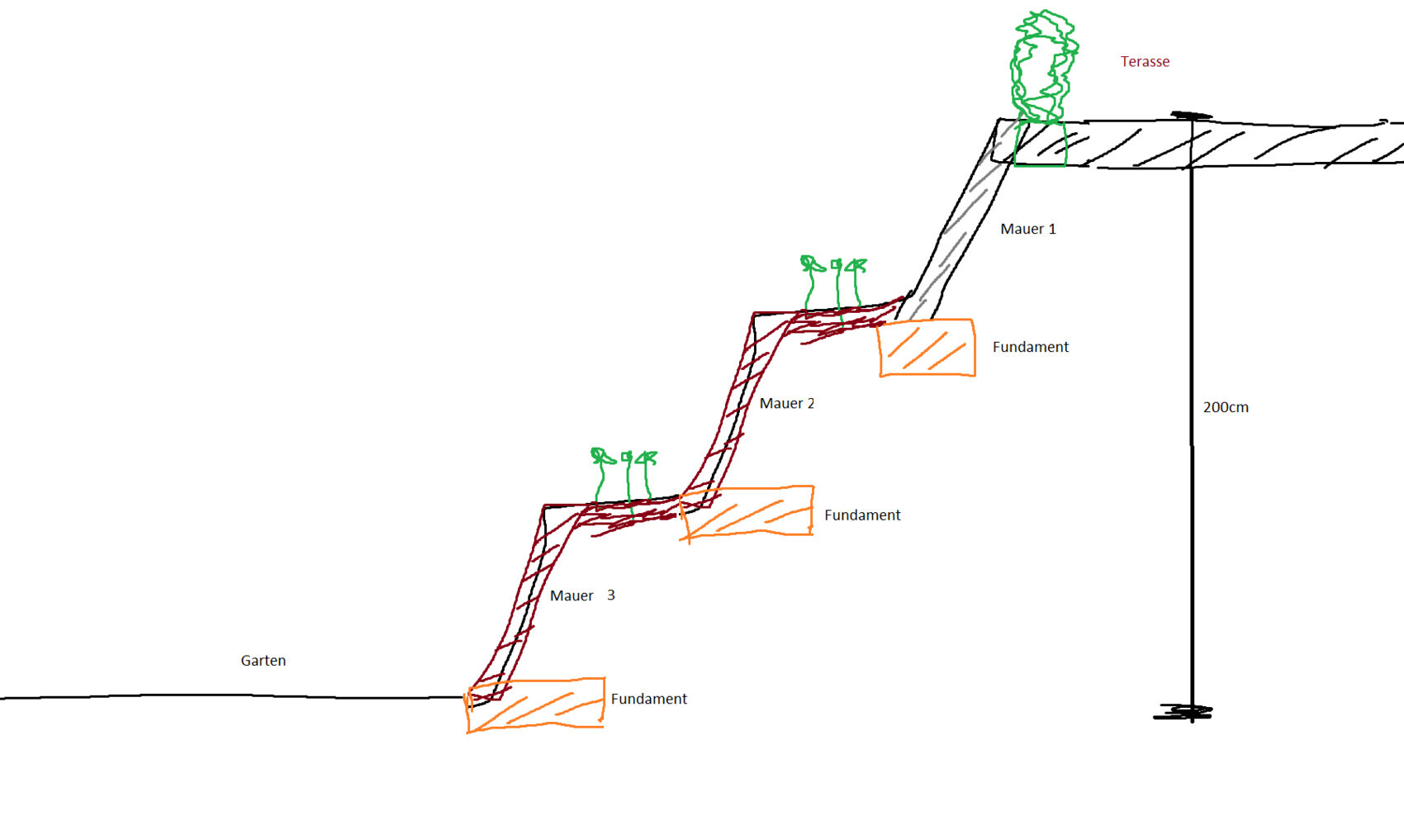
By two terraces, do you mean with three retaining walls, like NatureSys also described?
Here is a quick visualization of how that might look.
haydee schrieb:
Maybe a basement underground level. It’s unlikely that the plot is flat and then suddenly slopes sharply.
What did you submit with the application?
What does the development plan / zoning plan require?
A structural engineer wouldn’t be a luxury.
Has the area for the house and terrace already been filled?
Have plate load tests been conducted to check compaction?
There is no development plan / zoning plan. Most neighbors have basements and then made the basement level accessible at ground level on the downslope side. That was no longer financially feasible for us, so no basement underground level.
In the application, the slope simply continues with about 35° (degrees).
The basement is currently being filled in and will initially look like this so everything is prepared for the foundation slab:
Garden side ___________/‾‾‾‾‾‾‾‾‾‾‾‾‾ House/street side.
So the garden is level again and flush with the neighbors.
NatureSys schrieb:
There are quite a few options. For example, around 15 houses on our street have a 2-3 meter (6-10 feet) high slope in the garden.
What you do also depends on how you want to use the garden.
For example, we have three terraces:
The first terrace uses 50 cm (20 inches) L-shaped retaining stones, which stick out about 40 cm (16 inches) above garden level. On top, we placed a wide natural stone windowsill (about 40 cm (16 inches) deep and 6 meters (20 feet) long in total – divided into one 4-meter (13 feet) and one 2-meter (6.5 feet) section), so you have a nice bench over several meters in length. Above that are two more terraces (each about 60 cm (24 inches) high and then another 20 cm (8 inches) raising fill), which we planted with perennials and shrubs.
Other neighbors use the terraces for vegetable growing. Depending on the orientation (ours faces south), vegetables grow particularly well there.
We have a centrally located staircase with 15 cm (6 inch) steps, a total of 14 steps.
I therefore advise you to consider whether it is mainly important to have the lower part of the plot as large as possible (for playing football, badminton, etc.) or if you want to make the lower part smaller and use the terraces for garden design. Personally, I would not find a 2-meter (6.5 feet) high wall attractive.
Three terraces would certainly reduce the "bulkiness" of the whole design. Are all three terraces made from L-shaped stones? Or are the upper two made of a different material?
I would be worried that if the L-stones are only 50 cm (20 inches) high, they might be pushed away from the terrace. Have you had no issues with that? If I understood your setup correctly, it’s similar to the attached cross-section I included here?
We also planned a staircase, probably just installed as stepping stones.
And using the terraces facing south as planting beds is also our plan. 🙂
WilderSueden schrieb:
I would definitely choose two terraces to break the slope. It will cost you a bit of ground area, but it also creates a raised bed. Additionally, planting in between visually reduces the height. I would always prefer a natural stone wall over a concrete wall as it simply looks nicer.
Simply grading the slope would not be my choice, as it takes up a lot of space, is difficult to use, and hard to maintain. The combination of wall and slope has these disadvantages plus the cost of the wall.
By two terraces, do you mean with three retaining walls, like NatureSys also described?
Here is a quick visualization of how that might look.
W
WilderSueden25 Apr 2022 20:21hausamfeld schrieb:
Two steps, do you mean with three walls, as NatureSys also explained?With three walls, the problem is that it’s hard to access the middle area. So I would rather make two sections waist-high if possible.
gutentag schrieb:
Why don't you ask the person who planned it?
I would like to see the submitted site plan.I have so little to add to that that it really wouldn't fit in 30 characters ;-)https://www.instagram.com/11antgmxde/
https://www.linkedin.com/company/bauen-jetzt/
Similar topics