
Hello everyone, we moved in in the middle of last year and have a steel staircase with wooden steps. The wooden steps were only glued at the time. Now we have the problem that since we moved in, two steps have come loose. The carpenter used Lugato bombenfest as adhesive, a type of assembly adhesive. Can you recommend something better?
The steps have been oiled twice and the glued area was not scored or treated in any way. (We had noticed this with the first step.)
After the first step came loose, we reglued it. The second step is not completely detached yet but already loose. The adhesive sticks to the steel but not to the wood. What would you recommend now? I have attached pictures of the staircase construction. Of course, it is possible to screw the steps in place. However, we did not want to see screws from underneath. If we decide to screw them in now, is it possible to drill from below while keeping the steps in place?
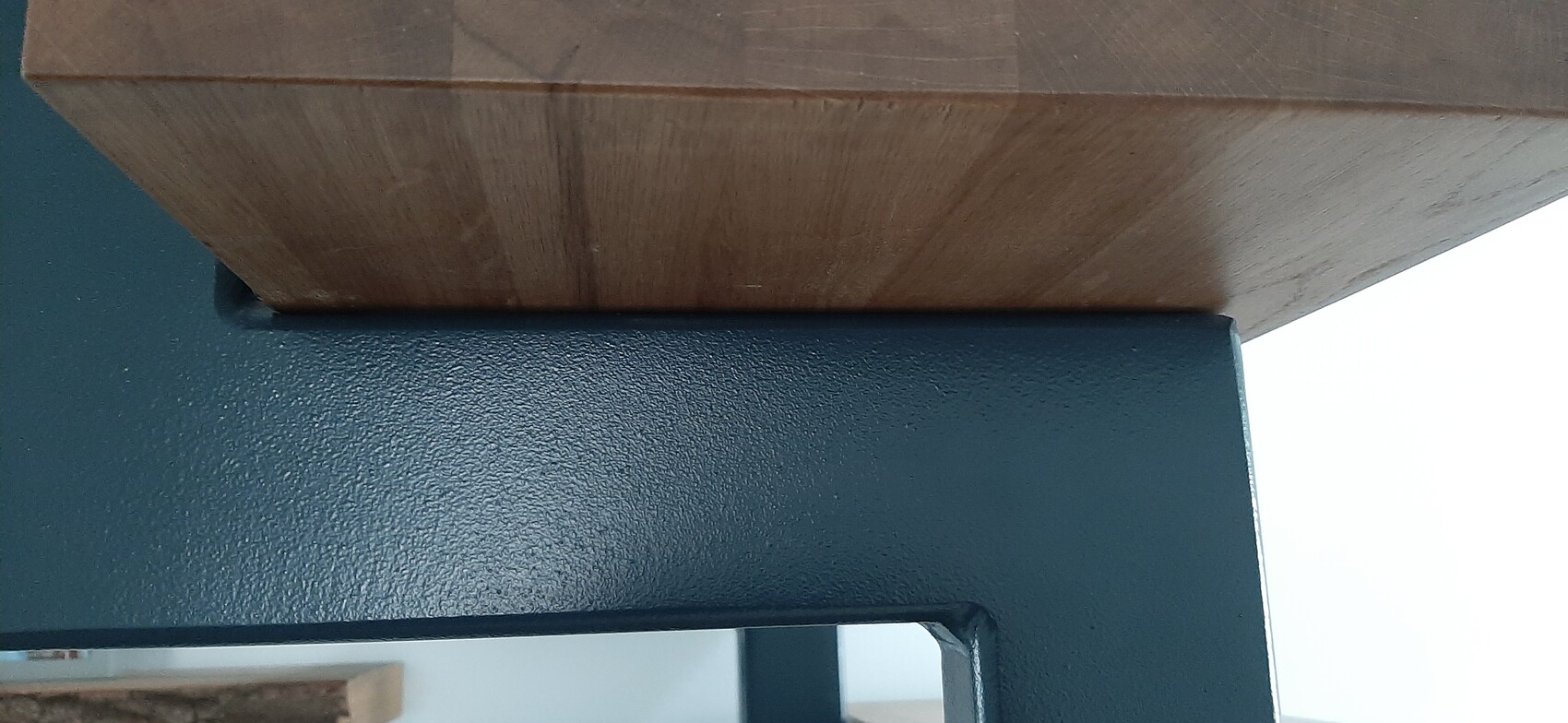
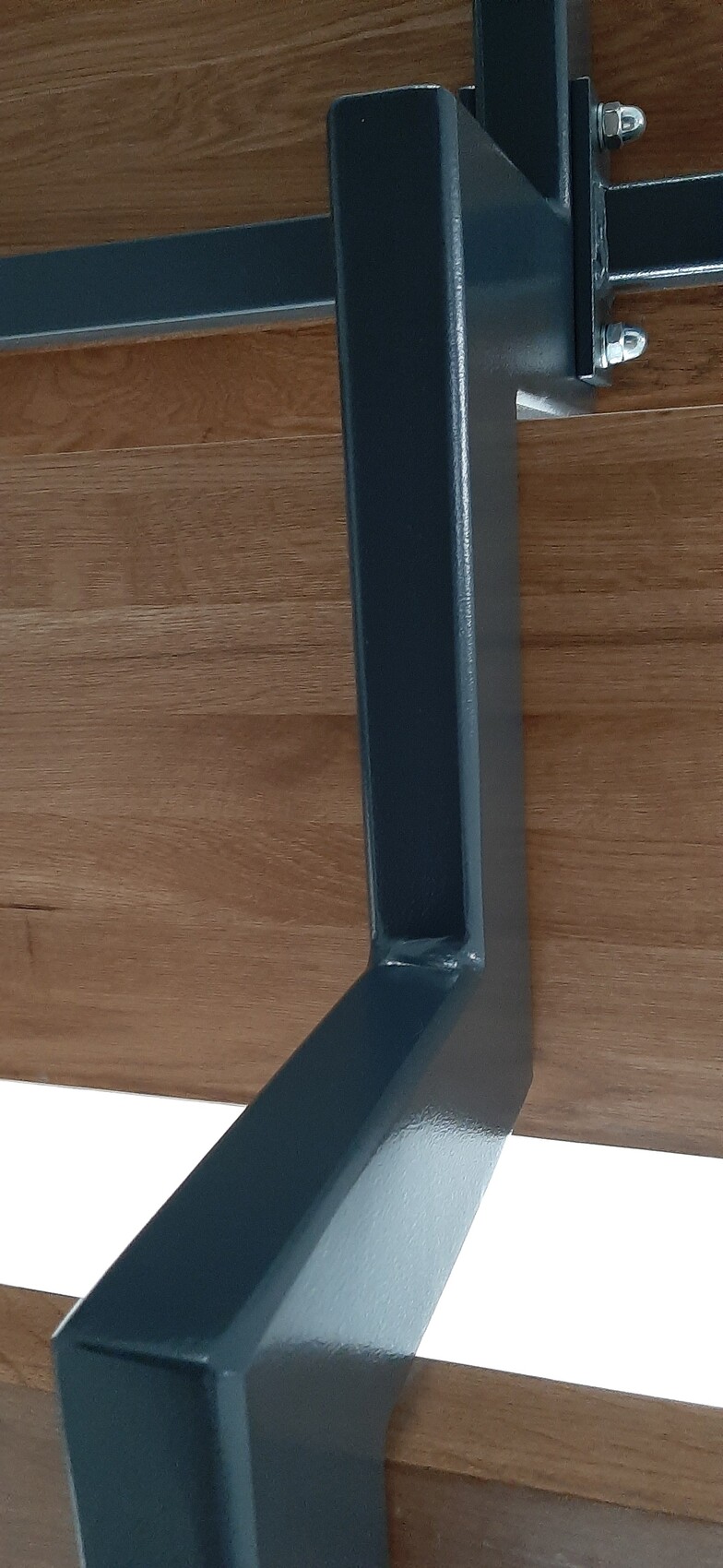
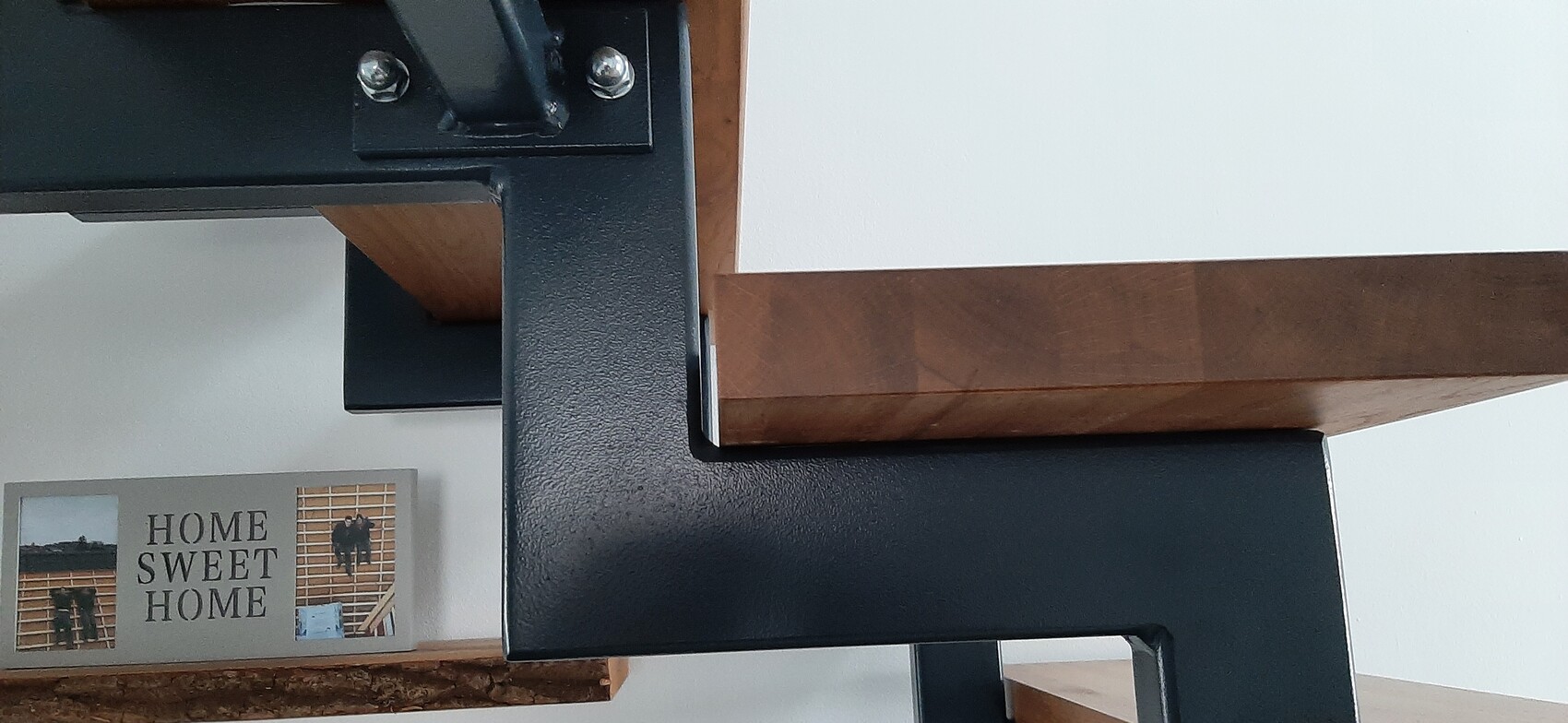
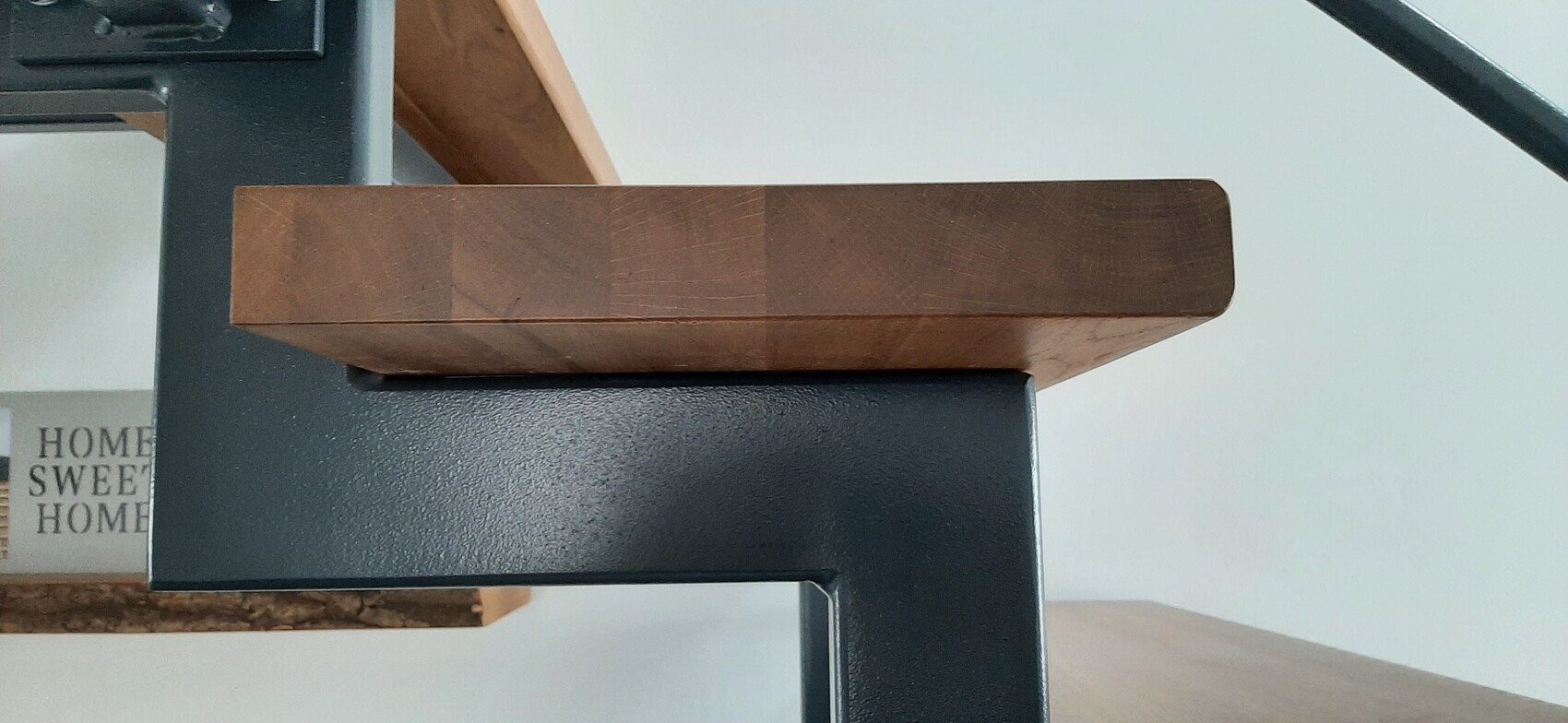
The steps have been oiled twice and the glued area was not scored or treated in any way. (We had noticed this with the first step.)
After the first step came loose, we reglued it. The second step is not completely detached yet but already loose. The adhesive sticks to the steel but not to the wood. What would you recommend now? I have attached pictures of the staircase construction. Of course, it is possible to screw the steps in place. However, we did not want to see screws from underneath. If we decide to screw them in now, is it possible to drill from below while keeping the steps in place?
Myrna_Loy schrieb:
Looks more like oak?Yes, of course, not beech but oak, treated with oil twice.M
Myrna_Loy18 Mar 2021 13:24Tx-25 schrieb:
Yes, of course, not beech, but oak, oiled twice.Either way, from a craftsmanship perspective, this is not a durable connection. You have too many materials with very different properties and multilayer systems. The adhesion could be somewhat better if the oil layer is removed – which is not easy with oiled wood. You would need to remove the oil from the wood using solvents or mechanically. But even then, you still face the problem of a material sandwich – wood expands and contracts depending on indoor conditions and contains acids; the adhesive can move slightly and may react with the acids in the wood; coated metal does not move at all. If you rigidly connect the steps to the metal with screws, cracks may occur. There are good reasons why traditional staircase builders design connections with some allowance for flexibility.M
Myrna_Loy18 Mar 2021 13:27What you see on the adhesive are the short wood fibers that were simply torn out. The adhesive apparently penetrated the oil well enough to reach the wood. However, as it dried and shrank, it just pulled the fibers out. I would say this cannot hold. A better bond could be achieved if the wood were coated, but that cannot be done effectively on just one side.
You have to imagine that the wooden step can expand or shrink in width by about 6% (6 percent). These are huge forces pulling on the adhesive joint. And you cannot prevent this – with coated wood, you only reduce the effect somewhat.
You have to imagine that the wooden step can expand or shrink in width by about 6% (6 percent). These are huge forces pulling on the adhesive joint. And you cannot prevent this – with coated wood, you only reduce the effect somewhat.

M
Myrna_Loy18 Mar 2021 13:34Tolentino schrieb:
Or drive elastic bushings into the wood and fit them onto pins in the metal (soldered?)?Yes, you can try solutions like that. But in the end, it’s just tinkering with a lot of effort to achieve a design.Similar topics