
Hello dear house-building experts,
I found a floor in a room of a recently purchased house that I am not happy with in its current condition. Unfortunately, it is inconsistent, with some areas appearing grayish and others showing a nice wood tone. There are no major damages. I assumed it was laminate flooring, so I thought replacement was the only option. Then I removed a profile strip and started to doubt that.
It doesn’t really look like what I would expect from typical laminate flooring. From the cross-section, it seems more like engineered hardwood flooring to me. Unfortunately, I am a complete beginner in this area and can only rely on information from Google.
Would it be possible to sand this floor with fine grit and treat it with hardwax oil to achieve a uniform, attractive appearance again?
Thank you and best regards
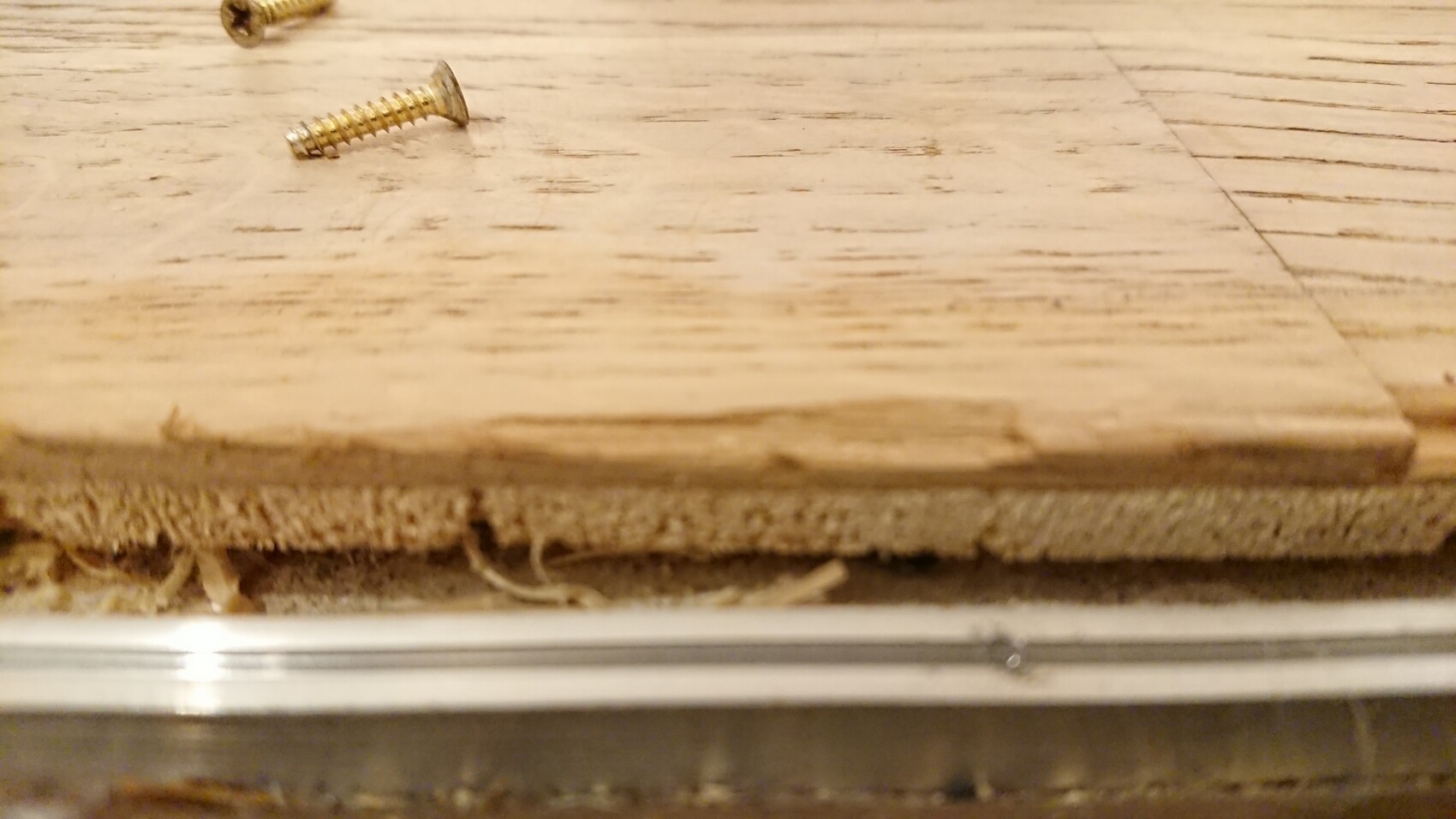
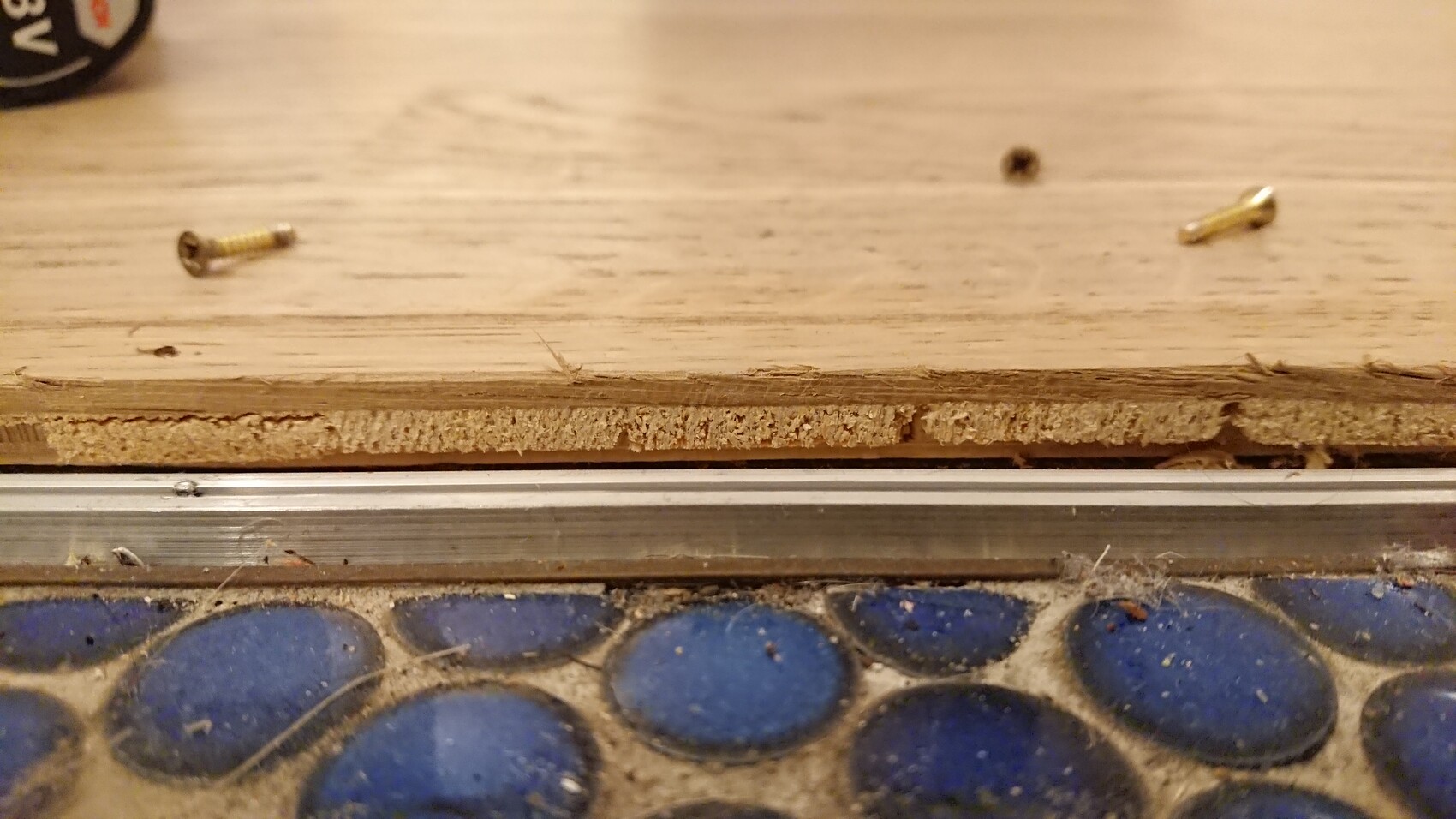
I found a floor in a room of a recently purchased house that I am not happy with in its current condition. Unfortunately, it is inconsistent, with some areas appearing grayish and others showing a nice wood tone. There are no major damages. I assumed it was laminate flooring, so I thought replacement was the only option. Then I removed a profile strip and started to doubt that.
It doesn’t really look like what I would expect from typical laminate flooring. From the cross-section, it seems more like engineered hardwood flooring to me. Unfortunately, I am a complete beginner in this area and can only rely on information from Google.
Would it be possible to sand this floor with fine grit and treat it with hardwax oil to achieve a uniform, attractive appearance again?
Thank you and best regards
P
pagoni202014 Jan 2021 00:50Oops… regarding your question about sanding by hand or with a machine:
You don’t actually need to sand away the wood itself, but rather remove or roughen up the existing finish or similar coating so the new material can adhere better. For that reason, sanding a small room by hand is possible, preferably along the grain. Of course, you could also use an orbital sander or similar tool. I would recommend not using sandpaper rougher than 120 grit, maybe even a bit finer.
Depending on the room (child’s room, study, etc.), I could also imagine using an opaque decorative wax right away, as there are some really nice colors available. In Scandinavia, you can find these in gray, white, light green, coffee tones… as I said, it depends on the room.
Osmo has renamed some of their products over time (older versions are still available online). Mine was called “opaque decorative wax” back then, but similar products are surely available from other manufacturers too. What I liked was that I didn’t have to sand and the final result.
Again, this is just my personal opinion and how I would do it based on my own experience. All other advice shared here is equally valid.
You don’t actually need to sand away the wood itself, but rather remove or roughen up the existing finish or similar coating so the new material can adhere better. For that reason, sanding a small room by hand is possible, preferably along the grain. Of course, you could also use an orbital sander or similar tool. I would recommend not using sandpaper rougher than 120 grit, maybe even a bit finer.
Depending on the room (child’s room, study, etc.), I could also imagine using an opaque decorative wax right away, as there are some really nice colors available. In Scandinavia, you can find these in gray, white, light green, coffee tones… as I said, it depends on the room.
Osmo has renamed some of their products over time (older versions are still available online). Mine was called “opaque decorative wax” back then, but similar products are surely available from other manufacturers too. What I liked was that I didn’t have to sand and the final result.
Again, this is just my personal opinion and how I would do it based on my own experience. All other advice shared here is equally valid.
P
pagoni202014 Jan 2021 14:14RAL5018 schrieb:
The idea of decorative wax sounds interesting. So I could, for example, brush on decorative wax in "oak." Then, as recommended, apply a clear hardwax oil on top. Would this work without sanding? As mentioned, there are no major damages visible... but if the surface before coating is uneven (partly grayish, partly more like beech), can I even out these differences with the decorative wax, or will they still show through? The difference lies between "transparent" and "opaque." The transparent type is similar to a glaze, so you can still see the original condition and the grain, which will make any grayish discoloration appear darker. Depending on the floor’s condition before or after sanding (if you decide to sand), this can look quite nice.
If you choose the "opaque" version, you might even skip sanding, if your current floor accepts it (a small test will show you); otherwise, sand lightly and apply with a roller as described. In the past, there were fewer but different "opaque" colors available from Osmo, and you can also mix them if you don’t like a single tone. From what I read, there are now options like "pebble," "silk," or "snow," which are fully opaque. You might still find others online; I once mixed mud gray with chocolate and ended up with a kind of cappuccino color...
I didn’t apply anything on top of that decorative wax layer—it served as the final finish, and that was never an issue in living areas (dining/living room).
Your mentioned decorative wax "oak" is probably "transparent," so more like a tint, meaning the grain and discolorations will still be visible depending on the shade.
icandoit schrieb:
I can only agree with pagoni2020. Sand along the grain direction. In my opinion, use a handheld belt sander starting with 120 grit, then do a test with the sealant. If sanding marks are still visible, sand again with finer grit (250). Okay, that sounds doable. Is a handheld orbital sander with a 180mm (7 inch) pad also suitable, or is that not ideal? I happen to have such a tool. How about the test? Won’t it be uneven if I do just one corner first? Assuming it looks good, do I just coat the rest, or how can I avoid an unattractive transition?
P
pagoni202014 Jan 2021 14:35You are not removing any wood. If you want to paint transparently over it, the surface should look relatively even in color. The "glaze" basically only alters the existing shade but remains mostly transparent.
P
pagoni202014 Jan 2021 14:54RAL5018 schrieb:
Is a hand sander with a 180mm (7 inch) disc also suitable?You get the best feel with a handheld sander, but you can proceed carefully. Of course, it makes more sense not to sand in circular motions or similar techniques, but everything should be doable for you. As I said, depending on the room, I would try it this way and then see how it turns out. For some rooms, I would paint solidly right away anyway, but that is a matter of personal taste. If you already have 180mm (7 inch) discs, it’s worth a try since the floor already has gray spots as you mentioned. These color variations will still be visible after staining, but wood is never completely uniform anyway. In the end, it’s a no risk, no fun situation, and in the worst case, you’ll have to sand, which you planned to do anyway. So giving it a try doesn’t involve any risk.
RAL5018 schrieb:
Then just paint the rest or how do I avoid an unattractive transition?You will see quite quickly how it looks, and since a stain isn’t like a painted surface and you can see the wood grain and any discoloration, there shouldn’t be a visible transition. Try it in a spot where furniture will be placed or similar. If you like it, you can always apply a second coat of stain, which will probably eliminate any visible transitions if they occur.
Similar topics