
ᐅ Window Installation – Using Expanding Foam Tape: Quick Fix or Worth the Wait?
Created on: 19 Dec 2020 08:04
A
annab377
Hello everyone,
Our general contractor actually managed to schedule a window installation appointment last week. The German-speaking window installer explained to me that they apply an external sealing tape / swelling tape. Due to the 2-3°C (36-37°F) temperature, it expands rather slowly. They started on Wednesday and by Thursday night it was supposed to have fully expanded. They also used a warm air blower because, according to him, they want to avoid the window installation foam getting underneath the swelling tape afterward. That’s why the swelling tape should be fully expanded (up to the masonry) before they can foam from the inside.
Yesterday evening, I was able to take photos of two different windows (doors) on the ground floor from the outside 🤨
According to the photos, it looks like they cut the swelling tape too short at its supposed expansion height. You can see the curves on the surface that should actually press against the window reveal, right? Doesn’t the installer use a uniform swelling tape with the same thickness for this?
The swelling tape is the gray one (in the front, since the photo is taken from outside) and behind it is the slightly different violet-gray of the installation foam.
Should I wait until next week, when a significant temperature increase of 8-9°C (14-16°F) is expected, and see if the swelling tape fully closes and contacts the window reveal everywhere? Or should I request fully closed swelling tape in all areas before final acceptance? That would probably require them to remove the affected windows again, right? Not all windows are like this. Most of the windows have swelling tape that sits completely against the reveal from the outside. I can’t see anything inside anymore because after the foam, a black adhesive tape (possibly with a cotton surface?) was applied over the joints.
What do the experts here think? I don’t want to create unnecessary thermal bridges due to such issues. Especially our window expert @11ant can surely tell me what is going on here.
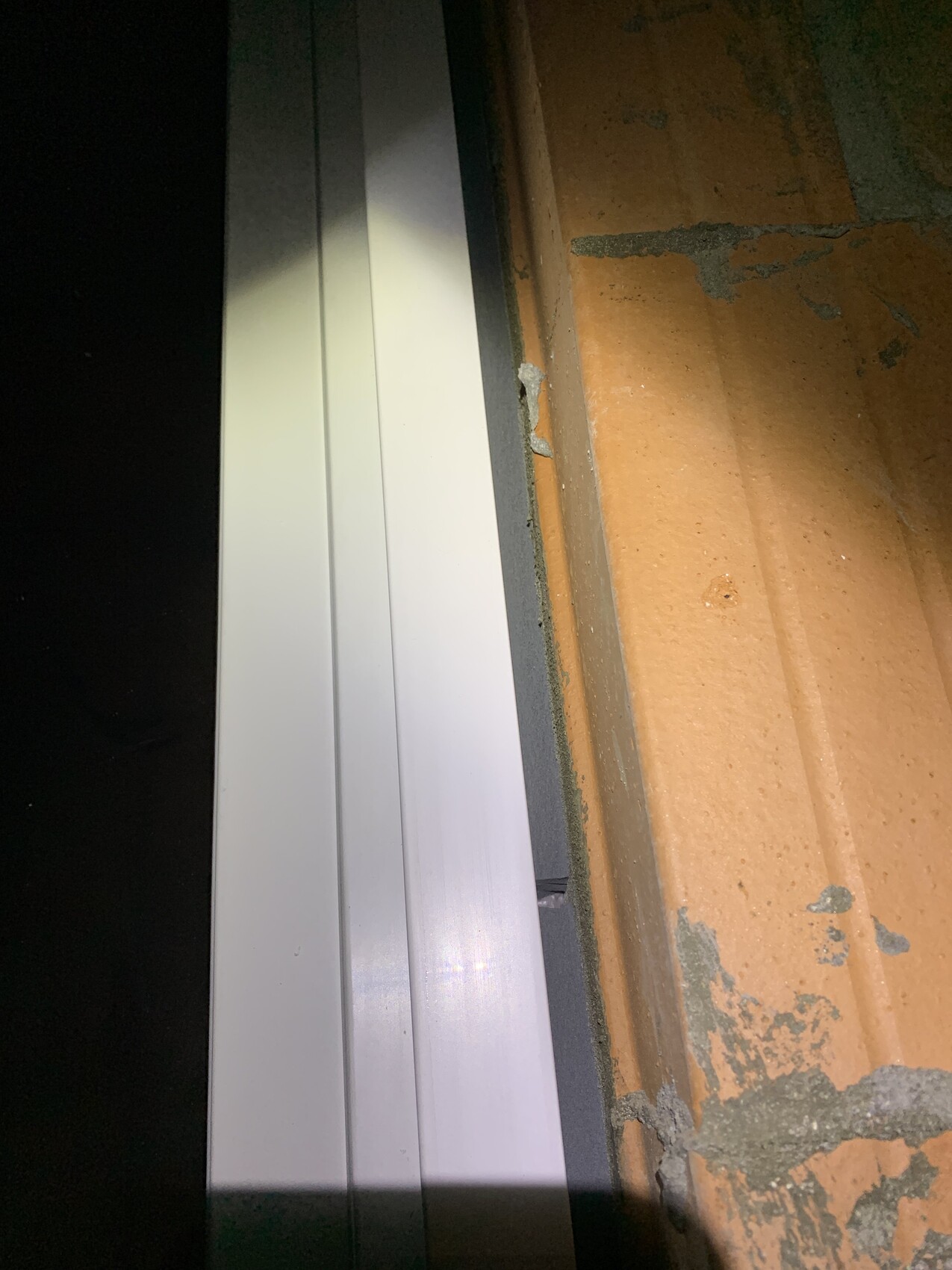
In the third picture, it looks like the swelling tape was simply cut too short in length, leaving a roughly 1 cm (0.4 inches) tall gap in the tape. There it has expanded well and presses against the window reveal. Should I just foam that small gap closed? But the waves and curves on the swelling tape surface, which unfortunately are largely not in contact with the window reveal, seem outside the tolerance range, don’t they?
Thank you very much for your answers.
Have a great weekend and an early Merry Christmas.
Annab377
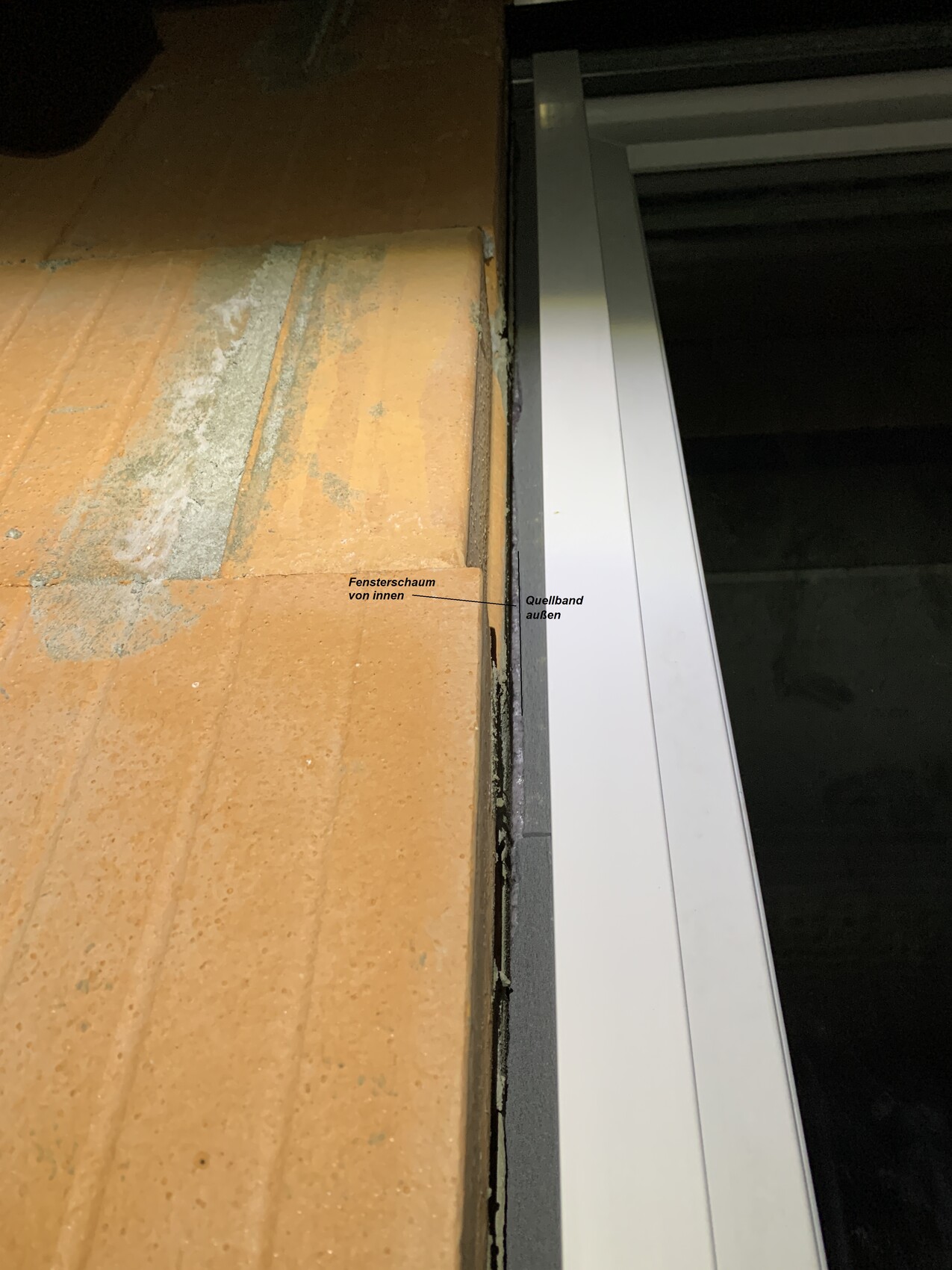
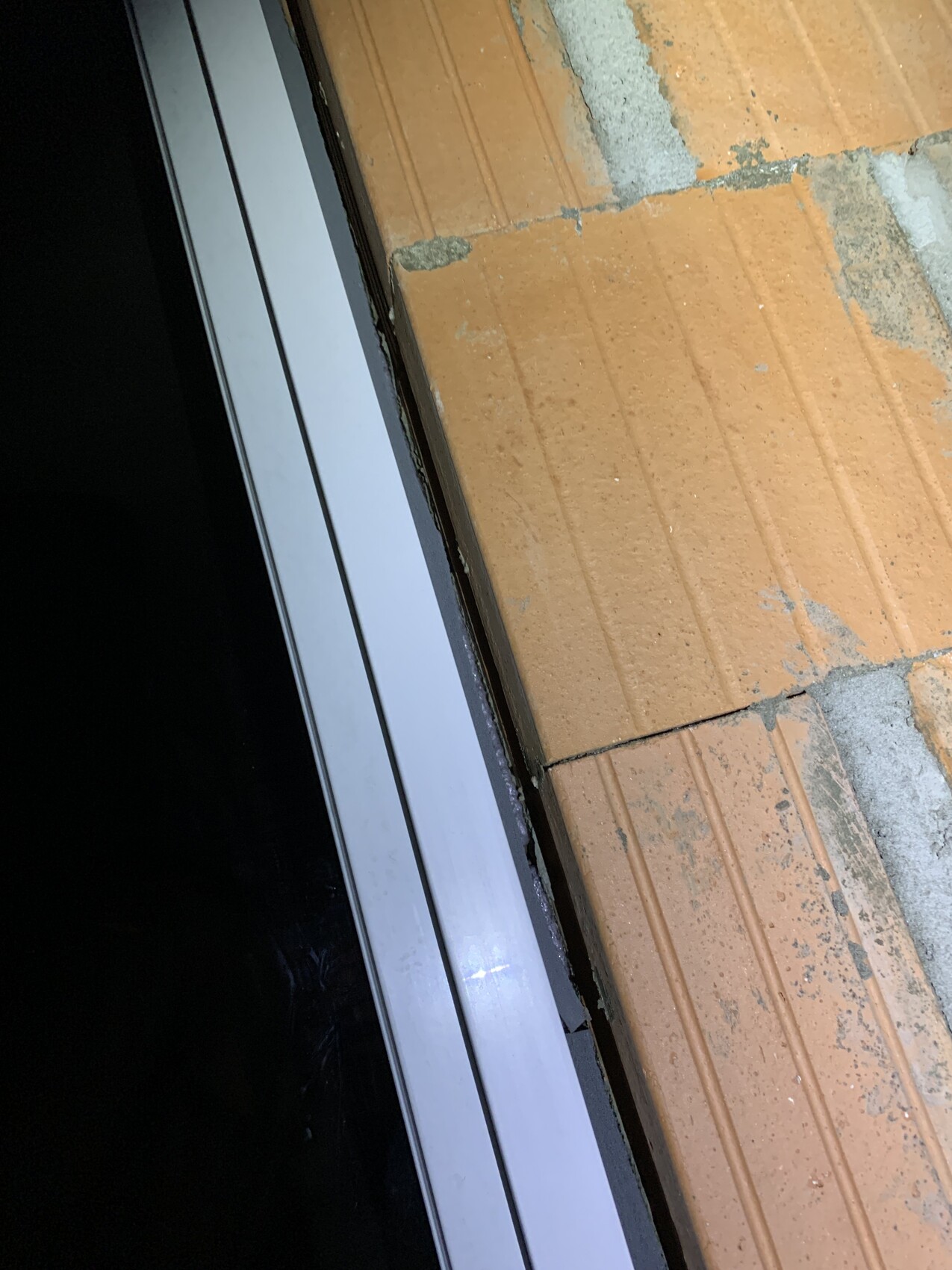
Our general contractor actually managed to schedule a window installation appointment last week. The German-speaking window installer explained to me that they apply an external sealing tape / swelling tape. Due to the 2-3°C (36-37°F) temperature, it expands rather slowly. They started on Wednesday and by Thursday night it was supposed to have fully expanded. They also used a warm air blower because, according to him, they want to avoid the window installation foam getting underneath the swelling tape afterward. That’s why the swelling tape should be fully expanded (up to the masonry) before they can foam from the inside.
Yesterday evening, I was able to take photos of two different windows (doors) on the ground floor from the outside 🤨
According to the photos, it looks like they cut the swelling tape too short at its supposed expansion height. You can see the curves on the surface that should actually press against the window reveal, right? Doesn’t the installer use a uniform swelling tape with the same thickness for this?
The swelling tape is the gray one (in the front, since the photo is taken from outside) and behind it is the slightly different violet-gray of the installation foam.
Should I wait until next week, when a significant temperature increase of 8-9°C (14-16°F) is expected, and see if the swelling tape fully closes and contacts the window reveal everywhere? Or should I request fully closed swelling tape in all areas before final acceptance? That would probably require them to remove the affected windows again, right? Not all windows are like this. Most of the windows have swelling tape that sits completely against the reveal from the outside. I can’t see anything inside anymore because after the foam, a black adhesive tape (possibly with a cotton surface?) was applied over the joints.
What do the experts here think? I don’t want to create unnecessary thermal bridges due to such issues. Especially our window expert @11ant can surely tell me what is going on here.
In the third picture, it looks like the swelling tape was simply cut too short in length, leaving a roughly 1 cm (0.4 inches) tall gap in the tape. There it has expanded well and presses against the window reveal. Should I just foam that small gap closed? But the waves and curves on the swelling tape surface, which unfortunately are largely not in contact with the window reveal, seem outside the tolerance range, don’t they?
Thank you very much for your answers.
Have a great weekend and an early Merry Christmas.
Annab377
Jann St schrieb:
If the sealing tape detaches from the reveal, it means it wasn’t secured properly, or the gap was too wide for the tape thickness.
If this only happens in small sections, I don’t see it as critical. Yes, that is the case in some areas. Hmm, the question is whether this can be disputed? If so, how much of the remaining payment of the total sum can be negotiated? Because you can’t really fix it anymore—unless you fully remove the window to replace the sealing tape. But that probably isn’t reasonable given the circumstances.
@Hausbau0815, did you really pay several thousand euros just for the various sealing processes?
That’s exactly the question with my windows right now. I haven’t paid 100% of the amount yet. Can I say “Wrong sealing tape because it isn’t firmly attached everywhere, and in some places it easily detaches from the reveal. I want to withhold part of the payment”?
I mean, the airtightness is actually ensured by the exterior render anyway. So a small gap shouldn’t be that critical. And if I end up paying a few extra cents per year in heating costs because of that gap, I’ll negotiate a sum that I don’t want to pay. Does that sound like a plan?
Hello,
when it comes to technical defects, there is no proportionality, but the contractor can repair the defect with an equivalent technical solution. I think he could at least improve the sealing from the inside using a sealing tape (not the one that goes into the joint, but the classic one that is applied to the wall and the window). That would make it airtight.
If the plaster cracks there, you will have a problem again. Also, regarding drafts, it’s less about the money spent on heating costs and more about overall comfort.
I would definitely suggest issuing a defect notice and withholding payment. I don’t know the specifics of your contract, but generally, withholding 10% as a “performance bond” is reasonable.
If you need more detailed help, we should discuss it further.
Best regards,
Jann
when it comes to technical defects, there is no proportionality, but the contractor can repair the defect with an equivalent technical solution. I think he could at least improve the sealing from the inside using a sealing tape (not the one that goes into the joint, but the classic one that is applied to the wall and the window). That would make it airtight.
If the plaster cracks there, you will have a problem again. Also, regarding drafts, it’s less about the money spent on heating costs and more about overall comfort.
I would definitely suggest issuing a defect notice and withholding payment. I don’t know the specifics of your contract, but generally, withholding 10% as a “performance bond” is reasonable.
If you need more detailed help, we should discuss it further.
Best regards,
Jann
 Hausbau08154 Jan 2021 18:42
annab377 schrieb:
Yes, that is partly the case. Hmm, the question is whether this can be challenged? If so, what portion of the remaining total amount can be negotiated? Because it can no longer be changed — except by completely removing the window to replace the sealing tape. However, that is likely unreasonable in terms of proportionality. You can definitely challenge this. I would not settle for less. A seal should be a proper seal, not just an attempt at one.
Here is my defect notice:
I hereby report defects in the installation and sealing of the windows.
Reason:
The installation of the windows must comply with the current energy saving regulations.
The sealing must be applied to the window before installation.
The space between the window frame and the wall must be fully insulated for thermal and soundproofing purposes, i.e., without gaps.
“According to regulations, the gap between the sealing layers must also be completely filled with a thermal insulating material (insulation).”
Installation must be carried out by a professional company that provides the homeowner with a contractor declaration confirming proper installation and compliance with the energy saving regulations.
Deadline for defect correction: no later than xx.xx.xxxx
Hausbau08154 Jan 2021 18:47annab377 schrieb:
@Hausbau0815 did you really pay several thousand euros just for the multiple waterproofing steps?
That’s the question I have regarding my windows. I haven’t paid 100% of the amount yet. Can I say, “Wrong sealing tape, because it’s not firm/hard everywhere and detaches easily from the reveal in some places. I want to withhold part of the payment”?
I mean, the airtightness is basically ensured by the exterior plaster anyway. So a small gap shouldn’t be that critical. And if I end up having a few cents more in heating costs per year because of the gap, I’m negotiating not to pay a part of the amount for that. Does that sound like a plan?No, of course I didn’t pay that, the general contractor did. As long as you haven’t accepted (taken over) the windows and their sealing, they are responsible for making sure everything is defect-free. This is not just about a few cents in heating costs, but about condensation and mold growth inside the building, which are serious problems. You have the right to withhold twice the estimated cost for fixing the defects.
 Schimi17914 Jan 2021 21:34
Hausbau0815 schrieb:
Photos 1 to 3 show the current waterproofing. We also have Gealan. Do you have the "Realwood" finish or the classic one with the texture?
Hausbau08154 Jan 2021 21:39Schimi1791 schrieb:
We also use GEALAN. Do you have the "Realwood" finish or the classic one with the texture?I can’t even tell you that. I only know that it looks the way it’s supposed to now, unlike before.
Similar topics