
Hello everyone, we built our house four years ago and now need help with a problem involving a damp wall.
Since last year, we have noticed small mold spots in the office along the lower part of the wall, as you can see in these pictures:
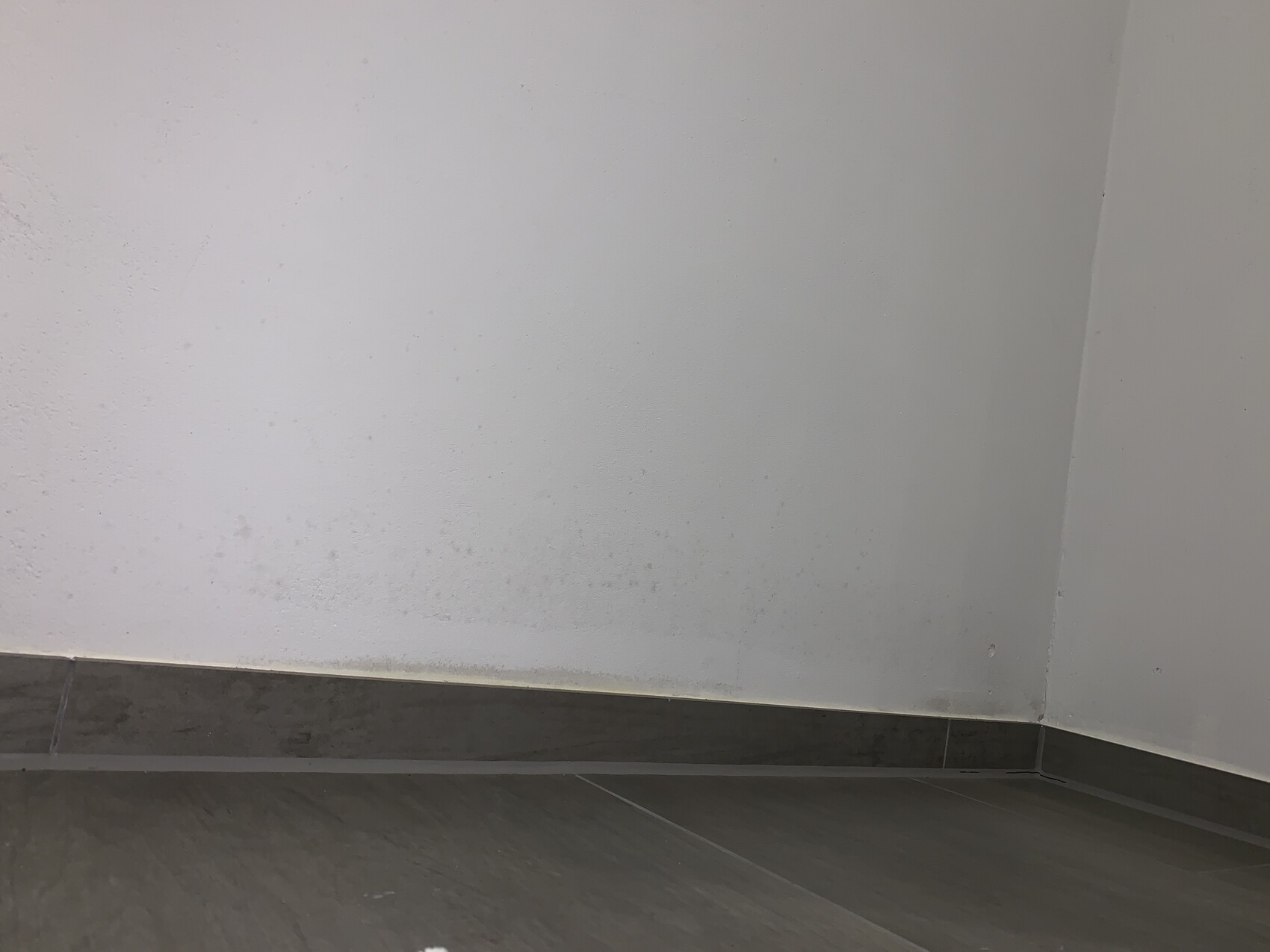
We initially thought the issue was due to insufficient ventilation on our part.
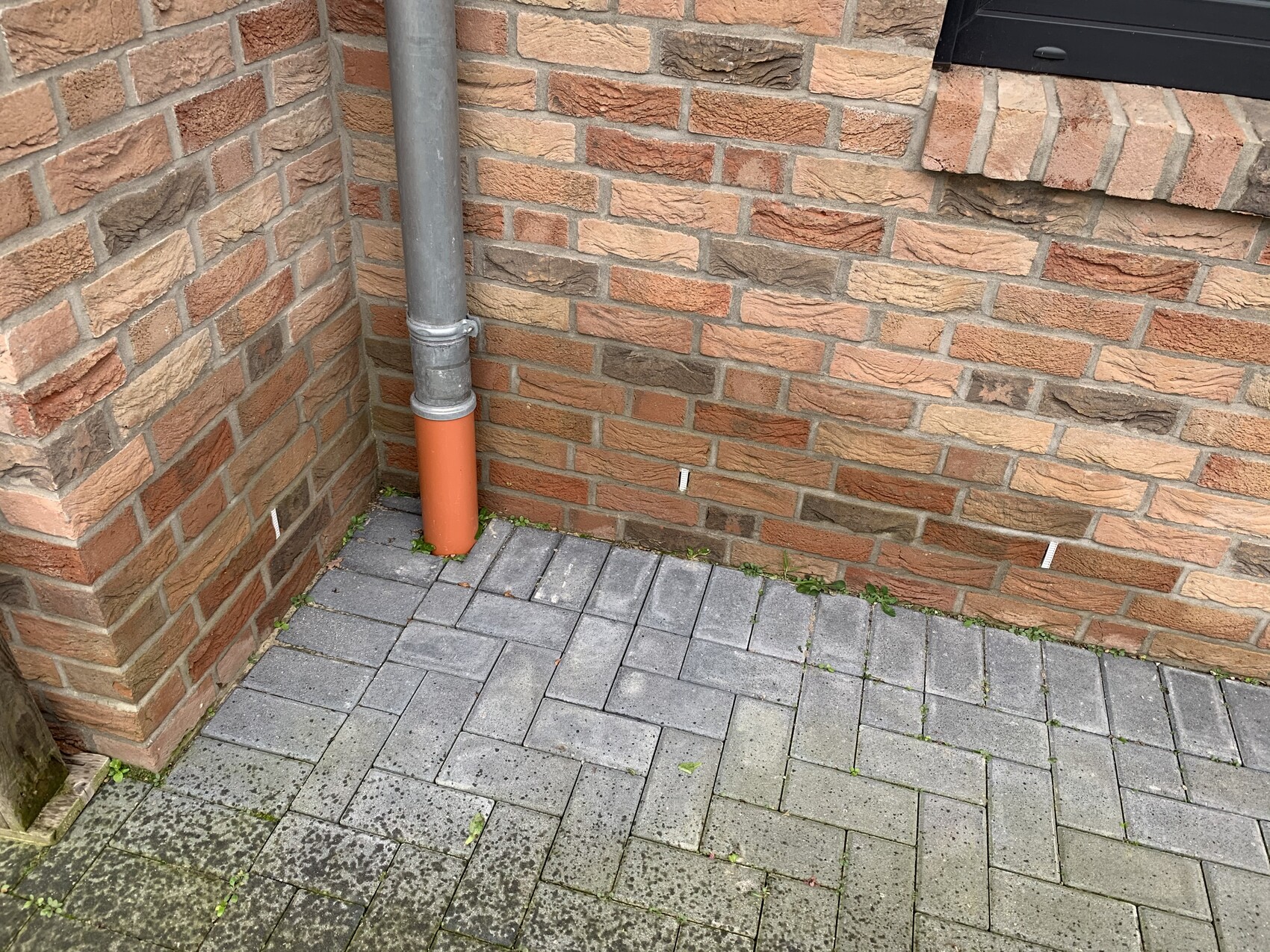
For the past one and a half months, we have also noticed that the outside wall is damp, as shown here:
My first thought was that there might be a problem with the drainage, so I flushed the pipes using a drain cleaning hose from Kärcher.
However, the water never backed up into or over the gutter, and I did not feel any resistance while flushing.
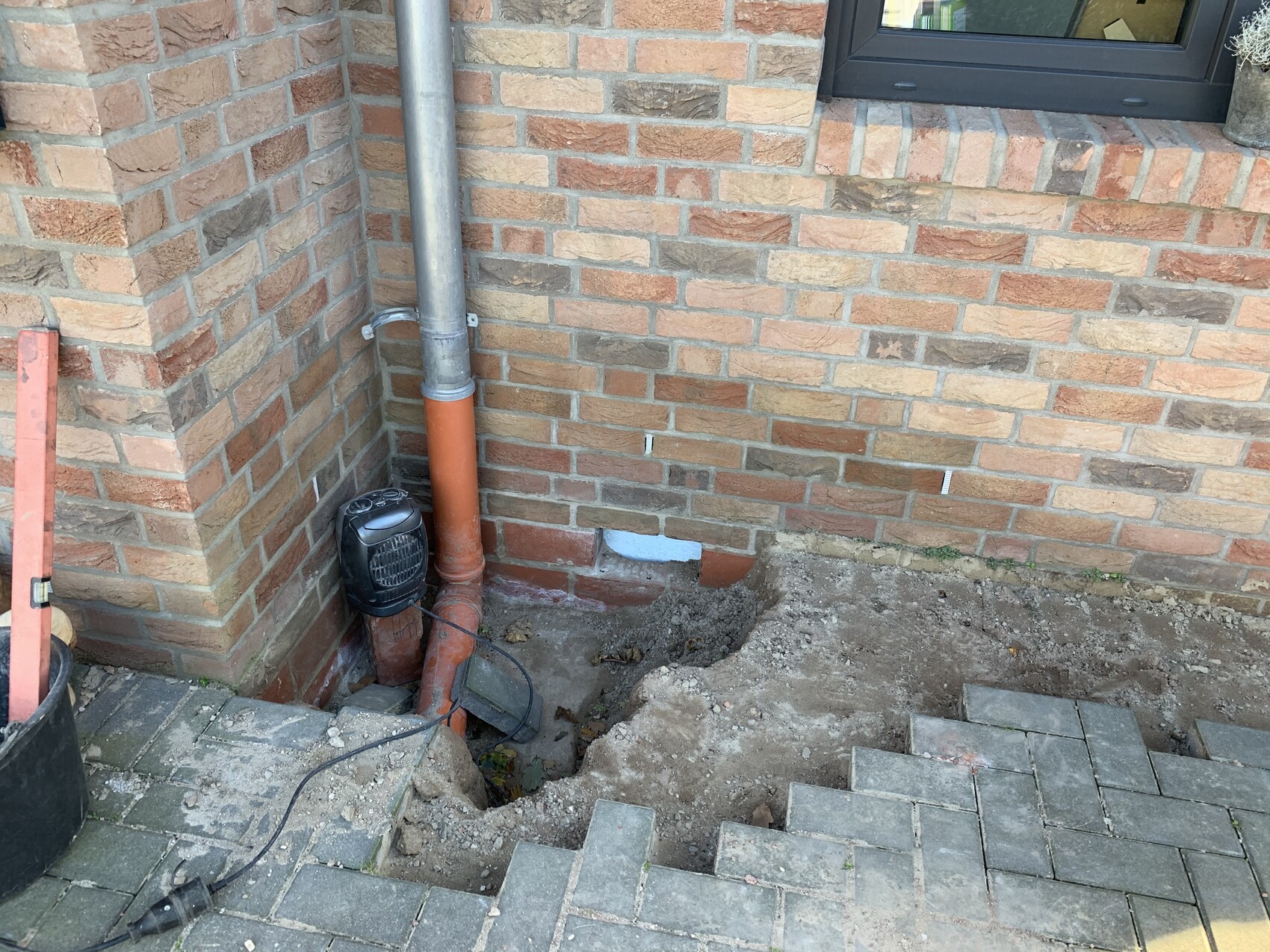
After two weeks without rain, the damp wall issue did not improve, so I uncovered the underground drainage pipe in the corner and found it to be intact and sealed:
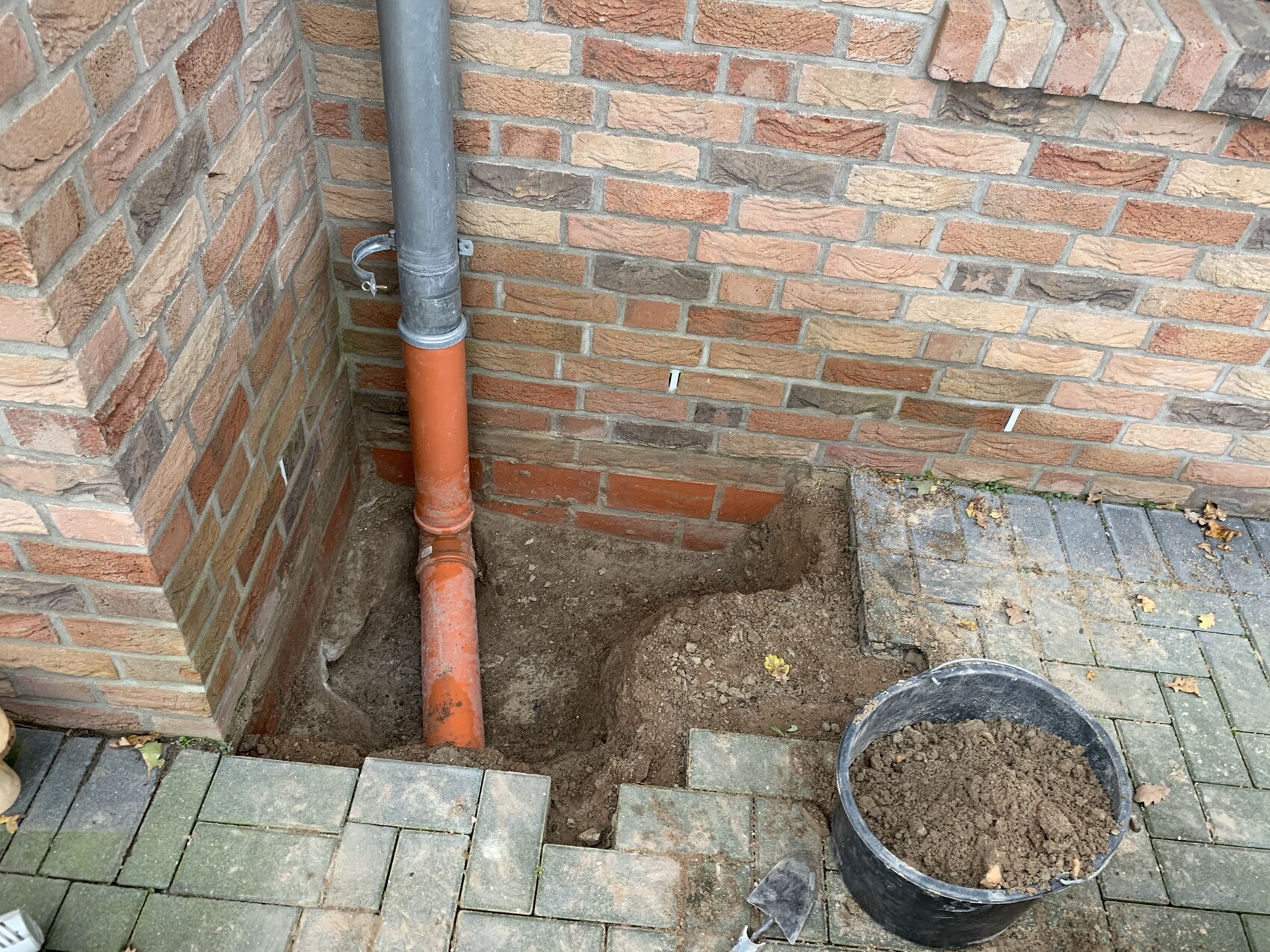
I poured water from above into the downpipe for two hours, and no water escaped anywhere.
A neighbor told me I had made two errors with the pipes, connecting them the wrong way around and using the wrong angle fitting.
However, he said that this could not explain the damp wall problem.
He suspected that the moisture might be coming either from the roof (possibly a damaged roof tile) or from the ground (due to missing or faulty waterproofing on the masonry).
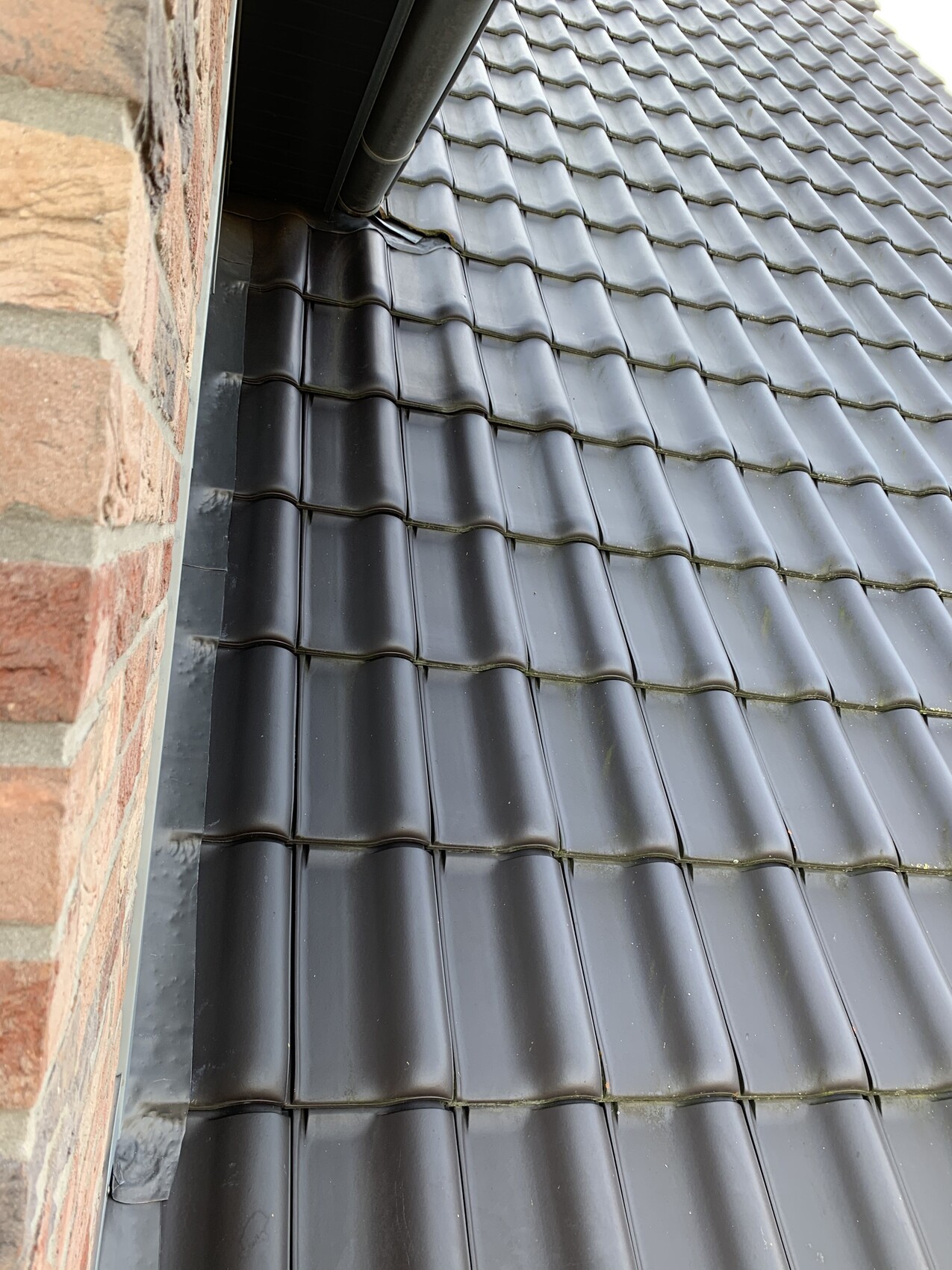
As far as we can tell, the roof is in good condition:
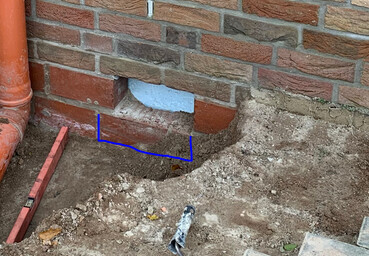
The builder sent someone to remove a stone from the wall to check whether the waterproofing was installed correctly:
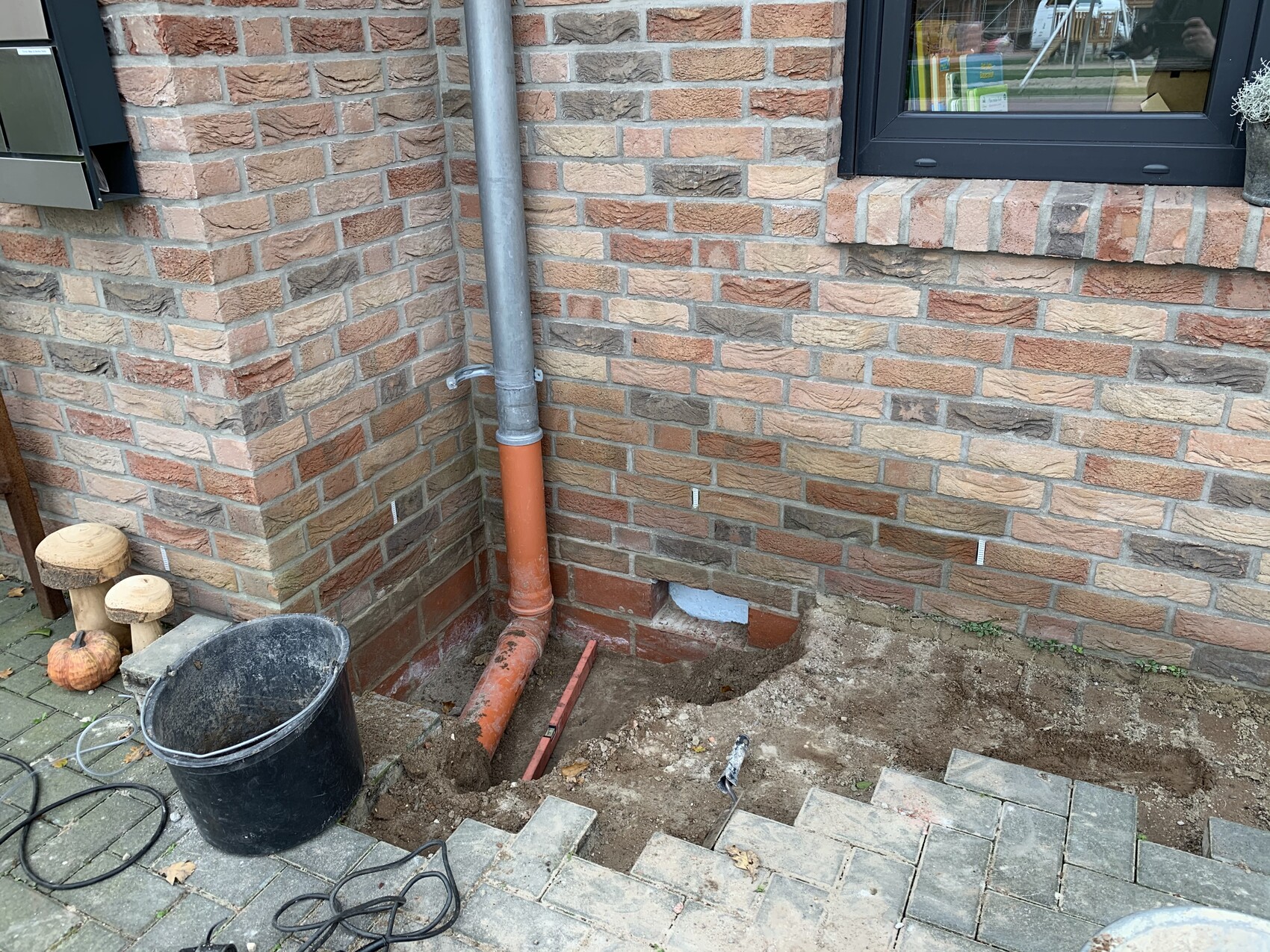
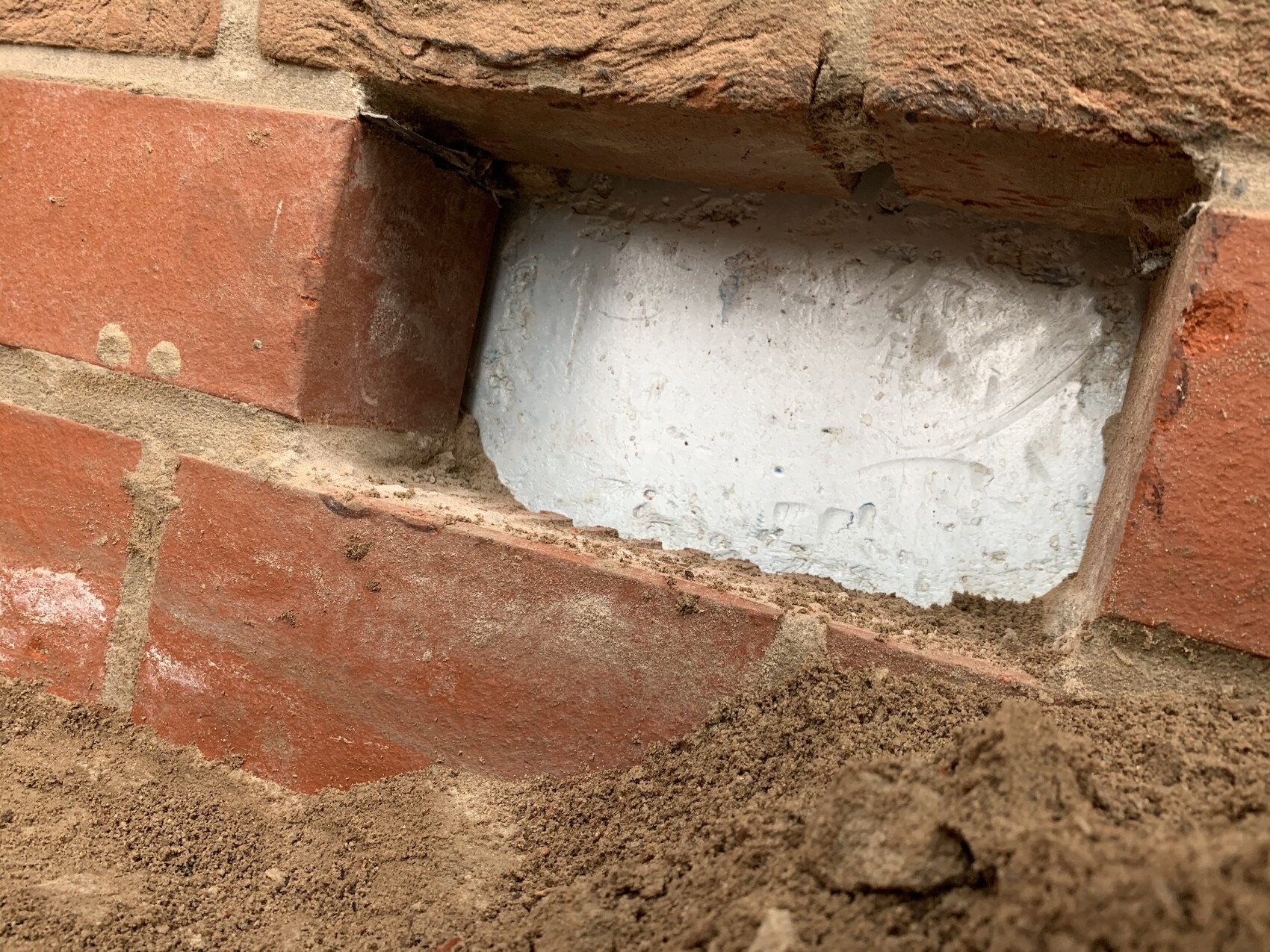
They saw that there is a membrane on the red brick, but they did not have an explanation for the source of the water and suspected it might be coming from the downpipe.
They said they could not do more for us and recommended that we hire a building inspector.
Unfortunately, this response was not very helpful to us since the problem persists and we do not know whether we caused it ourselves.
Also, hiring an inspector would likely be expensive, and we would have to pay if the problem turned out to be due to an installation error on our part in the drainage system.
Inside that area, there is no water connection, only underfloor heating, and the water pressure in the building has remained stable at 1.6 bar for a long time.
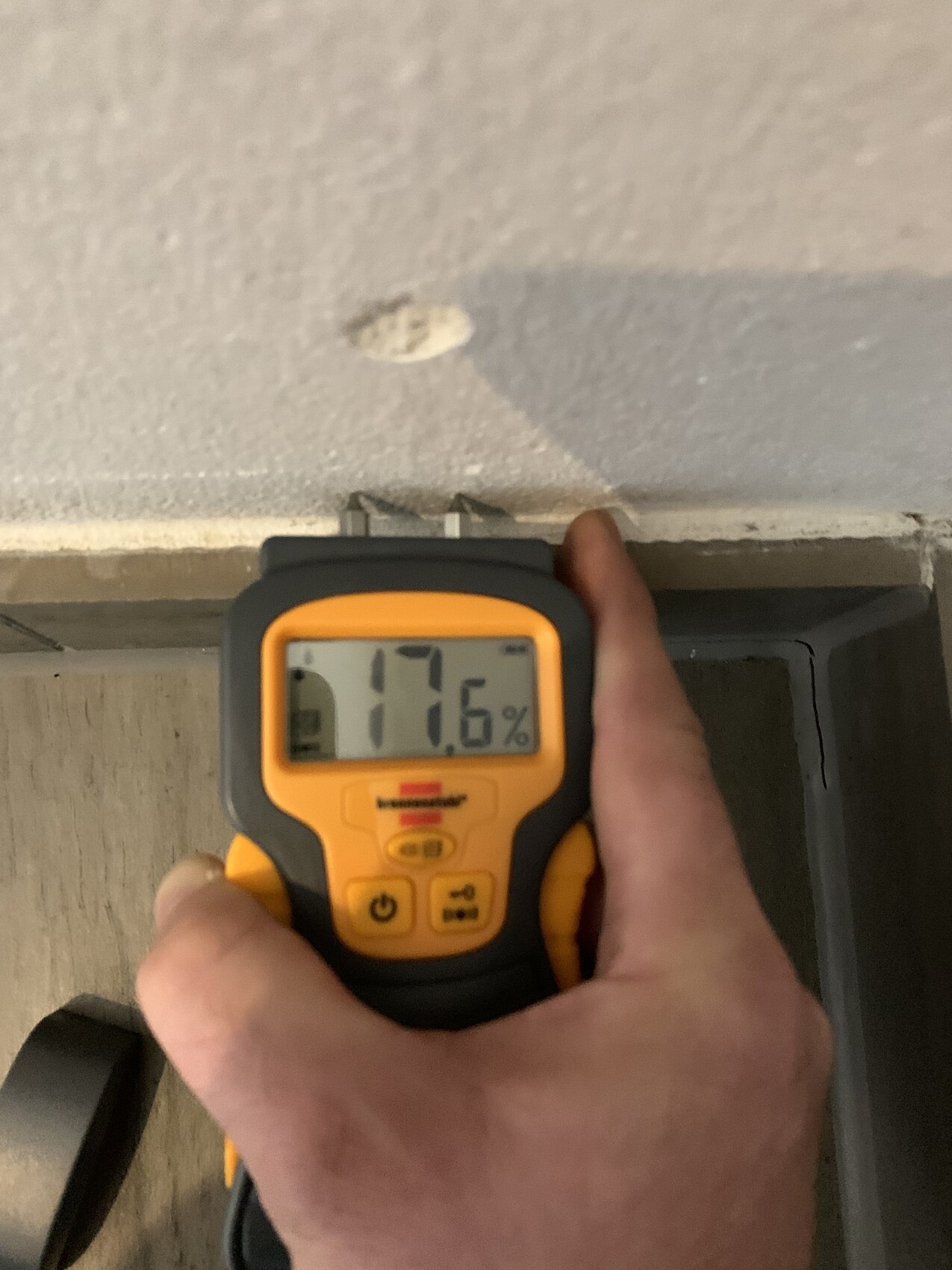
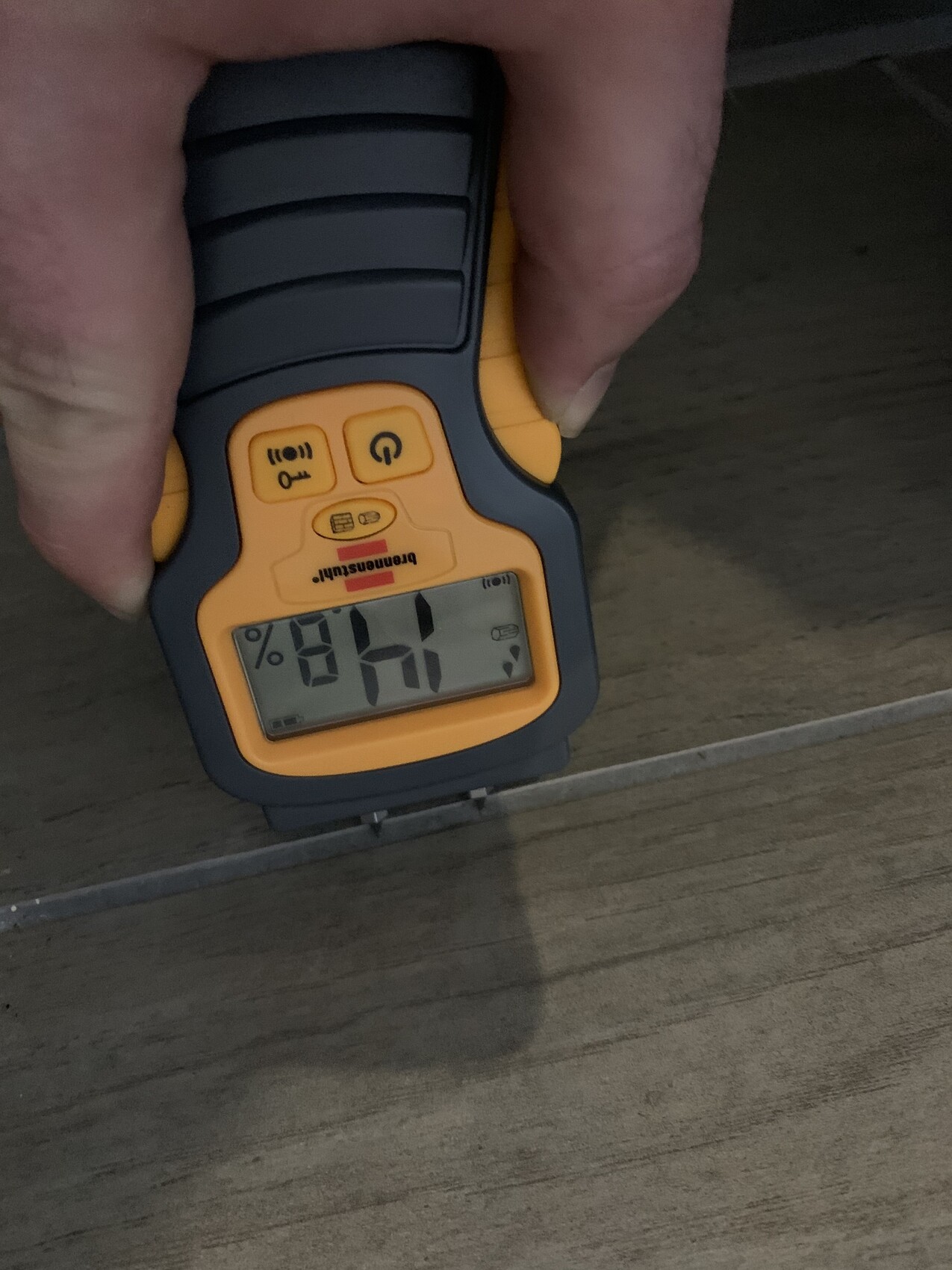
As you can see here, the wall and tiles (only in the corner) are damp:
What is also strange is that below the downpipe there is cement with a slope towards the house:
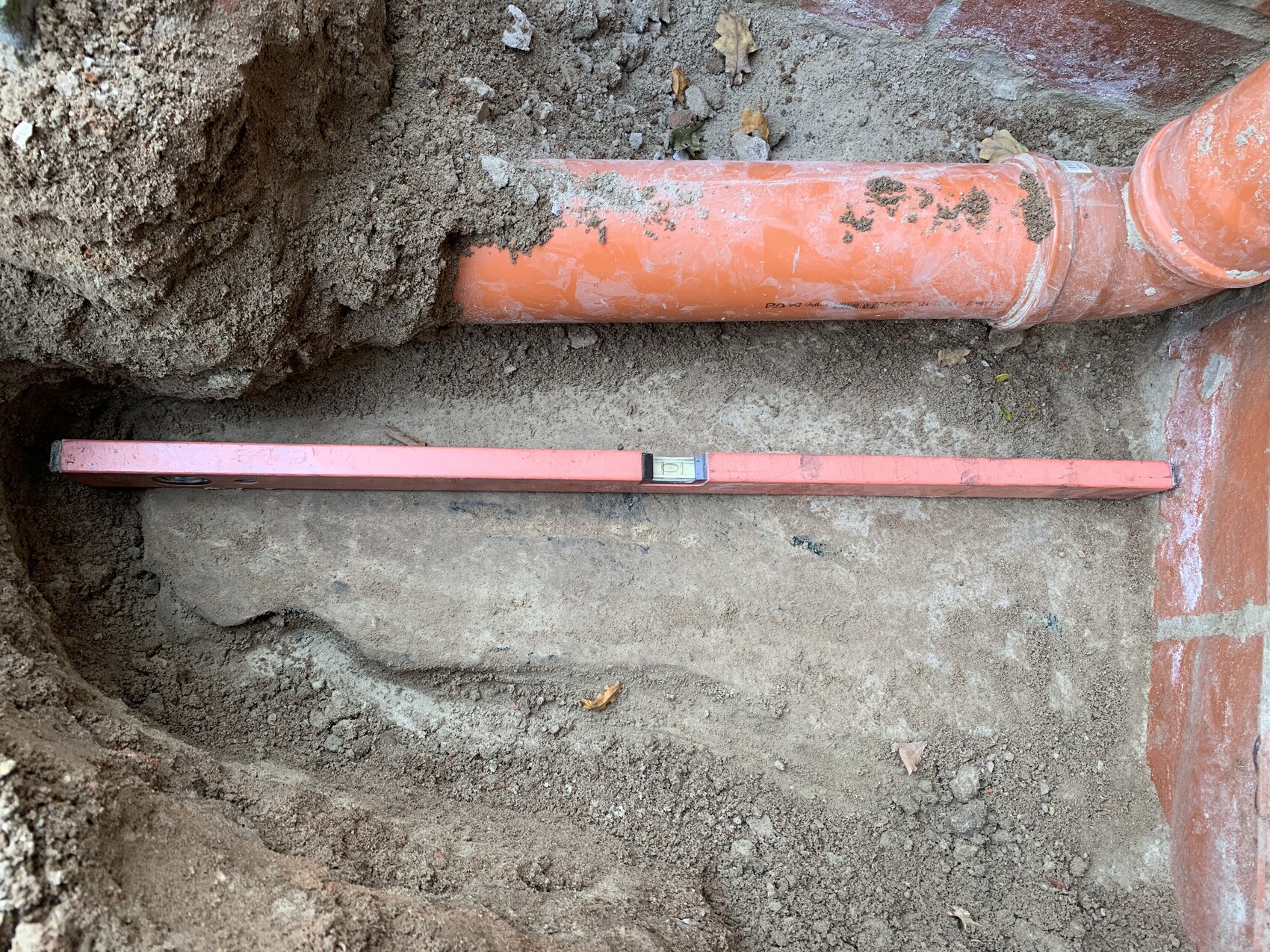
We were told that this can happen sometimes; although it is not ideal, it should not explain the dampness in the wall since everything is now exposed.
The hole has been open for two weeks, and no rainwater has accumulated there in one day (the spot is also under a roof overhang).
I also tried drying the wall with a fan heater, which only helped to a limited extent; after one day the wall was damp again.
What do you think—is the moisture coming from the soil due to missing or faulty waterproofing of the masonry?
We would appreciate any help or ideas as we are running out of options.
Since last year, we have noticed small mold spots in the office along the lower part of the wall, as you can see in these pictures:
We initially thought the issue was due to insufficient ventilation on our part.
For the past one and a half months, we have also noticed that the outside wall is damp, as shown here:
My first thought was that there might be a problem with the drainage, so I flushed the pipes using a drain cleaning hose from Kärcher.
However, the water never backed up into or over the gutter, and I did not feel any resistance while flushing.
After two weeks without rain, the damp wall issue did not improve, so I uncovered the underground drainage pipe in the corner and found it to be intact and sealed:
I poured water from above into the downpipe for two hours, and no water escaped anywhere.
A neighbor told me I had made two errors with the pipes, connecting them the wrong way around and using the wrong angle fitting.
However, he said that this could not explain the damp wall problem.
He suspected that the moisture might be coming either from the roof (possibly a damaged roof tile) or from the ground (due to missing or faulty waterproofing on the masonry).
As far as we can tell, the roof is in good condition:
The builder sent someone to remove a stone from the wall to check whether the waterproofing was installed correctly:
They saw that there is a membrane on the red brick, but they did not have an explanation for the source of the water and suspected it might be coming from the downpipe.
They said they could not do more for us and recommended that we hire a building inspector.
Unfortunately, this response was not very helpful to us since the problem persists and we do not know whether we caused it ourselves.
Also, hiring an inspector would likely be expensive, and we would have to pay if the problem turned out to be due to an installation error on our part in the drainage system.
Inside that area, there is no water connection, only underfloor heating, and the water pressure in the building has remained stable at 1.6 bar for a long time.
As you can see here, the wall and tiles (only in the corner) are damp:
What is also strange is that below the downpipe there is cement with a slope towards the house:
We were told that this can happen sometimes; although it is not ideal, it should not explain the dampness in the wall since everything is now exposed.
The hole has been open for two weeks, and no rainwater has accumulated there in one day (the spot is also under a roof overhang).
I also tried drying the wall with a fan heater, which only helped to a limited extent; after one day the wall was damp again.
What do you think—is the moisture coming from the soil due to missing or faulty waterproofing of the masonry?
We would appreciate any help or ideas as we are running out of options.
N
Nepokat91129 Oct 2019 15:45First of all, thank you very much for the replies.
@Mottenhausen
The brickwork is directly against the paving, without a drainage membrane.
On the other side of the house, only the first layer of bricks is slightly damp here.
Now the question is: if this is caused by the absence of a drainage membrane, bitumen coating, etc., is this a mistake on our part, or is it part of the house construction and should have been completed by the builder regardless of the fact that we did the paving ourselves?
@danixf
There is no pipe installation on this side of the house; those are located on the left side of the front door where there is also a downpipe, and we have no problems there.
@guckuck2
You are right, the construction is anything but professional, but I already mentioned that.
I will definitely fix this, but I am confident that it is not the issue since it is and was watertight.
@Lumpi_LE
My neighbour told me that I should remove another brick below the one that has already come loose to check if there is a membrane underneath.
Do you agree with this advice?
Do you maybe have a link where I can check whether all protective measures to prevent moisture damage to the wall have been taken?
@Mottenhausen
The brickwork is directly against the paving, without a drainage membrane.
On the other side of the house, only the first layer of bricks is slightly damp here.
Now the question is: if this is caused by the absence of a drainage membrane, bitumen coating, etc., is this a mistake on our part, or is it part of the house construction and should have been completed by the builder regardless of the fact that we did the paving ourselves?
@danixf
There is no pipe installation on this side of the house; those are located on the left side of the front door where there is also a downpipe, and we have no problems there.
@guckuck2
You are right, the construction is anything but professional, but I already mentioned that.
I will definitely fix this, but I am confident that it is not the issue since it is and was watertight.
@Lumpi_LE
My neighbour told me that I should remove another brick below the one that has already come loose to check if there is a membrane underneath.
Do you agree with this advice?
Do you maybe have a link where I can check whether all protective measures to prevent moisture damage to the wall have been taken?
Actually, the sealing layer should be on top. Unfortunately, posting links is not allowed here, but if you google "wall construction brick facade" and look at the images, the third image shows a cross-section where the seals are arranged the same way as they should be in your case (based on what can be seen in the pictures).
N
Nepokat91130 Oct 2019 12:40We found the following item in the purchase contract:
Masonry:
Base sealing. Bitumen coating in the base area below the Z-membrane.
Including creating a rounded corner in the edge area. Formed as a mortar bed with a trowel, shaped into a rounded edge to prevent cracking at bends.
Apply thick coating.
Length approximately 1.00 m (3.3 ft)
As far as we can see, parts of this work were not carried out, or are we misunderstanding it?
Or does it refer to the wall behind, made of calcium silicate bricks?
Masonry:
Base sealing. Bitumen coating in the base area below the Z-membrane.
Including creating a rounded corner in the edge area. Formed as a mortar bed with a trowel, shaped into a rounded edge to prevent cracking at bends.
Apply thick coating.
Length approximately 1.00 m (3.3 ft)
As far as we can see, parts of this work were not carried out, or are we misunderstanding it?
Or does it refer to the wall behind, made of calcium silicate bricks?
Hello Nepokat
You did the backfilling and paving yourself. Since you didn’t complete the necessary preliminary work, that’s on you.
Now you need to remove all the fill and leave it open until the wall has dried out. Then start again from the beginning, this time properly.
And make sure to let it dry for a long time. The moisture penetrates deeply.
Steven
You did the backfilling and paving yourself. Since you didn’t complete the necessary preliminary work, that’s on you.
Now you need to remove all the fill and leave it open until the wall has dried out. Then start again from the beginning, this time properly.
And make sure to let it dry for a long time. The moisture penetrates deeply.
Steven
Similar topics