
N
Nepokat91128 Oct 2019 10:52Hello everyone, we built our house four years ago and now need help with a problem involving a damp wall.
Since last year, we have noticed small mold spots in the office along the lower part of the wall, as you can see in these pictures:
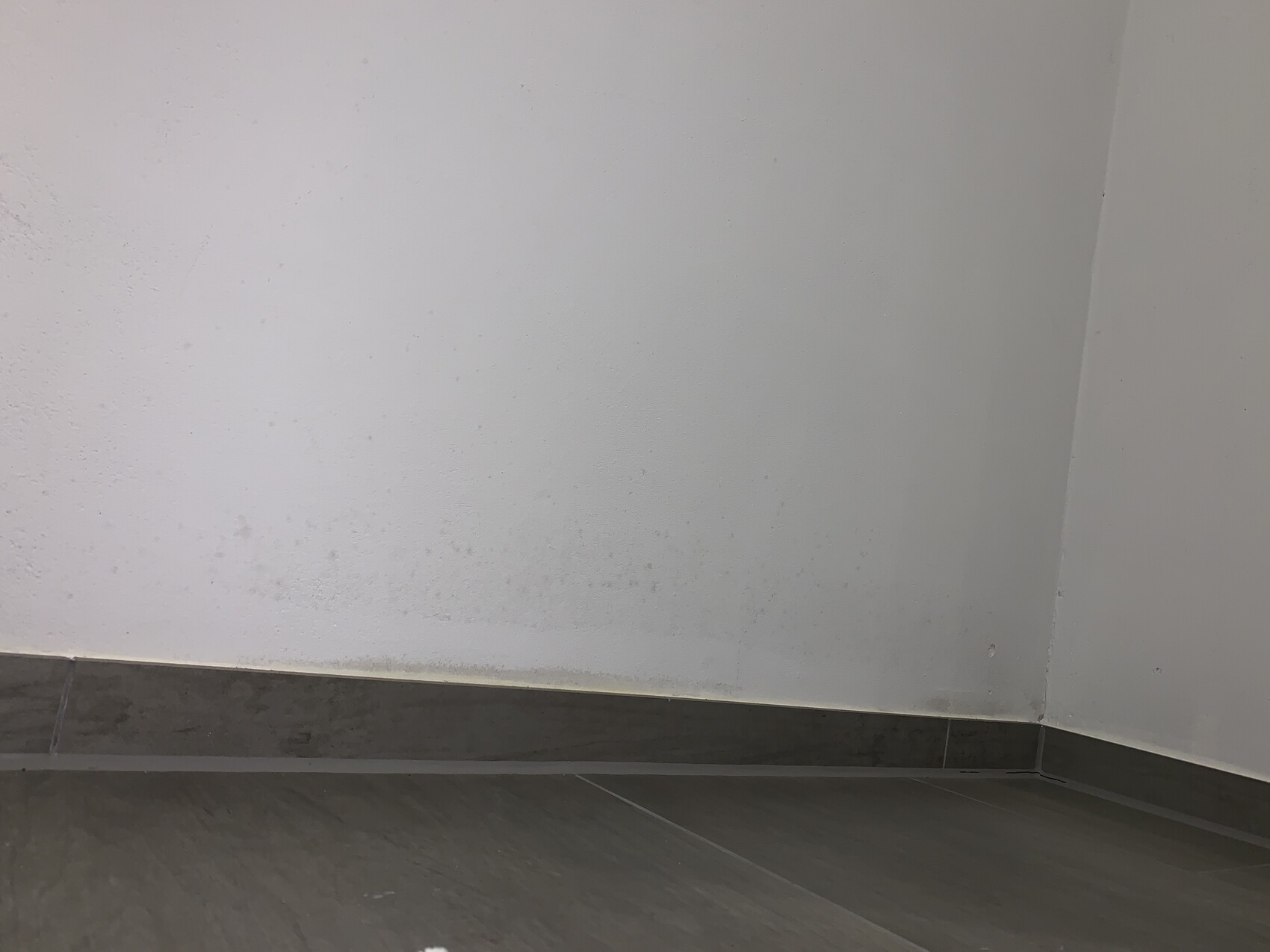
We initially thought the issue was due to insufficient ventilation on our part.
For the past one and a half months, we have also noticed that the outside wall is damp, as shown here:
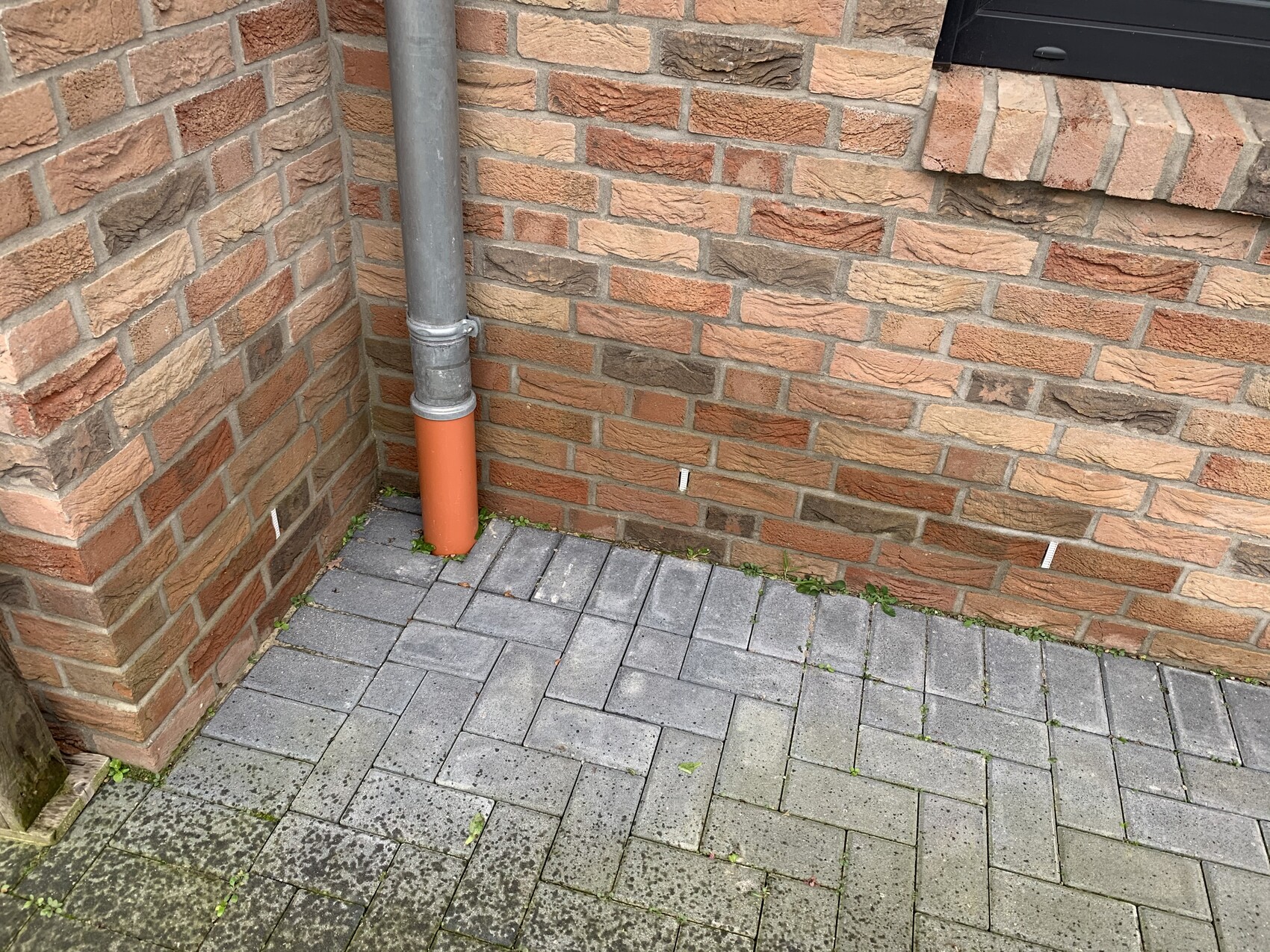
My first thought was that there might be a problem with the drainage, so I flushed the pipes using a drain cleaning hose from Kärcher.
However, the water never backed up into or over the gutter, and I did not feel any resistance while flushing.
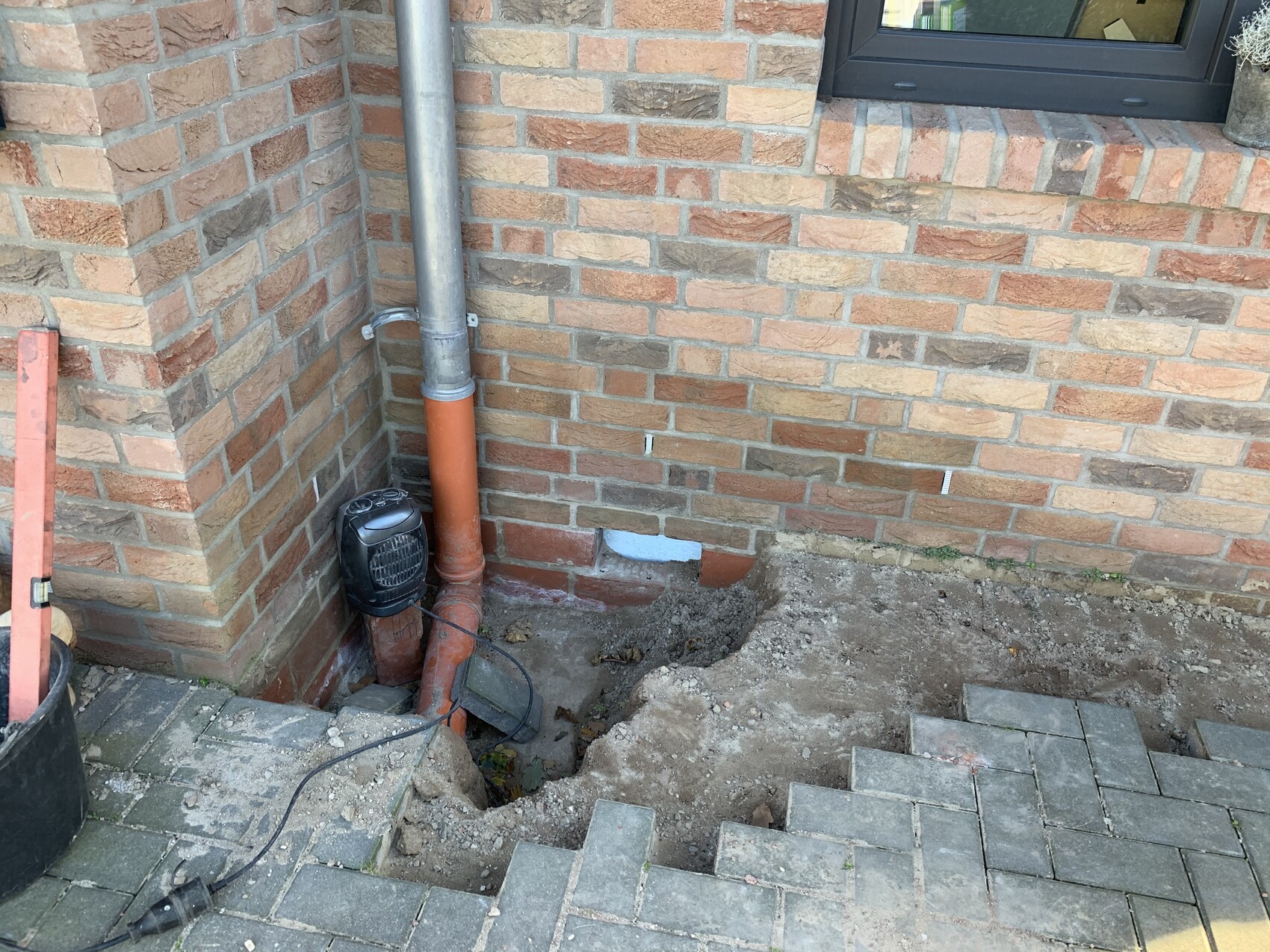
After two weeks without rain, the damp wall issue did not improve, so I uncovered the underground drainage pipe in the corner and found it to be intact and sealed:
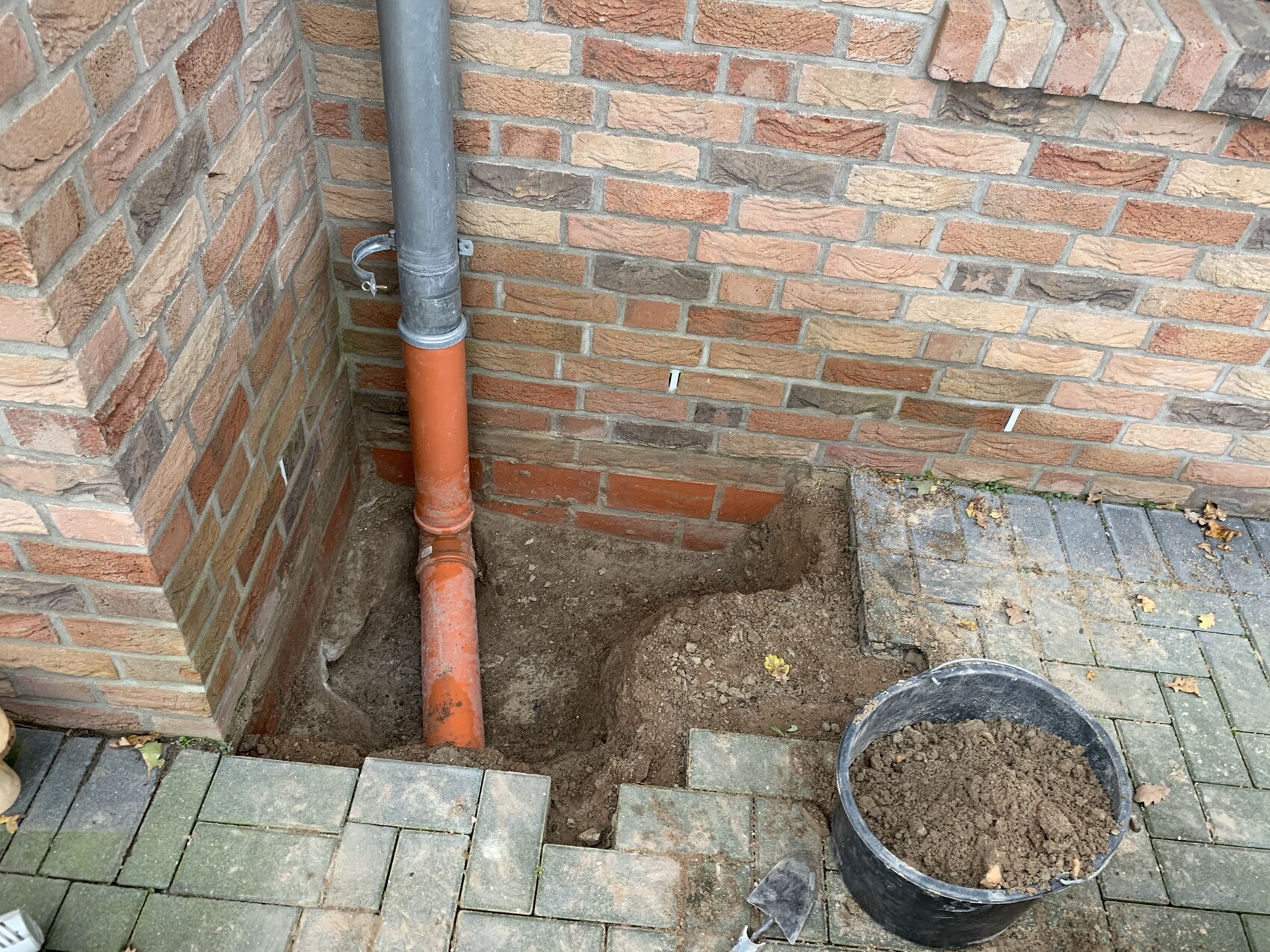
I poured water from above into the downpipe for two hours, and no water escaped anywhere.
A neighbor told me I had made two errors with the pipes, connecting them the wrong way around and using the wrong angle fitting.
However, he said that this could not explain the damp wall problem.
He suspected that the moisture might be coming either from the roof (possibly a damaged roof tile) or from the ground (due to missing or faulty waterproofing on the masonry).
As far as we can tell, the roof is in good condition:
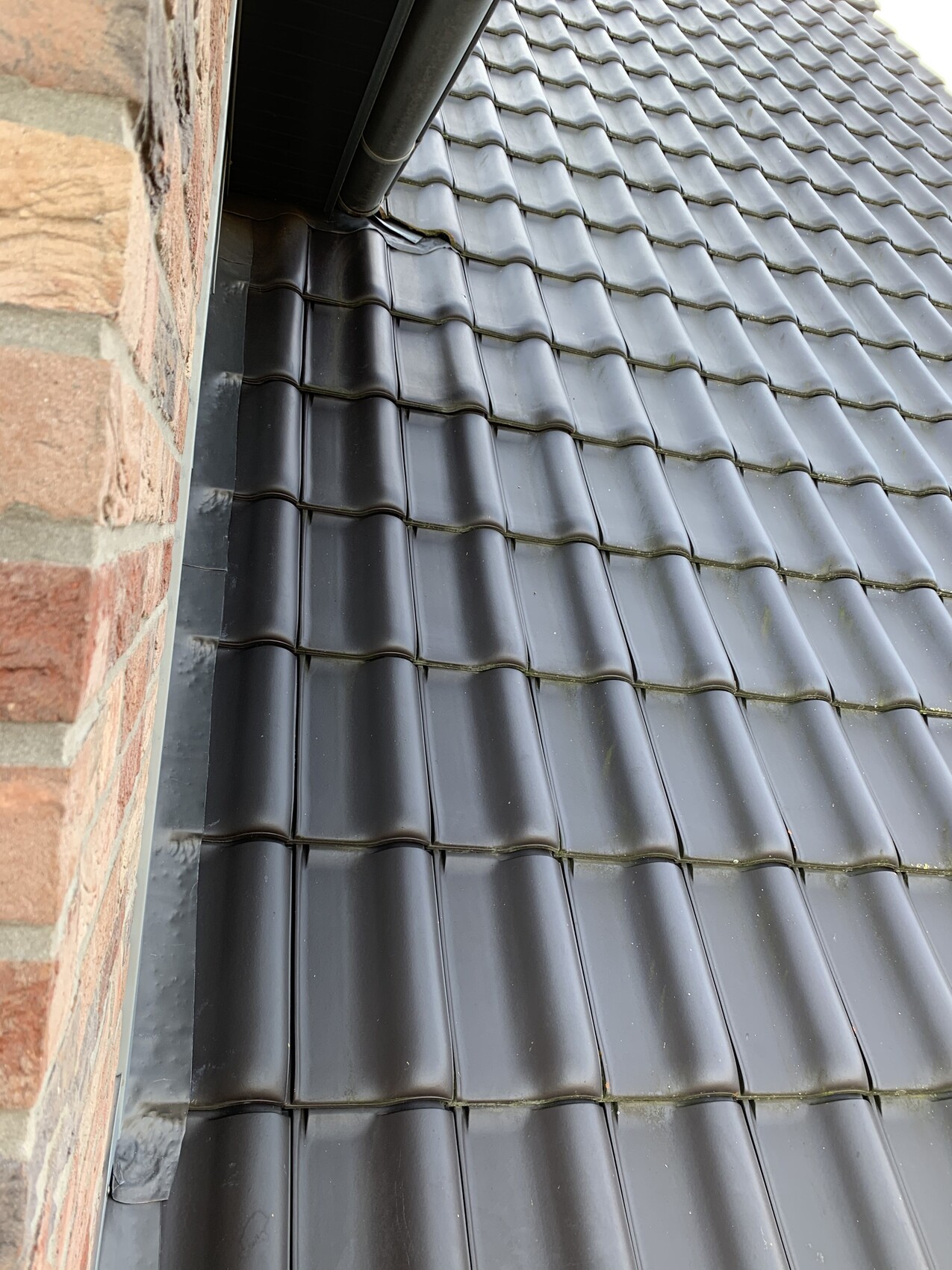
The builder sent someone to remove a stone from the wall to check whether the waterproofing was installed correctly:
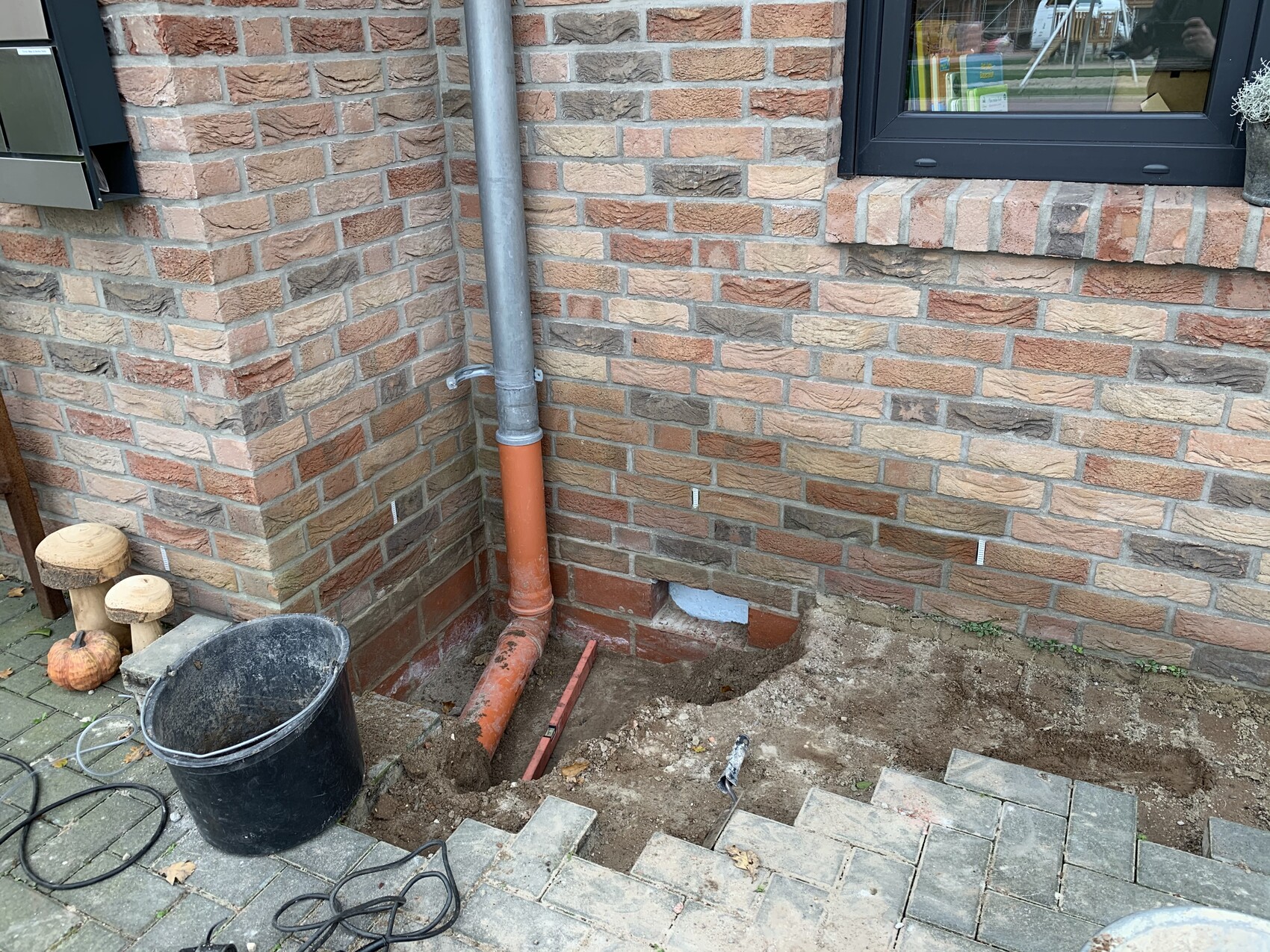
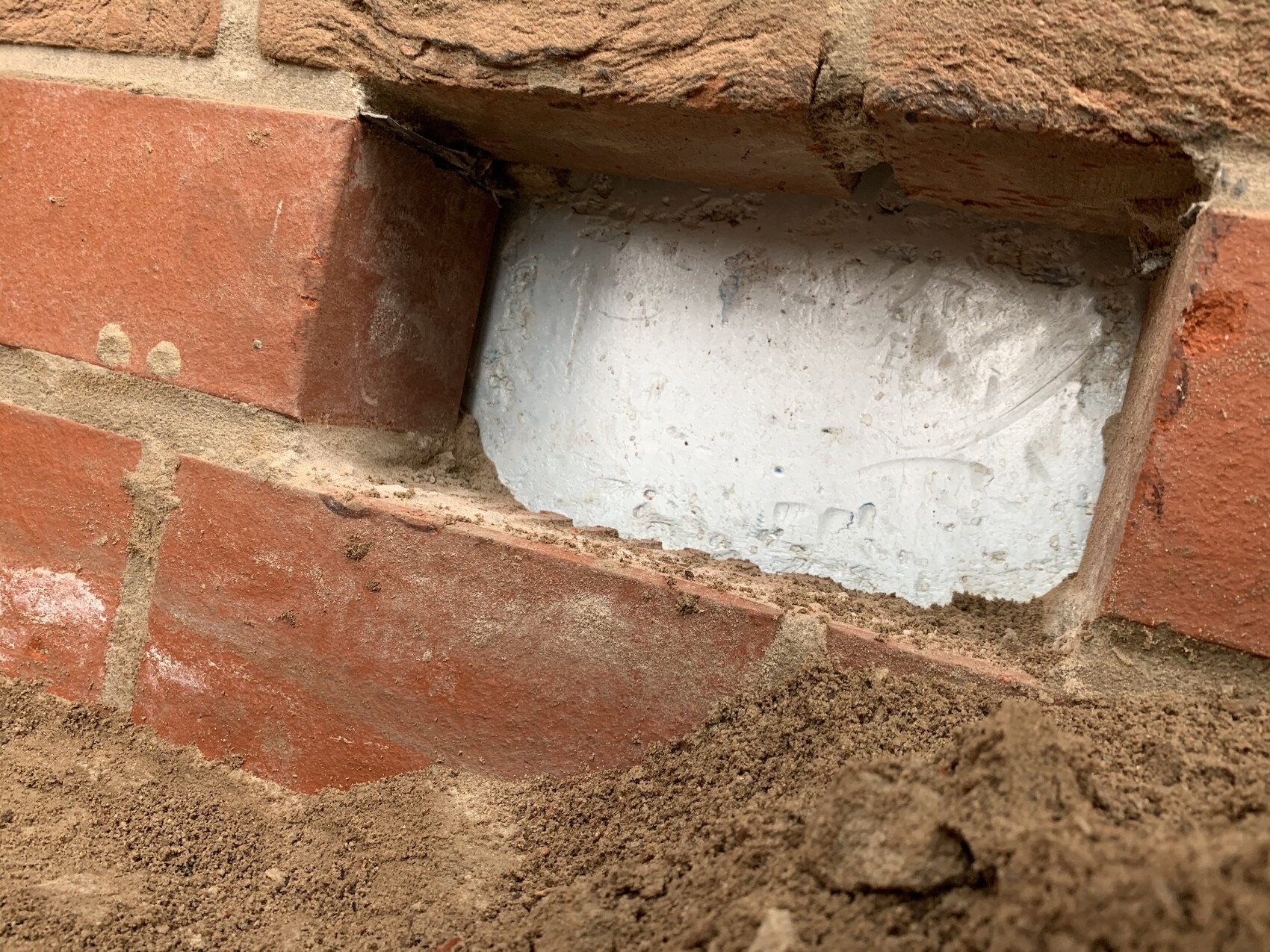
They saw that there is a membrane on the red brick, but they did not have an explanation for the source of the water and suspected it might be coming from the downpipe.
They said they could not do more for us and recommended that we hire a building inspector.
Unfortunately, this response was not very helpful to us since the problem persists and we do not know whether we caused it ourselves.
Also, hiring an inspector would likely be expensive, and we would have to pay if the problem turned out to be due to an installation error on our part in the drainage system.
Inside that area, there is no water connection, only underfloor heating, and the water pressure in the building has remained stable at 1.6 bar for a long time.
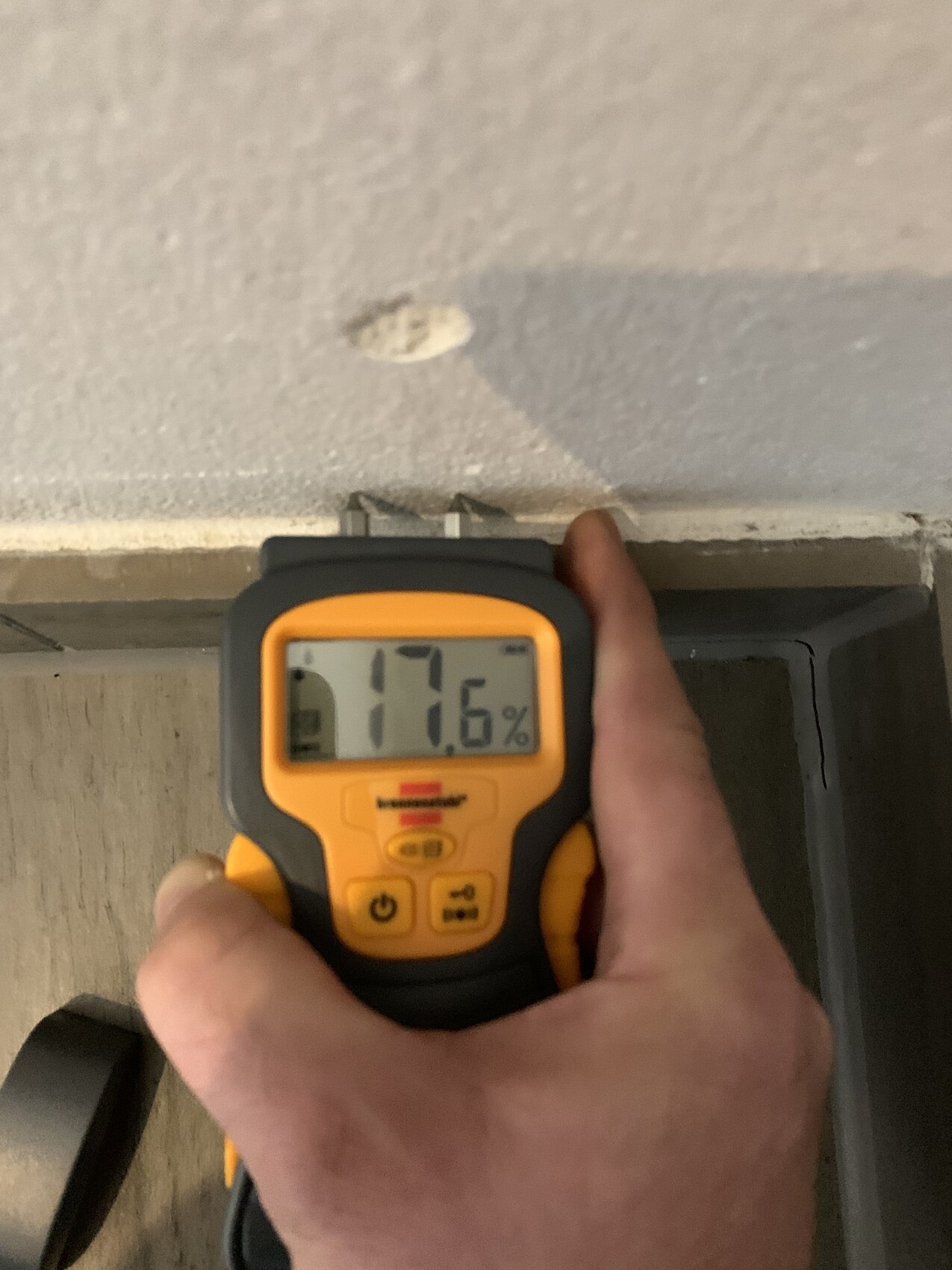
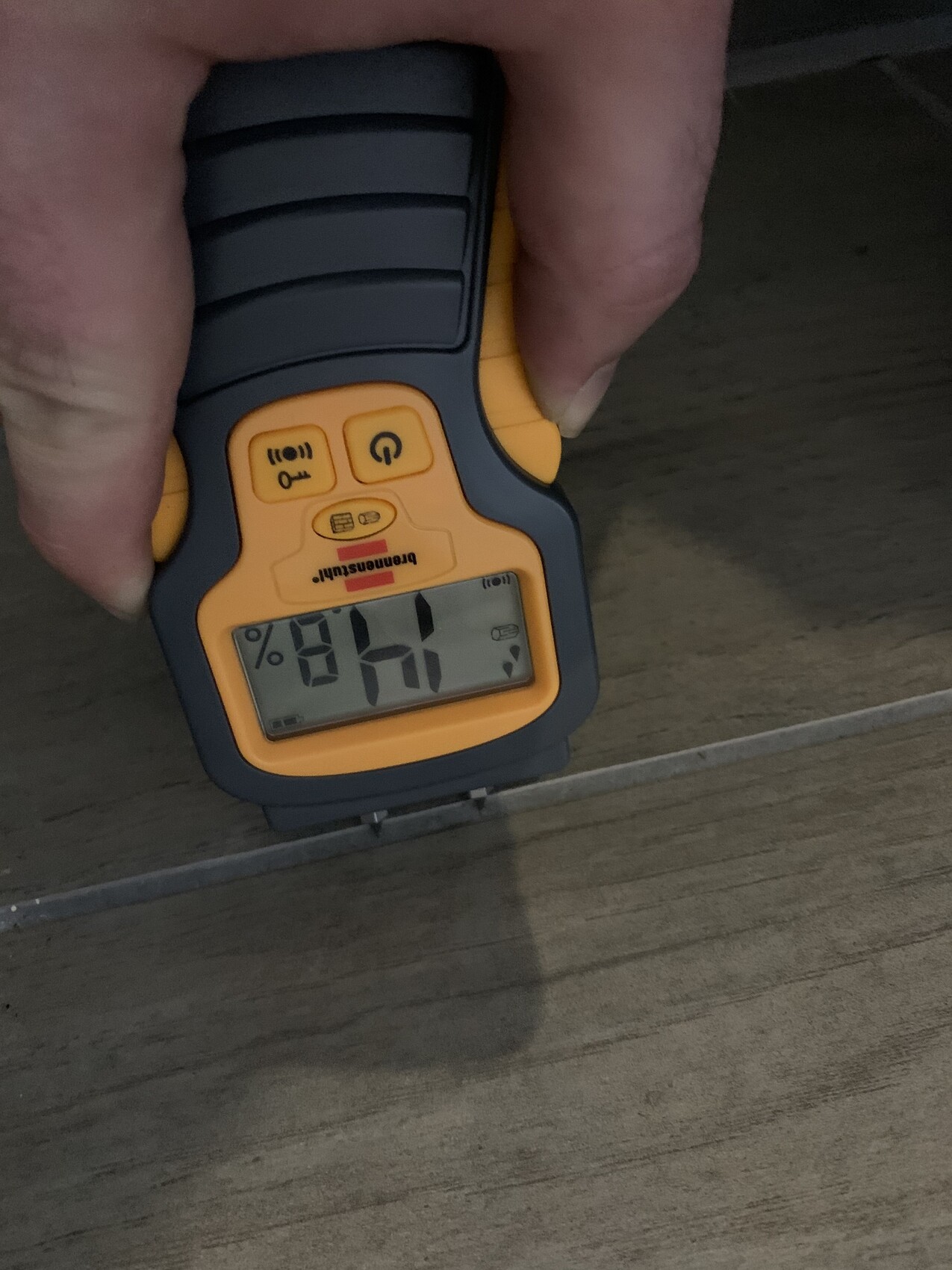
As you can see here, the wall and tiles (only in the corner) are damp:
What is also strange is that below the downpipe there is cement with a slope towards the house:
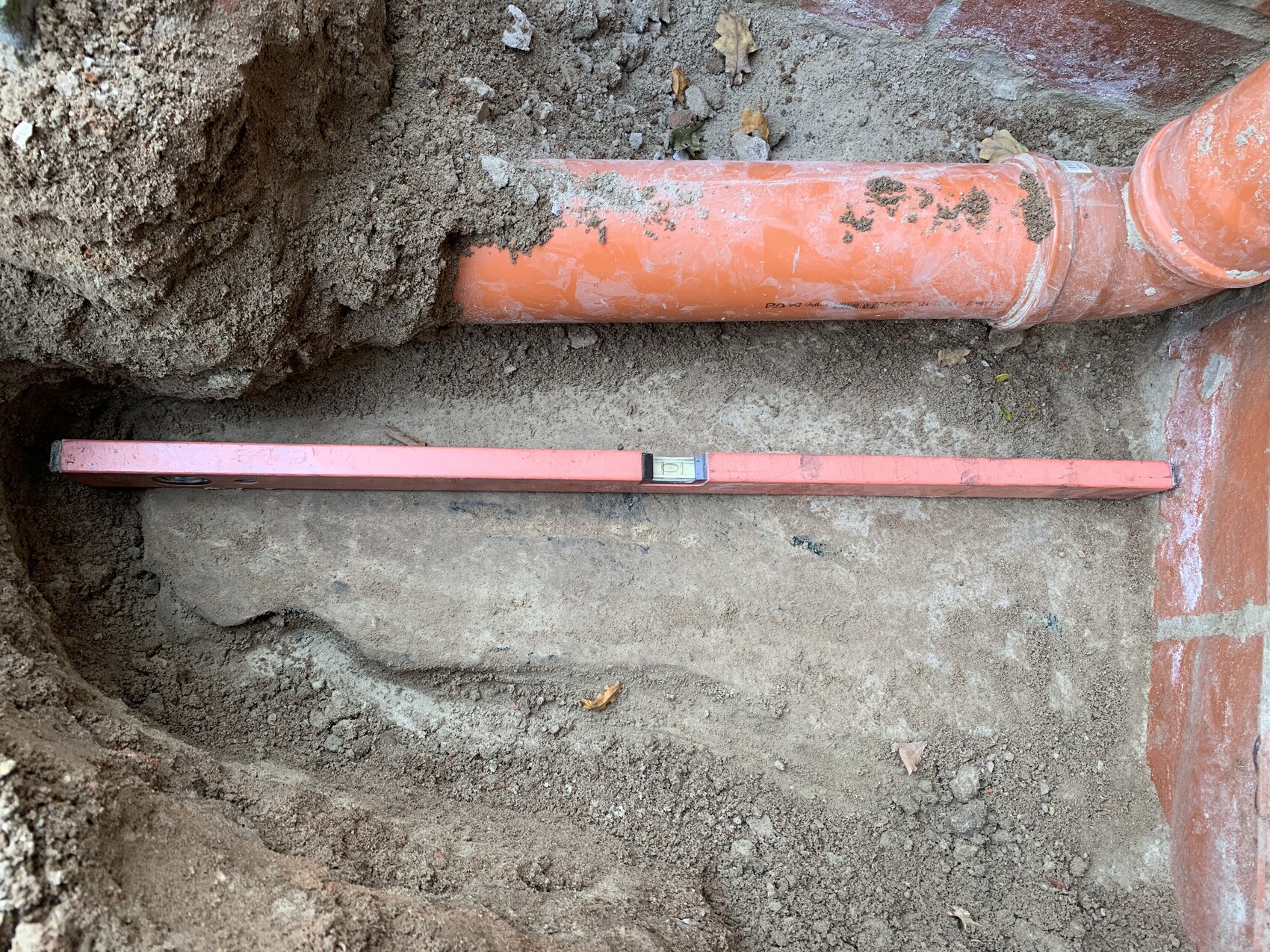
We were told that this can happen sometimes; although it is not ideal, it should not explain the dampness in the wall since everything is now exposed.
The hole has been open for two weeks, and no rainwater has accumulated there in one day (the spot is also under a roof overhang).
I also tried drying the wall with a fan heater, which only helped to a limited extent; after one day the wall was damp again.
What do you think—is the moisture coming from the soil due to missing or faulty waterproofing of the masonry?
We would appreciate any help or ideas as we are running out of options.
Since last year, we have noticed small mold spots in the office along the lower part of the wall, as you can see in these pictures:
We initially thought the issue was due to insufficient ventilation on our part.
For the past one and a half months, we have also noticed that the outside wall is damp, as shown here:
My first thought was that there might be a problem with the drainage, so I flushed the pipes using a drain cleaning hose from Kärcher.
However, the water never backed up into or over the gutter, and I did not feel any resistance while flushing.
After two weeks without rain, the damp wall issue did not improve, so I uncovered the underground drainage pipe in the corner and found it to be intact and sealed:
I poured water from above into the downpipe for two hours, and no water escaped anywhere.
A neighbor told me I had made two errors with the pipes, connecting them the wrong way around and using the wrong angle fitting.
However, he said that this could not explain the damp wall problem.
He suspected that the moisture might be coming either from the roof (possibly a damaged roof tile) or from the ground (due to missing or faulty waterproofing on the masonry).
As far as we can tell, the roof is in good condition:
The builder sent someone to remove a stone from the wall to check whether the waterproofing was installed correctly:
They saw that there is a membrane on the red brick, but they did not have an explanation for the source of the water and suspected it might be coming from the downpipe.
They said they could not do more for us and recommended that we hire a building inspector.
Unfortunately, this response was not very helpful to us since the problem persists and we do not know whether we caused it ourselves.
Also, hiring an inspector would likely be expensive, and we would have to pay if the problem turned out to be due to an installation error on our part in the drainage system.
Inside that area, there is no water connection, only underfloor heating, and the water pressure in the building has remained stable at 1.6 bar for a long time.
As you can see here, the wall and tiles (only in the corner) are damp:
What is also strange is that below the downpipe there is cement with a slope towards the house:
We were told that this can happen sometimes; although it is not ideal, it should not explain the dampness in the wall since everything is now exposed.
The hole has been open for two weeks, and no rainwater has accumulated there in one day (the spot is also under a roof overhang).
I also tried drying the wall with a fan heater, which only helped to a limited extent; after one day the wall was damp again.
What do you think—is the moisture coming from the soil due to missing or faulty waterproofing of the masonry?
We would appreciate any help or ideas as we are running out of options.
M
Mottenhausen28 Oct 2019 14:06The KG pipe construction is really not well done. I would tentatively connect a flexible hose directly to the top of the gutter box and temporarily divert the water above ground, far away, so that the downpipe component can be fundamentally ruled out at first. Only then should you continue investigating.
The concrete could be a leftover from a leveling layer and should therefore be located below or outside the waterproofing.
But tell me, is the soil just directly against the brickwork? No dimpled membrane? I think the ground moisture can quite easily penetrate the bricks, then move upward, above the underlying base waterproofing, and from there into the masonry of the house.
The concrete could be a leftover from a leveling layer and should therefore be located below or outside the waterproofing.
But tell me, is the soil just directly against the brickwork? No dimpled membrane? I think the ground moisture can quite easily penetrate the bricks, then move upward, above the underlying base waterproofing, and from there into the masonry of the house.
Have you taken photos of your rough installation? Are there possibly water pipes running there? I see a mailbox on the left side? On the right, could that be a guest bathroom/laundry room or an outdoor faucet on the exterior wall?
Our company also builds like this... I have wondered how best to approach it. Is it really enough to just install a drainage membrane (dimpled membrane) around the house? Doesn’t moisture still get drawn in, or is it so little that you can ignore it?
Mottenhausen schrieb:
But tell me, is the soil just lying against the brickwork? No drainage membrane? I think ground moisture can quite easily migrate into the brickwork, then further upwards, above the underlying base waterproofing and then also into the house’s masonry.
Our company also builds like this... I have wondered how best to approach it. Is it really enough to just install a drainage membrane (dimpled membrane) around the house? Doesn’t moisture still get drawn in, or is it so little that you can ignore it?
Hello Nepokat
What do you expect? The ground is directly against the brickwork. Naturally, it draws moisture from the soil.
A moisture barrier is necessary. At least extruded polystyrene (XPS). Ideally, thick-layer bitumen should be applied to the brickwork first, followed by the extruded polystyrene.
Moisture is entering the interior through some weak point. The result you have now is some mold. There is a lot of mold inside the wall.
Steven
What do you expect? The ground is directly against the brickwork. Naturally, it draws moisture from the soil.
A moisture barrier is necessary. At least extruded polystyrene (XPS). Ideally, thick-layer bitumen should be applied to the brickwork first, followed by the extruded polystyrene.
Moisture is entering the interior through some weak point. The result you have now is some mold. There is a lot of mold inside the wall.
Steven
It looks like there is concrete under the downpipe and in front of the house wall. Hardly any water can drain away there. Also, if I understand correctly, there is a slight slope towards the house wall. No wonder the brickwork is getting wet.
The underground pipe (KG pipe) resting on the concrete like that won't last forever either. It is neither protected from frost nor properly bedded. You also wouldn't use 90-degree bends in this situation.
The underground pipe (KG pipe) resting on the concrete like that won't last forever either. It is neither protected from frost nor properly bedded. You also wouldn't use 90-degree bends in this situation.
Please take a photo showing the entire corner (from roof to floor) and send a plan detailing the wall construction.
I think you won’t be able to avoid having an expert assess it to be sure.
I can’t imagine the moisture is coming from below; even if the drainage isn’t done correctly, it shouldn’t cause such significant effects. I suspect the ventilation drainage is not properly installed, causing water to accumulate. For example, there should be a waterproof membrane between the bricks beneath the ventilation openings, but since moisture is evenly present above and below, there probably isn’t one. Also, your construction needs a deep ventilation gap, which it currently lacks. The seal between the foundation and the brickwork is missing as well... I believe the problem lies somewhere in these areas.
I think you won’t be able to avoid having an expert assess it to be sure.
I can’t imagine the moisture is coming from below; even if the drainage isn’t done correctly, it shouldn’t cause such significant effects. I suspect the ventilation drainage is not properly installed, causing water to accumulate. For example, there should be a waterproof membrane between the bricks beneath the ventilation openings, but since moisture is evenly present above and below, there probably isn’t one. Also, your construction needs a deep ventilation gap, which it currently lacks. The seal between the foundation and the brickwork is missing as well... I believe the problem lies somewhere in these areas.
Similar topics