
Hello everyone, we built our house four years ago and now need help with a problem involving a damp wall.
Since last year, we have noticed small mold spots in the office along the lower part of the wall, as you can see in these pictures:
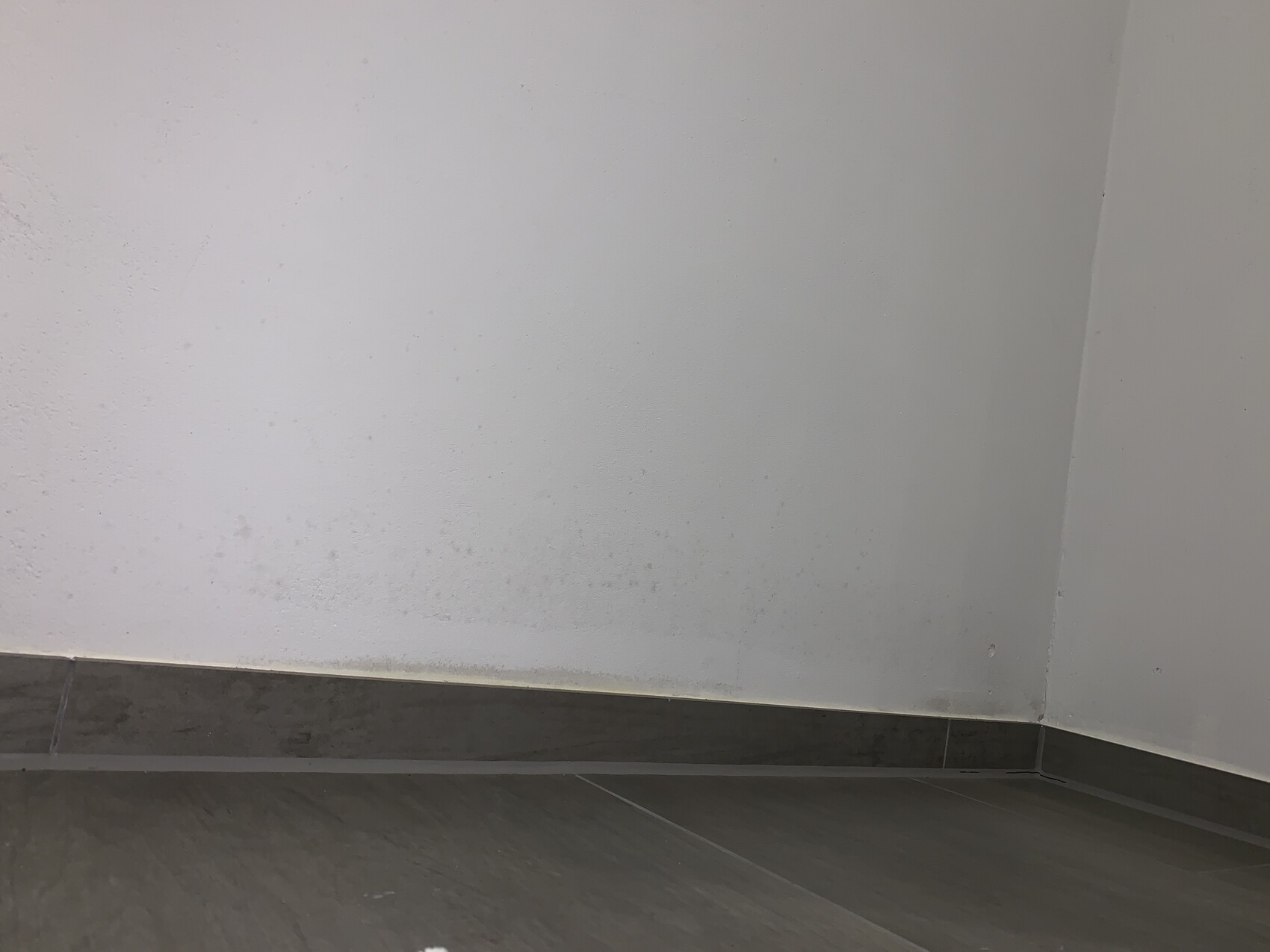
We initially thought the issue was due to insufficient ventilation on our part.
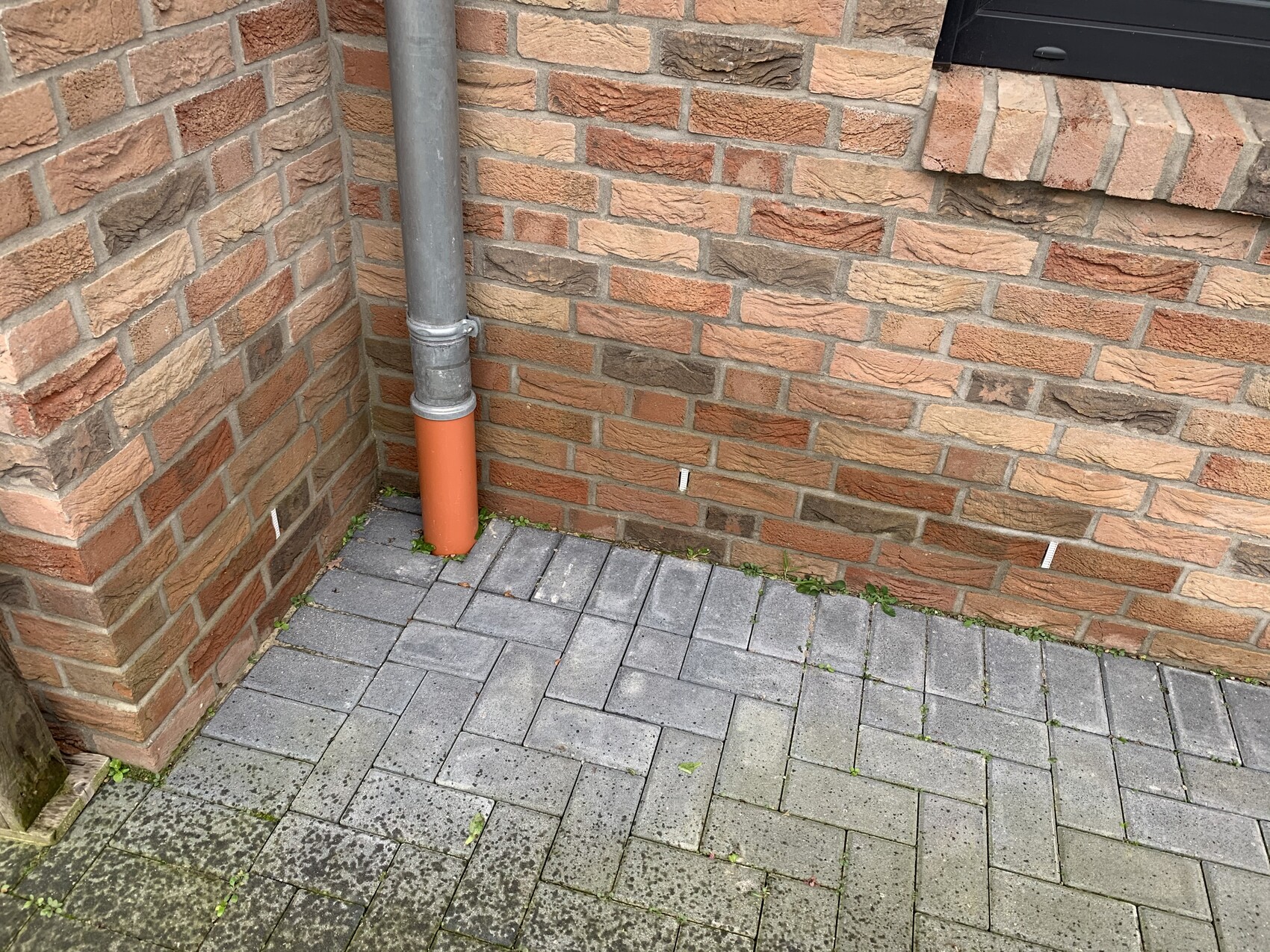
For the past one and a half months, we have also noticed that the outside wall is damp, as shown here:
My first thought was that there might be a problem with the drainage, so I flushed the pipes using a drain cleaning hose from Kärcher.
However, the water never backed up into or over the gutter, and I did not feel any resistance while flushing.
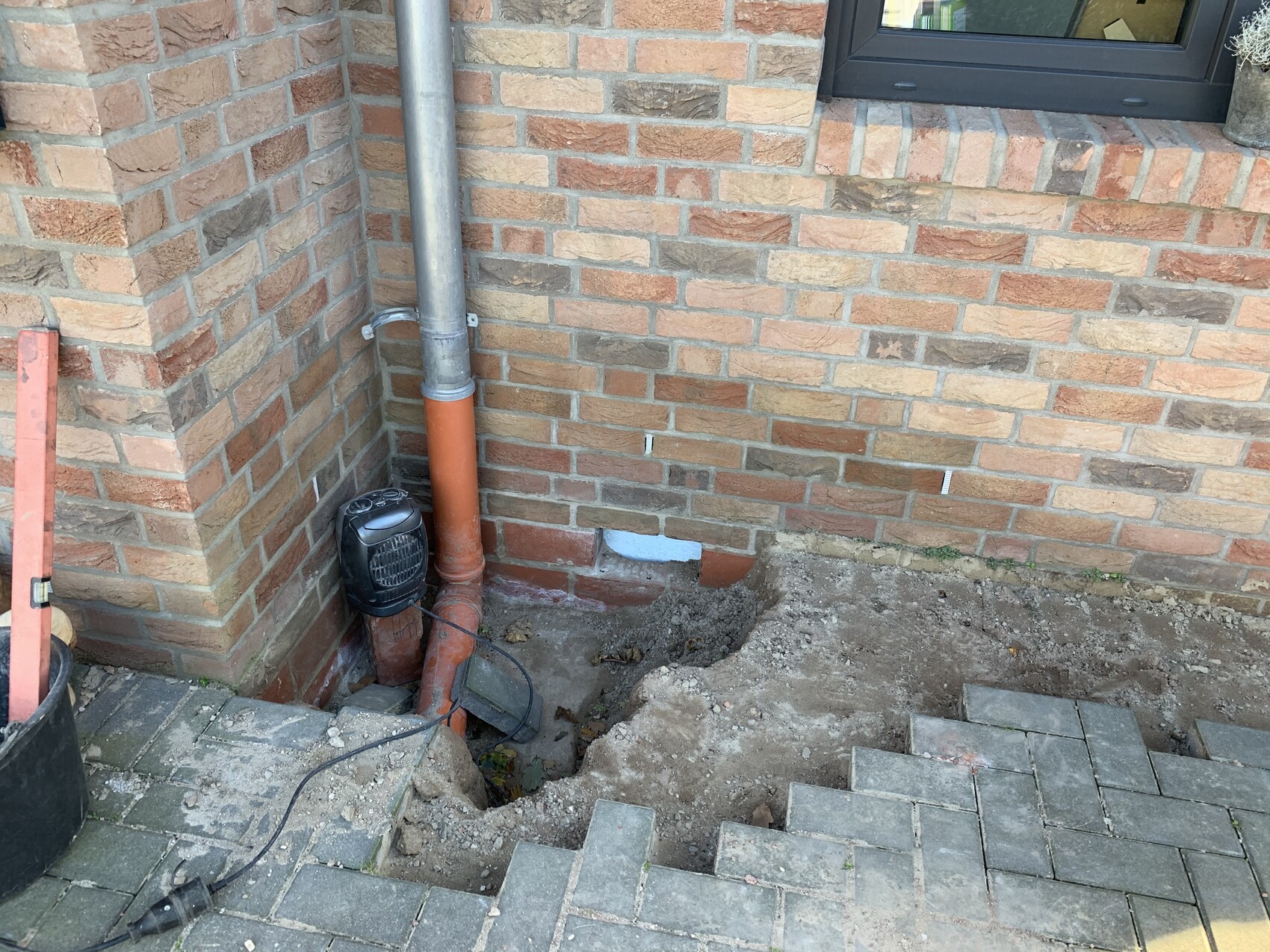
After two weeks without rain, the damp wall issue did not improve, so I uncovered the underground drainage pipe in the corner and found it to be intact and sealed:
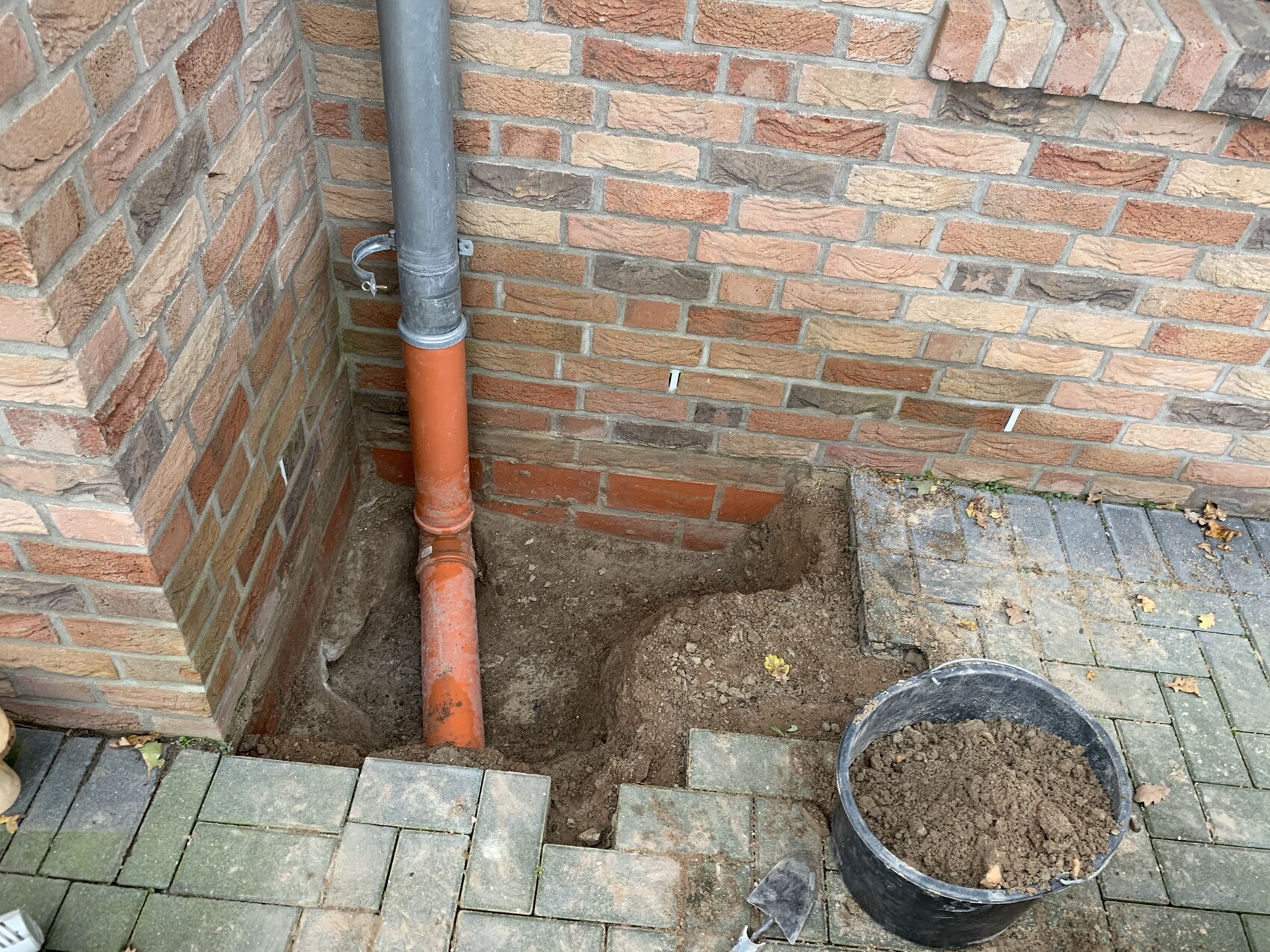
I poured water from above into the downpipe for two hours, and no water escaped anywhere.
A neighbor told me I had made two errors with the pipes, connecting them the wrong way around and using the wrong angle fitting.
However, he said that this could not explain the damp wall problem.
He suspected that the moisture might be coming either from the roof (possibly a damaged roof tile) or from the ground (due to missing or faulty waterproofing on the masonry).
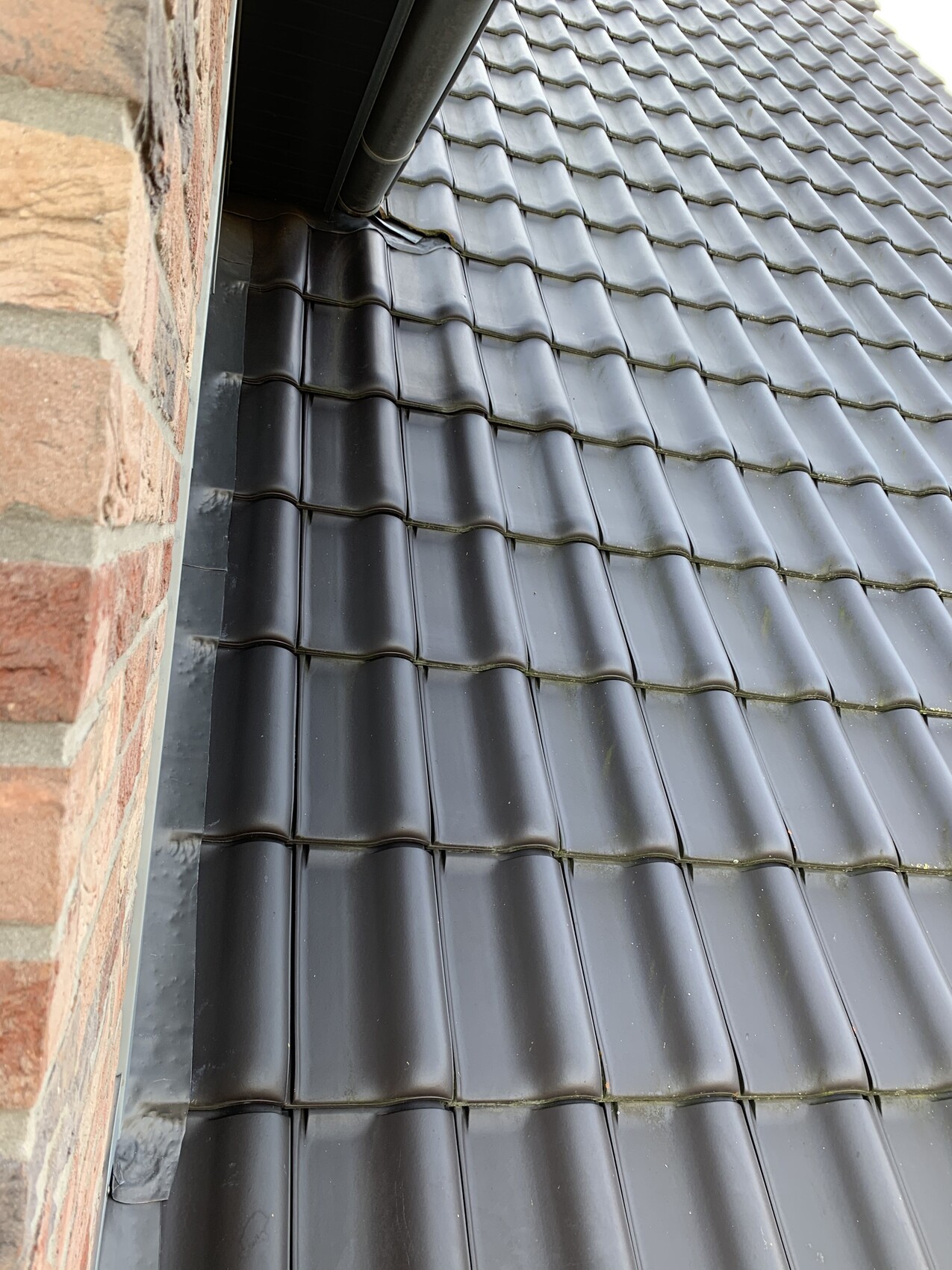
As far as we can tell, the roof is in good condition:
The builder sent someone to remove a stone from the wall to check whether the waterproofing was installed correctly:
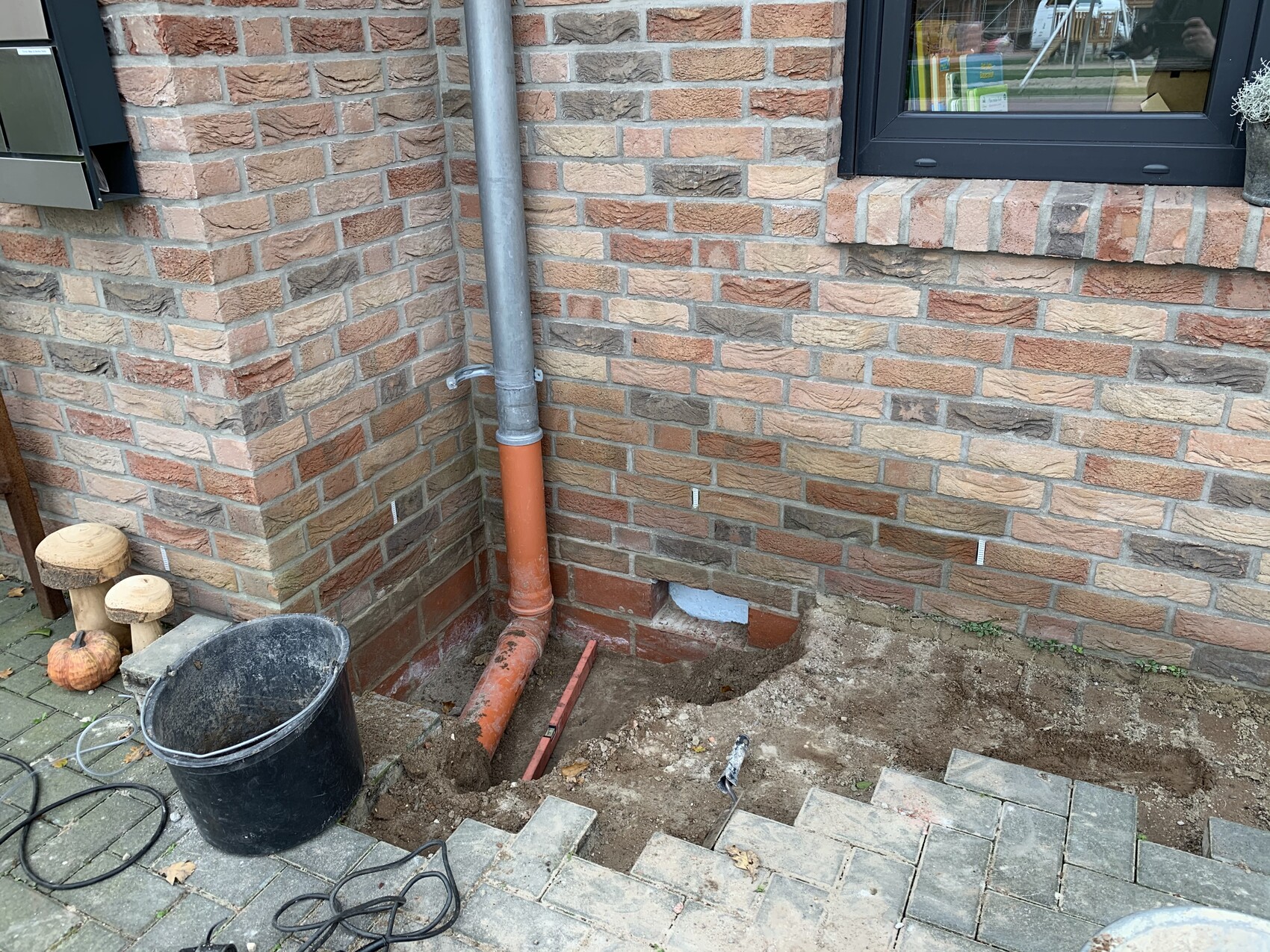
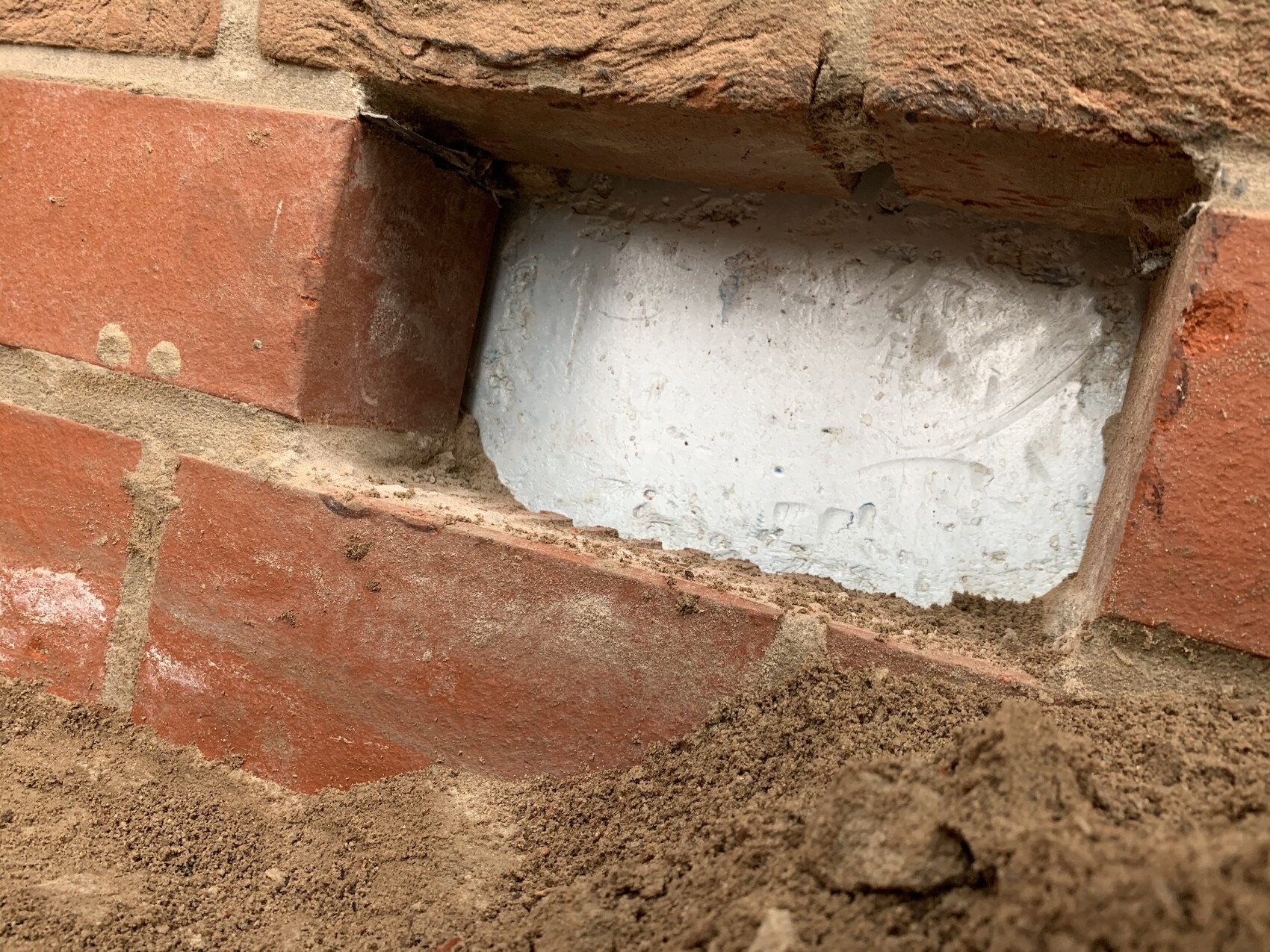
They saw that there is a membrane on the red brick, but they did not have an explanation for the source of the water and suspected it might be coming from the downpipe.
They said they could not do more for us and recommended that we hire a building inspector.
Unfortunately, this response was not very helpful to us since the problem persists and we do not know whether we caused it ourselves.
Also, hiring an inspector would likely be expensive, and we would have to pay if the problem turned out to be due to an installation error on our part in the drainage system.
Inside that area, there is no water connection, only underfloor heating, and the water pressure in the building has remained stable at 1.6 bar for a long time.
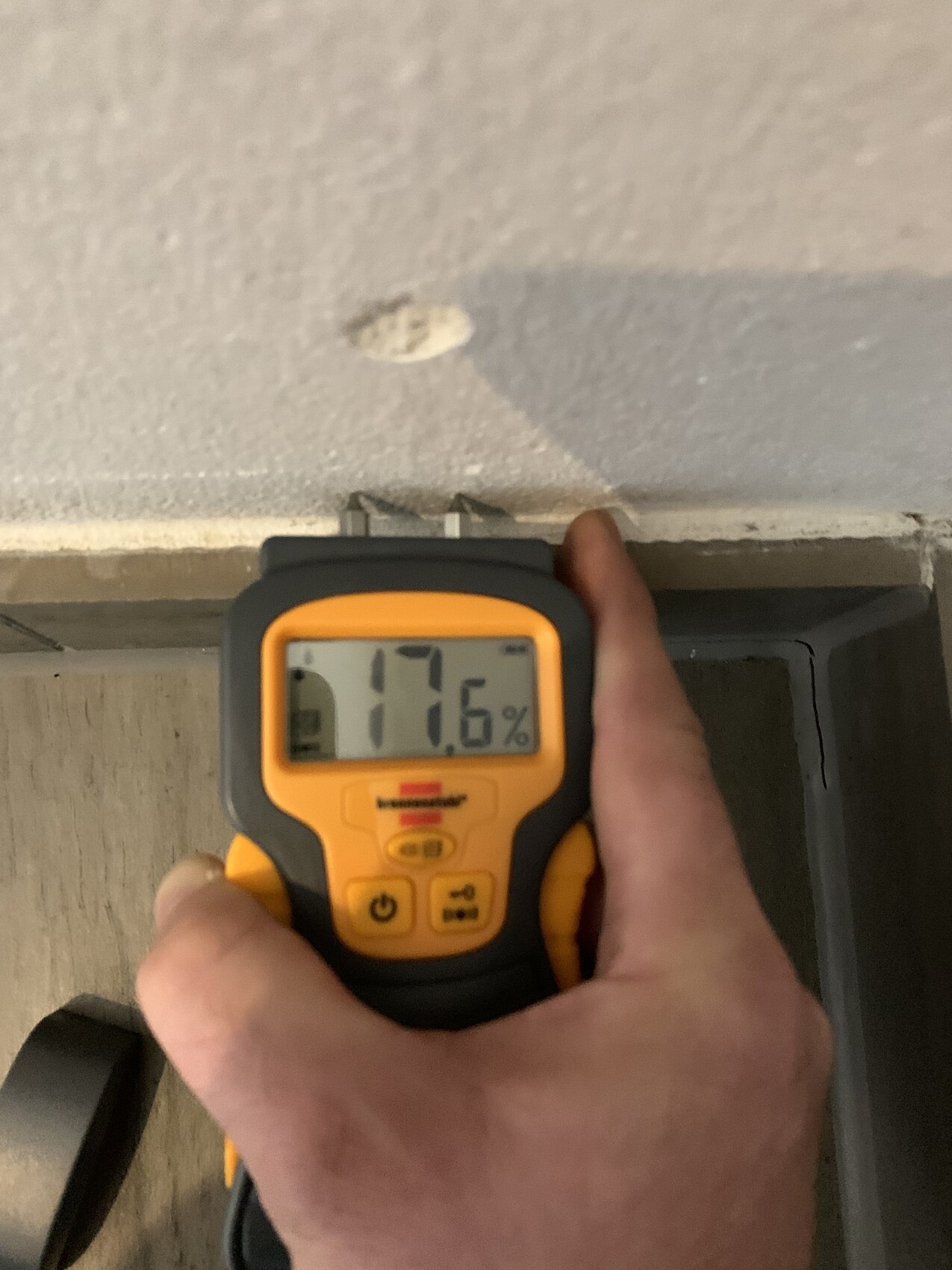
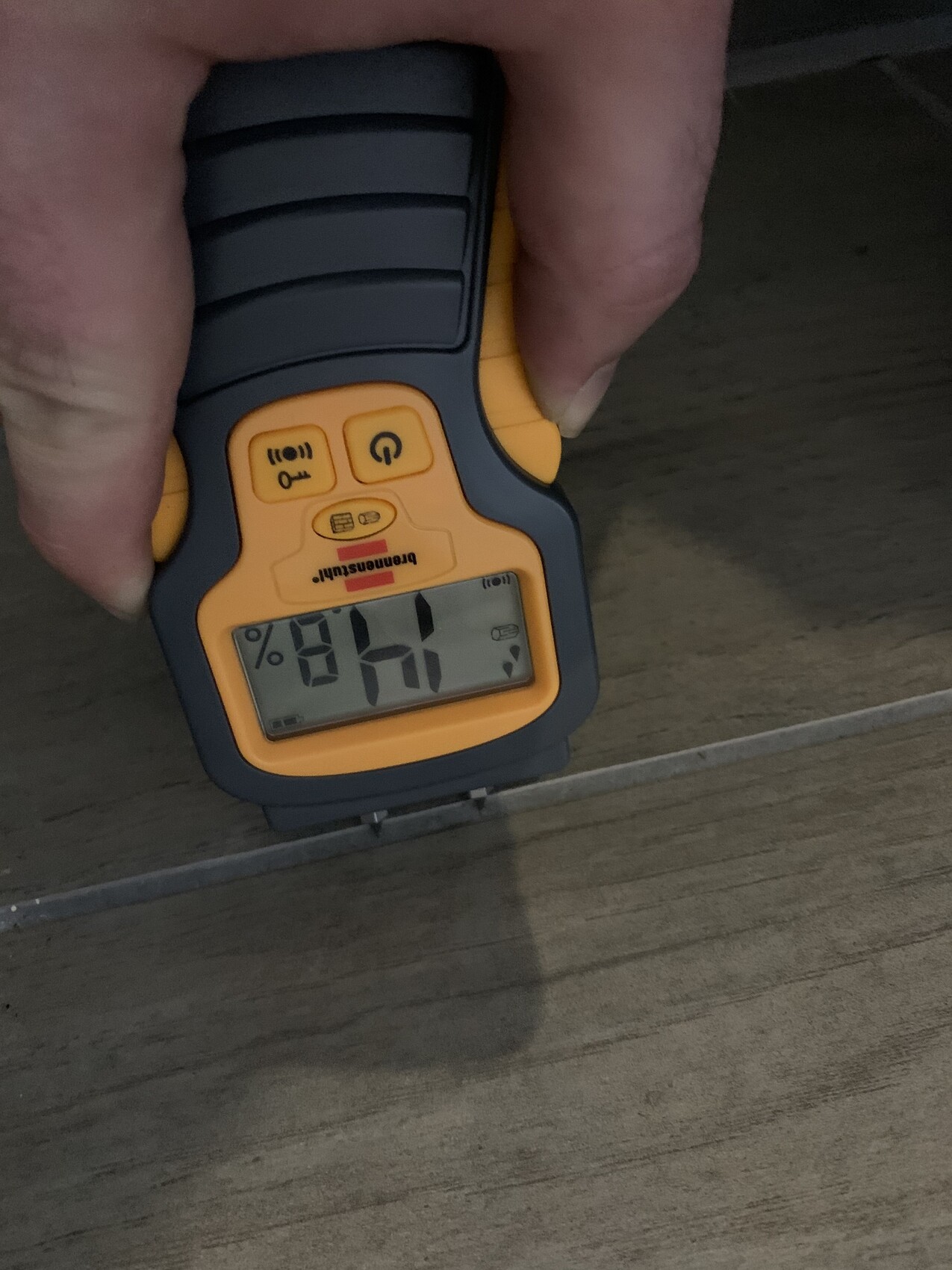
As you can see here, the wall and tiles (only in the corner) are damp:
What is also strange is that below the downpipe there is cement with a slope towards the house:
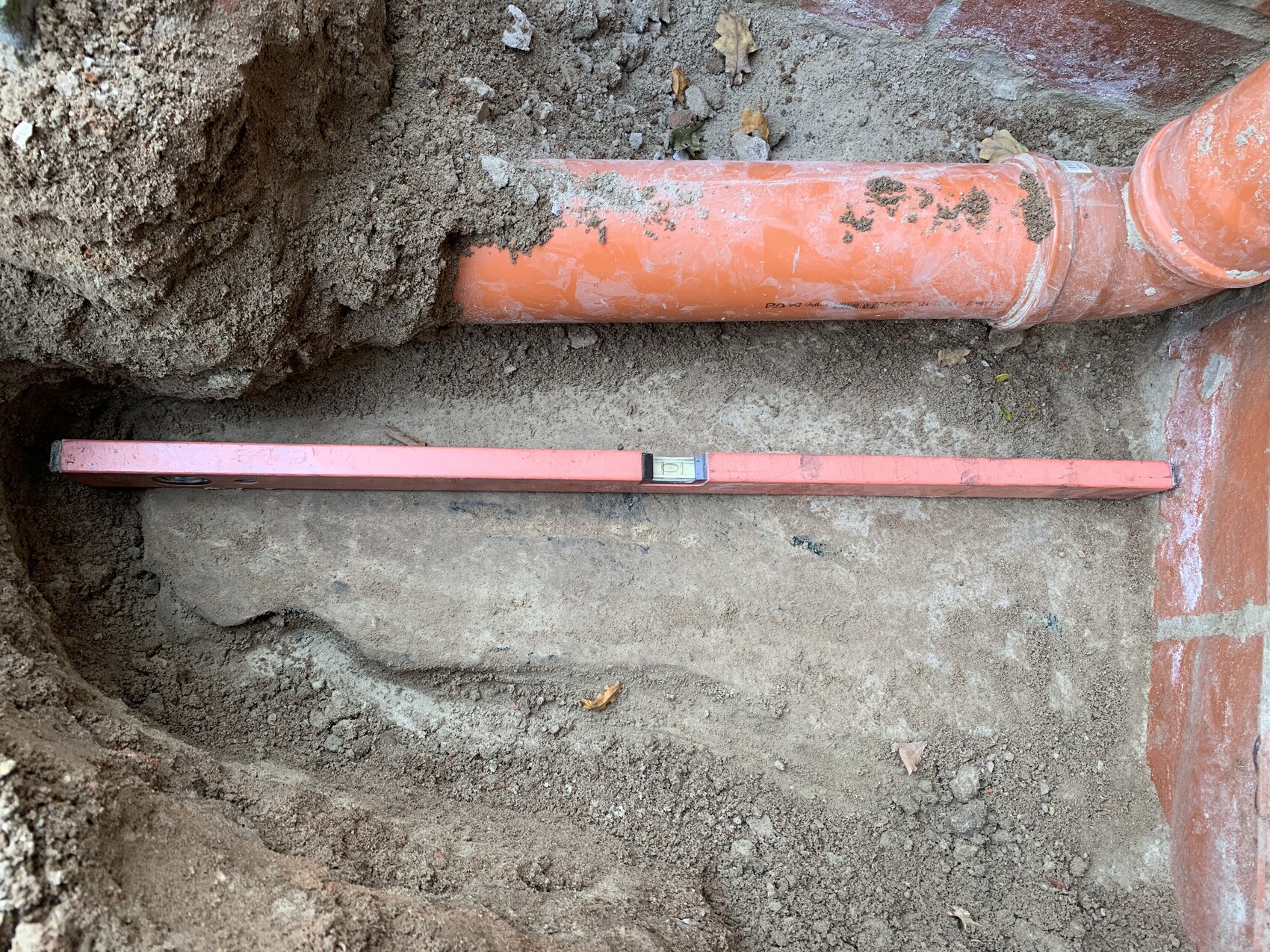
We were told that this can happen sometimes; although it is not ideal, it should not explain the dampness in the wall since everything is now exposed.
The hole has been open for two weeks, and no rainwater has accumulated there in one day (the spot is also under a roof overhang).
I also tried drying the wall with a fan heater, which only helped to a limited extent; after one day the wall was damp again.
What do you think—is the moisture coming from the soil due to missing or faulty waterproofing of the masonry?
We would appreciate any help or ideas as we are running out of options.
Since last year, we have noticed small mold spots in the office along the lower part of the wall, as you can see in these pictures:
We initially thought the issue was due to insufficient ventilation on our part.
For the past one and a half months, we have also noticed that the outside wall is damp, as shown here:
My first thought was that there might be a problem with the drainage, so I flushed the pipes using a drain cleaning hose from Kärcher.
However, the water never backed up into or over the gutter, and I did not feel any resistance while flushing.
After two weeks without rain, the damp wall issue did not improve, so I uncovered the underground drainage pipe in the corner and found it to be intact and sealed:
I poured water from above into the downpipe for two hours, and no water escaped anywhere.
A neighbor told me I had made two errors with the pipes, connecting them the wrong way around and using the wrong angle fitting.
However, he said that this could not explain the damp wall problem.
He suspected that the moisture might be coming either from the roof (possibly a damaged roof tile) or from the ground (due to missing or faulty waterproofing on the masonry).
As far as we can tell, the roof is in good condition:
The builder sent someone to remove a stone from the wall to check whether the waterproofing was installed correctly:
They saw that there is a membrane on the red brick, but they did not have an explanation for the source of the water and suspected it might be coming from the downpipe.
They said they could not do more for us and recommended that we hire a building inspector.
Unfortunately, this response was not very helpful to us since the problem persists and we do not know whether we caused it ourselves.
Also, hiring an inspector would likely be expensive, and we would have to pay if the problem turned out to be due to an installation error on our part in the drainage system.
Inside that area, there is no water connection, only underfloor heating, and the water pressure in the building has remained stable at 1.6 bar for a long time.
As you can see here, the wall and tiles (only in the corner) are damp:
What is also strange is that below the downpipe there is cement with a slope towards the house:
We were told that this can happen sometimes; although it is not ideal, it should not explain the dampness in the wall since everything is now exposed.
The hole has been open for two weeks, and no rainwater has accumulated there in one day (the spot is also under a roof overhang).
I also tried drying the wall with a fan heater, which only helped to a limited extent; after one day the wall was damp again.
What do you think—is the moisture coming from the soil due to missing or faulty waterproofing of the masonry?
We would appreciate any help or ideas as we are running out of options.
I still can’t imagine that it’s coming from the outside. Otherwise, other areas would probably be affected as well.
I don’t agree at all. The hole has been open for 2 weeks, and no water has accumulated. The wall still got wet. Overall, it’s not ideal, but the pipe is not the cause.
Get an expert opinion or have more stones removed to see exactly how it was constructed behind the wall. I still feel that the issue is coming from the inside, not the outside. Try posting a floor plan and turn off the underfloor heating in that room to completely rule it out.
Steven schrieb:
Hello Nepokat
You filled and paved the area yourself. You have to take responsibility for not doing the necessary preparation work.
Now you need to remove the entire fill and leave it open until the wall has dried. Then do it again, properly, from the beginning.
And let it dry thoroughly. The moisture penetrates deeply.
Steven
I don’t agree at all. The hole has been open for 2 weeks, and no water has accumulated. The wall still got wet. Overall, it’s not ideal, but the pipe is not the cause.
Get an expert opinion or have more stones removed to see exactly how it was constructed behind the wall. I still feel that the issue is coming from the inside, not the outside. Try posting a floor plan and turn off the underfloor heating in that room to completely rule it out.
N
Nepokat9111 Nov 2019 09:07Hello everyone,
before I hire an expert, I need to make sure it’s not our fault.
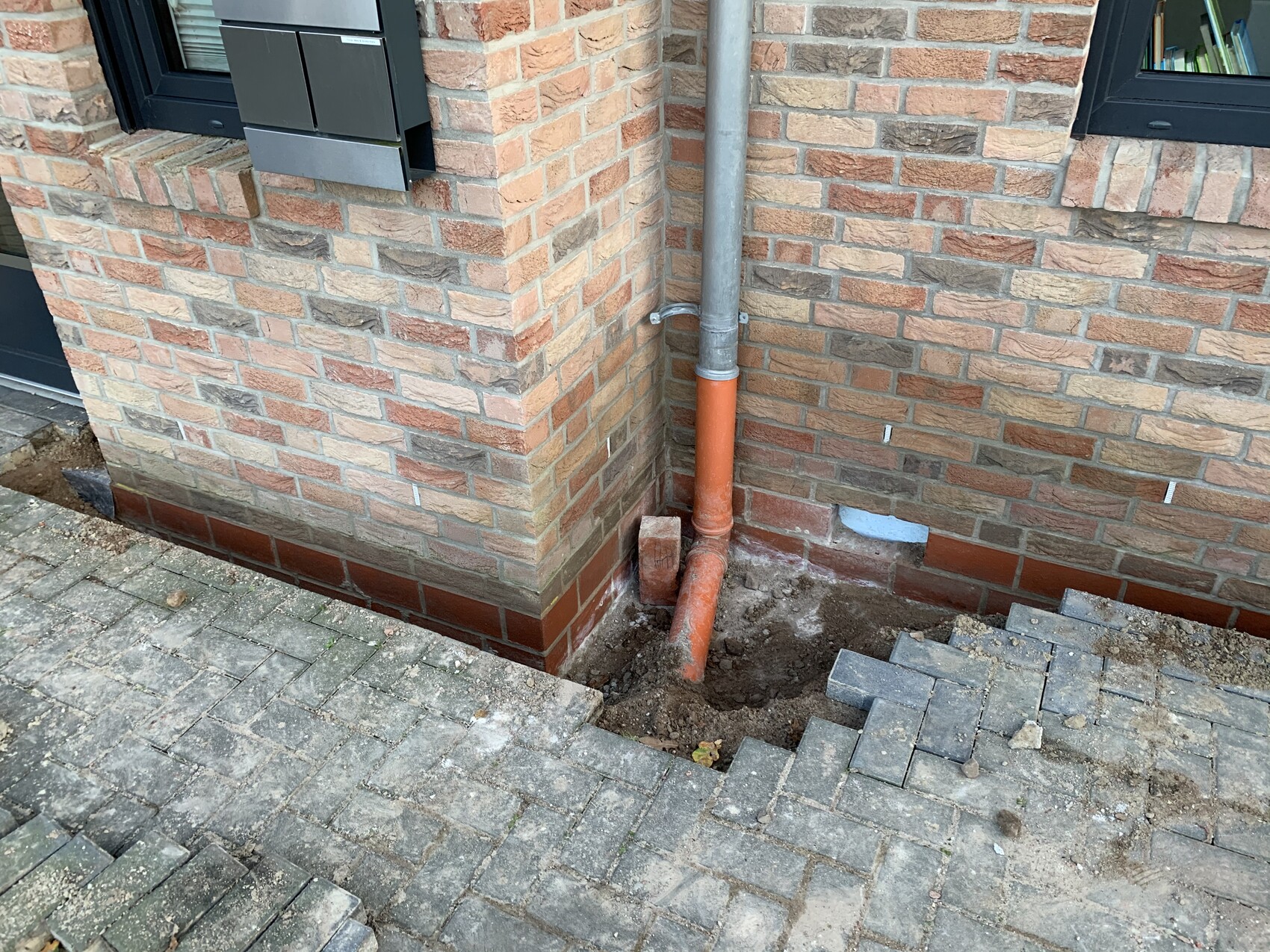
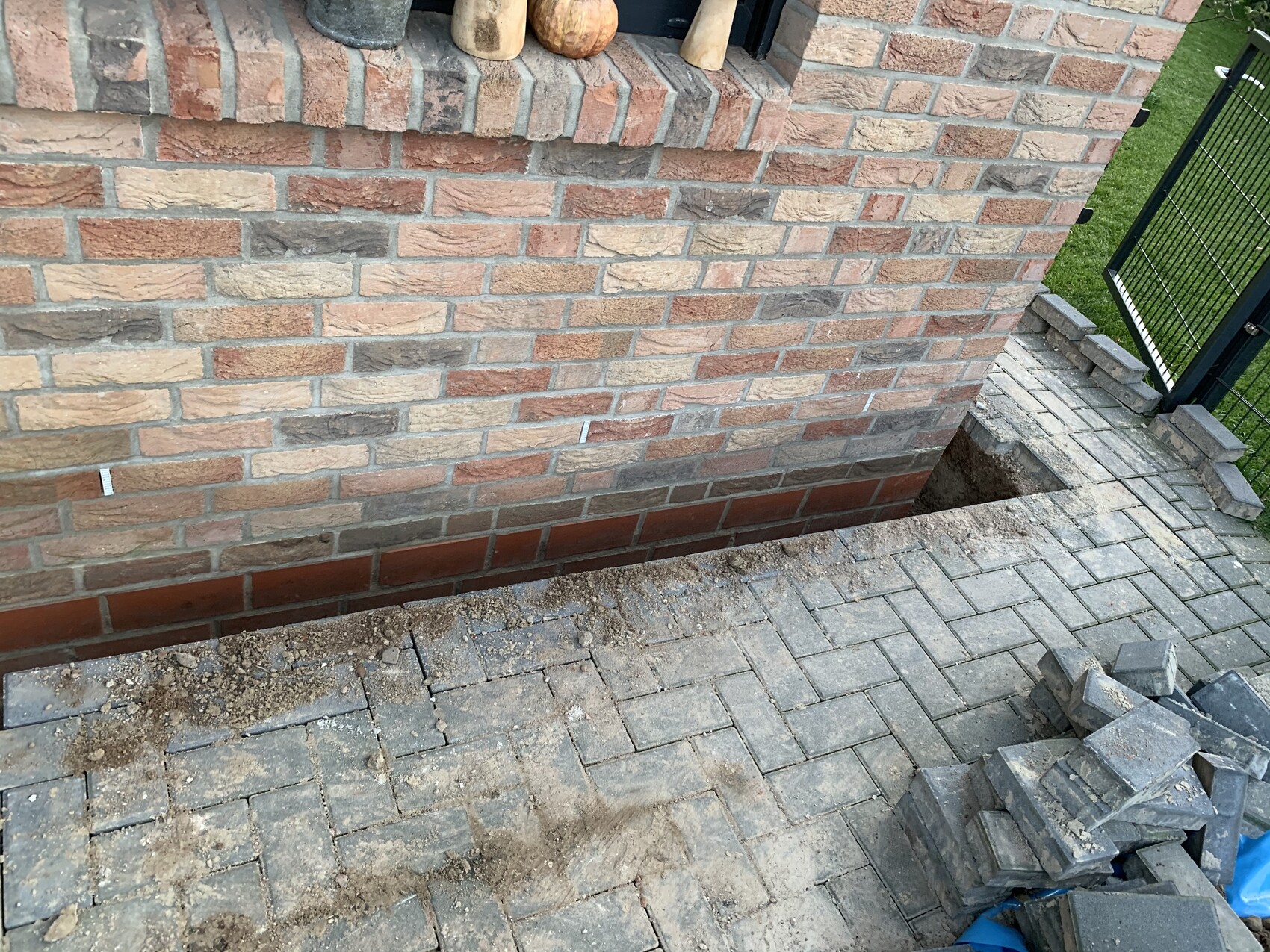
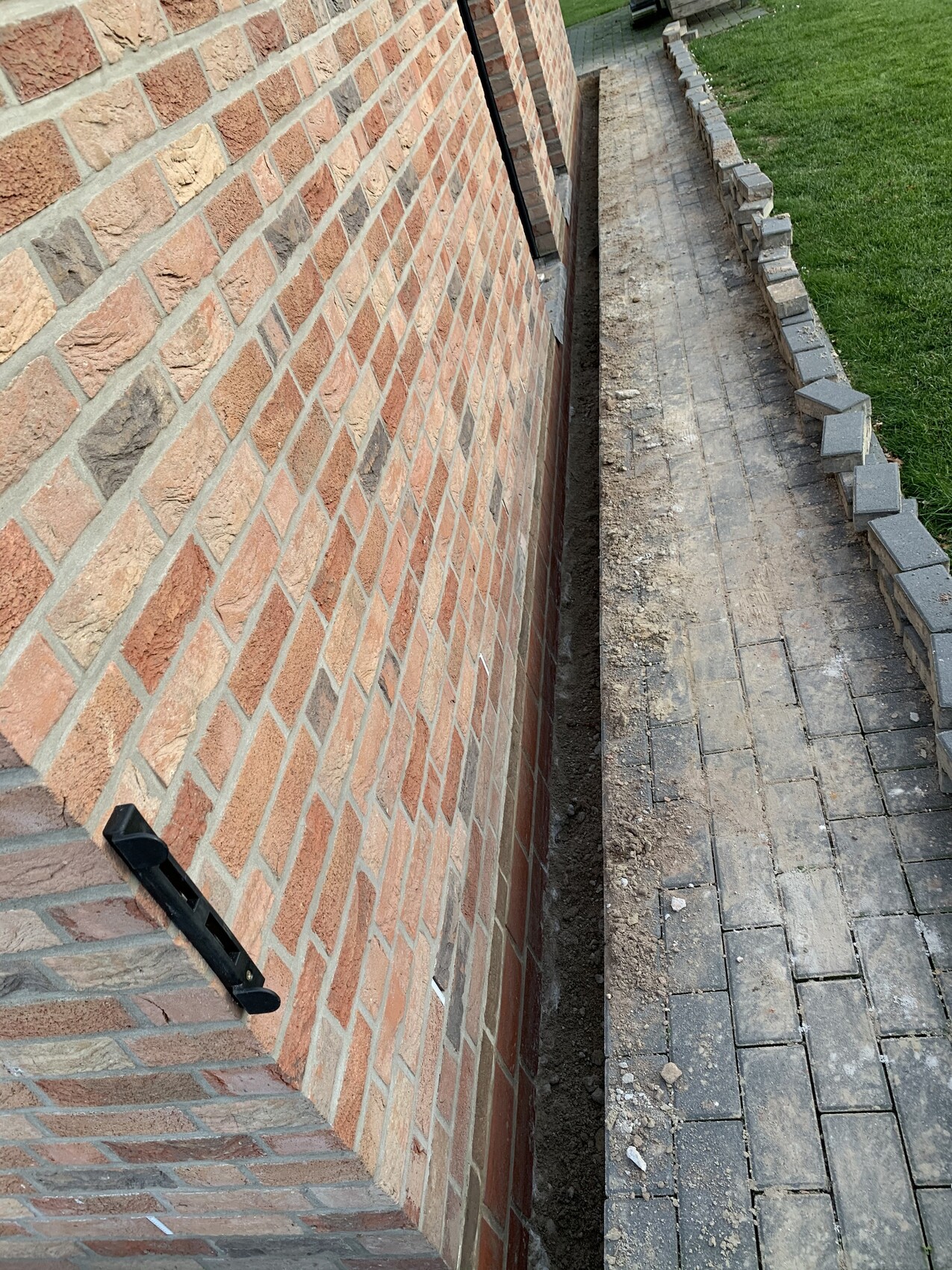
Since we definitely laid one paving stone too high, creating a moisture bridge, the black membrane on the red brick is pointless.
The soil no longer has physical contact with the brick wall; I have removed everything from the door to the window.
At the back of the house, the paving is exactly one stone lower, and we don’t have this problem there:
I will monitor the wall now and hope it dries. If not, I will have to call in an expert.
As already mentioned, there is only underfloor heating behind the wall, which is still at 1.6 bar.
It hasn’t rained in recent days, and visually, nothing has changed on the wall.
So, for now, we’ll wait and see.
before I hire an expert, I need to make sure it’s not our fault.
Since we definitely laid one paving stone too high, creating a moisture bridge, the black membrane on the red brick is pointless.
The soil no longer has physical contact with the brick wall; I have removed everything from the door to the window.
At the back of the house, the paving is exactly one stone lower, and we don’t have this problem there:
I will monitor the wall now and hope it dries. If not, I will have to call in an expert.
As already mentioned, there is only underfloor heating behind the wall, which is still at 1.6 bar.
It hasn’t rained in recent days, and visually, nothing has changed on the wall.
So, for now, we’ll wait and see.
Nepokat911 schrieb:
So, now we are just waiting a little while. Hello Nepokat,
you will have to wait quite a bit longer for the bricks to dry properly. But this is the correct approach.
Let them dry thoroughly. It’s not just about the appearance—the moisture is inside the bricks, and that takes time. I don’t think you’ll be able to complete the finishing this winter. When the sun comes out again in spring, you can rebuild, and then it will work.
Steven
I find the statement suggesting to consult an expert only when you are sure you are not at fault a bit strange.
This concerns your property, and it should be important to prevent any consequential damage as quickly as possible. Very valuable advice has already been given here, but I would definitely involve an expert immediately to ensure clarity and to initiate the appropriate measures...
This concerns your property, and it should be important to prevent any consequential damage as quickly as possible. Very valuable advice has already been given here, but I would definitely involve an expert immediately to ensure clarity and to initiate the appropriate measures...
Similar topics