
P
Peter791925 May 2024 23:37Hi everyone,
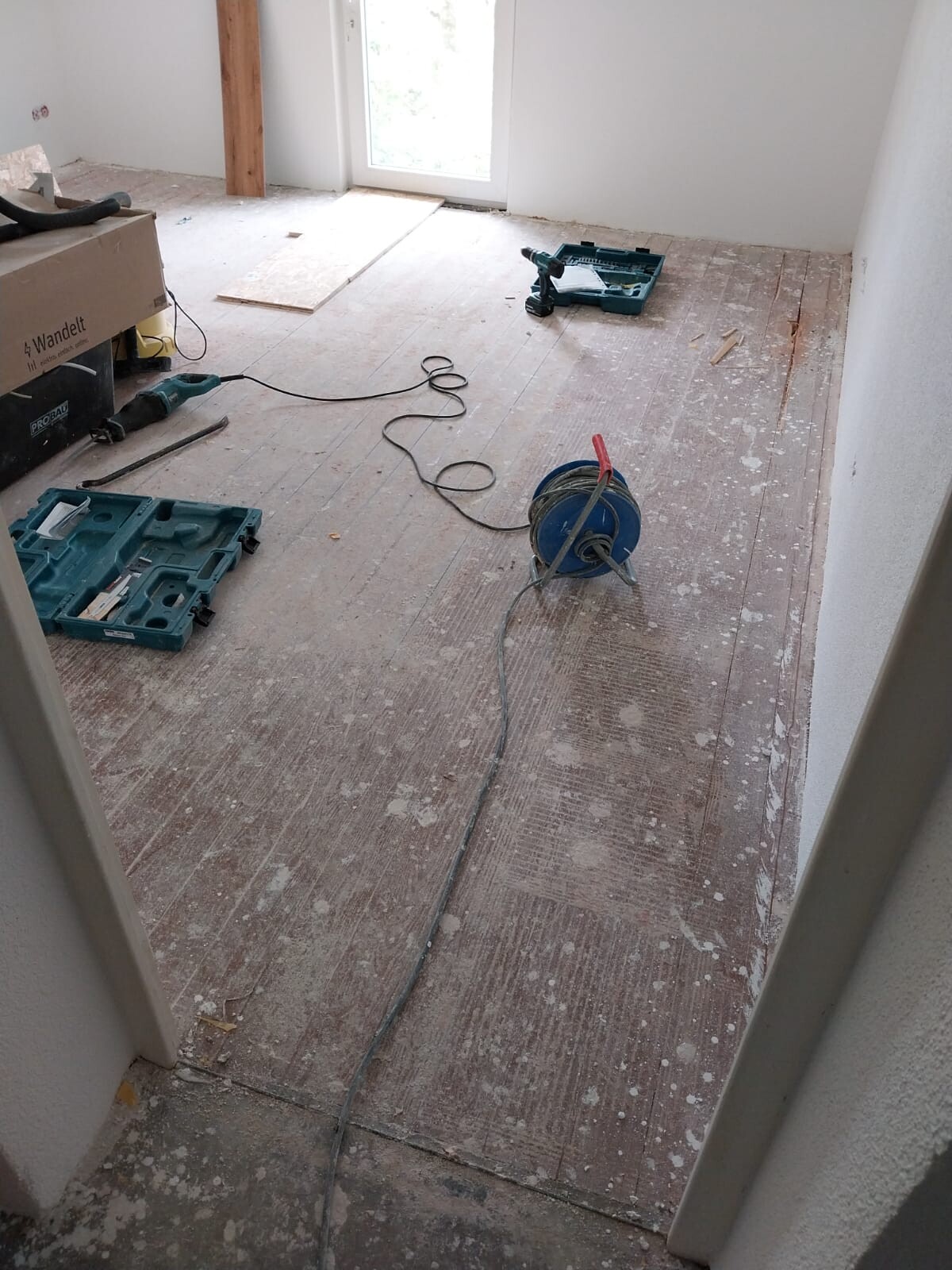
I have the following question: I bought a house from the 1950s. In the basement, two rooms have wooden floorboards. Beneath them, there is rubble and slag, all dry. I would like to apply a self-leveling screed over the wooden floorboards to create a solid, even surface. After that, I plan to install something like vinyl flooring.
My question now is: could I potentially have a moisture problem if I “seal” everything with the self-leveling screed?
Thank you all for your help!
I have the following question: I bought a house from the 1950s. In the basement, two rooms have wooden floorboards. Beneath them, there is rubble and slag, all dry. I would like to apply a self-leveling screed over the wooden floorboards to create a solid, even surface. After that, I plan to install something like vinyl flooring.
My question now is: could I potentially have a moisture problem if I “seal” everything with the self-leveling screed?
Thank you all for your help!
Peter7919 schrieb:
Now my question: could I possibly have a moisture problem if I cover everything with the liquid screed?What do you mean by that? There will be a vapor barrier under the screed anyway.P
Peter791926 May 2024 20:59I believe that the old floorboards underneath the screed and vapor barrier are beginning to rot, as moisture could be accumulating there.
Peter7919 schrieb:
I believe that the old floorboards beneath the screed and membrane may start to rot because moisture could accumulate there. If the floorboards were dry in the past, along with everything placed on them, it’s unlikely that any moisture rose from below in the past—otherwise, you would have noticed it inside the room. This situation is unlikely to change in the future.

Hello "Peter7919,"
What you are planning is critical.
A screed is not absolutely necessary for your intended project.
An intensive sanding of the old floorboards, followed by an appropriate primer and then a filler suitable for wooden subfloors would be sufficient. That would be completely adequate.
Now comes the critical part:
If you install a non-breathable top layer over the floorboards, you are creating a vapor-tight barrier on the wooden boards.
This will only work if you are absolutely sure that the wooden structure underneath is always well ventilated from below. The assumption that no harmful moisture can rise from beneath due to the age of the floorboards is technically incorrect!
Of course, moisture can rise if conditions are right (for example, if the floor is in contact with the ground or above a vaulted cellar).
Put the topic of screed aside quickly, as a wet screed always introduces water into the structural layer. This is simply not advisable.
The leveling compound based on calcium sulfate that I consider suitable for wooden floors, possibly reinforced with fiberglass mesh if there are large gaps between the floorboards, is completely sufficient at a thickness of about 5mm (2 inches).
Calcium sulfate leveling compounds introduce very little water to the wooden boards because most of it is chemically bound.
--------------------------------
Best regards and good luck: KlaRa
(currently temporarily residing in Romania)
What you are planning is critical.
A screed is not absolutely necessary for your intended project.
An intensive sanding of the old floorboards, followed by an appropriate primer and then a filler suitable for wooden subfloors would be sufficient. That would be completely adequate.
Now comes the critical part:
If you install a non-breathable top layer over the floorboards, you are creating a vapor-tight barrier on the wooden boards.
This will only work if you are absolutely sure that the wooden structure underneath is always well ventilated from below. The assumption that no harmful moisture can rise from beneath due to the age of the floorboards is technically incorrect!
Of course, moisture can rise if conditions are right (for example, if the floor is in contact with the ground or above a vaulted cellar).
Put the topic of screed aside quickly, as a wet screed always introduces water into the structural layer. This is simply not advisable.
The leveling compound based on calcium sulfate that I consider suitable for wooden floors, possibly reinforced with fiberglass mesh if there are large gaps between the floorboards, is completely sufficient at a thickness of about 5mm (2 inches).
Calcium sulfate leveling compounds introduce very little water to the wooden boards because most of it is chemically bound.
--------------------------------
Best regards and good luck: KlaRa
(currently temporarily residing in Romania)
P
Peter791929 May 2024 01:29Hi KlaRa,
Thank you very much for your really good answer!
Actually, the gaps between floorboards are supposed to remain open… so I wouldn’t need any filler, right?
On the other hand, it looks nicer if the gaps are filled. What material would you recommend for that?
Thanks for your effort.
Good luck, Peter
Thank you very much for your really good answer!
Actually, the gaps between floorboards are supposed to remain open… so I wouldn’t need any filler, right?
On the other hand, it looks nicer if the gaps are filled. What material would you recommend for that?
Thanks for your effort.
Good luck, Peter
Similar topics