
Hello,
I probably have a problem with my wall.
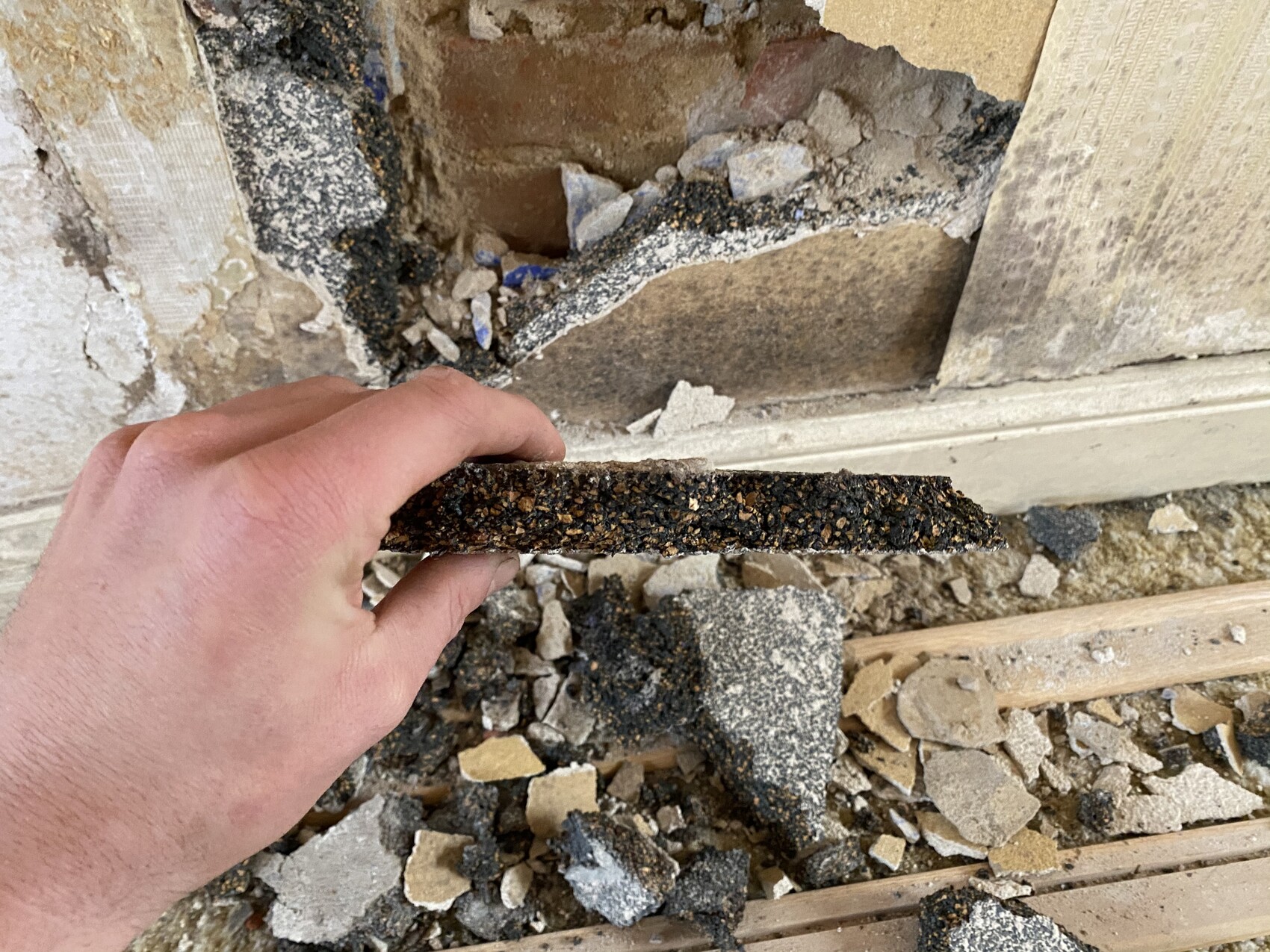
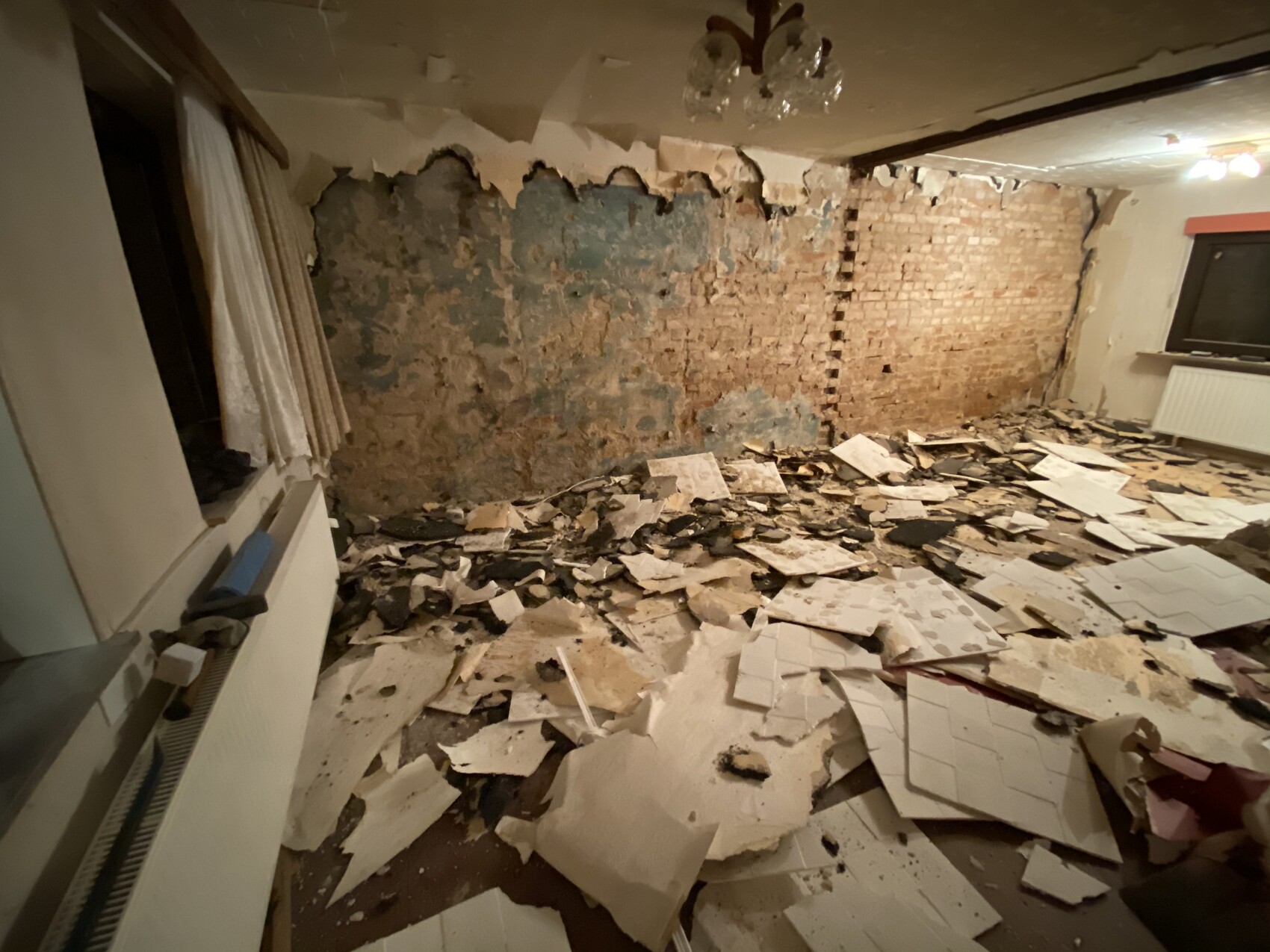
There was mold visible on the wallpaper, and the smell was unpleasant. After removing the wallpaper, I found insulation boards underneath, so it is interior insulation. The insulation material is unknown to me, possibly cork??? I will add photos. The house was built at the end of the 18th century, so likely from older times.
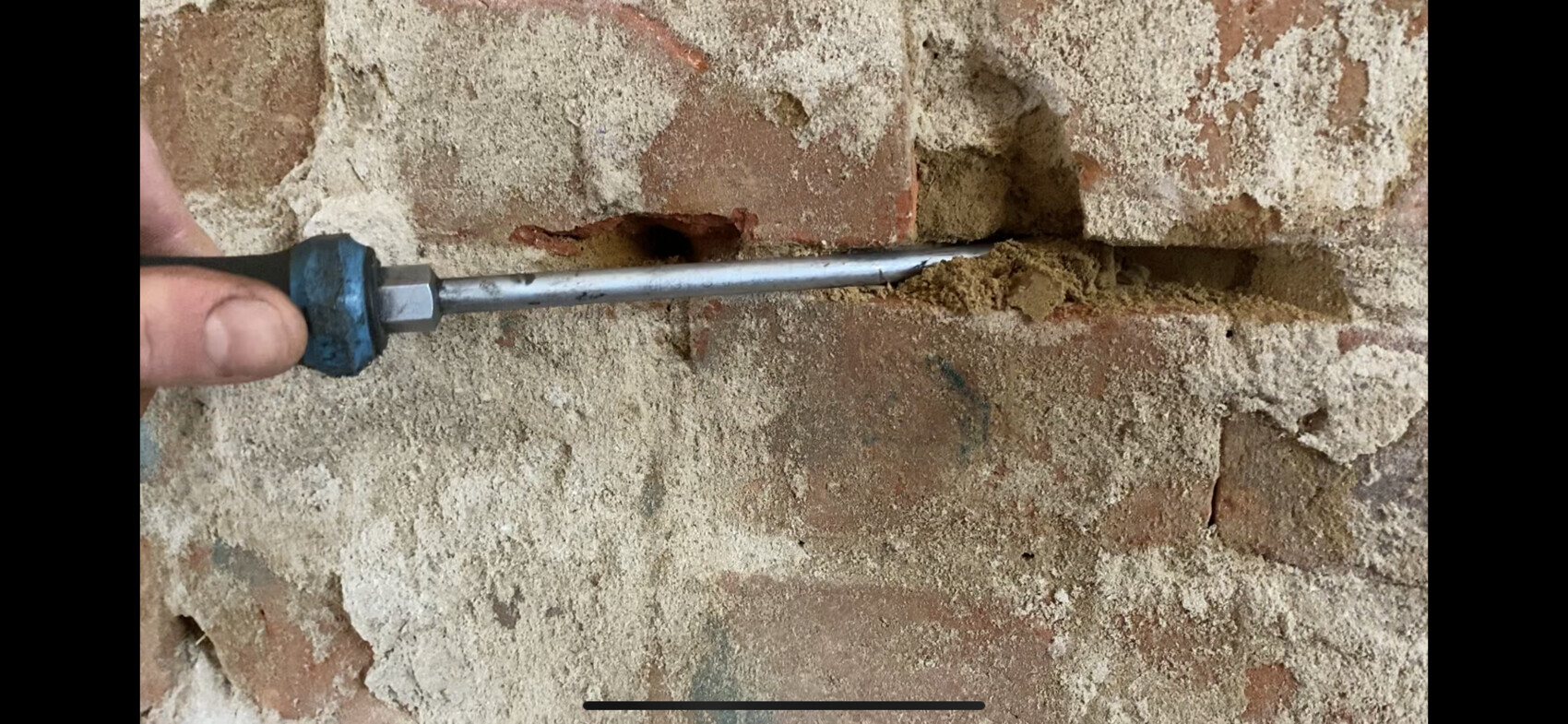
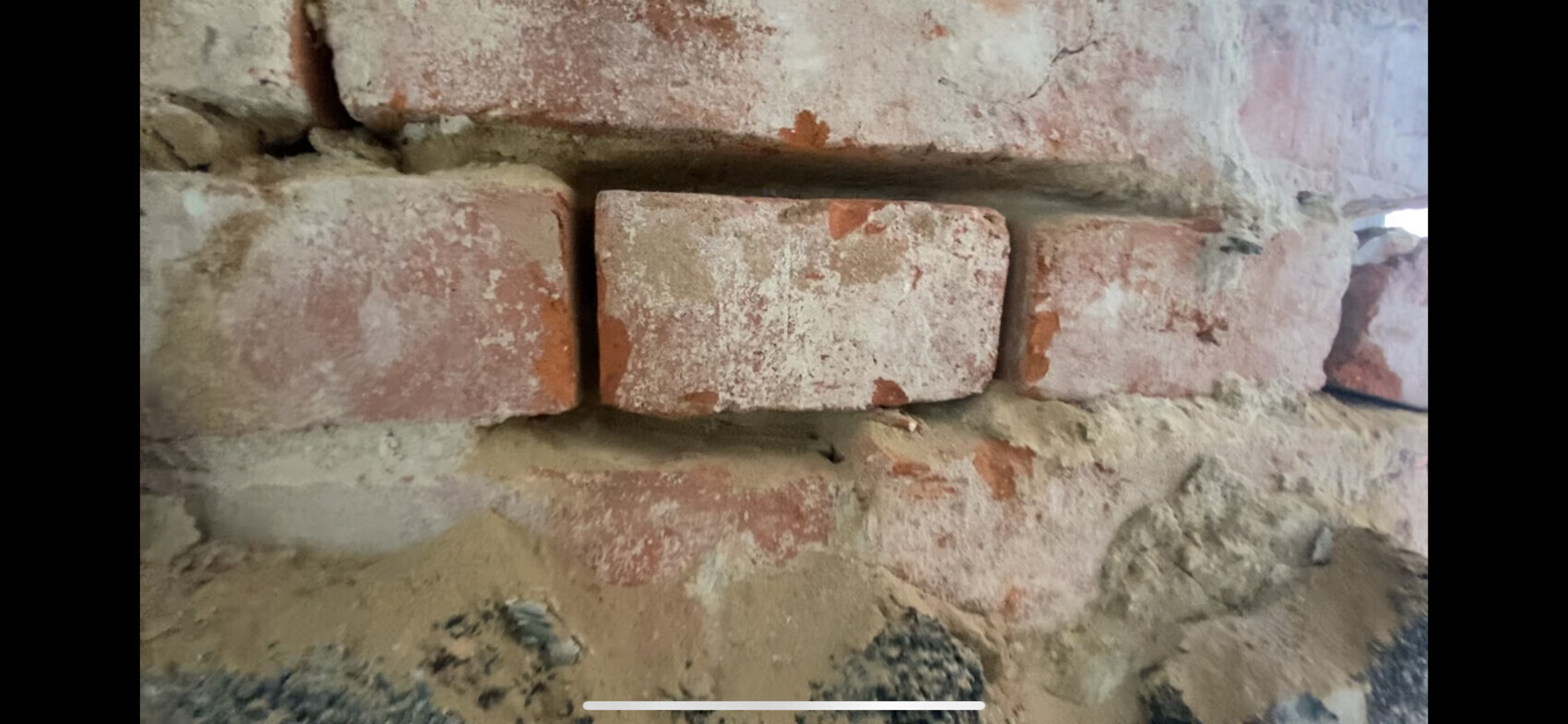
What worries me most are the joints between the masonry. Are these bricks? What are they called? The joints can be easily removed completely with a finger or screwdriver. To me, it looks like sand from a sandbox. This doesn’t seem like modern mortar, which is hard and would crumble instead if loose—am I mistaken?
What was used for these joints? What can I use to refill the joints? Despite everything, no bricks are loose or easily removed. The section of the wall is not above a basement.
What is the best way to proceed?
Thank you very much in advance, I would appreciate any answers. 🙂
I probably have a problem with my wall.
There was mold visible on the wallpaper, and the smell was unpleasant. After removing the wallpaper, I found insulation boards underneath, so it is interior insulation. The insulation material is unknown to me, possibly cork??? I will add photos. The house was built at the end of the 18th century, so likely from older times.
What worries me most are the joints between the masonry. Are these bricks? What are they called? The joints can be easily removed completely with a finger or screwdriver. To me, it looks like sand from a sandbox. This doesn’t seem like modern mortar, which is hard and would crumble instead if loose—am I mistaken?
What was used for these joints? What can I use to refill the joints? Despite everything, no bricks are loose or easily removed. The section of the wall is not above a basement.
What is the best way to proceed?
Thank you very much in advance, I would appreciate any answers. 🙂
K
knalltüte3 Mar 2021 20:29Perhaps you should first explain the basic conditions. Presumably, the house is now your property? Inherited or purchased, and under what conditions? What do you plan to do with the property? Live in it yourself, renovate and sell, or something else...
Soft-fired bricks are typical for that period. They definitely require external protection, such as plaster or a similar coating. I have an old exterior wall made of various soft-fired bricks (about 100m² (1,076 sq ft)) that I covered with a ventilated façade of larch wood, including 10cm (4 inches) of mineral wool insulation. Internal insulation is generally not recommended (but unfortunately is often found in my house as well, typical building mistakes from the past). Having a professional involved is advisable, as mentioned before. Moisture must be kept out as much as possible, but the house should not be made too airtight, for example, ventilation around load-bearing beams is important.
For my house, it has often been suggested as a "renovation measure" to "drive through with an excavator" 🙂
A proper renovation can be costly, and that must be clear. A half-hearted approach ends up costing even more, just over a longer period.
But old properties do have their charm... (although, for me, the old house mostly just gets on my nerves since I started building a new one :rolleyes 🙂
Soft-fired bricks are typical for that period. They definitely require external protection, such as plaster or a similar coating. I have an old exterior wall made of various soft-fired bricks (about 100m² (1,076 sq ft)) that I covered with a ventilated façade of larch wood, including 10cm (4 inches) of mineral wool insulation. Internal insulation is generally not recommended (but unfortunately is often found in my house as well, typical building mistakes from the past). Having a professional involved is advisable, as mentioned before. Moisture must be kept out as much as possible, but the house should not be made too airtight, for example, ventilation around load-bearing beams is important.
For my house, it has often been suggested as a "renovation measure" to "drive through with an excavator" 🙂
A proper renovation can be costly, and that must be clear. A half-hearted approach ends up costing even more, just over a longer period.
But old properties do have their charm... (although, for me, the old house mostly just gets on my nerves since I started building a new one :rolleyes 🙂
I have already heard something about sakret; once in the workshop, a leveling compound from that manufacturer was used. We want to live in the house ourselves. I have already bought it. Actually, this is the only wall that is only plastered on the outside, but you can still see the outlines of the bricks, so the plaster layer is relatively thin. The other walls are covered with plastic panels. Since in the roof area the wall, or rather the mortar between the bricks, was much drier and firmer, I assume the moisture is coming from below or from outside. On the outside, some plaster has peeled off in places so that the bricks are already visible. The wall shown in the pictures is the one I consider the worst. As far as I have found out, the insulation boards I had were made of tar and cork. When I removed them, the real smell of mold appeared. It should be added that the house was almost unheated for a year. I am not completely alone in this, as my uncle is an architect and will also give me some advice. What options do I have now? I have understood that re-mortaring the joints is necessary. Internal insulation is definitely not an option. I initially planned to waterproof the wall from the outside and install a horizontal barrier using drill holes and injection. Does the insulation have to be applied from the outside immediately, or can I wait a bit as long as the wall is at least sealed from the outside for now? I have seen systems where boards are glued to the outside and then plastered over—would that be recommended? Is it also possible to build a second wall from the inside or outside? What other systems are available?
Sorry for the amount of text and my lack of knowledge. I am determined to see this through. I work 18 hours every day—work, house, and master’s school. Every morning when I get up, I can hardly wait to get started. Thanks for the answers and information.
Sorry for the amount of text and my lack of knowledge. I am determined to see this through. I work 18 hours every day—work, house, and master’s school. Every morning when I get up, I can hardly wait to get started. Thanks for the answers and information.
 Winniefred4 Mar 2021 07:42
Then the wall has been almost exposed for who knows how long, and moisture will also come from below. No wonder the joints became so porous due to the moisture and there was mold. Once the rest of the house is insulated, I would personally insulate and plaster this wall in the same way (have it done professionally... this is not a DIY job). The injection method only prevents moisture from below, not from the outside. You absolutely need to educate yourself about building physics; please don’t just start insulating blindly. What kind of boards are those on the outside?
This is really a construction project that shouldn’t be planned and executed in a hurry. First, slow down and think and plan carefully. It will save time and money in the end! Houses from that construction period usually have good structural quality and can become real treasures. But if you make mistakes, in a few years you’ll just end up with a mold-infested building again.
This is really a construction project that shouldn’t be planned and executed in a hurry. First, slow down and think and plan carefully. It will save time and money in the end! Houses from that construction period usually have good structural quality and can become real treasures. But if you make mistakes, in a few years you’ll just end up with a mold-infested building again.
Winniefred4 Mar 2021 13:21The entire house will probably need to be renovated anyway. To repeat: this can only be done with a professional! No one in this forum can take that off your hands. These are not minor details; it seems you need to plan a full renovation. Talk to an architect and find some good tradespeople, and do yourself what you can manage well. Demolition, floors, ceilings, walls, drywall, maybe also windows, interior doors, and similar tasks. But the facade, moisture in the masonry, tiling, electrical work... and also structural engineering and the roof—you definitely need specialists for those.
Similar topics