
Hello,
I am currently setting up my apartment and want to mount the TV on a wall. I drilled the first hole but I’m not sure if the wall plugs are suitable, as drilling was relatively easy.
Based on the drilling dust, it seems to be gypsum (see pictures). However, the wall does not sound hollow and is about 25cm (10 inches) deep. What material could this wall be made of? And will standard plastic wall plugs work in this type of wall?
Thanks and best regards
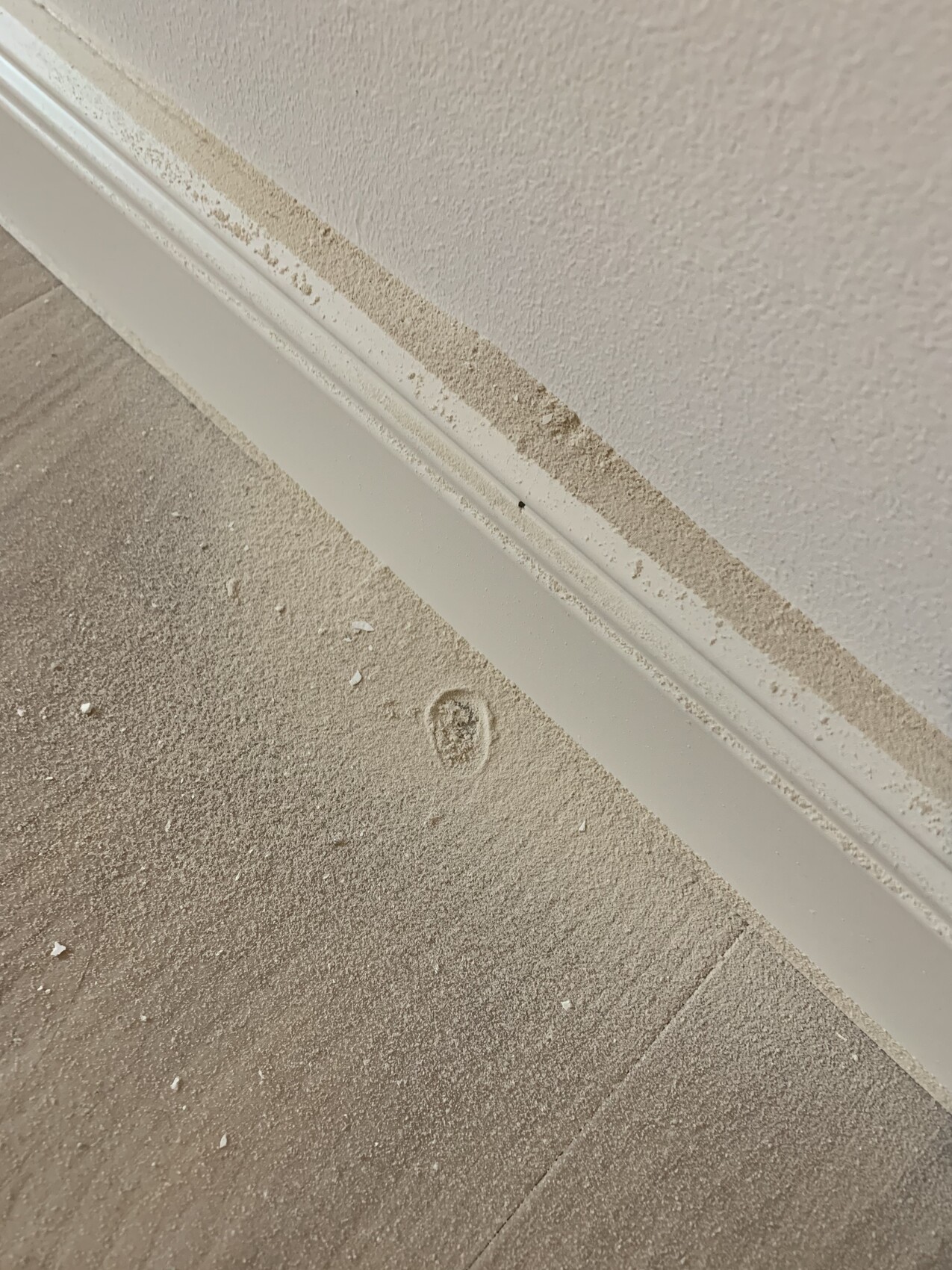
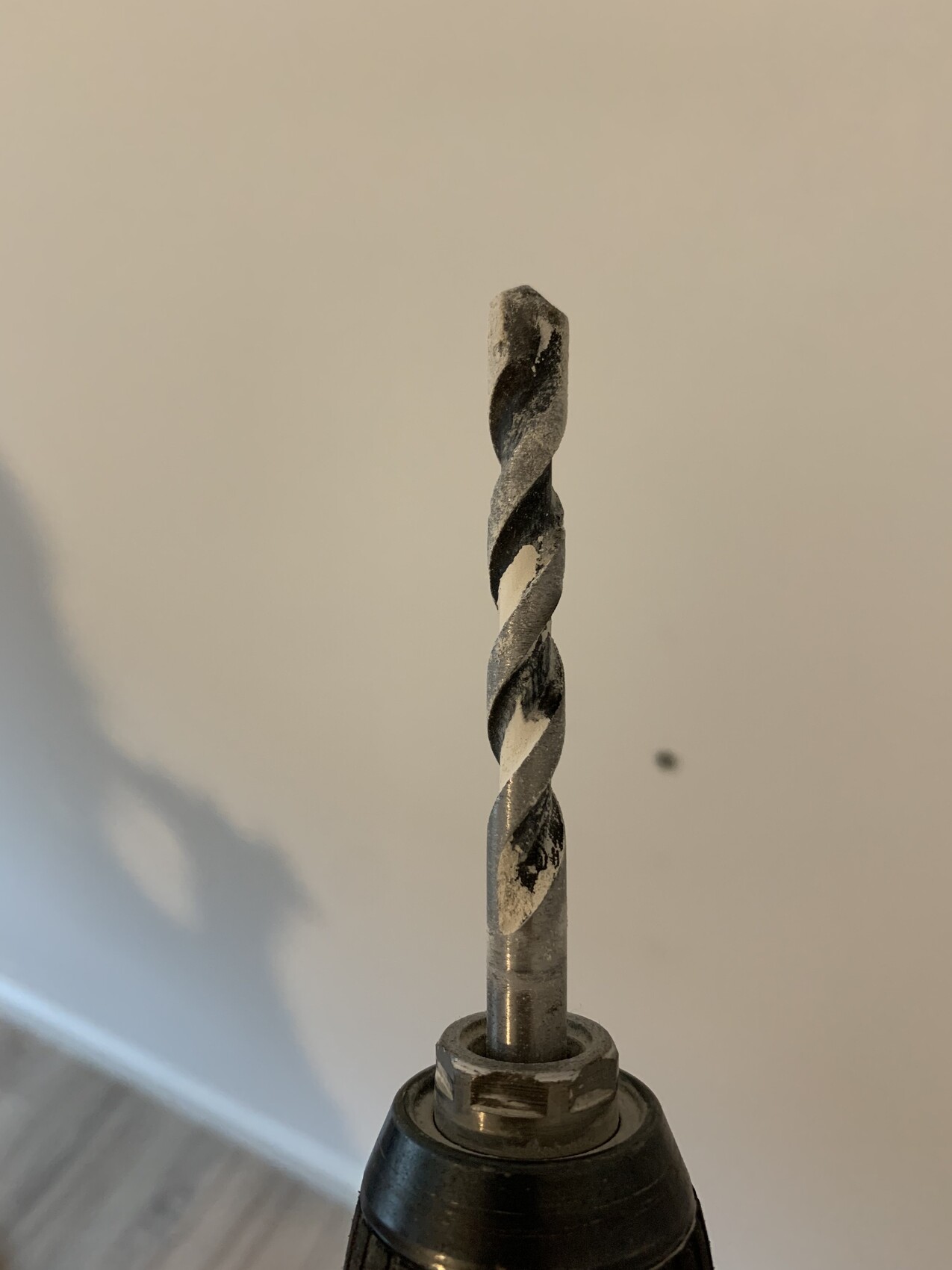
I am currently setting up my apartment and want to mount the TV on a wall. I drilled the first hole but I’m not sure if the wall plugs are suitable, as drilling was relatively easy.
Based on the drilling dust, it seems to be gypsum (see pictures). However, the wall does not sound hollow and is about 25cm (10 inches) deep. What material could this wall be made of? And will standard plastic wall plugs work in this type of wall?
Thanks and best regards
S
Smialbuddler27 Oct 2021 17:45It looks like drywall was installed over stone, which is quite common for renovations. How old is the house?
(By the way, you shouldn’t be making all your holes into craters—what’s going to hold anything then? 🙂 )
(By the way, you shouldn’t be making all your holes into craters—what’s going to hold anything then? 🙂 )
Smialbuddler schrieb:
Looks like drywall attached over masonry, which is quite common in renovations. How old is the house?
(By the way, you shouldn’t be turning all your holes into craters, what’s supposed to hold there? 🙂 ) The building is from the 1960s, I believe, and the apartment was completely renovated recently. Yes, the holes are starting to get a bit larger because the material is quite porous. However, they are about 7cm deep (3 inches), and with the anchors, hopefully they will hold well.
Drywall over masonry would make some sense. I hit resistance exactly at 2cm (0.8 inches) in that hole. With the other holes, it was still easy to go beyond 2cm (0.8 inches). And what could the right hole be? I couldn’t even get 2cm (0.8 inches) in there…
S
Smialbuddler27 Oct 2021 18:13It’s hard to tell, but it definitely looks like a screw to me. Does it sound hollow when you tap it?
As mentioned, drywall sheets are often glued directly onto old, uneven plaster walls to quickly level them out and sometimes to hide cables underneath.
However, they are generally glued in place.
On wood or metal studs, the panels are screwed on, and the screw holes are then filled with putty. That would match the depth you mentioned.
Maybe this is where a new wall extension starts? Or an old door opening that was closed off with lightweight construction?
If it really is a screw, there shouldn’t be anything right next to it. Try carefully drilling sideways next to the marked elongated hole to the same depth. That way, you can at least rule out the chance of accidentally hitting the screw exactly.
As mentioned, drywall sheets are often glued directly onto old, uneven plaster walls to quickly level them out and sometimes to hide cables underneath.
However, they are generally glued in place.
On wood or metal studs, the panels are screwed on, and the screw holes are then filled with putty. That would match the depth you mentioned.
Maybe this is where a new wall extension starts? Or an old door opening that was closed off with lightweight construction?
If it really is a screw, there shouldn’t be anything right next to it. Try carefully drilling sideways next to the marked elongated hole to the same depth. That way, you can at least rule out the chance of accidentally hitting the screw exactly.
I will continue drilling tomorrow. I will also try to free the metal object a bit; maybe it will be possible to tell if it’s a screw. At the moment, it already looks similar to a screw head. But the screw would only make sense if, as you described, an earlier door had been sealed with a wooden or metal frame, right? I’m not sure if I understood you correctly.
S
Smialbuddler27 Oct 2021 23:57SachaHH schrieb:
But the screw would only make sense if, as you described, an earlier door with a wooden or metal stud frame had been sealed off, right? I’m not sure if I understood you correctly. Well, at least that’s one possible explanation that comes to mind.
The other hole and the fact that this is an older, recently renovated house strongly suggest plasterboard mounted on a solid wall.
It’s unusual to suddenly have an additional substructure right next to that spot; in that case, a sealed opening would be one of the few reasonably plausible ideas. You haven’t said yet whether it sounds hollow there?
Carefully uncovering the area next to it tomorrow should definitely help. 🙂
Similar topics