
Good morning everyone,
we have created an opening in the basement from a small WC to the room where the oil tanks used to be (we switched to a gas heating system). The old bathroom was quite small, so we made the opening to enlarge the space.
We have already removed tiles from some walls and now the walls need to be plastered somehow. Would you recommend getting them properly plastered, or could drywall be a suitable alternative? In the area where the new shower will be installed (where the waste pipe comes down from above), we will install a drywall partition anyway because I want to conceal the pipe there. I was advised against rerouting the pipe into the external wall.
What are your thoughts on this? The advantage of drywall is that most of it could be done as a DIY project. However, the ceiling definitely needs to be plastered. The rooms are already quite low in height, and I don’t want to lose any more space by suspending the ceiling.
Is it feasible to use drywall here, or would you recommend having it properly plastered instead?
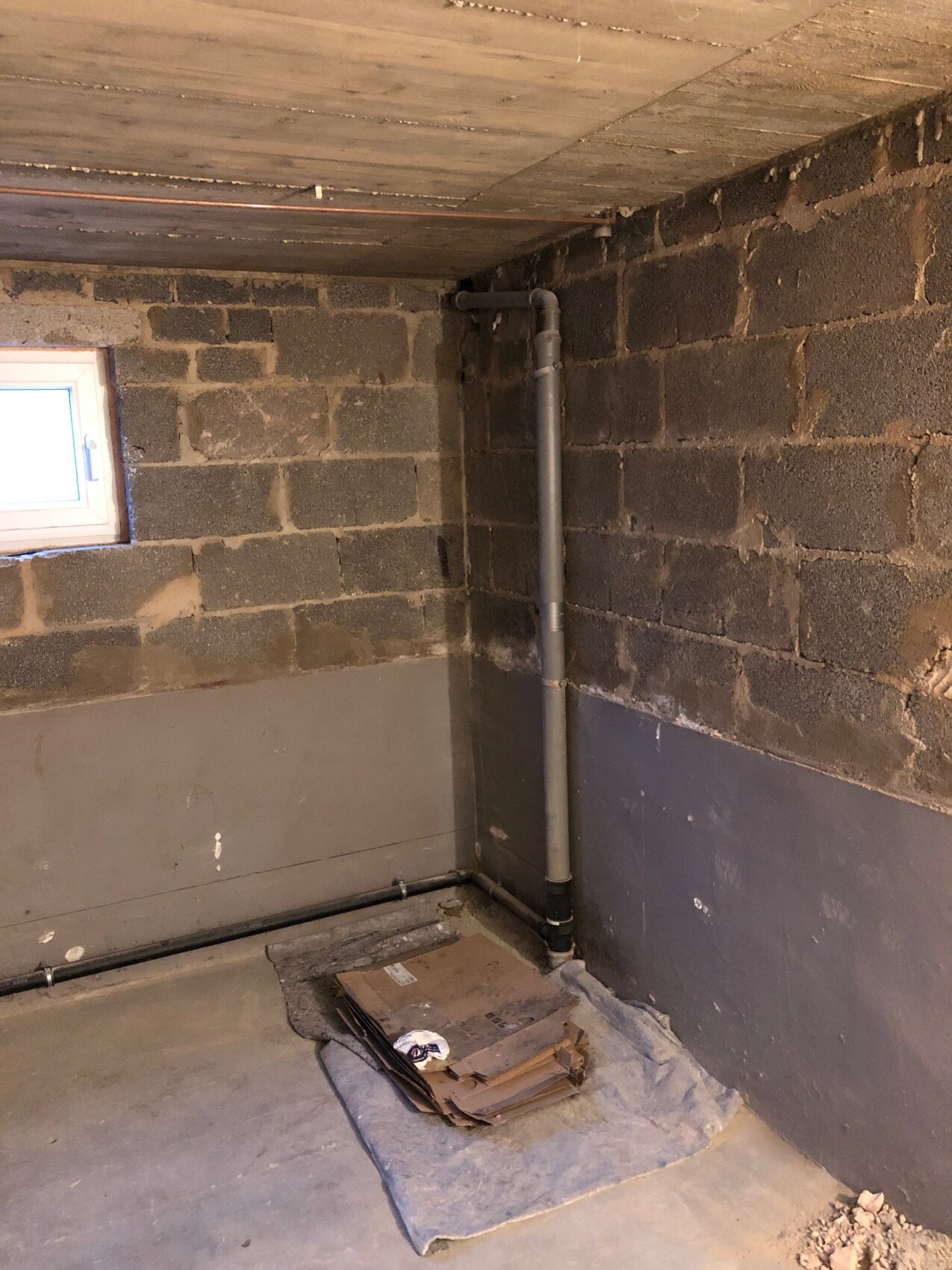
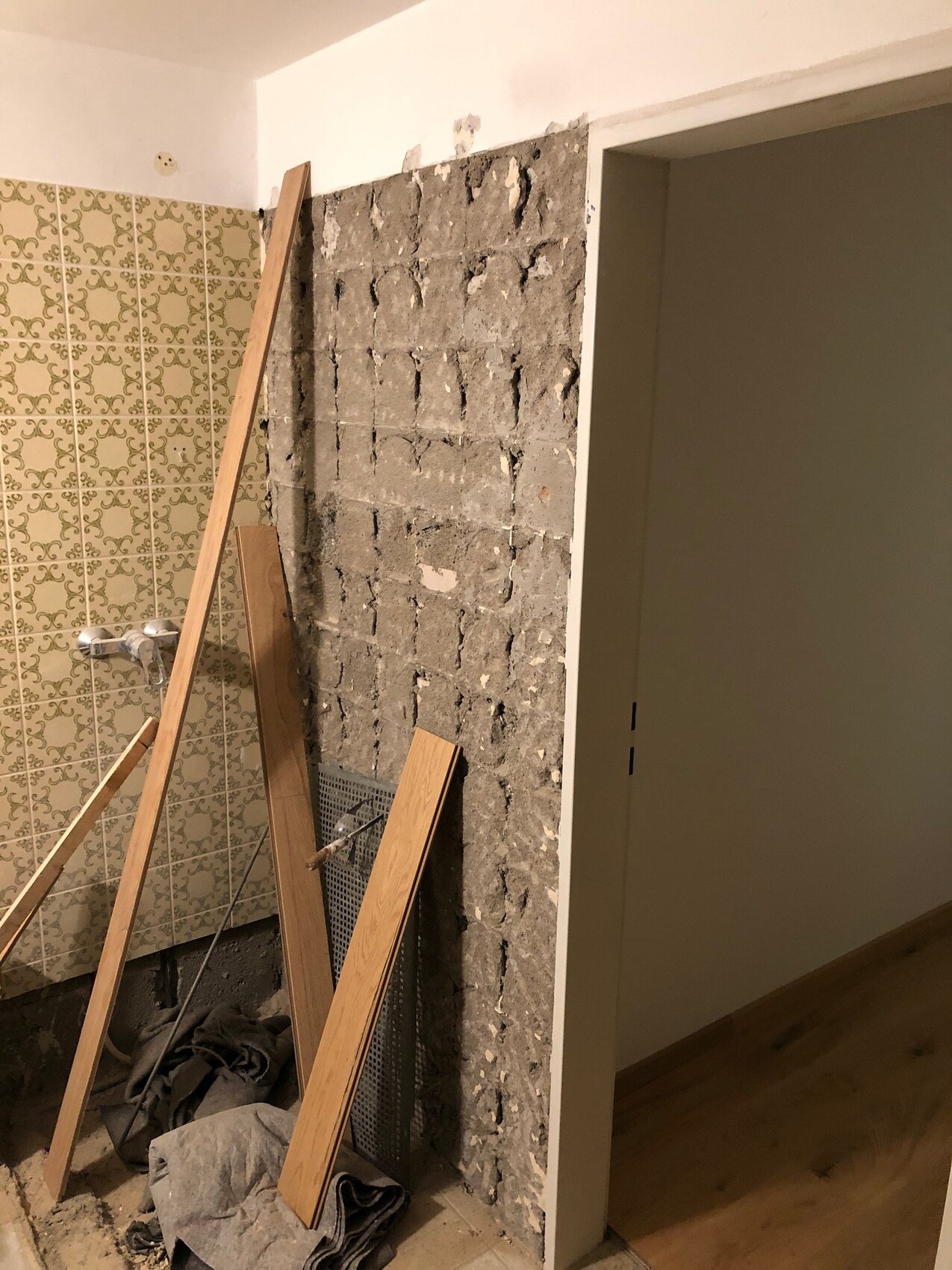
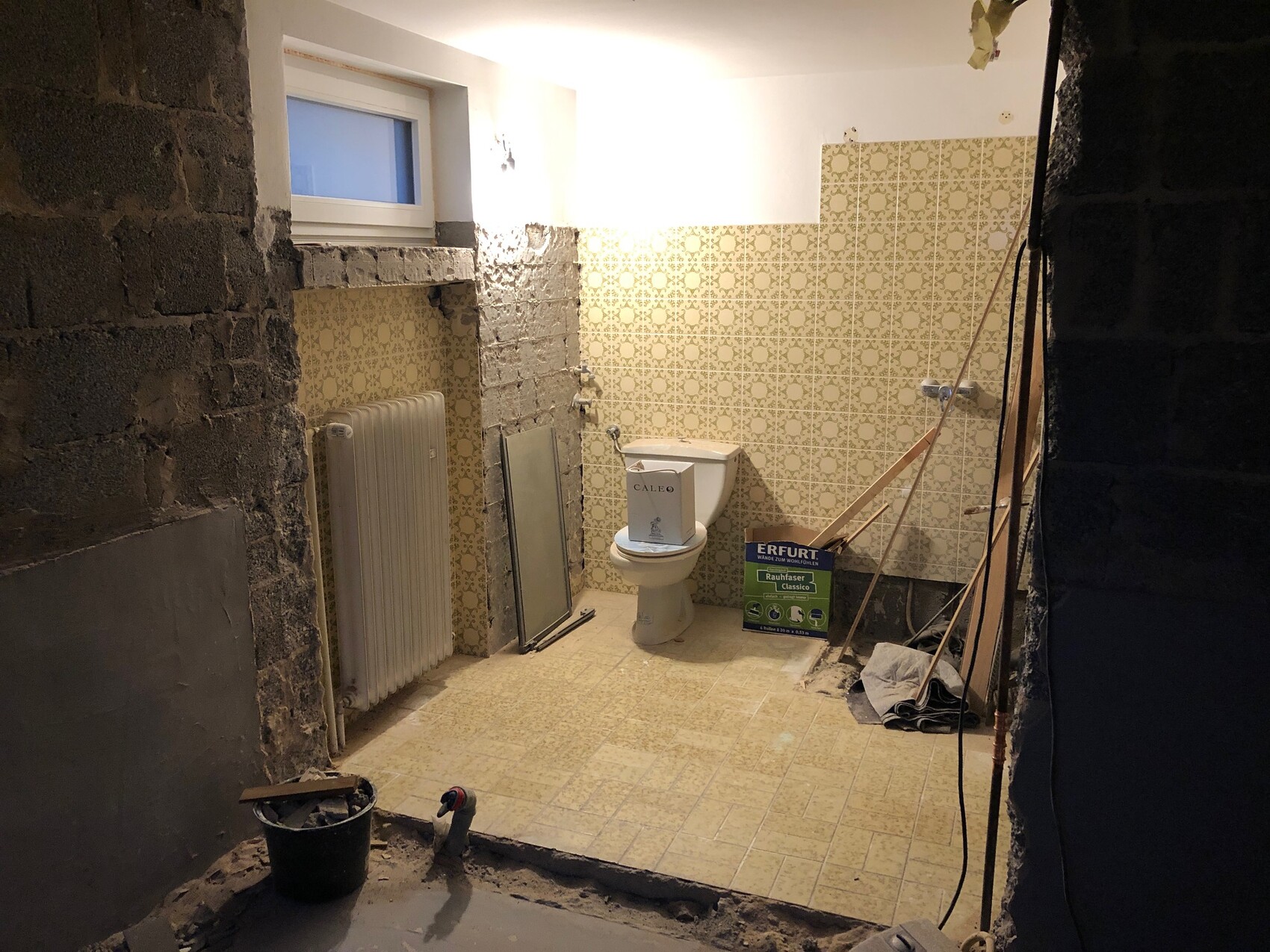
we have created an opening in the basement from a small WC to the room where the oil tanks used to be (we switched to a gas heating system). The old bathroom was quite small, so we made the opening to enlarge the space.
We have already removed tiles from some walls and now the walls need to be plastered somehow. Would you recommend getting them properly plastered, or could drywall be a suitable alternative? In the area where the new shower will be installed (where the waste pipe comes down from above), we will install a drywall partition anyway because I want to conceal the pipe there. I was advised against rerouting the pipe into the external wall.
What are your thoughts on this? The advantage of drywall is that most of it could be done as a DIY project. However, the ceiling definitely needs to be plastered. The rooms are already quite low in height, and I don’t want to lose any more space by suspending the ceiling.
Is it feasible to use drywall here, or would you recommend having it properly plastered instead?
N
nordanney11 Feb 2021 16:37Gypsum board (green) everywhere. You can simply stick it to the wall using Perlfix (except, of course, where your drain pipe is). It would also hold on the ceiling – although there, I would still suspend it using 24mm (1 inch) battens plus 12.5mm (0.5 inch) drywall. This also allows for recessed spotlights. Plastering doesn’t really offer any real advantage compared to suspending it.
nordanney schrieb:
). It would also work on the ceiling – although I would suspend it there using 24mm (1 inch) battens plus 12.5mm (0.5 inch) drywall. That way, flush-mounted spotlights would still fit. Applying plaster doesn’t really offer a real advantage compared to suspending the ceiling. The ceiling in the area of the old toilet is already plastered, so I thought it might be possible to blend it in when plastering the new ceiling. With battens and drywall on top, I’ll lose at least 3-4cm (1.2-1.6 inches), right? I had hoped it would be less with just plaster. I’ll measure everything again precisely—it’s quite tight all around.

X_SH5_X schrieb:
Is this feasible with drywall, or would it be better to have it professionally plastered? Dry plaster is proper plaster—in my opinion, even more so than wet plaster in this case ;-)
https://www.instagram.com/11antgmxde/
https://www.linkedin.com/company/bauen-jetzt/
11ant schrieb:
Dry plaster is “real” plaster – in my opinion, even more “real” than wet plaster here ;-)As a layperson, real plaster just feels like something “different” to me. But it’s good to hear that you think it could actually be a good choice here.Similar topics