
Good morning everyone,
we have created an opening in the basement from a small WC to the room where the oil tanks used to be (we switched to a gas heating system). The old bathroom was quite small, so we made the opening to enlarge the space.
We have already removed tiles from some walls and now the walls need to be plastered somehow. Would you recommend getting them properly plastered, or could drywall be a suitable alternative? In the area where the new shower will be installed (where the waste pipe comes down from above), we will install a drywall partition anyway because I want to conceal the pipe there. I was advised against rerouting the pipe into the external wall.
What are your thoughts on this? The advantage of drywall is that most of it could be done as a DIY project. However, the ceiling definitely needs to be plastered. The rooms are already quite low in height, and I don’t want to lose any more space by suspending the ceiling.
Is it feasible to use drywall here, or would you recommend having it properly plastered instead?
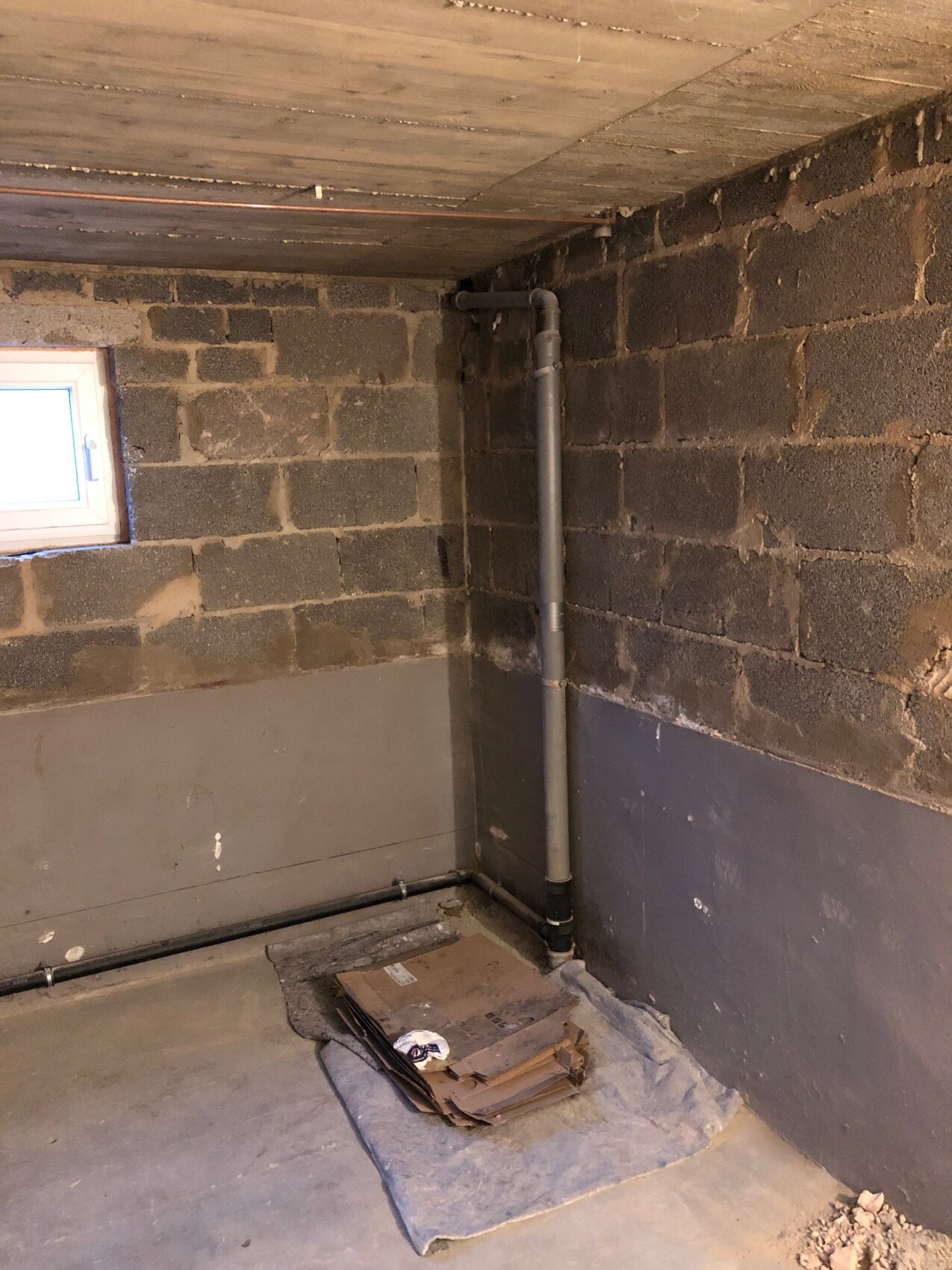
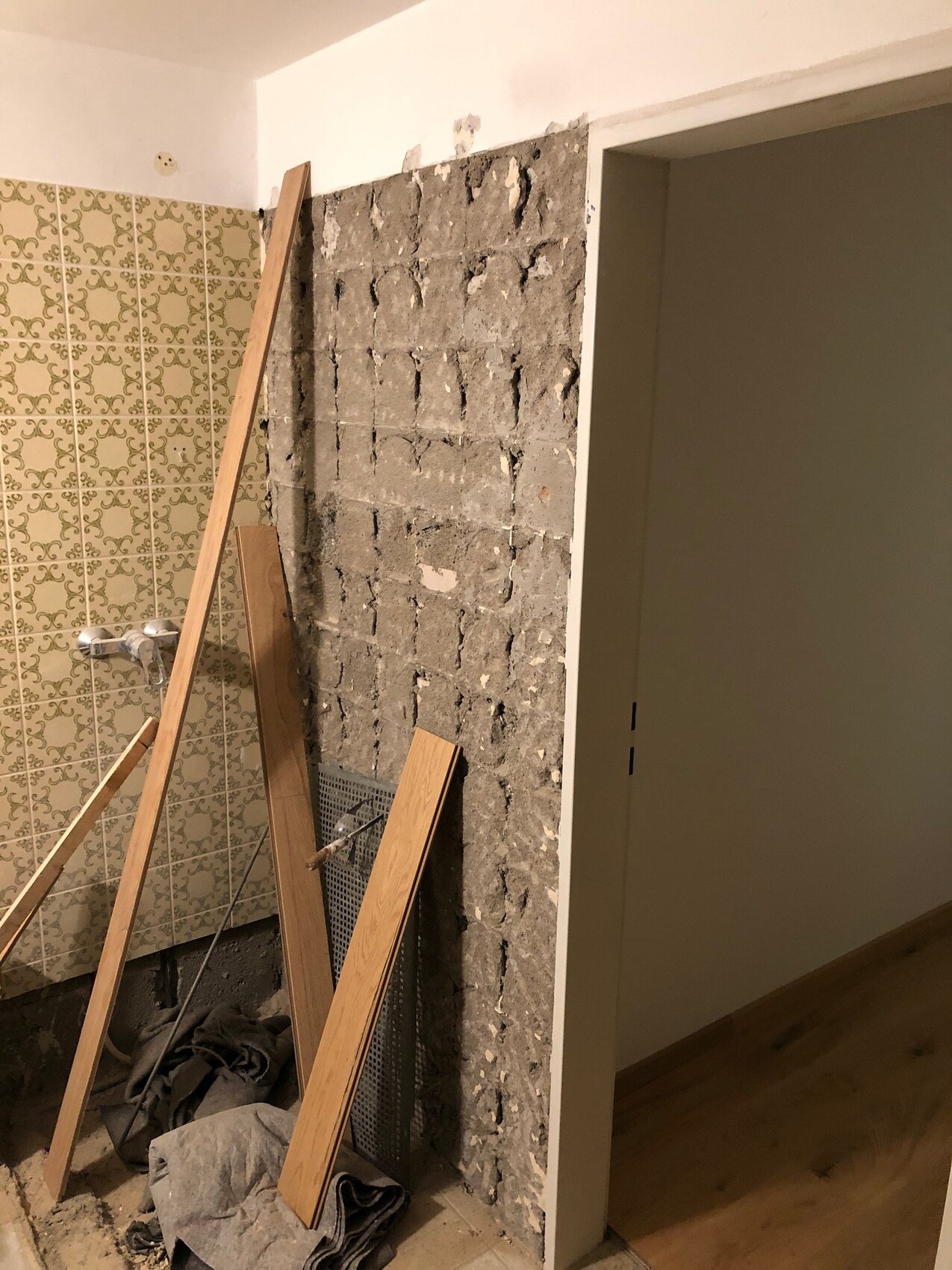
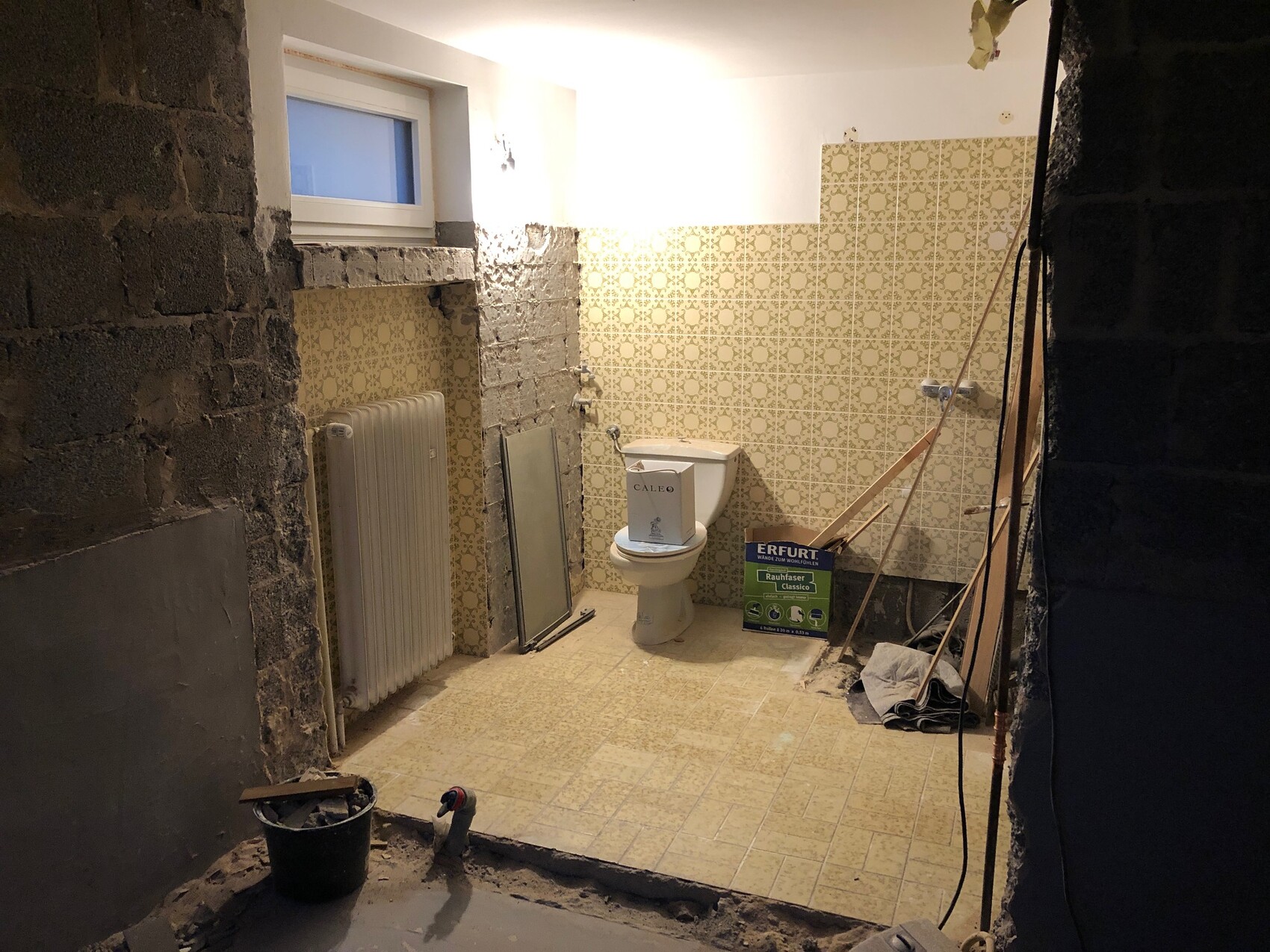
we have created an opening in the basement from a small WC to the room where the oil tanks used to be (we switched to a gas heating system). The old bathroom was quite small, so we made the opening to enlarge the space.
We have already removed tiles from some walls and now the walls need to be plastered somehow. Would you recommend getting them properly plastered, or could drywall be a suitable alternative? In the area where the new shower will be installed (where the waste pipe comes down from above), we will install a drywall partition anyway because I want to conceal the pipe there. I was advised against rerouting the pipe into the external wall.
What are your thoughts on this? The advantage of drywall is that most of it could be done as a DIY project. However, the ceiling definitely needs to be plastered. The rooms are already quite low in height, and I don’t want to lose any more space by suspending the ceiling.
Is it feasible to use drywall here, or would you recommend having it properly plastered instead?

X_SH5_X schrieb:
For me as a layperson, proper plaster is just something "different." "Proper" is relative; wet plaster is simply not the right choice here.
X_SH5_X schrieb:
But good to hear that you think it could even be a good choice here. Depending on the situation, it is definitely more than adequate. Especially when connecting to the drywall of the stud wall, you’ll do yourself a favor. And definitely for tiling—wet plaster will only give you a perfectly flat surface with a hundred years of experience ;-)
https://www.instagram.com/11antgmxde/
https://www.linkedin.com/company/bauen-jetzt/
I would have the wet plastering done by professionals, but I feel confident doing the drywall myself since we have some experience with it in the house already. I’ve also considered using plasterboard for the walls and possibly having the ceiling wet plastered after all. However, I’ll think about that some more.
X_SH5_X schrieb:
I would have had the wet plaster done, Yes, but even a professional plasterer doesn’t do it so precisely that a watchmaker would say it’s as perfectly flat as drywall.
X_SH5_X schrieb:
I also considered using drywall for the walls and possibly still having the ceiling wet plastered. I think that’s how it was done here (it was already finished when I moved in): wet plaster on the ceiling, dry plaster below the tile height (also on pumice blocks), and wet plaster above.
https://www.instagram.com/11antgmxde/
https://www.linkedin.com/company/bauen-jetzt/
One more question on this topic. I need to build a drywall stud wall in the shower area, about 2.50 meters (8 feet) long, to cover various pipes. I have already installed a stud wall in the living room, which was mounted on a wooden frame. Is it possible to do the same in the shower area? Basically, everything will be waterproofed by the tiler anyway. Or would you advise against using wood here? It is, at least for me personally, easier and more convenient to work with than metal studs.
N
nordanney16 Feb 2021 12:05X_SH5_X schrieb:
For me personally, these are easier and simpler to work with than metal studs.I’d recommend using metal studs instead. With metal snips, it’s straightforward. I find them more suitable for these kinds of structures, especially in bathrooms, where you never really know how moisture might affect things.Similar topics