
Hello
we are planning a new semi-detached house.
We want to install a photovoltaic system later on.
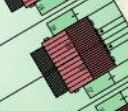
We will get the right half shown in the photo. Orientation is southwest.
The photovoltaic system will of course be installed on the southwest side facing the garden.
The black area is the 3x5 m (10x16 ft) terrace, which will later be covered with a fixed terrace roof measuring 4 m (13 ft) deep and 5.5 m (18 ft) wide.
My question is whether it will still be possible to install a photovoltaic system on the roof once the fixed terrace roof is there?
If the terrace roof is on the southwest side in the garden, it will no longer be possible to set up scaffolding.
For maintenance or in case of problems, access to the photovoltaic system will be necessary later on (is access without scaffolding not possible?)
Or can the photovoltaic system be installed without scaffolding?
The house will have a gable roof and 2.5 full stories.
we are planning a new semi-detached house.
We want to install a photovoltaic system later on.
We will get the right half shown in the photo. Orientation is southwest.
The photovoltaic system will of course be installed on the southwest side facing the garden.
The black area is the 3x5 m (10x16 ft) terrace, which will later be covered with a fixed terrace roof measuring 4 m (13 ft) deep and 5.5 m (18 ft) wide.
My question is whether it will still be possible to install a photovoltaic system on the roof once the fixed terrace roof is there?
If the terrace roof is on the southwest side in the garden, it will no longer be possible to set up scaffolding.
For maintenance or in case of problems, access to the photovoltaic system will be necessary later on (is access without scaffolding not possible?)
Or can the photovoltaic system be installed without scaffolding?
The house will have a gable roof and 2.5 full stories.
R
RotorMotor15 Sep 2021 14:47Cool, numbers! Thanks! :-)
Now we can address this more concretely.
I find that quite optimistic, but not impossible.
The next issue is that the lost feed-in tariff is not accounted for here.
So, only about €0.20 remains.
2000 * 0.9 * 0.35 =€777 €630
Also, the lost feed-in tariff is missing here again, and why is the electricity price now €0.05 higher?
A more accurate estimate would be:
2000 * 0.9 * 0.20 = €360
That would be great!
But it’s still significantly more expensive than the €360 mentioned above.
However, justifying the environmental benefit is even more difficult.
Now we can address this more concretely.
hampshire schrieb:A 1 kWh battery storage is very unusual; in that case, the electronics (inverter, balancer, etc.) tend to be significantly more expensive relative to the capacity.
With 7,000 full cycles, you can roughly calculate the cost per 1 kWh of battery capacity:
hampshire schrieb:Even if you charge and discharge the battery once daily, that amounts to 20 years.
7,000 * 0.9 kWh (on average 90% of battery capacity) * €0.30/kWh (assumed average electricity price over the lifetime) = €1,890
I find that quite optimistic, but not impossible.
The next issue is that the lost feed-in tariff is not accounted for here.
So, only about €0.20 remains.
hampshire schrieb:Already a calculation error here:
Let's calculate with 200 cycles per year and an average price of €0.35/kWh over 10 years:
2000 * 0.9 * 0.35 = €777
2000 * 0.9 * 0.35 =
Also, the lost feed-in tariff is missing here again, and why is the electricity price now €0.05 higher?
A more accurate estimate would be:
2000 * 0.9 * 0.20 = €360
hampshire schrieb:Including electronics, inverter, etc.?
A net kilowatt-hour of battery costs between €400 and €500 for private customers today.
That would be great!
But it’s still significantly more expensive than the €360 mentioned above.
hampshire schrieb:Why do you think that is?
Somehow people seem to want storage systems.
hampshire schrieb:I generally agree with that. Subsidies especially shift the calculation.
My conclusion: There are some much more worthwhile investments and at the same time a huge number of significantly worse purchases.
However, justifying the environmental benefit is even more difficult.
D
Deliverer15 Sep 2021 15:28And of course, just like with inverters, the purchase of a second battery within the 20-year lifecycle should be factored in.
Not because the cells fail, but the electronics often fail much earlier.
And no, you don’t have to do the calculations yourself. There are easily accessible studies on this topic, all reaching the same conclusion: batteries are an expensive hobby.
But hey – I don’t want to discourage anyone from having a battery/hobby. AS LONG AS the battery is not used as a (financial) excuse for not fully utilizing the roof. Because what the world really urgently needs is a lot more photovoltaic capacity.
Not because the cells fail, but the electronics often fail much earlier.
And no, you don’t have to do the calculations yourself. There are easily accessible studies on this topic, all reaching the same conclusion: batteries are an expensive hobby.
But hey – I don’t want to discourage anyone from having a battery/hobby. AS LONG AS the battery is not used as a (financial) excuse for not fully utilizing the roof. Because what the world really urgently needs is a lot more photovoltaic capacity.
nordanney schrieb:
Instead of buying expensive electricity, I prefer to use cheap solar power and SAVE.
Anything I don’t consume, I sell. It’s a nice setup. But initially, you do spend money, which you recover after a few years. And that specific calculation is exactly what I would like to see.
Regarding storage: what good is 1 kWh?
If you want storage, it should be enough so that I can remain largely self-sufficient in winter – otherwise, it’s useless.
And currently, that is not possible without a “deep pocket.” And by the time these investments have paid off through solar power, how many leap years will have passed?
H
hampshire15 Sep 2021 17:30RotorMotor schrieb:
Let's address this specifically. ... and you don’t have to contribute anything yourself...
RotorMotor schrieb:
A 1 kWh storage system is very unusual; in relation to capacity, the electronics (inverters, balancers, etc.) are significantly more expensive. once again, a refusal to understand intentionally – you can multiply by 1 kW.
RotorMotor schrieb:
calculation error:
2000 * 0.9 * 0.35 = €777 €630 Thank you for the correction.
RotorMotor schrieb:
Also, the lost feed-in tariff is missing here again. Offsetting feed-in tariffs – true, that can be included in the electricity price forecast however you estimate it over the next 10 years. Currently about 7 cent/kWh.
RotorMotor schrieb:
Also, the lost feed-in tariff is missing here again, and why has electricity become 5 cents more expensive now? Again, a refusal to understand — when parameters change, the electricity price forecast over the next 10 years can also change. You can also assume falling prices or strong increases. Guesswork remains guesswork.
RotorMotor schrieb:
What could be the reason? That would have been your contribution for an answer. Too bad, once again no substance.
Deliverer schrieb:
Because that is exactly what the world urgently needs: a lot more photovoltaic capacity. Completely agree.
R
RotorMotor15 Sep 2021 18:24driver55 schrieb:
If you want storage, please make sure it allows you to be mostly self-sufficient in winter – otherwise, it's pointless for me. And right now, that simply doesn’t work without a “deep wallet.” And how many leap years pass before these investments pay off from the solar energy generated?In winter, your battery usually won’t fully charge anyway (with typical 7-10kWp systems). If you have a heat pump, it already uses up all the electricity generated.That’s why a small 1kWh battery is actually a great option, because it covers the base load. So things like the refrigerator, ventilation, etc. With that, you can really achieve the cycling you need for it to be economical.
hampshire schrieb:
... and you yourself don’t have to contribute anything...Feel free to take a look at my profile; I’ve posted lots of numbers, facts, and example calculations here. You’ll find little room for belief or mere claims from me. ;-)hampshire schrieb:
Once again, a refusal to understand – you can multiply per 1kW.Unfortunately not. Different sizes change the calculation significantly—completely different cycles, prices, etc. As I mentioned above, a 1kWh battery definitely has its attractions, if only it were available.hampshire schrieb:
Offsetting feed-in tariffs – true, you can factor that into electricity prices, however you estimate them for the next 10 years. Currently around 7 cents/kWh.I prefer to work with currently available figures. Electricity costs 28 cents and feed-in tariffs are 8 cents per kWh, as of today. Everything else is just speculation.hampshire schrieb:
That would have been your contribution for an answer. Too bad, no substance again.So here are a few possible reasons (even though you can already find the real substance and accurate figures above):a) calculations are often incorrect or not done at all; sellers’ faulty calculations are trusted
b) people believe in “self-sufficiency” and “own electricity,” but forget that most systems aren’t island-capable and are sometimes only single-phase, etc.
c) subsidies are available
d) people believe, for whatever reason, in rapidly rising electricity prices
Feel free to add to this list.
H
hampshire15 Sep 2021 18:42driver55 schrieb:
If a storage system, then please one that allows me to be largely self-sufficient even in winter Yes, I would really like that too.Similar topics