
ᐅ Mold Problem in a New Kitchen – How to Prevent It in the Future?
Created on: 14 Feb 2021 21:54
N
Nanopixel
In our kitchen, which was completely renovated in mid-2020, we have a problem with mold:
It became noticeable when water suddenly started leaking from under the refrigerator. At first, I thought it was a device malfunction, but that does not seem to be the case. We have a built-in refrigerator, and after removing the cabinet where it was installed, we discovered the problem: mold in the lower corner of the room and on the wall next to the refrigerator (see picture). There was even mold between the refrigerator and the built-in cabinet (picture 2). The entire right side wall of the appliance was covered with water droplets (picture 3).
Trusted tradespeople (tiler and plasterer) examined the situation and said it is condensed water caused by humidity. The air cannot circulate properly around this cabinet, which leads to this problem. In addition, the refrigerator is placed directly in the corner of the room against two exterior walls (northeast).
How should this problem be addressed? Removing the mold and thoroughly drying everything first seems obvious.
The tiler suggested installing ventilation openings in the wall above the refrigerator to help regulate humidity. I find that reasonable, but I am concerned that, since the cabinet is placed right next to the wall on the right side with only about 0.5 to 1 cm (0.2 to 0.4 inches) of space, condensation might still form there despite ventilation.
Are there any additional measures that could be taken here—perhaps filling the small cavity somehow?
Thanks in advance for any advice.
N
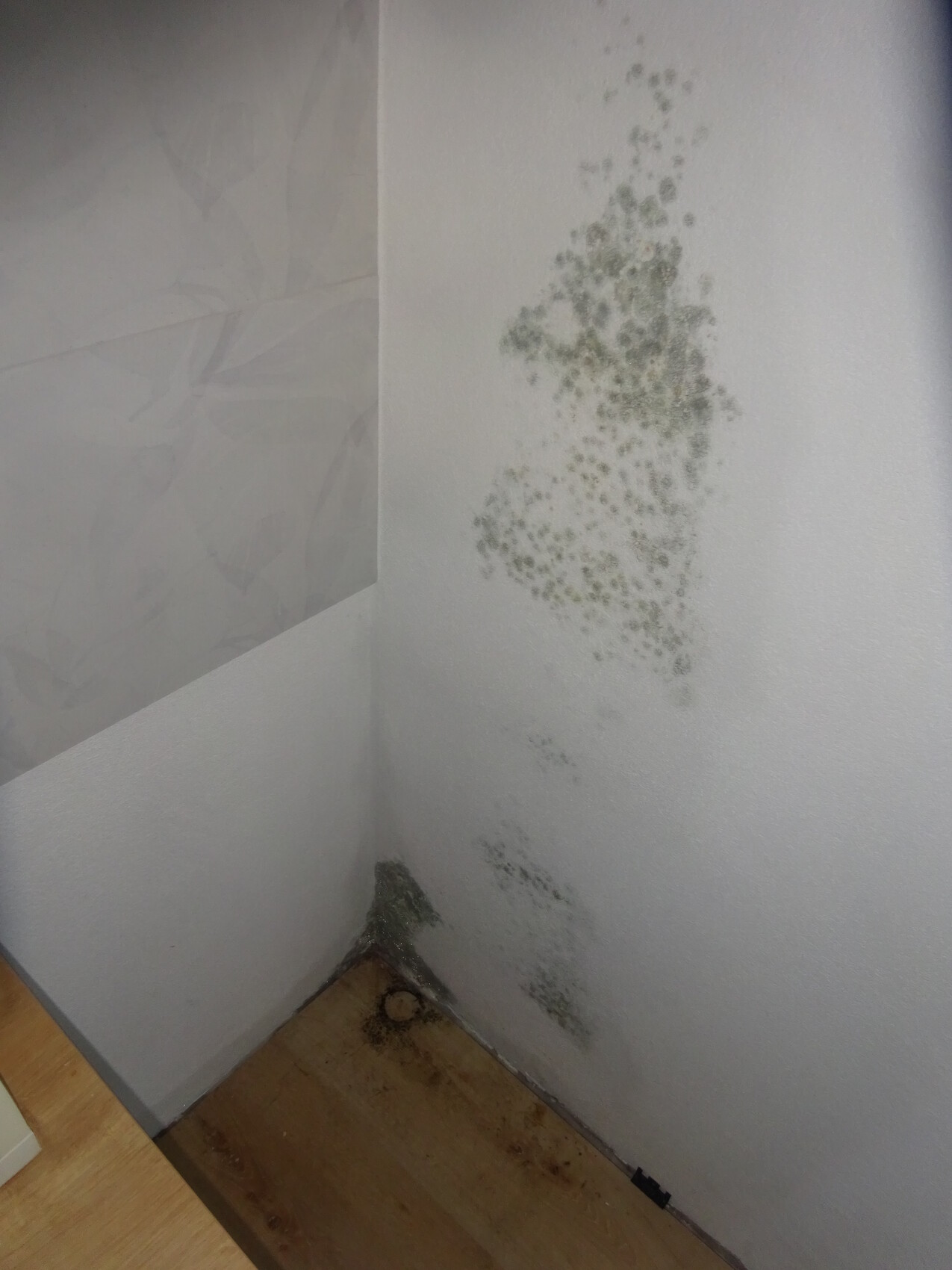
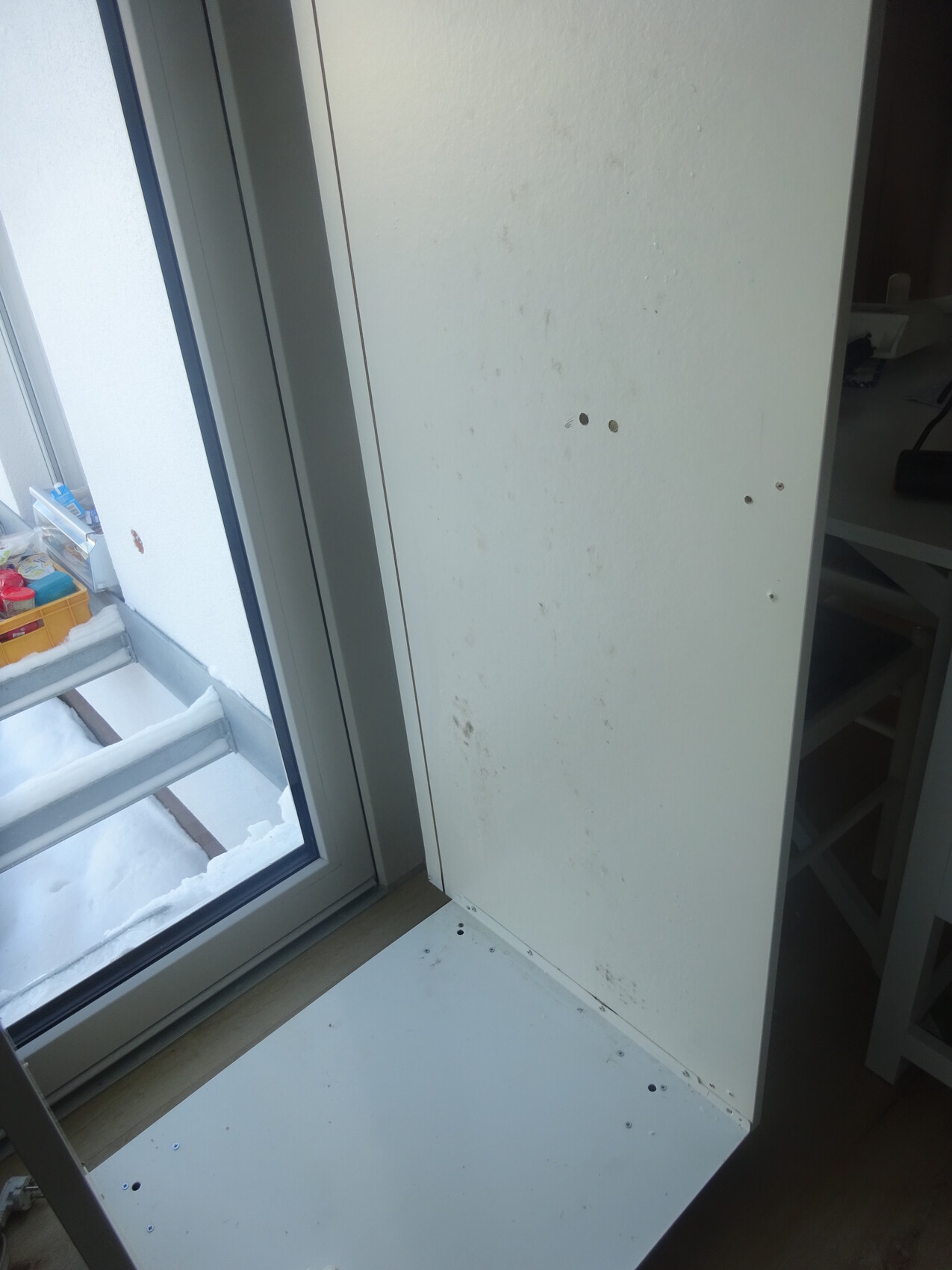
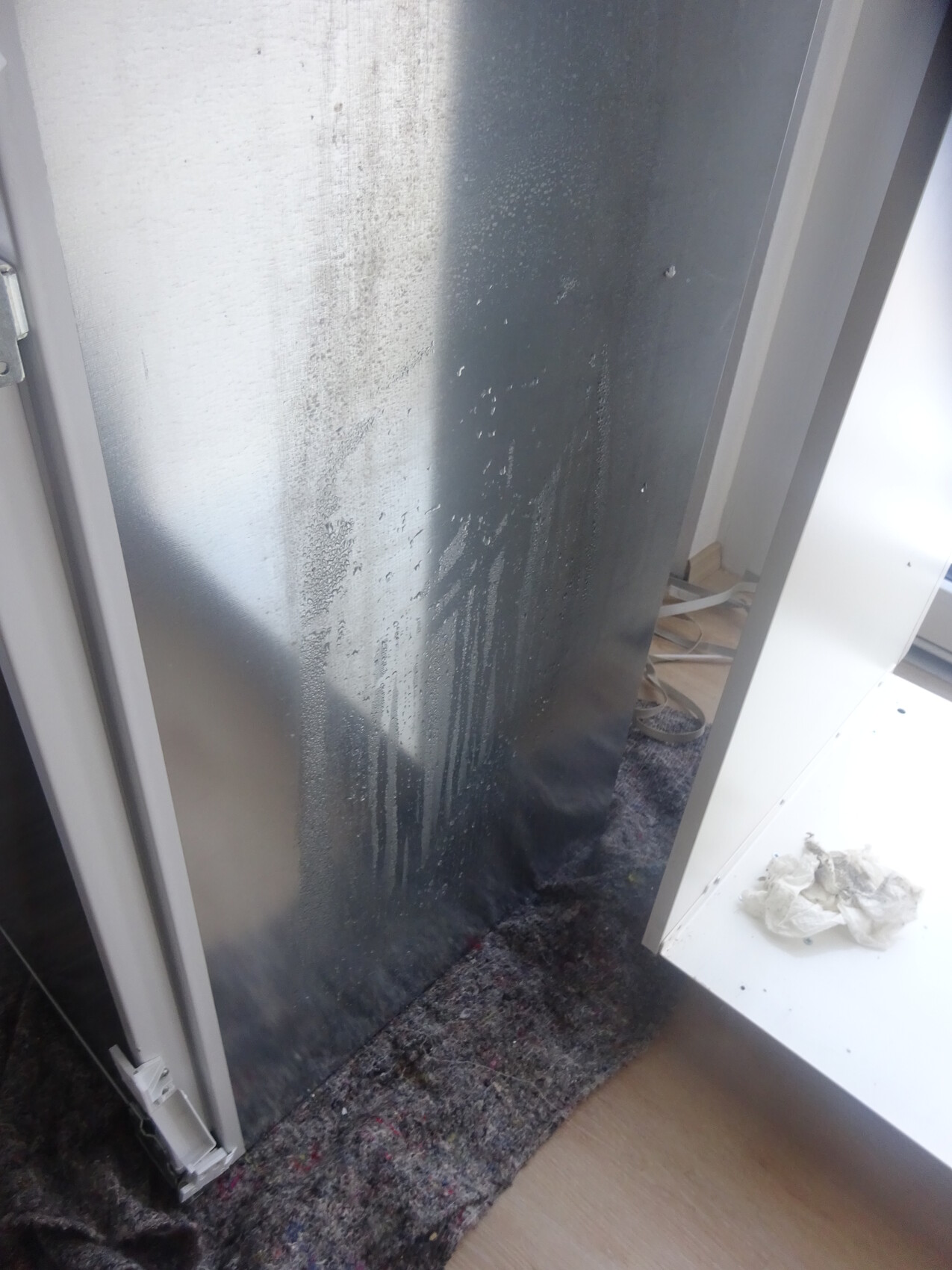
It became noticeable when water suddenly started leaking from under the refrigerator. At first, I thought it was a device malfunction, but that does not seem to be the case. We have a built-in refrigerator, and after removing the cabinet where it was installed, we discovered the problem: mold in the lower corner of the room and on the wall next to the refrigerator (see picture). There was even mold between the refrigerator and the built-in cabinet (picture 2). The entire right side wall of the appliance was covered with water droplets (picture 3).
Trusted tradespeople (tiler and plasterer) examined the situation and said it is condensed water caused by humidity. The air cannot circulate properly around this cabinet, which leads to this problem. In addition, the refrigerator is placed directly in the corner of the room against two exterior walls (northeast).
How should this problem be addressed? Removing the mold and thoroughly drying everything first seems obvious.
The tiler suggested installing ventilation openings in the wall above the refrigerator to help regulate humidity. I find that reasonable, but I am concerned that, since the cabinet is placed right next to the wall on the right side with only about 0.5 to 1 cm (0.2 to 0.4 inches) of space, condensation might still form there despite ventilation.
Are there any additional measures that could be taken here—perhaps filling the small cavity somehow?
Thanks in advance for any advice.
N
N
Nanopixel17 Feb 2021 13:42This is a bit confusing to me now, as I see two contradictory pieces of advice: Some say that more space, more distance from the wall, needs to be created to allow air circulation. Others say that the gap should be insulated, possibly with mineral wool. But that would completely stop the circulation. I don’t understand this.
Regarding the other suggestions:
- Remove the side wall from the cabinet – how is the structure supposed to stand then??
- Calculate the dew point with ubakus – excuse me, what?!
Regarding the other suggestions:
- Remove the side wall from the cabinet – how is the structure supposed to stand then??
- Calculate the dew point with ubakus – excuse me, what?!
H
hampshire17 Feb 2021 13:48There are no conflicting recommendations:
Insulation helps keep the wall warmer (shifting the dew point).
Ventilation helps remove moisture.
Doing both is beneficial.
If space is tight, do not block moisture removal when adding insulation; in no case should it be packed tightly.
Insulation helps keep the wall warmer (shifting the dew point).
Ventilation helps remove moisture.
Doing both is beneficial.
If space is tight, do not block moisture removal when adding insulation; in no case should it be packed tightly.
N
Nanopixel17 Feb 2021 13:55hampshire schrieb:
Do not block the removal of moisture with the insulation, so under no circumstances should it be packed tightly.This suggestion was already mentioned earlier as well.The first approach is to maintain the distance recommended by the manufacturer, which is usually at least 5cm (2 inches).
If this is not sufficient, using a capillary-active insulation material can help raise the surface temperature of the wall and thereby reduce condensation.
Be aware that the dew point will shift unfavorably in this case, so interior insulation is generally avoided.
An additional ventilator could even draw moisture from outside to inside, since the insulation material is capillary-active in both directions.
Too thick interior insulation has exactly this effect, which is why, as a rule, insulation thicknesses of more than 5cm (2 inches) are not recommended without verification.
If this is not sufficient, using a capillary-active insulation material can help raise the surface temperature of the wall and thereby reduce condensation.
Be aware that the dew point will shift unfavorably in this case, so interior insulation is generally avoided.
An additional ventilator could even draw moisture from outside to inside, since the insulation material is capillary-active in both directions.
Too thick interior insulation has exactly this effect, which is why, as a rule, insulation thicknesses of more than 5cm (2 inches) are not recommended without verification.
N
nordanney17 Feb 2021 13:58Yep, @hampshire explained it well. There are two possibilities.
Ubakus already calculates where moisture accumulation can occur, including the U-value. In your case, it is clear that significant moisture is gathering next to the refrigerator. That moisture has to go somewhere...
Ubakus already calculates where moisture accumulation can occur, including the U-value. In your case, it is clear that significant moisture is gathering next to the refrigerator. That moisture has to go somewhere...
Similar topics