
ᐅ Mold Problem in a New Kitchen – How to Prevent It in the Future?
Created on: 14 Feb 2021 21:54
N
Nanopixel
In our kitchen, which was completely renovated in mid-2020, we have a problem with mold:
It became noticeable when water suddenly started leaking from under the refrigerator. At first, I thought it was a device malfunction, but that does not seem to be the case. We have a built-in refrigerator, and after removing the cabinet where it was installed, we discovered the problem: mold in the lower corner of the room and on the wall next to the refrigerator (see picture). There was even mold between the refrigerator and the built-in cabinet (picture 2). The entire right side wall of the appliance was covered with water droplets (picture 3).
Trusted tradespeople (tiler and plasterer) examined the situation and said it is condensed water caused by humidity. The air cannot circulate properly around this cabinet, which leads to this problem. In addition, the refrigerator is placed directly in the corner of the room against two exterior walls (northeast).
How should this problem be addressed? Removing the mold and thoroughly drying everything first seems obvious.
The tiler suggested installing ventilation openings in the wall above the refrigerator to help regulate humidity. I find that reasonable, but I am concerned that, since the cabinet is placed right next to the wall on the right side with only about 0.5 to 1 cm (0.2 to 0.4 inches) of space, condensation might still form there despite ventilation.
Are there any additional measures that could be taken here—perhaps filling the small cavity somehow?
Thanks in advance for any advice.
N
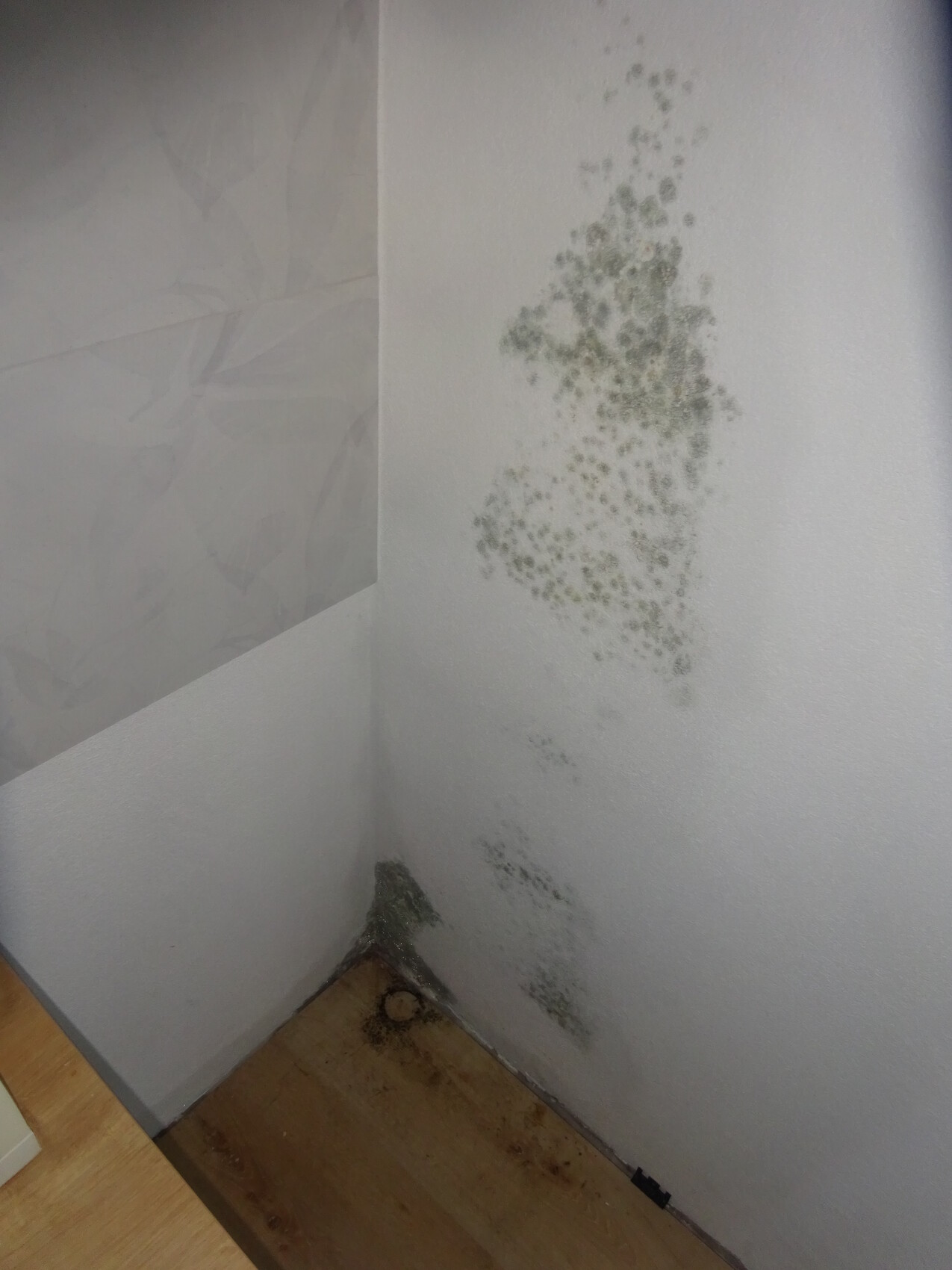
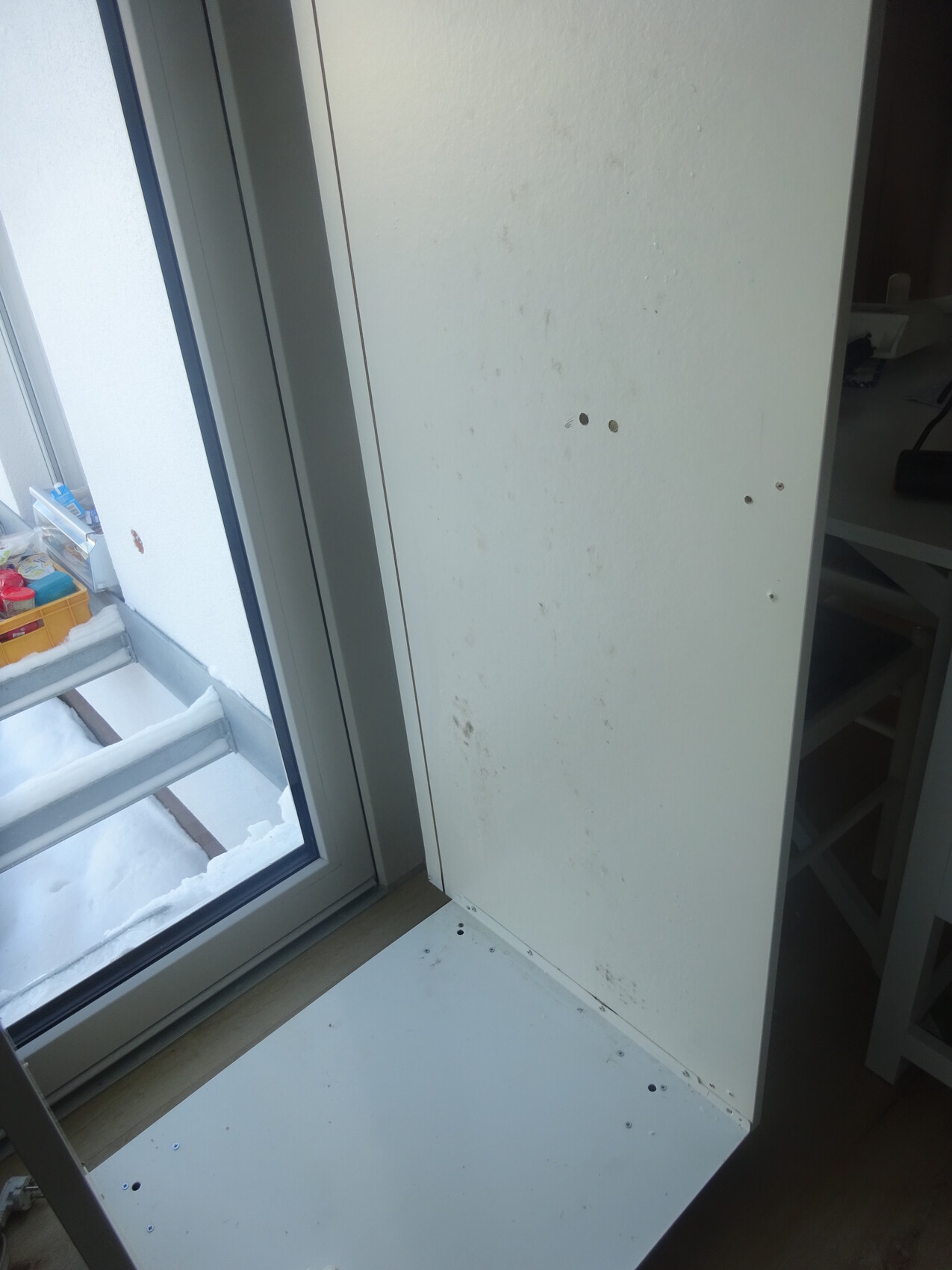
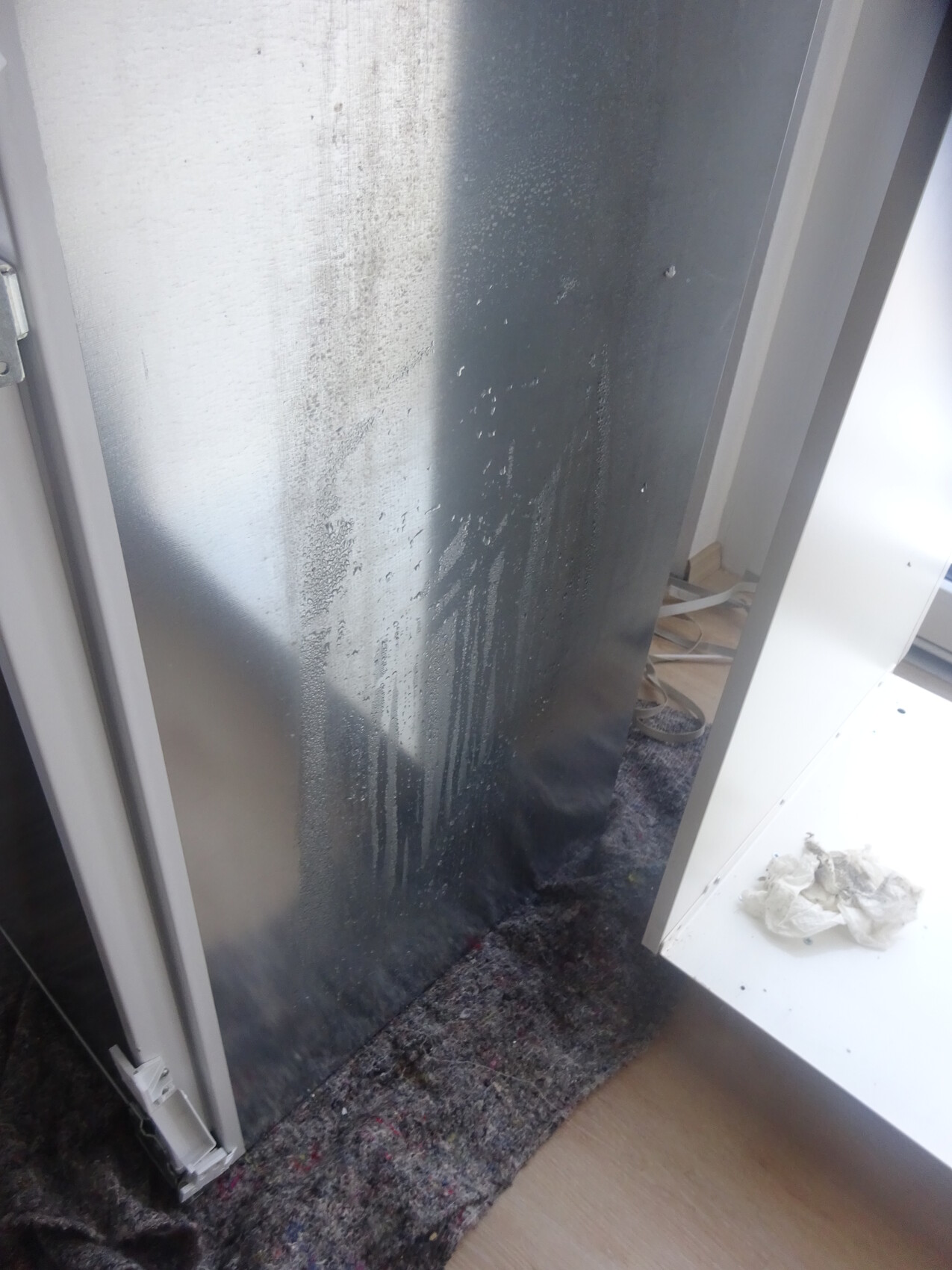
It became noticeable when water suddenly started leaking from under the refrigerator. At first, I thought it was a device malfunction, but that does not seem to be the case. We have a built-in refrigerator, and after removing the cabinet where it was installed, we discovered the problem: mold in the lower corner of the room and on the wall next to the refrigerator (see picture). There was even mold between the refrigerator and the built-in cabinet (picture 2). The entire right side wall of the appliance was covered with water droplets (picture 3).
Trusted tradespeople (tiler and plasterer) examined the situation and said it is condensed water caused by humidity. The air cannot circulate properly around this cabinet, which leads to this problem. In addition, the refrigerator is placed directly in the corner of the room against two exterior walls (northeast).
How should this problem be addressed? Removing the mold and thoroughly drying everything first seems obvious.
The tiler suggested installing ventilation openings in the wall above the refrigerator to help regulate humidity. I find that reasonable, but I am concerned that, since the cabinet is placed right next to the wall on the right side with only about 0.5 to 1 cm (0.2 to 0.4 inches) of space, condensation might still form there despite ventilation.
Are there any additional measures that could be taken here—perhaps filling the small cavity somehow?
Thanks in advance for any advice.
N
A
Alessandro19 Feb 2021 11:10If a refrigerator consumes more electricity when installed, this is a strong indication that its waste heat cannot dissipate properly.
If the waste heat cannot escape, moisture cannot escape either, which can lead to mold.
If the waste heat cannot escape, moisture cannot escape either, which can lead to mold.
N
Nanopixel19 Feb 2021 11:30Are there any ready-made solutions for installing active fans for air intake in the plinth? (setting aside any additional measures against mold)
T
T_im_Norden19 Feb 2021 12:19A difference of 5°C (9°F) is quite significant, and that is where the problem lies.

T_im_Norden schrieb:
A 5°C (9°F) difference is already quite significant; that’s where the problem lies.I agree. In our case, it was 12°C (54°F) versus 19°C (66°F), and we had to use insulation boards.
Nanopixel schrieb:
Are there any ready-made solutions to install active fans for air intake in the base? (regardless of other measures against mold)I’m not sure if there is a single “perfect” solution for that. However, I would look into PC case fans, which typically cost between 10 and 20 euros (about $10–20). They require 12V power, so you’ll need a suitable power supply (search for similar terms at an electronics store of your choice).
On Amazon, for example, you can find “PC case fans with power supply,” either with an actual power adapter or a USB connection that can be plugged into any outlet using an appropriate USB power adapter.
Nanopixel schrieb:
I would rule out a device malfunction. The fridge/freezer is now placed in the center of the kitchen (without the built-in cabinet) and is running. There is no water leaking anywhere.
The wall behind and beside the fridge was covered with water droplets, as if those spots had been sprayed with a bottle. By the way, there were droplets inside as well, between the appliance and the cabinet.
This is no longer the case, neither on the appliance nor on the wall. That makes sense. The refrigerator is now ventilated all around. From what you describe, this is not a device malfunction but rather the wrong appliance. You probably have a refrigerator that does not have a heat exchanger on the back panel but releases heat from the sides and the back. These appliances require clearance space on the left, right, and back sides for airflow.
Just a guess.
Similar topics