
ᐅ Mold Problem in a New Kitchen – How to Prevent It in the Future?
Created on: 14 Feb 2021 21:54
N
NanopixelN
Nanopixel14 Feb 2021 21:54In our kitchen, which was completely renovated in mid-2020, we have a problem with mold:
It became noticeable when water suddenly started leaking from under the refrigerator. At first, I thought it was a device malfunction, but that does not seem to be the case. We have a built-in refrigerator, and after removing the cabinet where it was installed, we discovered the problem: mold in the lower corner of the room and on the wall next to the refrigerator (see picture). There was even mold between the refrigerator and the built-in cabinet (picture 2). The entire right side wall of the appliance was covered with water droplets (picture 3).
Trusted tradespeople (tiler and plasterer) examined the situation and said it is condensed water caused by humidity. The air cannot circulate properly around this cabinet, which leads to this problem. In addition, the refrigerator is placed directly in the corner of the room against two exterior walls (northeast).
How should this problem be addressed? Removing the mold and thoroughly drying everything first seems obvious.
The tiler suggested installing ventilation openings in the wall above the refrigerator to help regulate humidity. I find that reasonable, but I am concerned that, since the cabinet is placed right next to the wall on the right side with only about 0.5 to 1 cm (0.2 to 0.4 inches) of space, condensation might still form there despite ventilation.
Are there any additional measures that could be taken here—perhaps filling the small cavity somehow?
Thanks in advance for any advice.
N
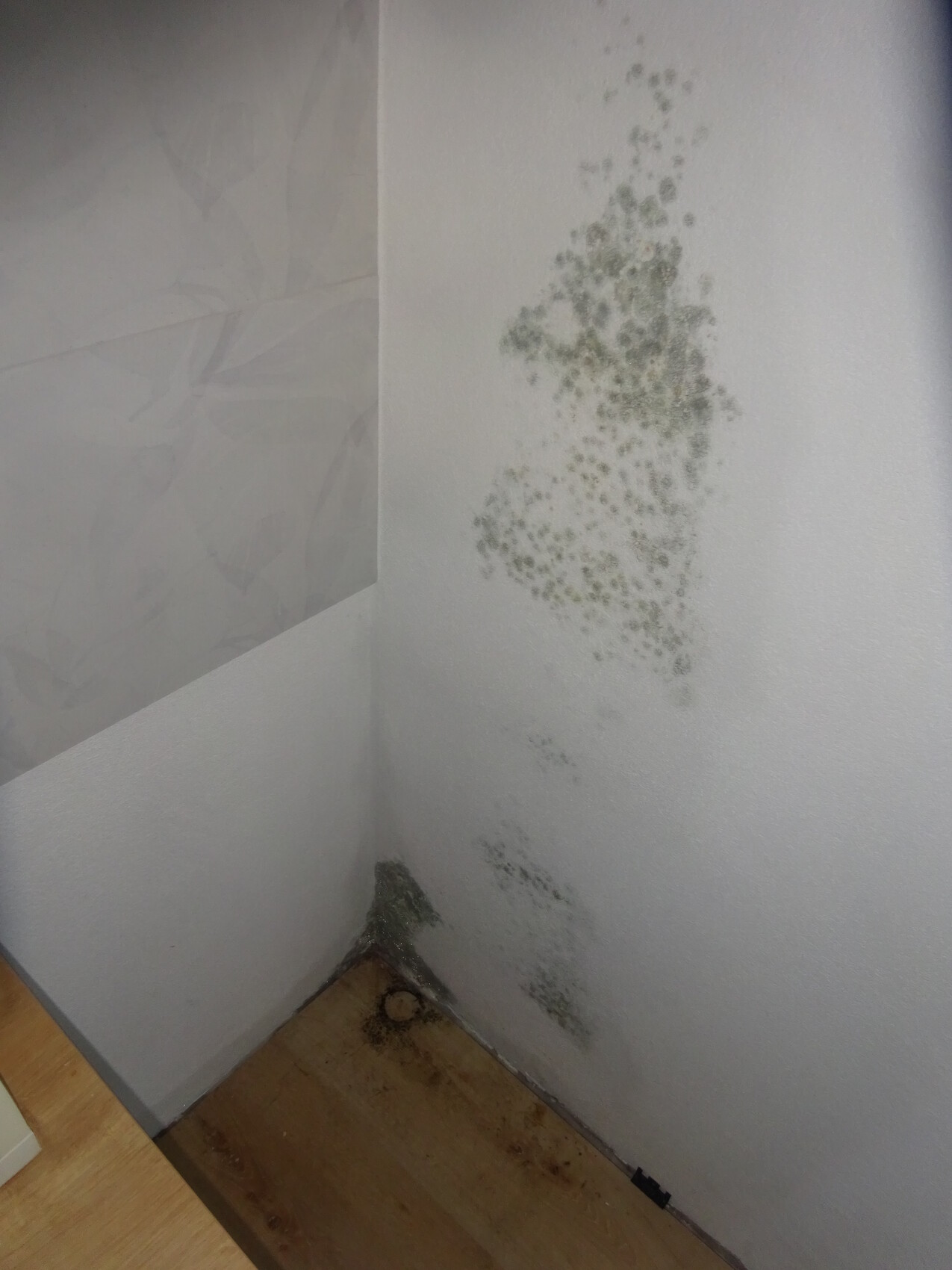
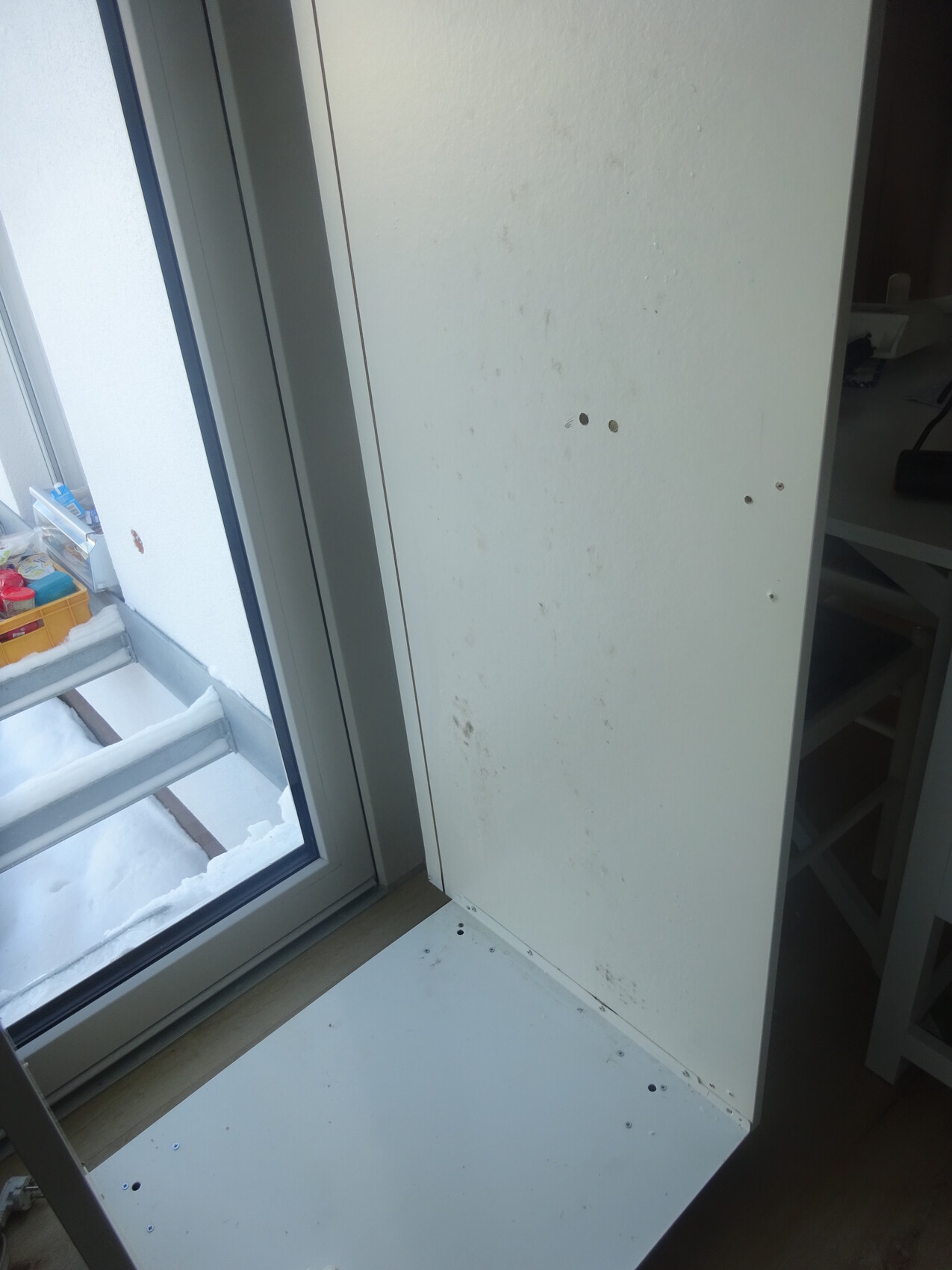
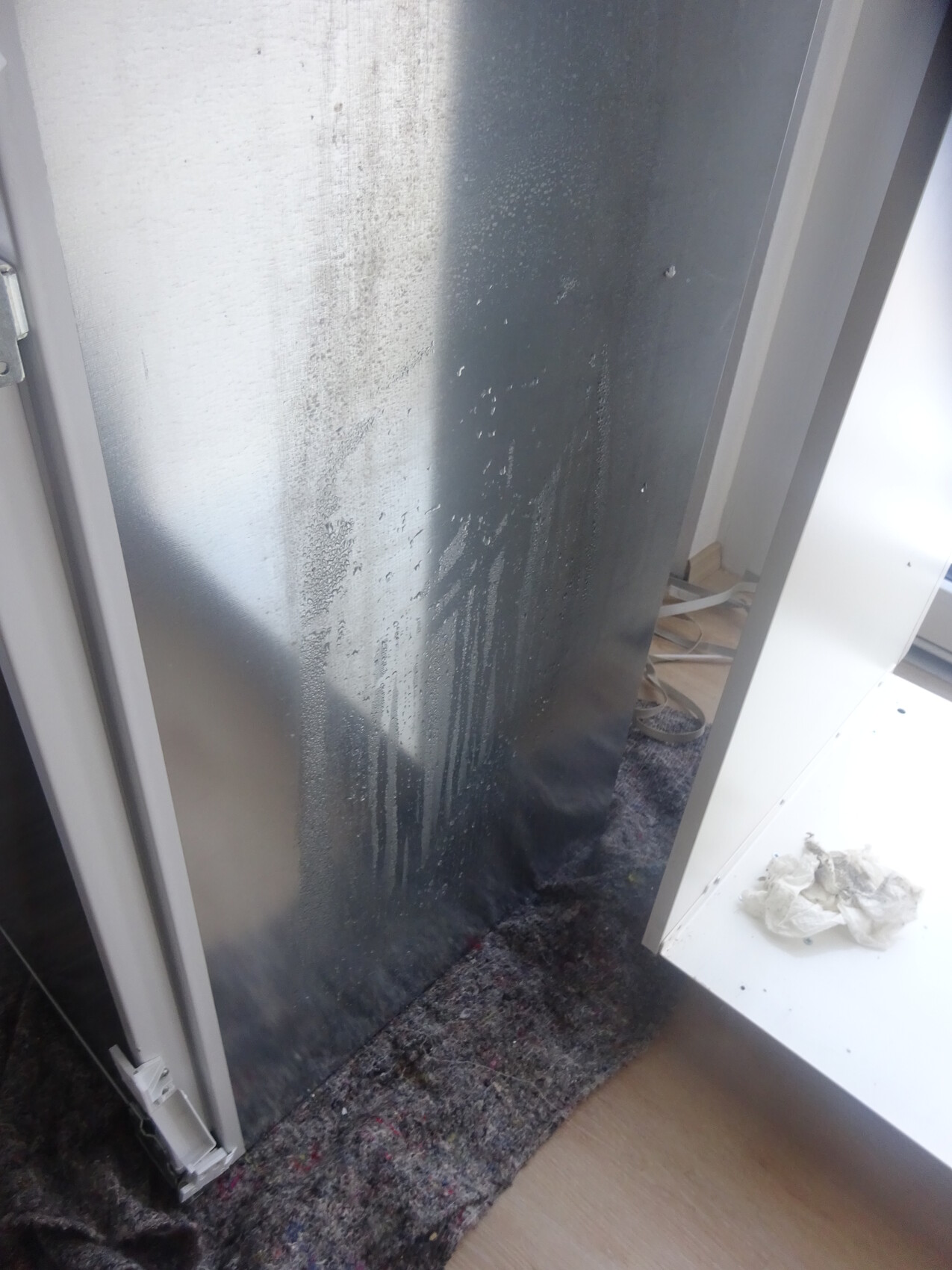
It became noticeable when water suddenly started leaking from under the refrigerator. At first, I thought it was a device malfunction, but that does not seem to be the case. We have a built-in refrigerator, and after removing the cabinet where it was installed, we discovered the problem: mold in the lower corner of the room and on the wall next to the refrigerator (see picture). There was even mold between the refrigerator and the built-in cabinet (picture 2). The entire right side wall of the appliance was covered with water droplets (picture 3).
Trusted tradespeople (tiler and plasterer) examined the situation and said it is condensed water caused by humidity. The air cannot circulate properly around this cabinet, which leads to this problem. In addition, the refrigerator is placed directly in the corner of the room against two exterior walls (northeast).
How should this problem be addressed? Removing the mold and thoroughly drying everything first seems obvious.
The tiler suggested installing ventilation openings in the wall above the refrigerator to help regulate humidity. I find that reasonable, but I am concerned that, since the cabinet is placed right next to the wall on the right side with only about 0.5 to 1 cm (0.2 to 0.4 inches) of space, condensation might still form there despite ventilation.
Are there any additional measures that could be taken here—perhaps filling the small cavity somehow?
Thanks in advance for any advice.
N
N
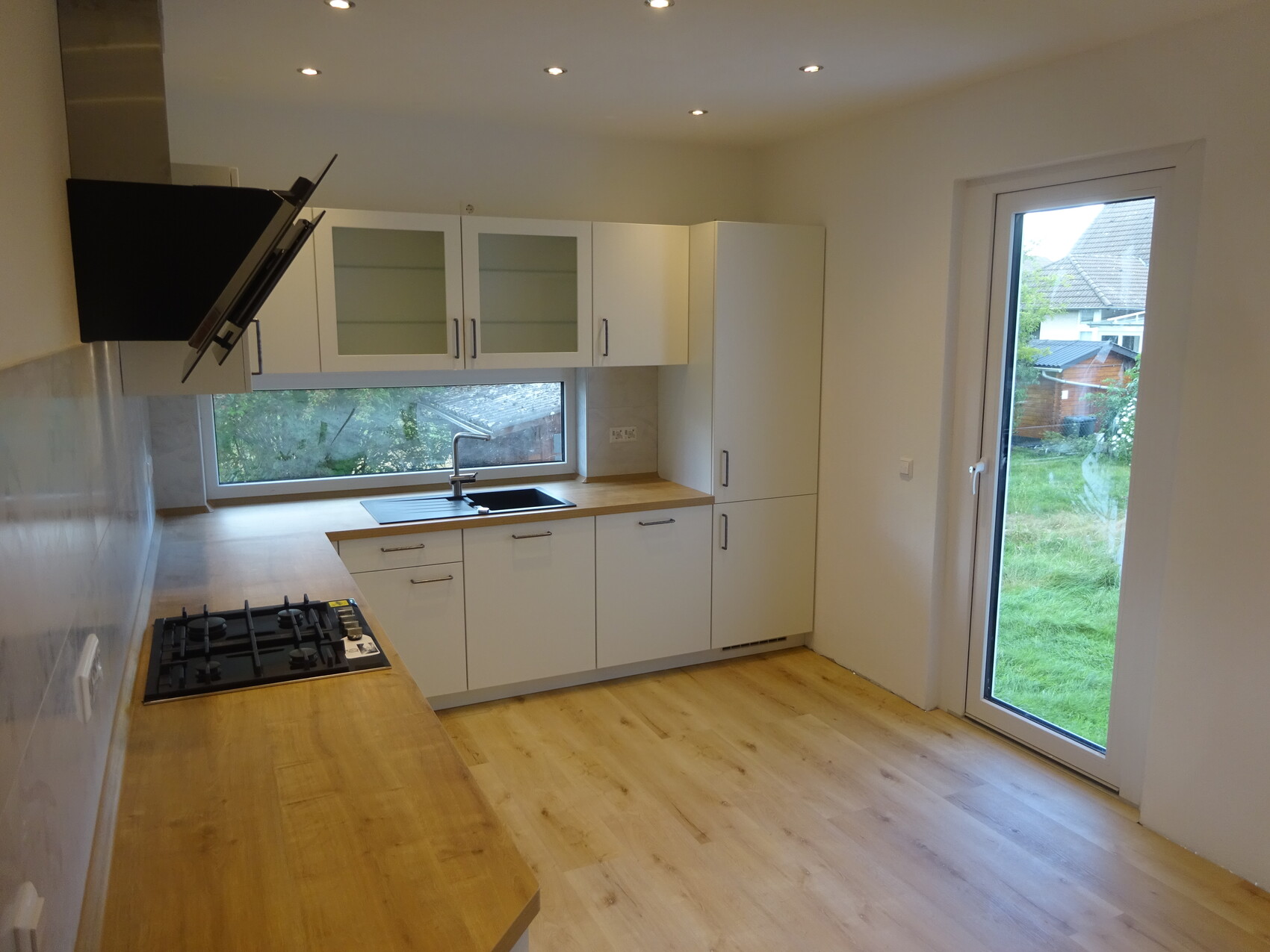
Nanopixel14 Feb 2021 22:42Here is a picture showing the refrigerator in its final position.
Additional information: The external wall is 30cm (12 inches) masonry without any additional insulation. (Built in the early 1970s)
Additional information: The external wall is 30cm (12 inches) masonry without any additional insulation. (Built in the early 1970s)

I would measure the temperature of the exterior wall at that spot.
If it is colder than the surrounding exterior walls, then you don’t have an issue caused by lack of air circulation, but a problem with the wall insulation.
Otherwise, in my opinion, it is a design mistake. You shouldn’t place a refrigerator against two exterior walls, right?
By the way, nice and very tasteful kitchen.
If it is colder than the surrounding exterior walls, then you don’t have an issue caused by lack of air circulation, but a problem with the wall insulation.
Otherwise, in my opinion, it is a design mistake. You shouldn’t place a refrigerator against two exterior walls, right?
By the way, nice and very tasteful kitchen.
DaSch17 schrieb:
Otherwise, in my opinion, this is a planning mistake. You shouldn’t place a refrigerator against two exterior walls, right?What makes you say that, or where can this information be found? I have never heard that before.N
Nanopixel15 Feb 2021 10:18I can imagine the reason for this: A refrigerator emits heat, while an exterior wall can be particularly cold. A large temperature difference between the appliance and the wall causes condensation – just like in my case. Therefore, my question is what could possibly be done to the wall to prevent this in the future.
Regardless of whether this should be done or not – it was the only option in our kitchen, as shown in the picture. On the opposite side, there are two doors (connecting rooms). There is no other suitable location for such a tall cabinet.
Regardless of whether this should be done or not – it was the only option in our kitchen, as shown in the picture. On the opposite side, there are two doors (connecting rooms). There is no other suitable location for such a tall cabinet.

Similar topics