
ᐅ Mold Problem in a New Kitchen – How to Prevent It in the Future?
Created on: 14 Feb 2021 21:54
N
Nanopixel
In our kitchen, which was completely renovated in mid-2020, we have a problem with mold:
It became noticeable when water suddenly started leaking from under the refrigerator. At first, I thought it was a device malfunction, but that does not seem to be the case. We have a built-in refrigerator, and after removing the cabinet where it was installed, we discovered the problem: mold in the lower corner of the room and on the wall next to the refrigerator (see picture). There was even mold between the refrigerator and the built-in cabinet (picture 2). The entire right side wall of the appliance was covered with water droplets (picture 3).
Trusted tradespeople (tiler and plasterer) examined the situation and said it is condensed water caused by humidity. The air cannot circulate properly around this cabinet, which leads to this problem. In addition, the refrigerator is placed directly in the corner of the room against two exterior walls (northeast).
How should this problem be addressed? Removing the mold and thoroughly drying everything first seems obvious.
The tiler suggested installing ventilation openings in the wall above the refrigerator to help regulate humidity. I find that reasonable, but I am concerned that, since the cabinet is placed right next to the wall on the right side with only about 0.5 to 1 cm (0.2 to 0.4 inches) of space, condensation might still form there despite ventilation.
Are there any additional measures that could be taken here—perhaps filling the small cavity somehow?
Thanks in advance for any advice.
N
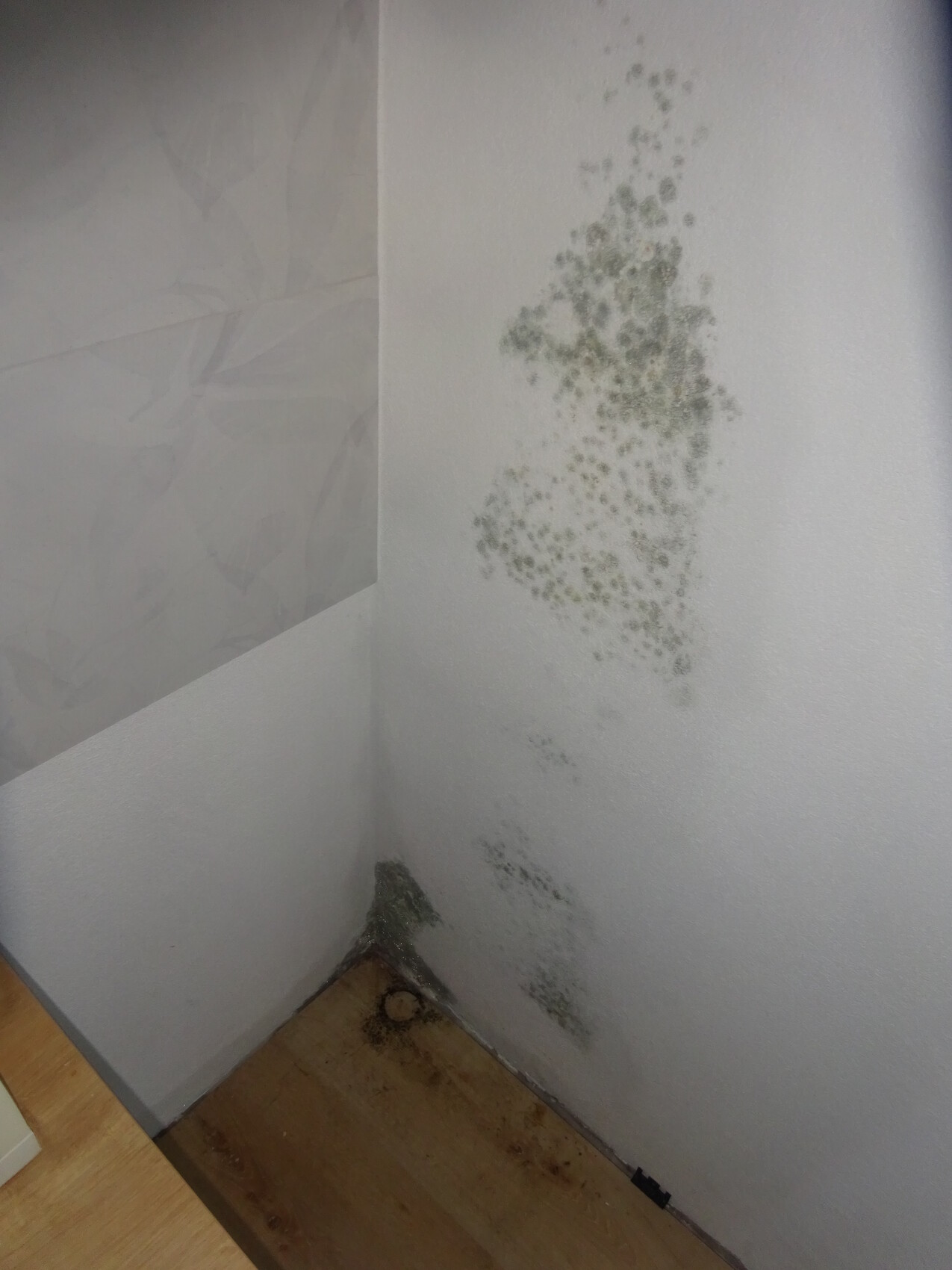
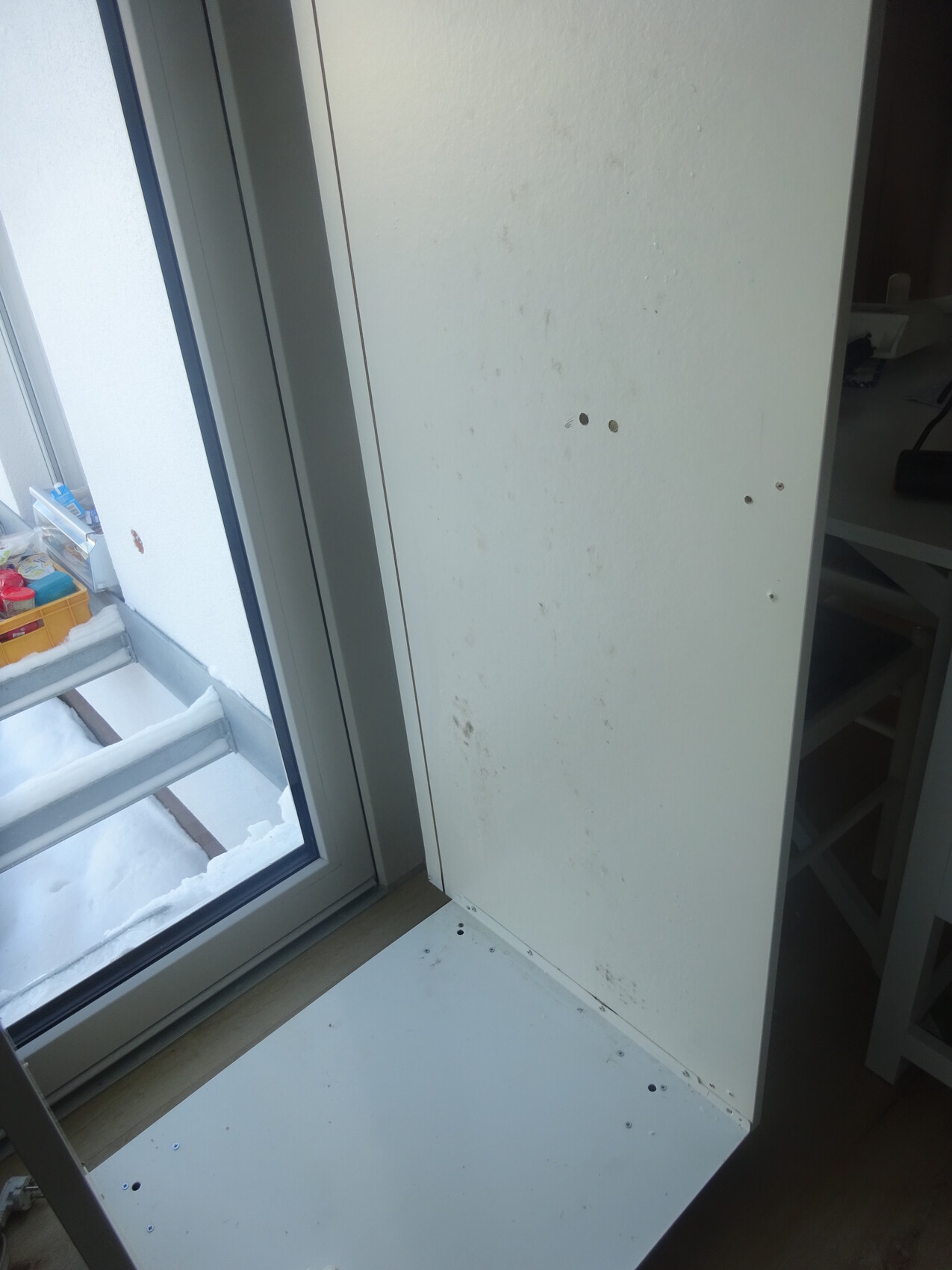
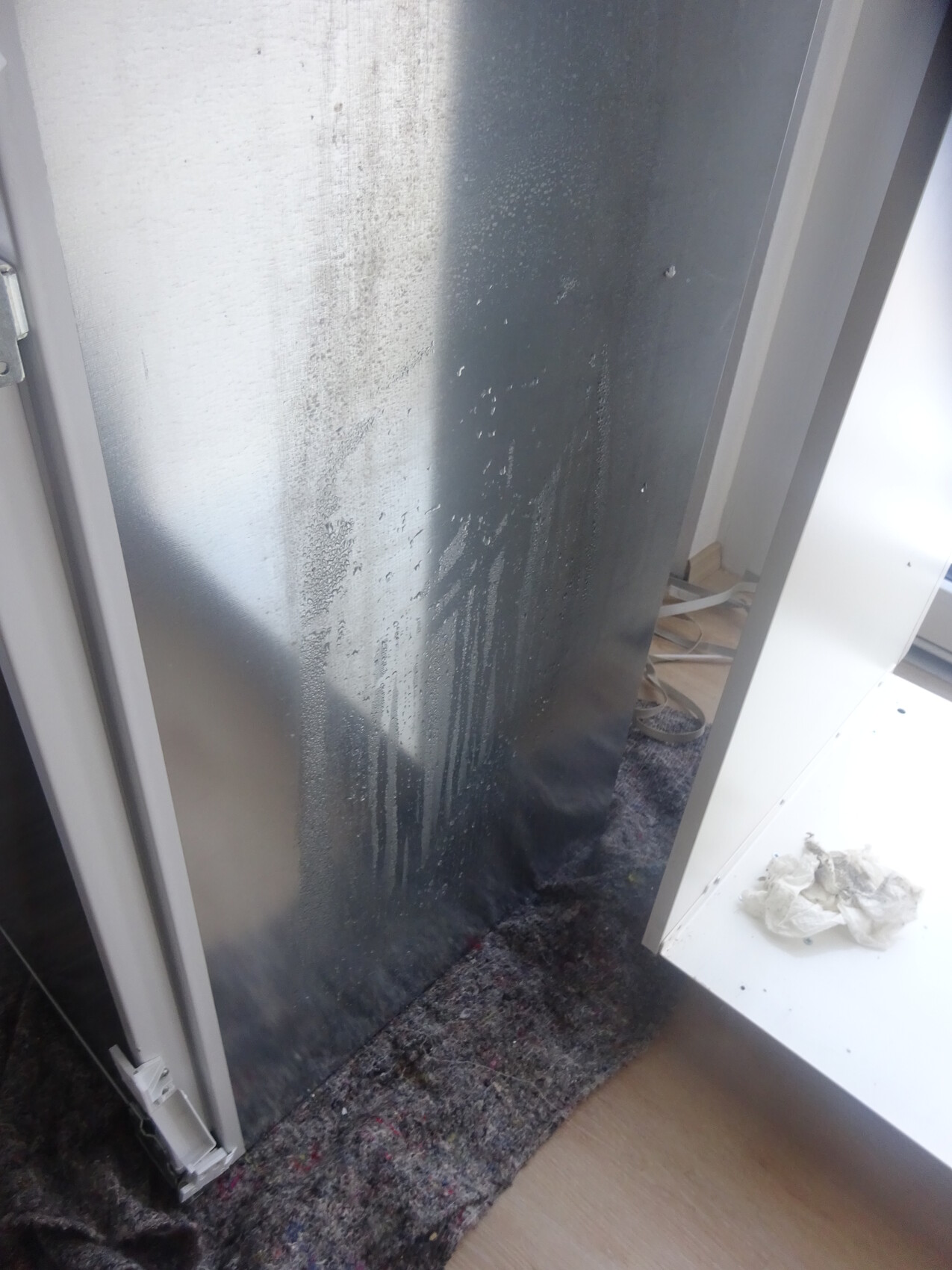
It became noticeable when water suddenly started leaking from under the refrigerator. At first, I thought it was a device malfunction, but that does not seem to be the case. We have a built-in refrigerator, and after removing the cabinet where it was installed, we discovered the problem: mold in the lower corner of the room and on the wall next to the refrigerator (see picture). There was even mold between the refrigerator and the built-in cabinet (picture 2). The entire right side wall of the appliance was covered with water droplets (picture 3).
Trusted tradespeople (tiler and plasterer) examined the situation and said it is condensed water caused by humidity. The air cannot circulate properly around this cabinet, which leads to this problem. In addition, the refrigerator is placed directly in the corner of the room against two exterior walls (northeast).
How should this problem be addressed? Removing the mold and thoroughly drying everything first seems obvious.
The tiler suggested installing ventilation openings in the wall above the refrigerator to help regulate humidity. I find that reasonable, but I am concerned that, since the cabinet is placed right next to the wall on the right side with only about 0.5 to 1 cm (0.2 to 0.4 inches) of space, condensation might still form there despite ventilation.
Are there any additional measures that could be taken here—perhaps filling the small cavity somehow?
Thanks in advance for any advice.
N

parcus schrieb:
So no mineral wool as mentioned before, because that can backfire... it might soak up water like a sponge. The trick is to shift the dew point using insulation. Either this works and there’s no more water (and thus no problem with mineral wool), or it doesn’t work. Then you’ll continue to have condensation on the refrigerator and the wall. You take the wool out and throw it away.
I mentioned mineral wool because of its flexible nature. You can buy some at any hardware store and stuff it in nicely. Put it in, then after two weeks, pull it out and check if it stayed dry.
The testing period might be ending soon due to rising outdoor temperatures. I’d suggest trying it right away.
The expert will recommend “proper” solutions. Whether you will find those practical is doubtful right now, especially if you don’t want to change the kitchen (which is the lesser evil).
N
Nanopixel16 Feb 2021 16:22Is there mineral wool that can be compressed to fit into a gap up to 1cm (0.4 inches) wide? The thinnest I quickly found was 40mm (1.6 inches) thick.
guckuck2
The dew point kept shifting; the high-tech solution would be a calcium silicate board, but wood wool board also works because of its capillary action.
Up to 5cm (2 inches), you usually can’t go wrong, but I have also done assessments with thicknesses over 10cm (4 inches).
Nanopixel
Of course, there is mineral wool for joints, just like with windows.
The dew point kept shifting; the high-tech solution would be a calcium silicate board, but wood wool board also works because of its capillary action.
Up to 5cm (2 inches), you usually can’t go wrong, but I have also done assessments with thicknesses over 10cm (4 inches).
Nanopixel
Of course, there is mineral wool for joints, just like with windows.
Similar topics