
ᐅ Mold Problem in a New Kitchen – How to Prevent It in the Future?
Created on: 14 Feb 2021 21:54
N
Nanopixel
In our kitchen, which was completely renovated in mid-2020, we have a problem with mold:
It became noticeable when water suddenly started leaking from under the refrigerator. At first, I thought it was a device malfunction, but that does not seem to be the case. We have a built-in refrigerator, and after removing the cabinet where it was installed, we discovered the problem: mold in the lower corner of the room and on the wall next to the refrigerator (see picture). There was even mold between the refrigerator and the built-in cabinet (picture 2). The entire right side wall of the appliance was covered with water droplets (picture 3).
Trusted tradespeople (tiler and plasterer) examined the situation and said it is condensed water caused by humidity. The air cannot circulate properly around this cabinet, which leads to this problem. In addition, the refrigerator is placed directly in the corner of the room against two exterior walls (northeast).
How should this problem be addressed? Removing the mold and thoroughly drying everything first seems obvious.
The tiler suggested installing ventilation openings in the wall above the refrigerator to help regulate humidity. I find that reasonable, but I am concerned that, since the cabinet is placed right next to the wall on the right side with only about 0.5 to 1 cm (0.2 to 0.4 inches) of space, condensation might still form there despite ventilation.
Are there any additional measures that could be taken here—perhaps filling the small cavity somehow?
Thanks in advance for any advice.
N
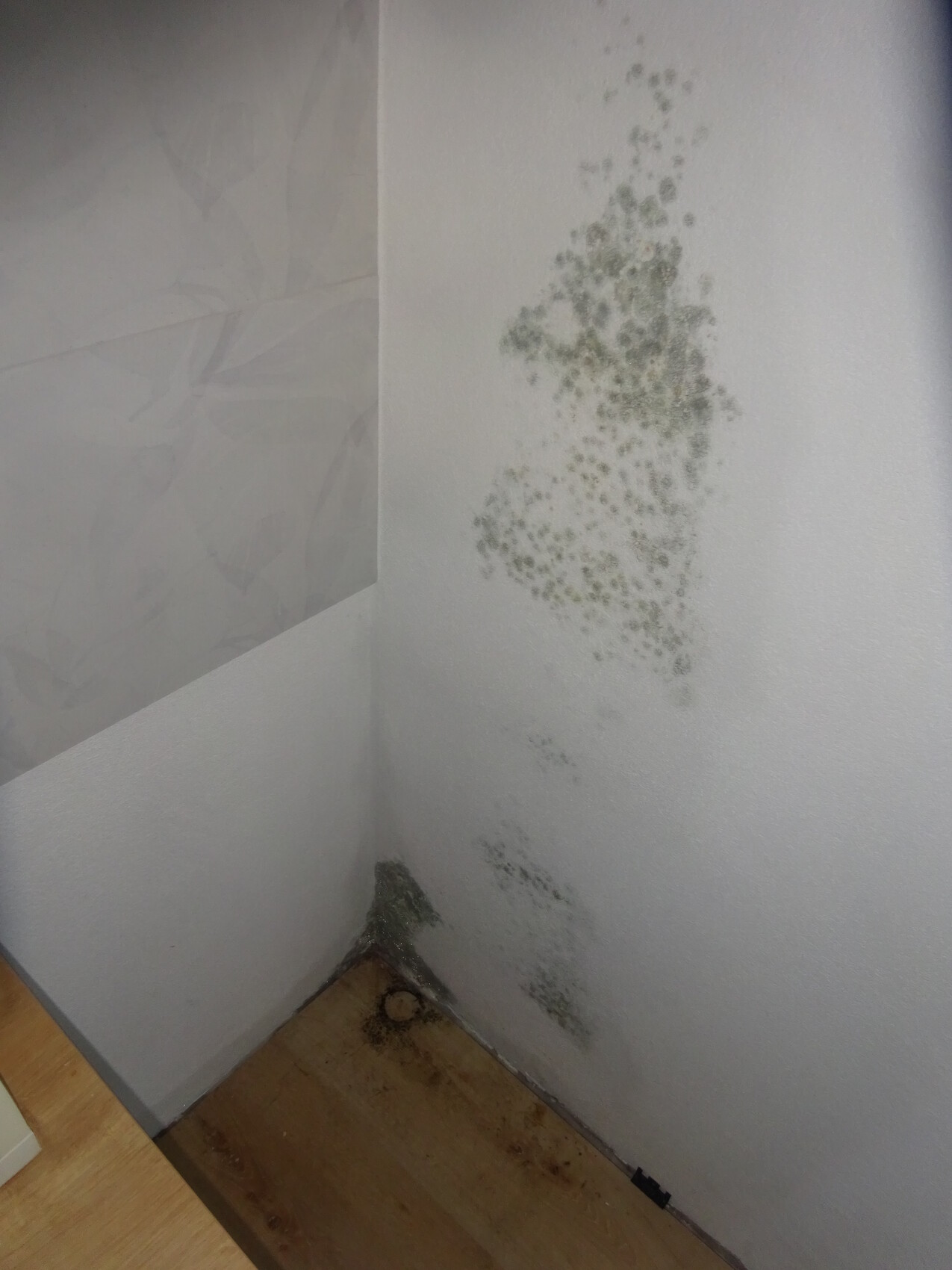
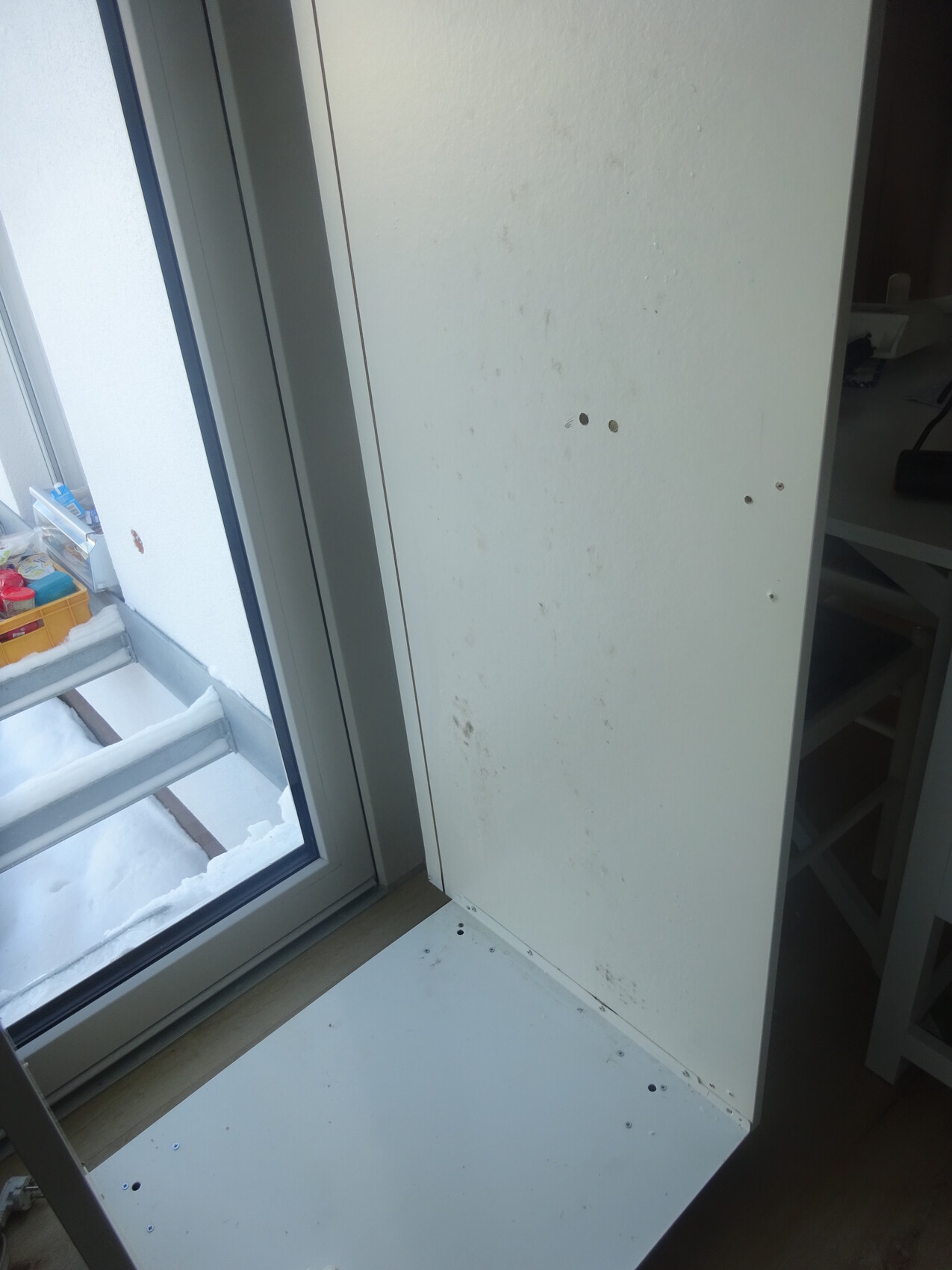
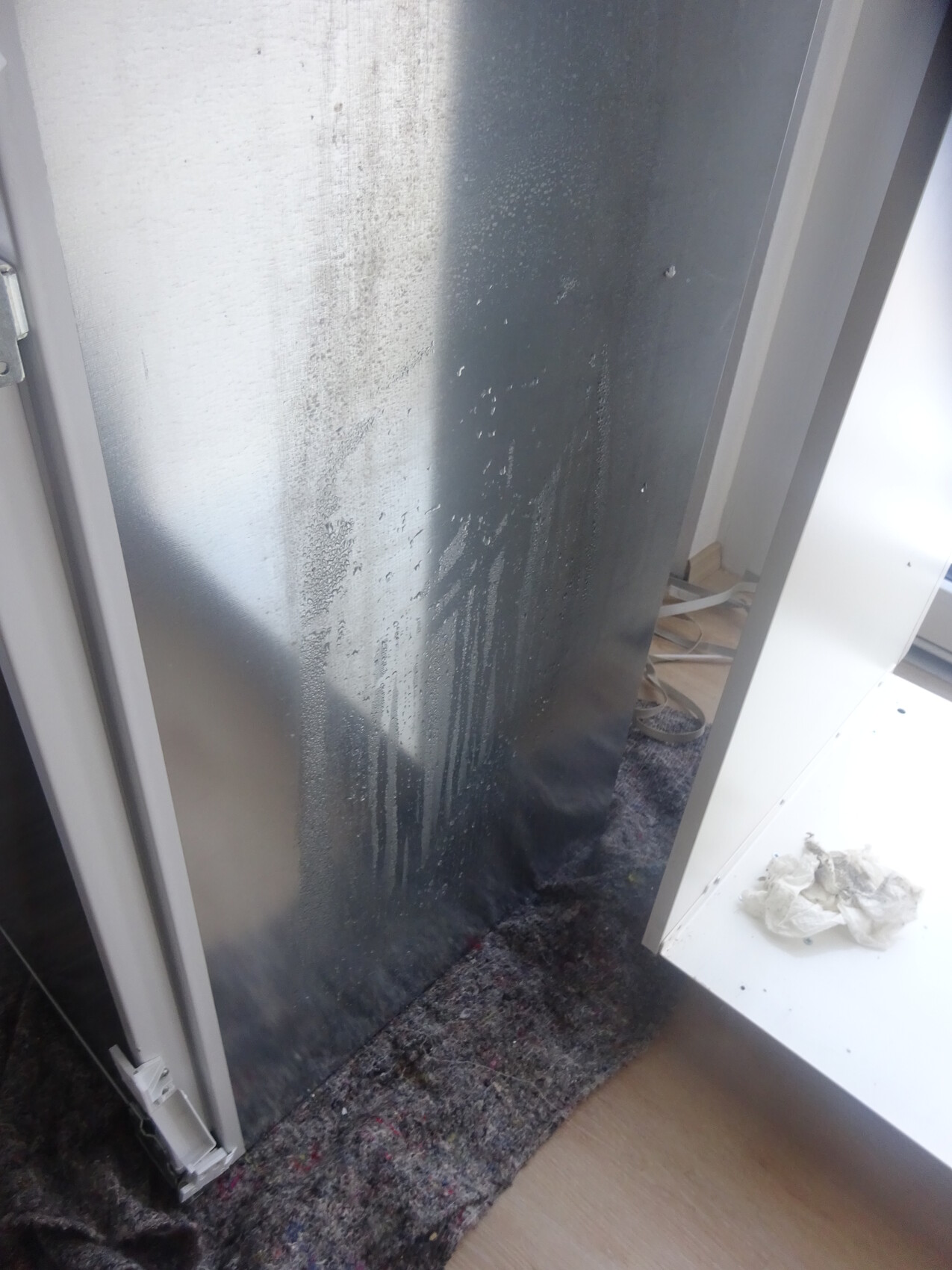
It became noticeable when water suddenly started leaking from under the refrigerator. At first, I thought it was a device malfunction, but that does not seem to be the case. We have a built-in refrigerator, and after removing the cabinet where it was installed, we discovered the problem: mold in the lower corner of the room and on the wall next to the refrigerator (see picture). There was even mold between the refrigerator and the built-in cabinet (picture 2). The entire right side wall of the appliance was covered with water droplets (picture 3).
Trusted tradespeople (tiler and plasterer) examined the situation and said it is condensed water caused by humidity. The air cannot circulate properly around this cabinet, which leads to this problem. In addition, the refrigerator is placed directly in the corner of the room against two exterior walls (northeast).
How should this problem be addressed? Removing the mold and thoroughly drying everything first seems obvious.
The tiler suggested installing ventilation openings in the wall above the refrigerator to help regulate humidity. I find that reasonable, but I am concerned that, since the cabinet is placed right next to the wall on the right side with only about 0.5 to 1 cm (0.2 to 0.4 inches) of space, condensation might still form there despite ventilation.
Are there any additional measures that could be taken here—perhaps filling the small cavity somehow?
Thanks in advance for any advice.
N
N
Nanopixel18 Feb 2021 09:53lastdrop schrieb:
Question for the thread starter: I hope the cabinet above the refrigerator (at the back against the wall) is open, allowing air to enter through the vents at the bottom and exit at the top, right? Yes, of course it is. Or rather, it WAS like that until all that stuff was removed again...
Alessandro schrieb:
A refrigerator produces heat that builds up behind it. This heat needs to be removed to prevent warming the refrigerator and thus increasing electricity costs. This happens through the ventilation grille at the base.
Maybe it would be a good idea to also install a grille at the top of the cabinet to improve air circulation and remove moisture. How do you picture the surrounding cabinet of a built-in refrigerator? It is of course completely open at the back and has a gap (distance) to the wall, so that the waste heat can freely escape upwards at the back.
Again, my problem with mold is not behind the refrigerator, but next to it.
A
Alessandro18 Feb 2021 10:00Yes, I understand how it looks. However, since you have two exterior walls, the air circulation or the openings for it might be insufficient. Perhaps an additional vent grille at the top on the side of the right exterior wall is needed. This was just a thought or an idea. The effort required for that would also be very minimal.
O
Osnabruecker18 Feb 2021 10:06Without having read everything thoroughly, our kitchen planner designed a free space between the exterior wall and the refrigerator...
I never noticed this until this post, but it might be a solution for you?
So, shift the entire row and install a filler panel.
(Photo taken from above at an angle, showing the refrigerator with the exterior wall on the left)
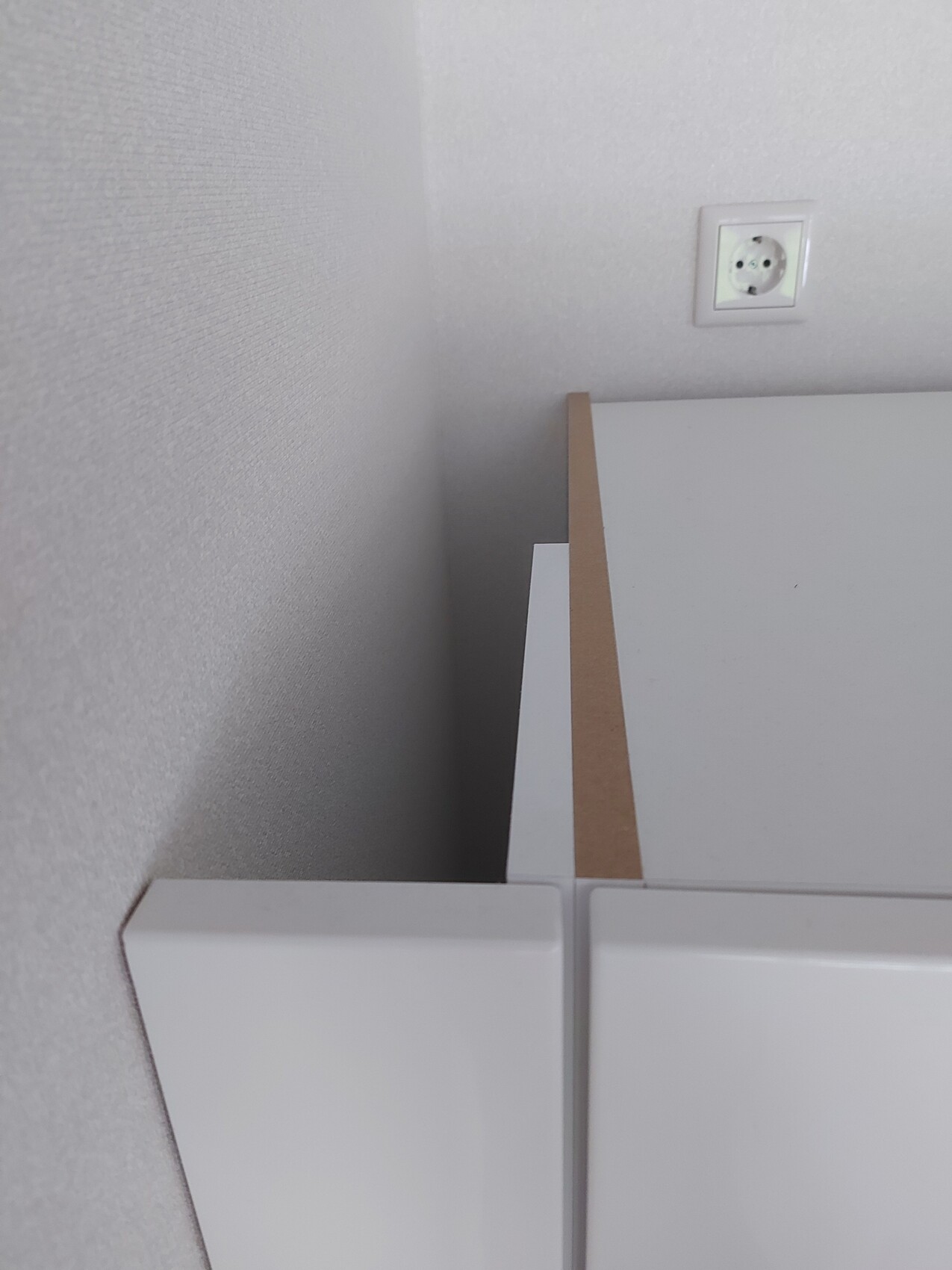
I never noticed this until this post, but it might be a solution for you?
So, shift the entire row and install a filler panel.
(Photo taken from above at an angle, showing the refrigerator with the exterior wall on the left)
O
Osnabruecker18 Feb 2021 10:21Osnabruecker schrieb:
Without having read everything, ... disregard my previous comment above 😉
Somehow I didn’t notice the pictures of the kitchen at first glance... so my solution is flawed... (the comment above can’t be edited...)
N
Nanopixel19 Feb 2021 10:35Interesting:
1. Now that the refrigerator is placed in the middle of the room, it uses much less energy – 0.5 instead of 1 kWh per day.
2. Using an infrared thermometer, the temperature was measured at different spots on the wall; the corner at the bottom with the main mold issue is by far the coldest spot at 11°C (52°F), while everywhere else is at least 16°C (61°F).
1. Now that the refrigerator is placed in the middle of the room, it uses much less energy – 0.5 instead of 1 kWh per day.
2. Using an infrared thermometer, the temperature was measured at different spots on the wall; the corner at the bottom with the main mold issue is by far the coldest spot at 11°C (52°F), while everywhere else is at least 16°C (61°F).
Similar topics