
ᐅ Mold Problem in a New Kitchen – How to Prevent It in the Future?
Created on: 14 Feb 2021 21:54
N
Nanopixel
In our kitchen, which was completely renovated in mid-2020, we have a problem with mold:
It became noticeable when water suddenly started leaking from under the refrigerator. At first, I thought it was a device malfunction, but that does not seem to be the case. We have a built-in refrigerator, and after removing the cabinet where it was installed, we discovered the problem: mold in the lower corner of the room and on the wall next to the refrigerator (see picture). There was even mold between the refrigerator and the built-in cabinet (picture 2). The entire right side wall of the appliance was covered with water droplets (picture 3).
Trusted tradespeople (tiler and plasterer) examined the situation and said it is condensed water caused by humidity. The air cannot circulate properly around this cabinet, which leads to this problem. In addition, the refrigerator is placed directly in the corner of the room against two exterior walls (northeast).
How should this problem be addressed? Removing the mold and thoroughly drying everything first seems obvious.
The tiler suggested installing ventilation openings in the wall above the refrigerator to help regulate humidity. I find that reasonable, but I am concerned that, since the cabinet is placed right next to the wall on the right side with only about 0.5 to 1 cm (0.2 to 0.4 inches) of space, condensation might still form there despite ventilation.
Are there any additional measures that could be taken here—perhaps filling the small cavity somehow?
Thanks in advance for any advice.
N
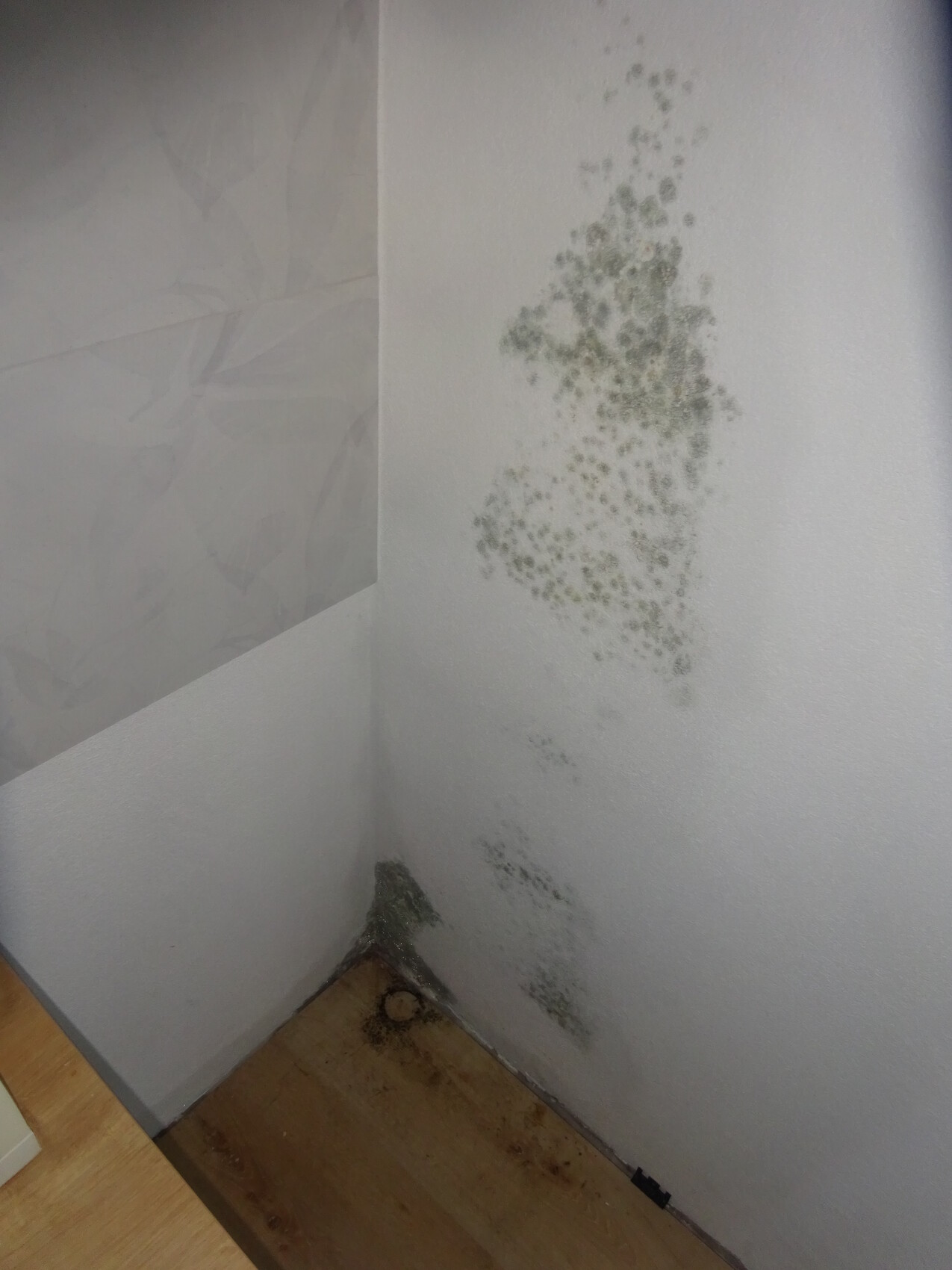
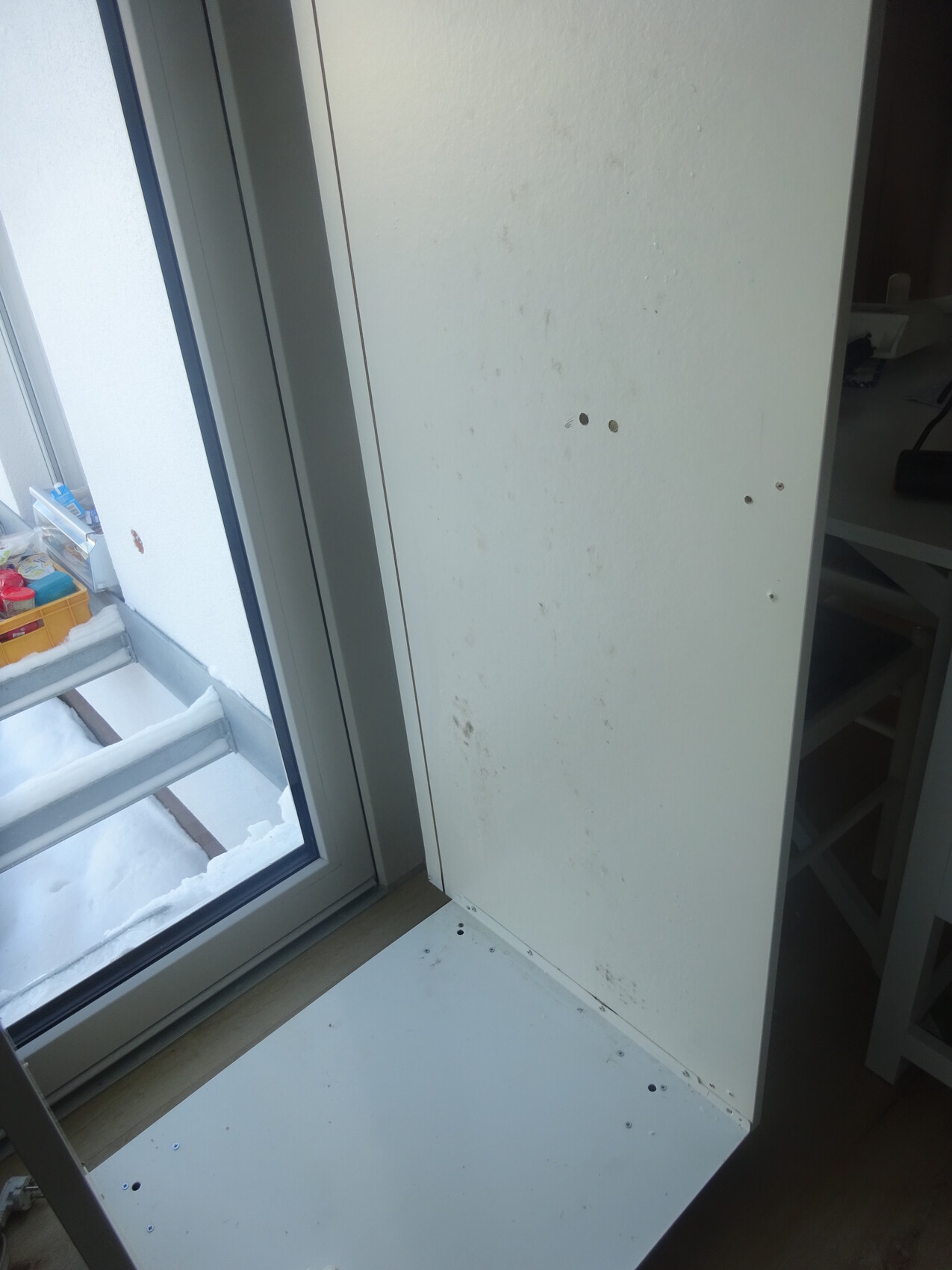
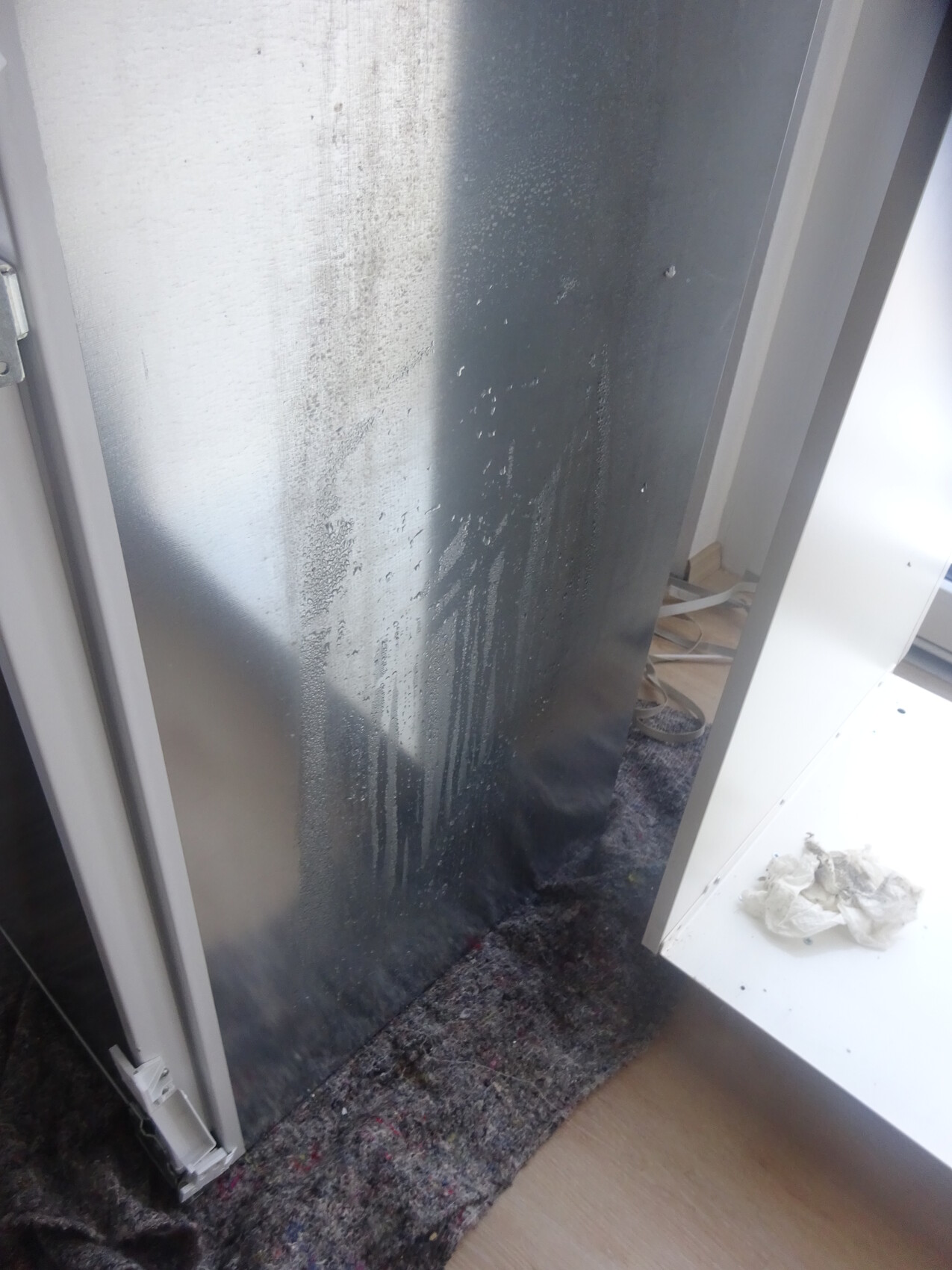
It became noticeable when water suddenly started leaking from under the refrigerator. At first, I thought it was a device malfunction, but that does not seem to be the case. We have a built-in refrigerator, and after removing the cabinet where it was installed, we discovered the problem: mold in the lower corner of the room and on the wall next to the refrigerator (see picture). There was even mold between the refrigerator and the built-in cabinet (picture 2). The entire right side wall of the appliance was covered with water droplets (picture 3).
Trusted tradespeople (tiler and plasterer) examined the situation and said it is condensed water caused by humidity. The air cannot circulate properly around this cabinet, which leads to this problem. In addition, the refrigerator is placed directly in the corner of the room against two exterior walls (northeast).
How should this problem be addressed? Removing the mold and thoroughly drying everything first seems obvious.
The tiler suggested installing ventilation openings in the wall above the refrigerator to help regulate humidity. I find that reasonable, but I am concerned that, since the cabinet is placed right next to the wall on the right side with only about 0.5 to 1 cm (0.2 to 0.4 inches) of space, condensation might still form there despite ventilation.
Are there any additional measures that could be taken here—perhaps filling the small cavity somehow?
Thanks in advance for any advice.
N
The vacuum insulation panel would be completely unsuitable and the worst option.
I only mentioned the perimeter insulation because these often have a poor thermal conductivity rating (WLG) and absorb little moisture when sold in DIY stores.
The primary concern isn’t the insulation itself but the moisture transport to the outside. This is without knowing what type of paint is on the wall.
Calcium silicate and wood fiber insulation would be verifiable options, but these are rarely available in DIY stores.
Possibly, perimeter insulation could fail; however, I’m withdrawing that suggestion because I assume that the clearance recommended by the manufacturer should be sufficient 🙂
I only mentioned the perimeter insulation because these often have a poor thermal conductivity rating (WLG) and absorb little moisture when sold in DIY stores.
The primary concern isn’t the insulation itself but the moisture transport to the outside. This is without knowing what type of paint is on the wall.
Calcium silicate and wood fiber insulation would be verifiable options, but these are rarely available in DIY stores.
Possibly, perimeter insulation could fail; however, I’m withdrawing that suggestion because I assume that the clearance recommended by the manufacturer should be sufficient 🙂
 Winniefred16 Feb 2021 19:23
When was the room plastered?
I also think it is most likely due to the uninsulated wall combined with the fridge’s location without air circulation. However, I find it quite remarkable that there is so much water that it actually runs under the fridge.
I also think it is most likely due to the uninsulated wall combined with the fridge’s location without air circulation. However, I find it quite remarkable that there is so much water that it actually runs under the fridge.
N
Nanopixel16 Feb 2021 21:22The room was plastered last year in June/July, so a little over 6 months ago.
I would rule out equipment malfunction; the fridge/freezer unit is now positioned in the center of the kitchen (without a built-in cabinet) and is operational. There is no water leaking anywhere.
The wall behind/next to the refrigerator was covered with water droplets, as if those spots had been sprayed with a spray bottle. Incidentally, these droplets were also found inside, meaning between the appliance and the built-in cabinet.
None of this is the case anymore, neither on the appliance nor on the wall.
I would rule out equipment malfunction; the fridge/freezer unit is now positioned in the center of the kitchen (without a built-in cabinet) and is operational. There is no water leaking anywhere.
The wall behind/next to the refrigerator was covered with water droplets, as if those spots had been sprayed with a spray bottle. Incidentally, these droplets were also found inside, meaning between the appliance and the built-in cabinet.
None of this is the case anymore, neither on the appliance nor on the wall.
Winniefred16 Feb 2021 21:26Then the location, the insufficient clearance, and the cold exterior wall are probably the cause.

As an "active" solution, I see two additional options besides insulation:
1. Installing an extra heater in the corner to warm that area (which usually also increases air circulation).
2. Installing a small fan in the ventilation slots to create faster air exchange.
These are workarounds but are regularly used in other cases...
1. Installing an extra heater in the corner to warm that area (which usually also increases air circulation).
2. Installing a small fan in the ventilation slots to create faster air exchange.
These are workarounds but are regularly used in other cases...
Similar topics