
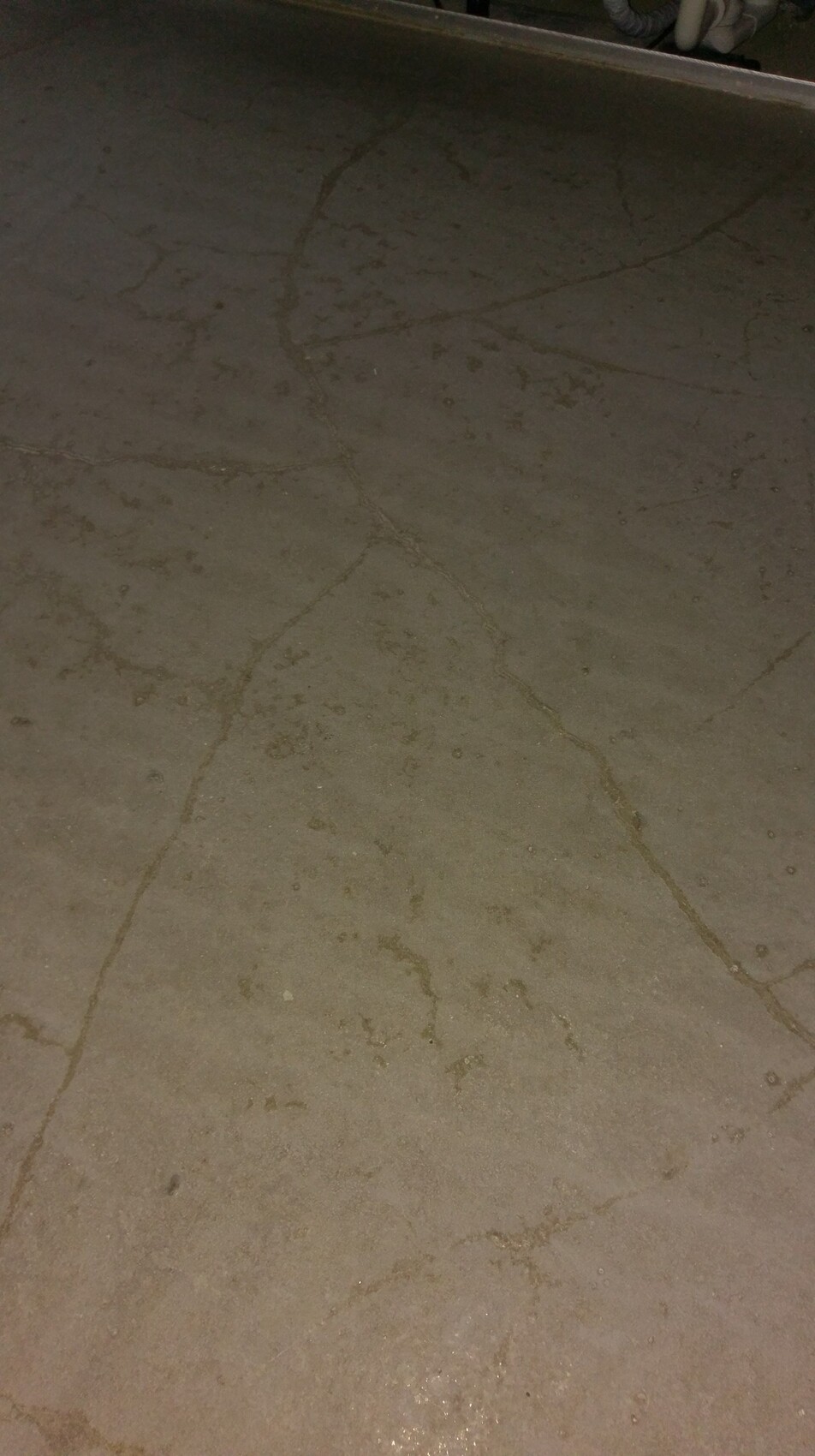
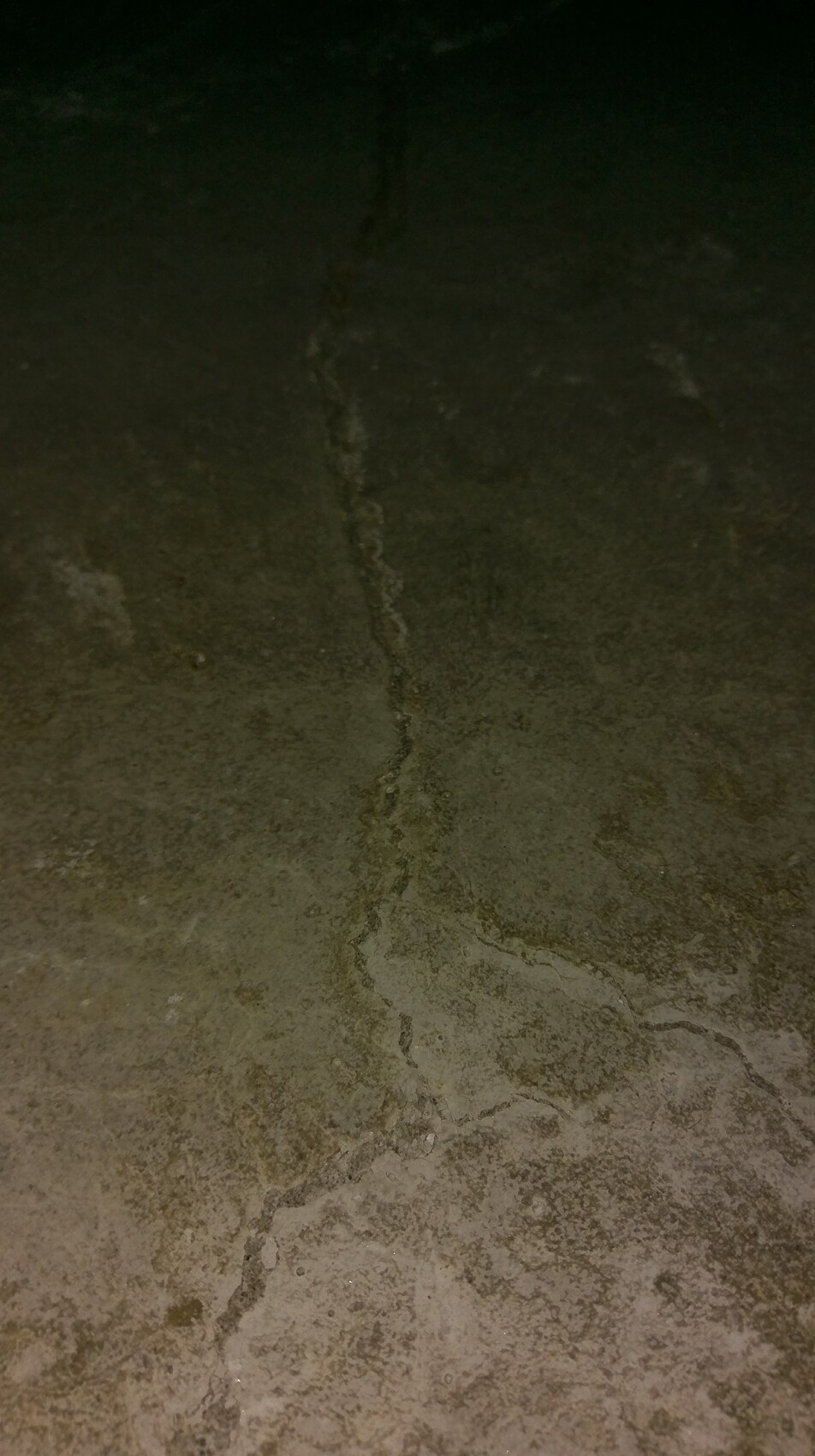
Good evening. We had liquid screed installed in the house one week ago. The underfloor heating is being gradually turned up. From the beginning, there have been slight "cracks" visible on the surface.


Hello "Marchonisch".
"A polite greeting at the beginning of the message and a brief closing remark at the end of the request would surely be appreciated by the volunteer responders here in this forum, as it shows courtesy and style."
It is quite unusual for a screed to crack in the way shown in the photos. If it is a flowable screed (and here the interesting question would be whether it is based on cement or calcium sulfate binder), such cracking indicates more than just structural constraints.
While it is true that a screed can always develop sporadic cracks and, after crack repair, should be considered a properly executed trade, when larger cracks appear, the question of WHY must be asked.
In a project I inspected in Bad Neuenahr, it was undoubtedly a material defect, and in a hotel in Frankfurt that I am currently inspecting again, it was a special screed construction that did not work.
You can decide for yourself whether to resolve the problem with the screed installer, who will likely be your contact person, or whether you want to involve an expert in the trade (screed or floor technology).
The question of WHY, regarding crack formation, cannot be answered remotely. The screed’s history must be known, and if necessary, parts of the construction must be opened.
This ultimately means that a layperson is overwhelmed in this situation, and general advice from the internet may not always be helpful.
------------------------------------
Best regards and good luck: KlaRa
"A polite greeting at the beginning of the message and a brief closing remark at the end of the request would surely be appreciated by the volunteer responders here in this forum, as it shows courtesy and style."
It is quite unusual for a screed to crack in the way shown in the photos. If it is a flowable screed (and here the interesting question would be whether it is based on cement or calcium sulfate binder), such cracking indicates more than just structural constraints.
While it is true that a screed can always develop sporadic cracks and, after crack repair, should be considered a properly executed trade, when larger cracks appear, the question of WHY must be asked.
In a project I inspected in Bad Neuenahr, it was undoubtedly a material defect, and in a hotel in Frankfurt that I am currently inspecting again, it was a special screed construction that did not work.
You can decide for yourself whether to resolve the problem with the screed installer, who will likely be your contact person, or whether you want to involve an expert in the trade (screed or floor technology).
The question of WHY, regarding crack formation, cannot be answered remotely. The screed’s history must be known, and if necessary, parts of the construction must be opened.
This ultimately means that a layperson is overwhelmed in this situation, and general advice from the internet may not always be helpful.
------------------------------------
Best regards and good luck: KlaRa
M
Marchonisch7 Nov 2017 21:55Thank you all for the quick feedback.
My heating engineer says these are not cracks and everything is fine. The architect says the same.
Nevertheless, I will confront the screed installer about it again.
It is cementitious flowing screed.
My heating engineer says these are not cracks and everything is fine. The architect says the same.
Nevertheless, I will confront the screed installer about it again.
It is cementitious flowing screed.
Marchonisch schrieb:
My heating engineer says that these are not cracks and that everything is fine. The architect says the same.If they are not cracks, then what are they supposed to be?
M
Marchonisch8 Nov 2017 09:12Sorry, I just had another conversation with the screed installer.
We received an anhydrite flow screed. The cracks are only on the surface and disappear after sanding.
We removed a bit of the surface at one of the cracks. After that, the crack was no longer visible.
Sorry for the incorrect information regarding the type of screed.
Now I’m torn and don’t know what to believe anymore.
How do you assess this (considering the new facts, sorry)?
We received an anhydrite flow screed. The cracks are only on the surface and disappear after sanding.
We removed a bit of the surface at one of the cracks. After that, the crack was no longer visible.
Sorry for the incorrect information regarding the type of screed.
Now I’m torn and don’t know what to believe anymore.
How do you assess this (considering the new facts, sorry)?
Marchonisch schrieb:
....
We received an anhydrite flow screed. The cracks are only on the surface and disappear after sanding.
We slightly removed the surface at one "crack." After that, no crack was visible anymore.
.....
I'm now torn and don't know what to believe anymore.
How do you evaluate this (taking the new facts into account (sorry))Why shouldn’t you trust your screed installer?
If everything will still be sanded (which I’ve never heard of before), and then the superficial cracks (which we cannot see or assess how deep they are) disappear, everything should be fine.
Hello "Marchonisch".
There are superficial cracks. These occur in cement screeds and concrete as well as in calcium sulfate screeds, unless the latter were installed as self-leveling screeds (in which case they should not appear).
A crack only deserves attention if it is a separation crack that completely runs through the screed structure. Such a crack would certainly not be removed by grinding, whereas a superficial crack would be.
You can therefore determine the type of crack yourself after grinding: superficial or separation crack.
The first usually occurs due to draft during the fresh phase, while the latter appears after several hours or days, once the screed’s inherent strength develops and stresses are released through structural weaknesses.
Separation cracks must be repaired before the floor installer begins work. This is nothing extraordinary but must be done.
Costs for this? As a defect in the screed, the screed installer is initially responsible.
Kind regards,
KlaRa
There are superficial cracks. These occur in cement screeds and concrete as well as in calcium sulfate screeds, unless the latter were installed as self-leveling screeds (in which case they should not appear).
A crack only deserves attention if it is a separation crack that completely runs through the screed structure. Such a crack would certainly not be removed by grinding, whereas a superficial crack would be.
You can therefore determine the type of crack yourself after grinding: superficial or separation crack.
The first usually occurs due to draft during the fresh phase, while the latter appears after several hours or days, once the screed’s inherent strength develops and stresses are released through structural weaknesses.
Separation cracks must be repaired before the floor installer begins work. This is nothing extraordinary but must be done.
Costs for this? As a defect in the screed, the screed installer is initially responsible.
Kind regards,
KlaRa
Similar topics