
So, we want to renovate the kids’ room and have already started removing the old wallpaper. Since it was quite old, there were multiple layers of wallpaper, and while pulling it off, some of the plaster or whatever you want to call it also came off.
Now the question is whether we should remove everything and then wallpaper, or if we need to apply something beforehand.
You can’t really leave it like this because there are a few millimeters (inches) of difference in the surface, so I think everything needs to be removed. But the substrate is kind of sandy—should we apply a primer first, or what is the usual procedure? I don’t want to replaster it now... this isn’t supposed to be a big project, "really"... I’ve attached a picture to show what it looks like.
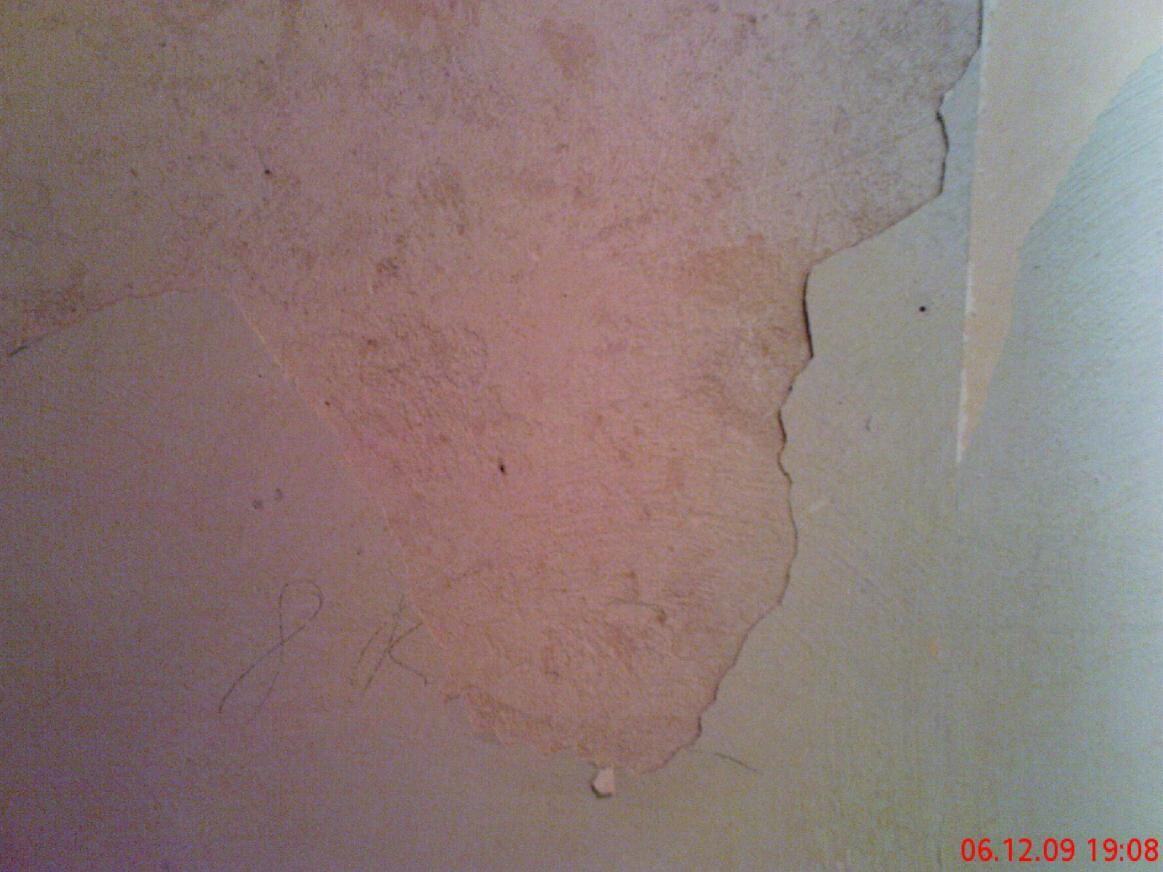
Now the question is whether we should remove everything and then wallpaper, or if we need to apply something beforehand.
You can’t really leave it like this because there are a few millimeters (inches) of difference in the surface, so I think everything needs to be removed. But the substrate is kind of sandy—should we apply a primer first, or what is the usual procedure? I don’t want to replaster it now... this isn’t supposed to be a big project, "really"... I’ve attached a picture to show what it looks like.
Schakal schrieb:
Hello!
Looks like you’ve already made good progress: o))
In principle, you could now take the next step and start wallpapering the walls.
A tip on the side: treat the walls, especially the newly plastered areas, with a primer. You could also use a very diluted wallpaper paste; this method is sometimes used.
The advantage is that the different surfaces will then absorb moisture more evenly and consistently.
Best regards 😉What is the purpose of the heavily diluted paste? Technically, that is completely wrong.
Regards, Thommi
I thought I would share a brief statement to clarify what motivates me to write this post or tip. Maybe it can help other users.
We could discuss certain opinions or explanations, or even help and exchange ideas with each other, but it’s not right to say or claim something is completely wrong from a professional standpoint if you don’t understand the subject.
With this, I will be ending my activity in this forum. Reason: It’s becoming increasingly tiresome when other users add unnecessary comments and respond so carelessly.
Now, about wallpaper paste:
When renovating a room—removing old wallpaper and performing plastering work—dust is created, caused by sanding the walls or from the preparatory work itself.
To better bind the dust, you could buy an expensive primer, or try cleaning the surfaces with a broom, but in practice, this is not necessary.
Wallpaper paste is needed anyway since the walls will be re-papered, so it’s enough to buy an extra package.
The advantage is that if you prime the walls with wallpaper paste, the following benefits occur:
Costs are lower.
The surface becomes dust-free and hardened.
New wallpaper adheres better to walls that have been pre-pasted.
Well, that was my statement on something I consider unnecessary, but oh well.
Best regards.
We could discuss certain opinions or explanations, or even help and exchange ideas with each other, but it’s not right to say or claim something is completely wrong from a professional standpoint if you don’t understand the subject.
With this, I will be ending my activity in this forum. Reason: It’s becoming increasingly tiresome when other users add unnecessary comments and respond so carelessly.
Now, about wallpaper paste:
When renovating a room—removing old wallpaper and performing plastering work—dust is created, caused by sanding the walls or from the preparatory work itself.
To better bind the dust, you could buy an expensive primer, or try cleaning the surfaces with a broom, but in practice, this is not necessary.
Wallpaper paste is needed anyway since the walls will be re-papered, so it’s enough to buy an extra package.
The advantage is that if you prime the walls with wallpaper paste, the following benefits occur:
Costs are lower.
The surface becomes dust-free and hardened.
New wallpaper adheres better to walls that have been pre-pasted.
Well, that was my statement on something I consider unnecessary, but oh well.
Best regards.
Schakal schrieb:
I thought I’d make a short statement to clarify some points about what motivated me to write this post or tip. Maybe it can help other users.
You could discuss certain opinions or explanations, or even help and exchange ideas with each other, but you shouldn’t say or claim something is completely wrong if you don’t understand the subject.
I will stop my activities here in the forum. Reason: It’s becoming tiresome when other users add inappropriate comments and respond with such crude replies.
Now, about wallpaper paste:
When renovating a room—removing old wallpaper and doing plastering—dust is created, usually from sanding the walls or from the preliminary work itself.
To better bind the dust, you can of course buy an expensive primer, or try cleaning the surfaces with a broom, which in practice is usually not necessary.
Wallpaper paste is needed anyway because the walls will be wallpapered again, so it’s enough to buy one extra package.
The advantages of priming the walls with wallpaper paste are:
Lower initial cost.
The surface becomes dust-free and hardens.
New wallpaper adheres better to pre-pasted walls.
Well, that was my statement on what I consider unnecessary, but oh well.
Best regards 😉Schakal, I don’t know where you get your knowledge from, but primer is not meant to bind dust. If you had even a little understanding about painting, you would know that wallpaper paste dissolves again when it comes into contact with water. So your supposedly hardened surface is no longer valid. Better leave it and stop writing about things you don’t understand. I took the time to read through your posts. You must have several master certificates or something, otherwise how could you, for example, recommend a cable cross-section for electrical wiring? You also seem to be an expert in heating and plumbing, concrete work, painting, and drywall, and so on. I’d be curious to know what your profession is.
Regards, thommi
@ thommi
Please don’t take this the wrong way or personally, but you really are quite an unusual character. Well, since you’ve already taken the trouble to go through my posts, I would ask you to correct all the nonsense I write. Personally, I believe you’re the best person to do that.
It’s true that primer is not meant to bind dust, but I can definitely tell you it does. Think about it—this wasn’t about the functions of primer or even a product description.
Could you imagine that there are different types of primer? Have you actually seen that? Take a look.
But anyway, I don’t want to argue about that…
And now, a quick word about your version of wallpaper paste:
Are you seriously trying to explain to me that if you prime the walls with wallpaper paste and then apply new wallpaper using paste, it will dissolve afterwards because of the water content in the paste itself?
Well, nice theory, but unfortunately not applicable or, as you so nicely put it, completely incorrect from a technical standpoint.
PS. This is really my last post. Good luck.
Best regards.
Please don’t take this the wrong way or personally, but you really are quite an unusual character. Well, since you’ve already taken the trouble to go through my posts, I would ask you to correct all the nonsense I write. Personally, I believe you’re the best person to do that.
It’s true that primer is not meant to bind dust, but I can definitely tell you it does. Think about it—this wasn’t about the functions of primer or even a product description.
Could you imagine that there are different types of primer? Have you actually seen that? Take a look.
But anyway, I don’t want to argue about that…
And now, a quick word about your version of wallpaper paste:
Are you seriously trying to explain to me that if you prime the walls with wallpaper paste and then apply new wallpaper using paste, it will dissolve afterwards because of the water content in the paste itself?
Well, nice theory, but unfortunately not applicable or, as you so nicely put it, completely incorrect from a technical standpoint.
PS. This is really my last post. Good luck.
Best regards.
T
tim taylor28 Sep 2010 10:54I currently have a similar problem in one of my rooms. In addition, the wall shows signs of moisture. I simply hired a painter to take care of it, and that worked well. Rather than risk doing a poor job and causing mold to develop, I prefer to play it safe!
Similar topics