
Hi everyone,
I had the facade of my house painted by a professional company, using silicone resin paint as stated in the quote.
After the first coat, I noticed many cracks in the paint. It was painted two more times, but without any improvement. Previously, the facade had no cracks.
The facade has many indentations due to the plaster. The paint was applied with a roller.
Now the company says these are just air bubbles and that this does not affect the quality.
I don’t believe that.
What do you think about this?
Best regards,
Ulfi
I’ve attached a photo!
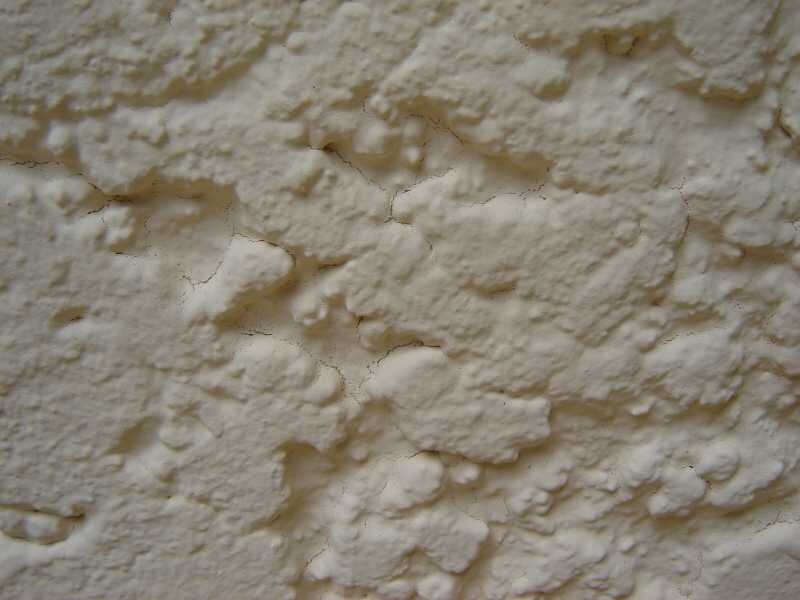
I had the facade of my house painted by a professional company, using silicone resin paint as stated in the quote.
After the first coat, I noticed many cracks in the paint. It was painted two more times, but without any improvement. Previously, the facade had no cracks.
The facade has many indentations due to the plaster. The paint was applied with a roller.
Now the company says these are just air bubbles and that this does not affect the quality.
I don’t believe that.
What do you think about this?
Best regards,
Ulfi
I’ve attached a photo!
S
schwarzmeier29 Jun 2009 18:51Apples and Oranges
If you bring up the comparison between organic facade paint and gypsum or fillers, you might as well tell Schubeck that the lamb leg has to be ready in 10 minutes, not 70, since the salmon fillet didn't take any longer.
You are mixing things up quite a bit!
I’ll leave your assessment of the Sto technical advisor without comment.
I once had a painter journeyman, 45 years old, whom I sent to paint windows. Just before he started, I arrived just in time to stop him.
When I asked what he planned to apply, he said, "Well, Glasurit window paint!" Glasurit was indeed in the can, but it was liquid plastic. I mention this only in passing after 30 years of professional experience. Furthermore, these are not cracks in the true sense, but surface flaking. Even cracks in plaster with grain sizes of 3mm (1.2 inches) and widths of 0.2mm (0.008 inches) do not constitute defects in my opinion.
But as the saying goes along the Rhine, "Everyone is different!"
In my expert reports, such surface flaking is not classified as a defect!
By the way, I have been doing my job for 44 years, nearly 36 years as a master craftsman, and have been working as an expert witness for 13 years.
But I don’t want to preach to you, believe whatever you want.
You have my blessing, in God’s name.
If you bring up the comparison between organic facade paint and gypsum or fillers, you might as well tell Schubeck that the lamb leg has to be ready in 10 minutes, not 70, since the salmon fillet didn't take any longer.
You are mixing things up quite a bit!
I’ll leave your assessment of the Sto technical advisor without comment.
I once had a painter journeyman, 45 years old, whom I sent to paint windows. Just before he started, I arrived just in time to stop him.
When I asked what he planned to apply, he said, "Well, Glasurit window paint!" Glasurit was indeed in the can, but it was liquid plastic. I mention this only in passing after 30 years of professional experience. Furthermore, these are not cracks in the true sense, but surface flaking. Even cracks in plaster with grain sizes of 3mm (1.2 inches) and widths of 0.2mm (0.008 inches) do not constitute defects in my opinion.
But as the saying goes along the Rhine, "Everyone is different!"
In my expert reports, such surface flaking is not classified as a defect!
By the way, I have been doing my job for 44 years, nearly 36 years as a master craftsman, and have been working as an expert witness for 13 years.
But I don’t want to preach to you, believe whatever you want.
You have my blessing, in God’s name.
I don’t know where you get the idea that cracked surfaces are completely acceptable. To me, this is certainly not a professional way to carry out the work. How are you going to explain to the client that one side is good while the other side has cracks in the paint? I’m curious to see how that will go. Hopefully, you won’t be appointed as an expert witness by Ulfi.
S
schwarzmeier30 Jun 2009 19:16Speculation
These are not cracks in the surface but just minor superficial flakings.
You haven’t even seen the other walls, or are you the reincarnation of Hanussen? So everything you say is just based on assumptions. Furthermore, when assessing, the usual viewing distance of 2–3 m (6.5–10 feet) should be maintained; here the distance is only about 20–30 cm (8–12 inches). Under a microscope, these flakes would look like the Amazon River. Relax a bit, or else your worries might run wild.
These are not cracks in the surface but just minor superficial flakings.
You haven’t even seen the other walls, or are you the reincarnation of Hanussen? So everything you say is just based on assumptions. Furthermore, when assessing, the usual viewing distance of 2–3 m (6.5–10 feet) should be maintained; here the distance is only about 20–30 cm (8–12 inches). Under a microscope, these flakes would look like the Amazon River. Relax a bit, or else your worries might run wild.
Hello, I suppose they wanted to seal the cracks by painting over them.
Regarding Schwarzmeier again: I haven’t seen the other walls and assumed that the defects listed here were not present there. Which is quite odd. Perhaps the inspector could provide a statement on this.
As for your comment about inspecting the work from 2-3 meters (6-10 feet) away — that’s obviously a joke. No one can tell me, as a customer, at what distance I am allowed to inspect the completed work. Surely, you get a better overall impression of a painted wall from a certain distance than when standing very close. However, the finer details should definitely be examined up close.
Best regards,
Thommi
Regarding Schwarzmeier again: I haven’t seen the other walls and assumed that the defects listed here were not present there. Which is quite odd. Perhaps the inspector could provide a statement on this.
As for your comment about inspecting the work from 2-3 meters (6-10 feet) away — that’s obviously a joke. No one can tell me, as a customer, at what distance I am allowed to inspect the completed work. Surely, you get a better overall impression of a painted wall from a certain distance than when standing very close. However, the finer details should definitely be examined up close.
Best regards,
Thommi
S
schwarzmeier1 Jul 2009 07:33ADMIN schrieb:
Hello everyone,
what do you think is the reason the painting company applied an additional coat to the facade for free?This question should be answered by the painting company; otherwise, it quickly falls into the category of "GUESSING," not KNOWING!
@THOMMI
The watchmaker has a very short "normal viewing distance"!
ADMIN schrieb:
Hello everyone,
what do you think is the reason that the painting company applied an additional free coat to the facade?schwarzmeier schrieb:
The painting company should answer that question; otherwise, it becomes mere "SPECULATION" rather than KNOWING!
@Thommi
A watchmaker has a very short "usual viewing distance"!Schwarzmeier, I knew you wouldn’t have anything more to say on this. Seems you’ve run out of your expert jargon. When a company performs work again for free, the reason is usually obvious: they wanted to fix their botched job.
Regarding the statement "SPECULATION" rather than KNOWING!
Ulfi said, "So, a part is paid for—what the company correctly completed."
Why should I doubt that?
Regards, Thommi
Similar topics