
ᐅ We are planning to build in 2022; the planning phase is beginning.
Created on: 6 Jun 2020 09:33
Y
Ybias78
Before I share the completed data, here are some details about our building project. We are still quite early in the process. About 2.5 years ago, we purchased a plot of land that we are currently paying off. The plot is located within the developed area of Fichtenwalde (about 50km (31 miles) south of Berlin) and is currently classified as forest. There are about 80 trees on the land. Converting it into a building plot is not a problem. However, there is a tree protection regulation, which means all trees must be replaced. The cost of felling the trees, including replanting and a financial deposit (in case the replacement trees do not survive), is around €20,000 (based on feedback from our neighbors who built last year).
We plan to start building the house at the beginning of 2022 and want to consult an architect by August 2020 to design the house and submit the building permit / planning permission application. While the building application is being processed, the land can then be converted, including tree removal. This will be paid for with the money we save from now until the new build. We don’t have any other equity. We moved in together around 10 years ago, during which time we had to pay off my student loans, buy two cars, etc. Our income has also increased over time.
We now need some help with the overall planning. As mentioned, our current plan is:
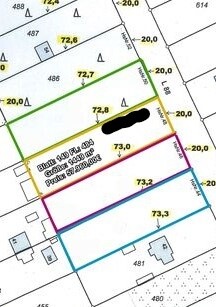
Here is the plot:
Information about us:
General information about you:
Expenses already included elsewhere can be omitted. This list is not exhaustive and can be extended or summarized. Please specify all costs monthly, even if they only occur annually!
Housing costs:
Other expenses:
General information about the property:
We plan to start building the house at the beginning of 2022 and want to consult an architect by August 2020 to design the house and submit the building permit / planning permission application. While the building application is being processed, the land can then be converted, including tree removal. This will be paid for with the money we save from now until the new build. We don’t have any other equity. We moved in together around 10 years ago, during which time we had to pay off my student loans, buy two cars, etc. Our income has also increased over time.
We now need some help with the overall planning. As mentioned, our current plan is:
- Consult an architect and plan the house by August.
- Submit the building permit / planning permission application in October.
- Tree felling can take place by the end of February.
- In 2021, we will look for a (most likely) regional company to build the house (recommendations welcome).
- From June 2020 to December 2021, the saved money will be spent on:
- Architect fees, tree removal, paying off the land including a €2,750 special repayment. A new car for my wife (approx. €10,000) will also be purchased.
- Cheaper items should also be covered, such as surveying, soil report, etc.
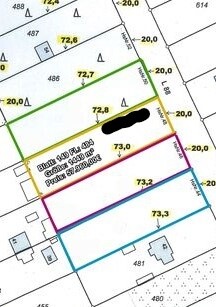
Here is the plot:
Information about us:
General information about you:
- Who are you?
- A family of three.
- How old are you?
- She is 38, he is 41, daughter: 8.
- Do you have children?
- Yes, a girl.
- Are more children planned?
- No others planned.
- What do you do professionally?
- She is a full-time teacher. He is a controlling manager for several hospitals (full-time).
- Are you employed, self-employed, retired, homemaker, etc.?
- Both employed.
- How many hours do you work?
- She works full-time with 27 teaching hours plus preparation and follow-up time. He works 40 hours.
- What are your gross/net incomes?
- She: €2,820. He: €3,000 (tax class IV/IV). This includes about €400 in company pension contributions. Additionally, there are annual bonuses of about €3,000 (not included in net income).
- How much child benefit do you receive?
- €204.
- Other transfer payments like parental allowance, sick pay, etc.?
- None.
- How much equity do you have?
- Currently negligible (under €10,000).
- How much of that equity do you want to invest in the house project?
- All of it.
Expenses already included elsewhere can be omitted. This list is not exhaustive and can be extended or summarized. Please specify all costs monthly, even if they only occur annually!
Housing costs:
- Current basic rent (cold rent)
- €390
- Current total rent (warm rent)
- €567
- Electricity
- €72
- Gas
- None.
- Water, sewage, waste disposal, street cleaning
- Included in additional costs.
- Telephone, internet, mobile phone
- €85 (including Amazon Prime and Netflix)
- Public transport monthly pass (also for children)
- None.
- Car loan (or savings rate for a new car)
- Currently none.
- Insurance
- €100 per month (one fully comprehensive, one partially comprehensive).
- Taxes
- €34
- Fuel
- €200
- Repairs
- €140
- Other
- Is there a second car, motorcycle, scooter? Please specify all costs again!
- Private health insurance (also supplementary health insurance, daily sickness allowance, etc.)
- Dental supplementary insurance: €37
- Liability insurance (including pets)
- €7
- Capital or term life insurance
- None
- Pension insurance (including company pension plans)
- Company pension contributions (already included in net income).
- Disability insurance
- None
- Accident insurance
- None
- Household contents insurance
- €7
- Legal expenses insurance
- €20
- Other insurance (e.g., travel insurance, funeral insurance)
- Groceries
- Difficult to plan.
- Dining out
- Personal care/drugstore
- Pets (food, vet, medication, housing)
- Medication
- Clothing
- Furniture
- Childcare/school fees (including meals)
- After-school care €190 including meals
- Tutoring
- School supplies and books
- Club fees/gym
- Student association: €20
- Gym: €25
- Daughter’s music school: €66
- Babysitter
- Toys
- Cleaning
- TV/video/audio/CDs/DVDs
- Tickets (sports, cinema, concerts, etc.)
- Donations
- Student association: €15
- Other
- Vacation
- House
- Retirement
- Hobbies/gifts
- Other
- Total: €2,250
Other expenses:
- Alimony?
- Loans?
- €250 for the land.
- Other?
- Anything forgotten? Please add here!
- Total income: €6,024
- Total expenses: €3,769
- Balance: €2,255 (saved).
- Including cold rent and optional savings (e.g., savings rate for the house).
General information about the property:
- How large is the plot?
- 1,447 sqm (15,575 sq ft)
- What are its dimensions?
- 20 m (66 ft) road frontage x 72 m (236 ft)
- What is the land value?
- €120 per sqm
- New build, renovation / year built, house type?
- New build – L-shaped bungalow (we are still very early in planning)
- Garages?
- Depends on the budget.
- How big should the house be? (living area / usable area)
- About 140 sqm (1,507 sq ft)
- What is the market value of the land and house after completion?
- Land approx. €200,000 + house €350,000 = €550,000
- Land cost:
- Current outstanding debt €42,000
- Development costs
- Plot is fully developed.
- Acquisition incidental costs (notary, court, property transfer tax, realtor)
- Building or purchase costs (including architect, structural engineer):
- €300,000 budgeted.
- Renovation or restoration costs
- Additional building costs (e.g., utility connections, soil expert, construction electricity, etc.)
- Planned: €50,000
- Outdoor facilities/terrace, paths, landscaping, fences, etc.
- Depends on the total costs.
- Financing costs (fees or commitment interest)
- Total costs
- Remaining debt on the land + new build: Planned financing amount: €400,000
- Kitchen costs
- €10,000
- Furniture, lamps, decoration
- Mostly furniture will be kept and replaced gradually.
- Other "non-acquisition, incidental acquisition, construction, or additional building costs"
- Total costs:
- €400,000
- Deductible equity
- €0 (will be used for clearing the plot; €25,000).
- Financing amount
- €400,000

Ybias78 schrieb:
Why should I spend several hundred euros on more than two power outlets for, for example, the TV, when I can simply buy a good power strip and then connect the Xbox, Amazon Fire TV, etc. to it? "I will never do messy wiring work again" is, in my opinion, one of the best reasons to build a house.
https://www.instagram.com/11antgmxde/
https://www.linkedin.com/company/bauen-jetzt/

Ybias78 schrieb:
What do you think? Are all the connections included, or is something missing? This is really the absolute minimum.
I think having a light switch by the bed in the bedroom is a good idea. Sockets next to the bed are essential.
In the children’s room, you definitely need more sockets. If there’s ever a PC with a printer, etc., you’ll easily need four sockets at the desk.
In the storage room, if you want to have a chest freezer and a handheld vacuum, how would you charge it?
But yes, you can always make do with power strips.
Apparently, the number of electrical outlets is also a matter of personal preference.
We have friends who are electricians. They installed 3 or 4 outlets in every spot because, if you do it yourself, it costs almost the same as installing just one outlet. That might be practical, but we thought it looked really awful—walls completely covered with outlets.
Each of our outlets cost 80 euros (about 80 USD), so we were quite economical. For the TV, there is now a 4-socket power strip hidden inside the TV cabinet, which is even better because it’s easier to plug things in than behind the cabinet. And I’d rather spend the 240 euros (about 240 USD) elsewhere. But we don’t have many electronic devices, so that probably also plays a role.
We have friends who are electricians. They installed 3 or 4 outlets in every spot because, if you do it yourself, it costs almost the same as installing just one outlet. That might be practical, but we thought it looked really awful—walls completely covered with outlets.
Each of our outlets cost 80 euros (about 80 USD), so we were quite economical. For the TV, there is now a 4-socket power strip hidden inside the TV cabinet, which is even better because it’s easier to plug things in than behind the cabinet. And I’d rather spend the 240 euros (about 240 USD) elsewhere. But we don’t have many electronic devices, so that probably also plays a role.
SteLa33 schrieb:
Apparently, the number of power outlets is also a matter of personal preference.
We have friends who are electricians.
They installed 3 or 4 outlets at every location because, when doing it yourself, it costs almost the same as installing just one outlet.
That might be practical, but we thought it looked really awful. Everything covered with outlets...
Each of our outlets cost 80 euros (about $88), so we were quite restrained.
For the TV, there is now a 4-socket power strip hidden inside the TV cabinet, which is even better because it’s easier to plug in devices than behind the cabinet. And I’d rather spend the 240 euros (about $260) elsewhere.
But we also have few electronic devices, which probably plays a role. We feel the same way. We arranged the following additional work:
**Electrical:**
- No outlets below switches
- Bedroom: one additional double outlet
- Children’s room: one additional double outlet
- Hallway: one additional ceiling light fixture, but no wall fixture. Two light switches in the hallway.
- Living room: one additional ceiling light fixture (above the dining table) with separate switching option
- Bathroom: 6 recessed ceiling spotlights
- Toilet: 3 recessed ceiling spotlights
- Charging cable for electric car
That should be sufficient.
Why no outlets below the switch?
In hindsight, I would have preferred more of them because we use those for vacuuming so you don’t have to bend down. We also always plug in things like drills, baby monitors, or other temporary devices there. So, we would definitely prefer to have more, and we’re not getting any younger...
And what I still don’t understand: a bathroom with two double outlets? Is that actually a guest bathroom? In our old house, we only had one outlet there, and even that one was NEVER used. For a guest bathroom, I would still consider that too many.
Overall, we only have a few more outlets than you are planning, but we have significantly more locations with outlets. For example, we have 10 outlets in the living/dining room but spread across 9 different spots (8 single and one double). So, in our case, there is basically an outlet within reach at every conceivable location. The problem of "too few outlets" is actually quite hard to encounter, even when using power strips, without creating a mess of cables.
We have significantly more switches than you, but of course, that depends on the floor plan.
For example, in the hallway downstairs, we have 4 switches, and none of them is really dispensable.
In total, our contract specified the cost for each additional outlet, and we were able to reconsider where to place outlets during the shell construction phase. That way, it’s easier to visualize it than just on paper.
In hindsight, I would have preferred more of them because we use those for vacuuming so you don’t have to bend down. We also always plug in things like drills, baby monitors, or other temporary devices there. So, we would definitely prefer to have more, and we’re not getting any younger...
And what I still don’t understand: a bathroom with two double outlets? Is that actually a guest bathroom? In our old house, we only had one outlet there, and even that one was NEVER used. For a guest bathroom, I would still consider that too many.
Overall, we only have a few more outlets than you are planning, but we have significantly more locations with outlets. For example, we have 10 outlets in the living/dining room but spread across 9 different spots (8 single and one double). So, in our case, there is basically an outlet within reach at every conceivable location. The problem of "too few outlets" is actually quite hard to encounter, even when using power strips, without creating a mess of cables.
We have significantly more switches than you, but of course, that depends on the floor plan.
For example, in the hallway downstairs, we have 4 switches, and none of them is really dispensable.
In total, our contract specified the cost for each additional outlet, and we were able to reconsider where to place outlets during the shell construction phase. That way, it’s easier to visualize it than just on paper.
Similar topics