
ᐅ We are planning to build in 2022; the planning phase is beginning.
Created on: 6 Jun 2020 09:33
Y
Ybias78
Before I share the completed data, here are some details about our building project. We are still quite early in the process. About 2.5 years ago, we purchased a plot of land that we are currently paying off. The plot is located within the developed area of Fichtenwalde (about 50km (31 miles) south of Berlin) and is currently classified as forest. There are about 80 trees on the land. Converting it into a building plot is not a problem. However, there is a tree protection regulation, which means all trees must be replaced. The cost of felling the trees, including replanting and a financial deposit (in case the replacement trees do not survive), is around €20,000 (based on feedback from our neighbors who built last year).
We plan to start building the house at the beginning of 2022 and want to consult an architect by August 2020 to design the house and submit the building permit / planning permission application. While the building application is being processed, the land can then be converted, including tree removal. This will be paid for with the money we save from now until the new build. We don’t have any other equity. We moved in together around 10 years ago, during which time we had to pay off my student loans, buy two cars, etc. Our income has also increased over time.
We now need some help with the overall planning. As mentioned, our current plan is:
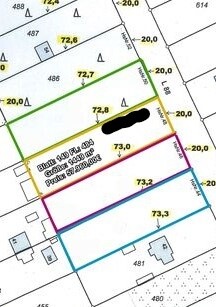
Here is the plot:
Information about us:
General information about you:
Expenses already included elsewhere can be omitted. This list is not exhaustive and can be extended or summarized. Please specify all costs monthly, even if they only occur annually!
Housing costs:
Other expenses:
General information about the property:
We plan to start building the house at the beginning of 2022 and want to consult an architect by August 2020 to design the house and submit the building permit / planning permission application. While the building application is being processed, the land can then be converted, including tree removal. This will be paid for with the money we save from now until the new build. We don’t have any other equity. We moved in together around 10 years ago, during which time we had to pay off my student loans, buy two cars, etc. Our income has also increased over time.
We now need some help with the overall planning. As mentioned, our current plan is:
- Consult an architect and plan the house by August.
- Submit the building permit / planning permission application in October.
- Tree felling can take place by the end of February.
- In 2021, we will look for a (most likely) regional company to build the house (recommendations welcome).
- From June 2020 to December 2021, the saved money will be spent on:
- Architect fees, tree removal, paying off the land including a €2,750 special repayment. A new car for my wife (approx. €10,000) will also be purchased.
- Cheaper items should also be covered, such as surveying, soil report, etc.
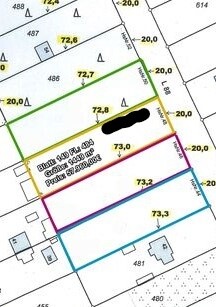
Here is the plot:
Information about us:
General information about you:
- Who are you?
- A family of three.
- How old are you?
- She is 38, he is 41, daughter: 8.
- Do you have children?
- Yes, a girl.
- Are more children planned?
- No others planned.
- What do you do professionally?
- She is a full-time teacher. He is a controlling manager for several hospitals (full-time).
- Are you employed, self-employed, retired, homemaker, etc.?
- Both employed.
- How many hours do you work?
- She works full-time with 27 teaching hours plus preparation and follow-up time. He works 40 hours.
- What are your gross/net incomes?
- She: €2,820. He: €3,000 (tax class IV/IV). This includes about €400 in company pension contributions. Additionally, there are annual bonuses of about €3,000 (not included in net income).
- How much child benefit do you receive?
- €204.
- Other transfer payments like parental allowance, sick pay, etc.?
- None.
- How much equity do you have?
- Currently negligible (under €10,000).
- How much of that equity do you want to invest in the house project?
- All of it.
Expenses already included elsewhere can be omitted. This list is not exhaustive and can be extended or summarized. Please specify all costs monthly, even if they only occur annually!
Housing costs:
- Current basic rent (cold rent)
- €390
- Current total rent (warm rent)
- €567
- Electricity
- €72
- Gas
- None.
- Water, sewage, waste disposal, street cleaning
- Included in additional costs.
- Telephone, internet, mobile phone
- €85 (including Amazon Prime and Netflix)
- Public transport monthly pass (also for children)
- None.
- Car loan (or savings rate for a new car)
- Currently none.
- Insurance
- €100 per month (one fully comprehensive, one partially comprehensive).
- Taxes
- €34
- Fuel
- €200
- Repairs
- €140
- Other
- Is there a second car, motorcycle, scooter? Please specify all costs again!
- Private health insurance (also supplementary health insurance, daily sickness allowance, etc.)
- Dental supplementary insurance: €37
- Liability insurance (including pets)
- €7
- Capital or term life insurance
- None
- Pension insurance (including company pension plans)
- Company pension contributions (already included in net income).
- Disability insurance
- None
- Accident insurance
- None
- Household contents insurance
- €7
- Legal expenses insurance
- €20
- Other insurance (e.g., travel insurance, funeral insurance)
- Groceries
- Difficult to plan.
- Dining out
- Personal care/drugstore
- Pets (food, vet, medication, housing)
- Medication
- Clothing
- Furniture
- Childcare/school fees (including meals)
- After-school care €190 including meals
- Tutoring
- School supplies and books
- Club fees/gym
- Student association: €20
- Gym: €25
- Daughter’s music school: €66
- Babysitter
- Toys
- Cleaning
- TV/video/audio/CDs/DVDs
- Tickets (sports, cinema, concerts, etc.)
- Donations
- Student association: €15
- Other
- Vacation
- House
- Retirement
- Hobbies/gifts
- Other
- Total: €2,250
Other expenses:
- Alimony?
- Loans?
- €250 for the land.
- Other?
- Anything forgotten? Please add here!
- Total income: €6,024
- Total expenses: €3,769
- Balance: €2,255 (saved).
- Including cold rent and optional savings (e.g., savings rate for the house).
General information about the property:
- How large is the plot?
- 1,447 sqm (15,575 sq ft)
- What are its dimensions?
- 20 m (66 ft) road frontage x 72 m (236 ft)
- What is the land value?
- €120 per sqm
- New build, renovation / year built, house type?
- New build – L-shaped bungalow (we are still very early in planning)
- Garages?
- Depends on the budget.
- How big should the house be? (living area / usable area)
- About 140 sqm (1,507 sq ft)
- What is the market value of the land and house after completion?
- Land approx. €200,000 + house €350,000 = €550,000
- Land cost:
- Current outstanding debt €42,000
- Development costs
- Plot is fully developed.
- Acquisition incidental costs (notary, court, property transfer tax, realtor)
- Building or purchase costs (including architect, structural engineer):
- €300,000 budgeted.
- Renovation or restoration costs
- Additional building costs (e.g., utility connections, soil expert, construction electricity, etc.)
- Planned: €50,000
- Outdoor facilities/terrace, paths, landscaping, fences, etc.
- Depends on the total costs.
- Financing costs (fees or commitment interest)
- Total costs
- Remaining debt on the land + new build: Planned financing amount: €400,000
- Kitchen costs
- €10,000
- Furniture, lamps, decoration
- Mostly furniture will be kept and replaced gradually.
- Other "non-acquisition, incidental acquisition, construction, or additional building costs"
- Total costs:
- €400,000
- Deductible equity
- €0 (will be used for clearing the plot; €25,000).
- Financing amount
- €400,000
 dynaudio7916 Sep 2020 21:41
A three-sided fireplace is also planned for us.
Depending on the brand of the insert you want or are offered, the price ranges from 8,000 to 12,000.
It is important to ensure that the insert is not chosen too large, as otherwise the room or floor can overheat too quickly. You would then need to open the windows and reduce the fire. However, the fireplace insert does not tolerate that well because it does not operate at its optimal efficiency and thus does not burn properly. Over time, this can damage both the fireplace and the chimney.
Depending on the brand of the insert you want or are offered, the price ranges from 8,000 to 12,000.
It is important to ensure that the insert is not chosen too large, as otherwise the room or floor can overheat too quickly. You would then need to open the windows and reduce the fire. However, the fireplace insert does not tolerate that well because it does not operate at its optimal efficiency and thus does not burn properly. Over time, this can damage both the fireplace and the chimney.

If people consider a fireplace to be essential, they should clarify the basis of this view: if it is based on recent experiences, then they simply have a different opinion than I do and a good chance of sticking to it in practice. However, if it stems from experiences in a home built around 1980 (or otherwise from the era before modern energy saving regulations, basically "prehistory"), then they will probably only use it to create a white Christmas and otherwise mostly avoid heating up a room by using it while leaving windows wide open. In that case, they will regret having spent so much money on such expensive fuel. I recommend a fake fireplace not primarily because it is cheaper, but because it’s not a flaw, but sometimes even a feature, that a placebo contains no active ingredient — here meaning: no side effect. A fireplace simulation warms the occupants mentally without physically heating them. I have only driven a Twingo once as a rental, but I have spent a lot of time with the Uno and Corsa, as well as the Agila, which is nowadays often the case only with Mercedes models, unlike before 1993 without exception. Currently, I am considering a Panda.
https://www.instagram.com/11antgmxde/
https://www.linkedin.com/company/bauen-jetzt/
https://www.instagram.com/11antgmxde/
https://www.linkedin.com/company/bauen-jetzt/
So, I completely misunderstand this then? I’m happy to be corrected!
A huge fireplace costing 15,000€ won’t get as hot as a small Swedish stove that only costs 2,000€?
I definitely don’t want to use it for heating and I also don’t want to be melting away during a TV evening...
In that case, I’m much better off with a small stove where I can just throw in a few logs that burn slowly and steadily, right?
A huge fireplace costing 15,000€ won’t get as hot as a small Swedish stove that only costs 2,000€?
I definitely don’t want to use it for heating and I also don’t want to be melting away during a TV evening...
In that case, I’m much better off with a small stove where I can just throw in a few logs that burn slowly and steadily, right?
exto1791 schrieb:
So am I completely misunderstanding this?
A huge built-in fireplace costing €15,000 (about $16,200) won’t get as hot as a small wood stove that only costs €2,000 (about $2,160)? Partly. Both will get hot, but the difference is how long it takes for the heat to be released. Naturally, a built-in fireplace is so expensive because much more work is involved in installation. You can’t really compare that to a regular wood stove. You can also buy a “cheap” built-in fireplace for a lot of money, but let’s leave that situation out for now.
If you want to keep it simple, take the example of an expensive wood stove versus a cheaper wood stove:
The expensive stove is definitely better suited for heating because it has more mass—that means more material used (thicker steel walls, soapstone included, etc.). That’s usually what the price reflects. Because of the mass, it takes longer for the stove to heat up itself, and then it slowly releases the heat into the room. A cheaper wood stove lacks this material and therefore releases heat “all at once” into your room. This provides quick warmth but the room cools down quickly once the fire burns out.
exto1791 schrieb:
In that case, wouldn’t I be clearly better off with a small stove where I just throw in a few logs that burn slowly? You can’t really say that in general. You can’t just throw “a few logs” into the stove and expect it to work well. For wood to burn cleanly and properly, a certain temperature must be maintained in the firebox, which you only get if you maintain a good fire. If you don’t burn cleanly, soot and smoke will form, and the fire won’t look very nice in the fireplace. I don’t want to overstate it—it’s not rocket science—but generally it is harder to maintain a small, clean fire than to just heat at full power.
But you’re not alone in this situation. Nowadays, almost no one buys a fireplace to heat their entire house and replace their main heating system. 99% of buyers get wood stoves simply because they want one. Stove manufacturers know this and have adapted accordingly. If I were you, I’d get advice at a stove showroom, where they can recommend something suitable. For €2,000 to €4,000 (about $2,160 to $4,320), you can get a good-looking stove (not primarily for heating).
And compare the heating output of the fireplace with that of your house. Houses typically have 4 to 7 kW, and small wood stoves around 5 kW. You can imagine the resulting temperature in a room, and no, underfloor heating cannot adjust down quickly enough.
There are also really good fake fireplaces, weak ethanol fireplaces, and even 4K fireplace Blu-rays.
I don’t want to come across as a big environmentalist, but we really need to stop constantly burning things!
There are also really good fake fireplaces, weak ethanol fireplaces, and even 4K fireplace Blu-rays.
I don’t want to come across as a big environmentalist, but we really need to stop constantly burning things!
rdwlnts schrieb:
Environmental activists say we really need to stop burning things all the time!This is not an issue with wood stoves if the combustion is clean (enough fuel, dry wood). Since 2015, wood stoves must meet certain regulations to be installed at all. Because many older fireplaces do not comply with these standards, they had to or must be taken out of operation. Every chimney sweep can measure fine dust and other emissions and will confirm that these concerns are unwarranted for new stoves.Edit: All of this is defined in the Federal Emission Control Act (Bundes-Immissionsschutzgesetz).
Similar topics