
Hey,
Currently, it looks like in the picture. Now I would like to complete the splash protection.
A dimpled membrane will be installed vertically along the house wall, positioned in front of the membrane that is already in place. However, I don’t want to fill the entire area with the decorative stones. Instead, I am considering applying a layer of another material at the bottom—what material would be suitable for this? On top of that, I would place a geotextile fabric, and then the decorative stones. This way, the decorative stones would not be located in the invisible section.
Will this setup still allow proper water drainage, especially since there is quite a bit of concrete on the inner side?
Would someone be able to provide advice on this? Also, what color would work well for the decorative stones on top?
Thanks!
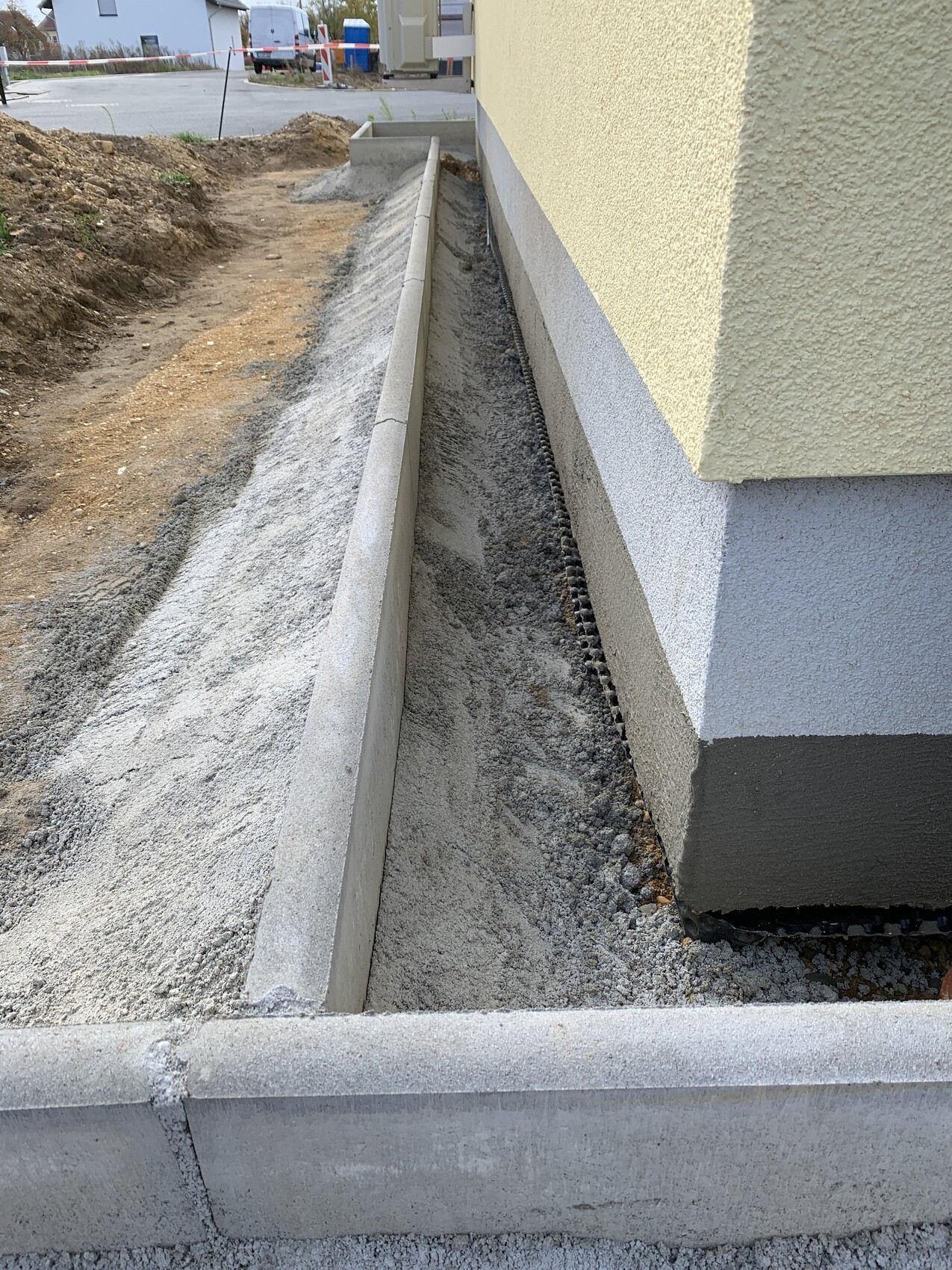
Currently, it looks like in the picture. Now I would like to complete the splash protection.
A dimpled membrane will be installed vertically along the house wall, positioned in front of the membrane that is already in place. However, I don’t want to fill the entire area with the decorative stones. Instead, I am considering applying a layer of another material at the bottom—what material would be suitable for this? On top of that, I would place a geotextile fabric, and then the decorative stones. This way, the decorative stones would not be located in the invisible section.
Will this setup still allow proper water drainage, especially since there is quite a bit of concrete on the inner side?
Would someone be able to provide advice on this? Also, what color would work well for the decorative stones on top?
Thanks!
B
borderpuschl27 Oct 2020 16:07That’s how I did it too, although you already have a lot of interior surface sealed with concrete. For filling at the bottom, it’s best to use material that allows water to drain easily. I used gravel since I had some left over anyway. For the visible stones, you can choose whatever you like and that matches well with the rest (basalt gravel, granite gravel, river pebbles, etc.).
It is also important that the base coat plaster in that area is treated to be waterproof, for example with a base sealing product, otherwise you will get efflorescence at the transition at the top (which seems to have already happened in your case, judging by the photo).
It is also important that the base coat plaster in that area is treated to be waterproof, for example with a base sealing product, otherwise you will get efflorescence at the transition at the top (which seems to have already happened in your case, judging by the photo).

@borderpuschl
Yes, the gray layer at the bottom is the waterproof slurry. Gravel as the base layer is fine. Would crushed stone also work? It’s being delivered these days as fill material from the current parking area, so I could take some from there.
Is there anything special to consider for the step, or can it be constructed the same way, with the base layers and then gravel and pavers on top?
I can imagine using stones like those shown in the picture.
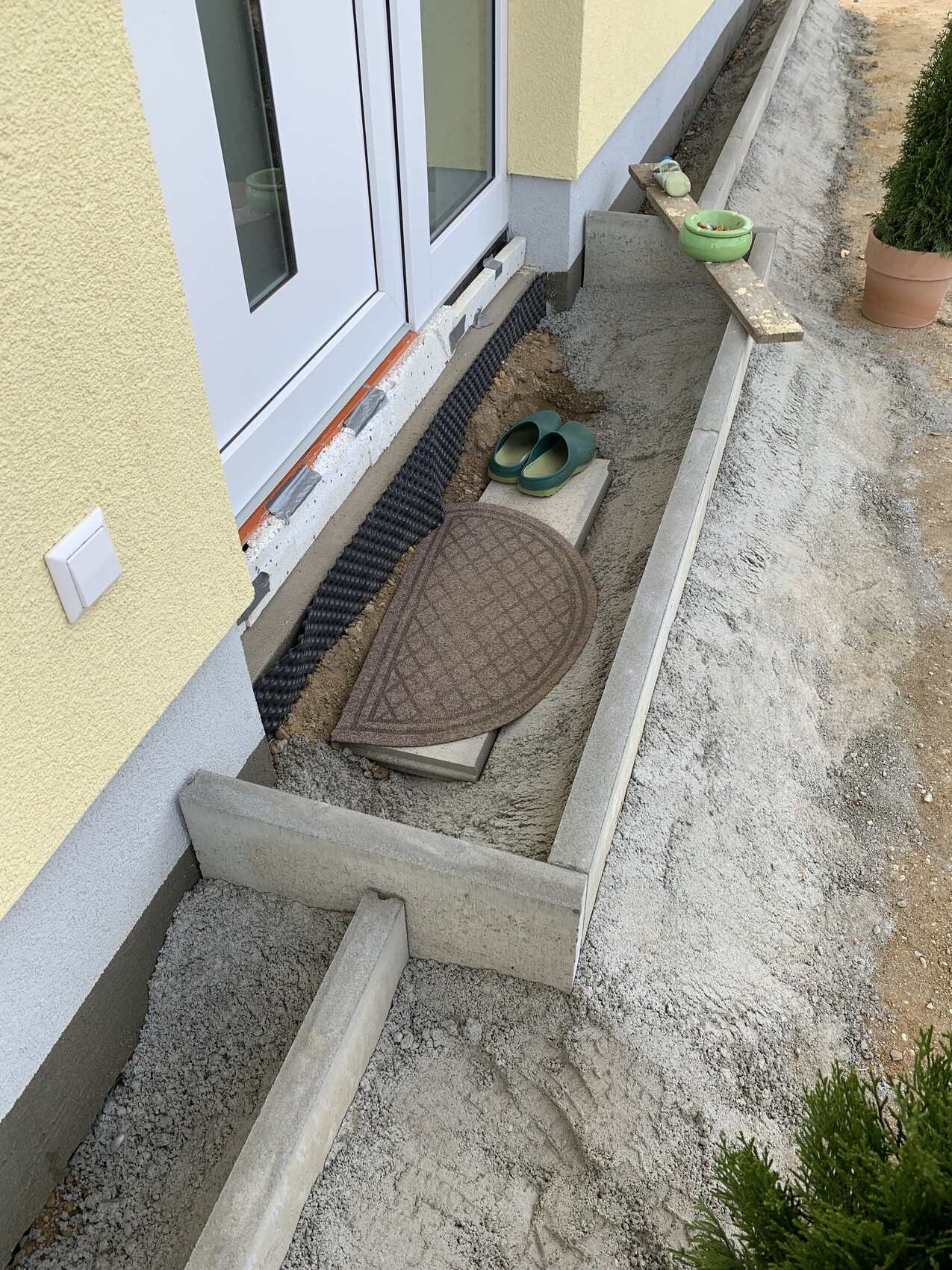

Yes, the gray layer at the bottom is the waterproof slurry. Gravel as the base layer is fine. Would crushed stone also work? It’s being delivered these days as fill material from the current parking area, so I could take some from there.
Is there anything special to consider for the step, or can it be constructed the same way, with the base layers and then gravel and pavers on top?
I can imagine using stones like those shown in the picture.

S
Smialbuddler27 Oct 2020 17:12See the answer from @tomtom79 – where exactly is the water supposed to flow that will be inside there? I only see concrete at the moment…
Similar topics