
ᐅ Smart ideas that make everyday life easier incorporated into the home
Created on: 20 Nov 2015 23:36
S
Slintrebla
Hello everyone,
We are currently in the construction phase of our single-family home. We are actively gathering ideas to make daily life in the new house easier.
So far, we have:
- A laundry chute from the bathroom on the upper floor to the washing machine in the basement
- A platform for the washing machine to allow easy loading and unloading
- Pantry shelving with rotating trays
We have also considered:
- Building a small utility room behind the living room cabinet (sideboard) to house all the TV equipment (satellite box, DVD player, receiver, hard drive, etc.) out of sight
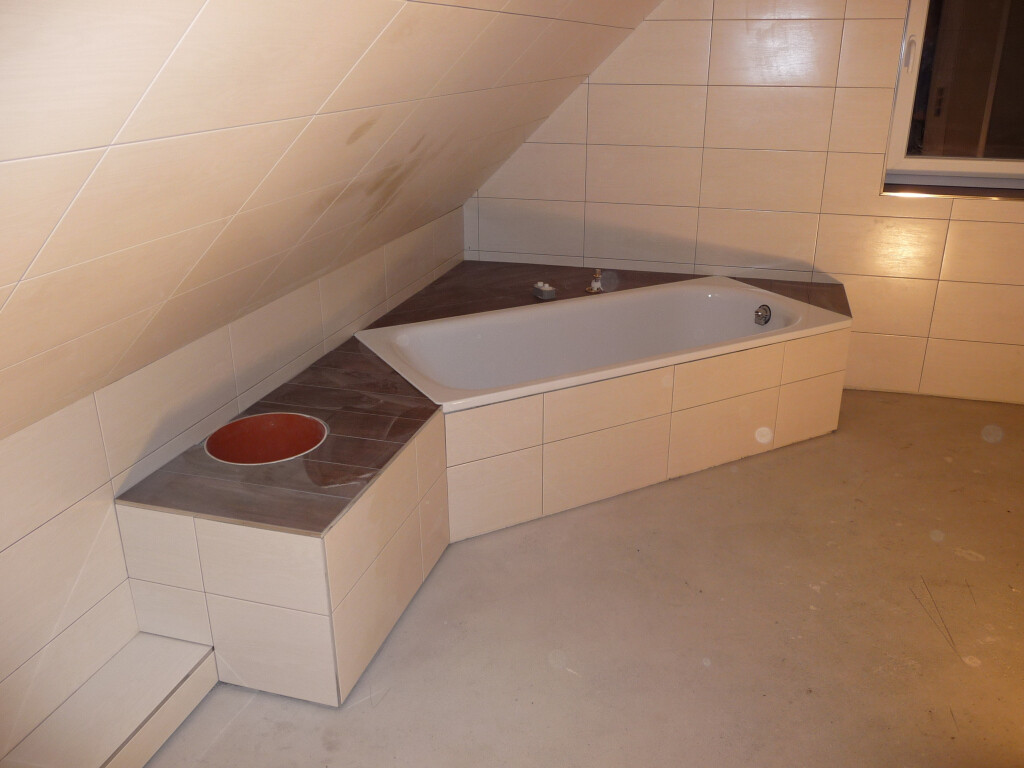
To illustrate, I’m attaching three photos.
Maybe some of you have a nice REALISTIC idea that could be implemented.
Thank you in advance for your ideas!
Best regards,
Slintrebla


We are currently in the construction phase of our single-family home. We are actively gathering ideas to make daily life in the new house easier.
So far, we have:
- A laundry chute from the bathroom on the upper floor to the washing machine in the basement
- A platform for the washing machine to allow easy loading and unloading
- Pantry shelving with rotating trays
We have also considered:
- Building a small utility room behind the living room cabinet (sideboard) to house all the TV equipment (satellite box, DVD player, receiver, hard drive, etc.) out of sight
To illustrate, I’m attaching three photos.
Maybe some of you have a nice REALISTIC idea that could be implemented.
Thank you in advance for your ideas!
Best regards,
Slintrebla
Oh right, of course that’s one way to do it. Fireplace on, air conditioning on. Unfortunately, with an air exchange rate of XX per hour, it reduces the humidity to “almost zero” within minutes.
The windows have the same effect. That’s why you specifically installed a mechanical ventilation system with heat and moisture recovery...
You carry out a heat load calculation, plan the installation spacing very precisely, perform all the calculations and work, and then the wood stove suddenly produces ten times the normal heating output...
The windows have the same effect. That’s why you specifically installed a mechanical ventilation system with heat and moisture recovery...
You carry out a heat load calculation, plan the installation spacing very precisely, perform all the calculations and work, and then the wood stove suddenly produces ten times the normal heating output...
There are also fireplaces with low emission output. Apart from that, choosing a fireplace is purely a matter of personal taste. You either like it or you don't (or you have access to a forest, which means inexpensive wood). Personally, I’m not a fan of that type of heat and I’m not the type to sit in front of a fireplace.
S
Sebastian7921 Dec 2015 20:13@Grym:
So what? You’re just a theorist and seem overly cautious.
And of course, the humidity immediately drops to zero... funny world you live in.
I didn’t plan the installation spacing down to the last detail...
I don’t have to worry about such things – I simply don’t care, and it doesn’t harm me or my house.
So what? You’re just a theorist and seem overly cautious.
And of course, the humidity immediately drops to zero... funny world you live in.
I didn’t plan the installation spacing down to the last detail...
I don’t have to worry about such things – I simply don’t care, and it doesn’t harm me or my house.
If you want to vent several kilowatts of heating capacity from the living room, whether by air conditioning or window ventilation, a very high air exchange rate is required. This air exchange rate means that in winter, cold, dry air flows in. Air is a very poor heat conductor (see ineffective air heaters), but it transports moisture outside very effectively. Your indoor humidity will at least drop significantly due to the high air exchange rate. Saying it drops to "almost zero" is an exaggeration—see rhetorical devices, upper secondary school German class.
No "yes, but." A fireplace and new construction is quite a challenge, but maybe you have a solution or ideas? "Yes, but" does not solve any problems. And whether your heating load for the living area is 0.3, 0.6, or 0.8 kW (at the standard design temperature) does not really matter here. The fireplace overheats the living room massively in any case.
One idea might be a water-bearing (hydronic) fireplace, which removes a good portion of the heat and directs it to a useful purpose. Another idea is simply turning the air conditioning on, which leads to follow-up problems.
No "yes, but." A fireplace and new construction is quite a challenge, but maybe you have a solution or ideas? "Yes, but" does not solve any problems. And whether your heating load for the living area is 0.3, 0.6, or 0.8 kW (at the standard design temperature) does not really matter here. The fireplace overheats the living room massively in any case.
One idea might be a water-bearing (hydronic) fireplace, which removes a good portion of the heat and directs it to a useful purpose. Another idea is simply turning the air conditioning on, which leads to follow-up problems.
S
Sebastian7921 Dec 2015 20:27Yes, and? The problems only exist in your mind – it’s MY house where I’m doing this, and I wouldn’t force anyone else to do it the same way.
You don’t actually want to do it, so why waste time arguing unnecessarily?
By the way, the comment about the climate was mostly a joke, but apparently, learning about jokes only happens much later for you.
Just open the windows, and it’s fine – what do houses without mechanical ventilation systems do? Dry out like the Sahara? You’re exaggerating, as usual...
You don’t actually want to do it, so why waste time arguing unnecessarily?
By the way, the comment about the climate was mostly a joke, but apparently, learning about jokes only happens much later for you.
Just open the windows, and it’s fine – what do houses without mechanical ventilation systems do? Dry out like the Sahara? You’re exaggerating, as usual...
Grym schrieb:
If you want to remove several kilowatts of heating power from the living room by ventilating, whether using air conditioning or window ventilation, you need a very high air exchange rate. This air exchange rate means that in winter, cold, dry air flows in. Air is a very poor heat conductor (see the ineffective air heaters), but it does transport moisture out very well. Your indoor humidity will at least drop significantly due to the high air exchange rate. Saying it drops to "almost zero" is an exaggeration—see rhetorical devices taught in advanced secondary school language classes.
No ifs or buts. Fireplaces and new builds are quite a problem, but maybe you have a solution or ideas? "Yes, but" doesn’t solve anything. And whether the heating load of your living area is 0.3, 0.6, or 0.8 kW (at standard design temperature) doesn’t really matter here. The fireplace overheats the living room massively in any case.
One idea might be a water-bearing fireplace that absorbs a large part of the heat and delivers it to a useful application. Another idea is just to turn on the air conditioning, which brings subsequent problems.Grym, you have been planning "virtually" for several months here, draining other people’s knowledge, annoying people with ridiculous ideas, and hijacking one post after another. I think it’s really enough by now!
Build your house and report on the great things you have done!
I can’t read this anymore…..
Similar topics