
Hello dear house-building experts,
I found a floor in a room of a recently purchased house that I am not happy with in its current condition. Unfortunately, it is inconsistent, with some areas appearing grayish and others showing a nice wood tone. There are no major damages. I assumed it was laminate flooring, so I thought replacement was the only option. Then I removed a profile strip and started to doubt that.
It doesn’t really look like what I would expect from typical laminate flooring. From the cross-section, it seems more like engineered hardwood flooring to me. Unfortunately, I am a complete beginner in this area and can only rely on information from Google.
Would it be possible to sand this floor with fine grit and treat it with hardwax oil to achieve a uniform, attractive appearance again?
Thank you and best regards
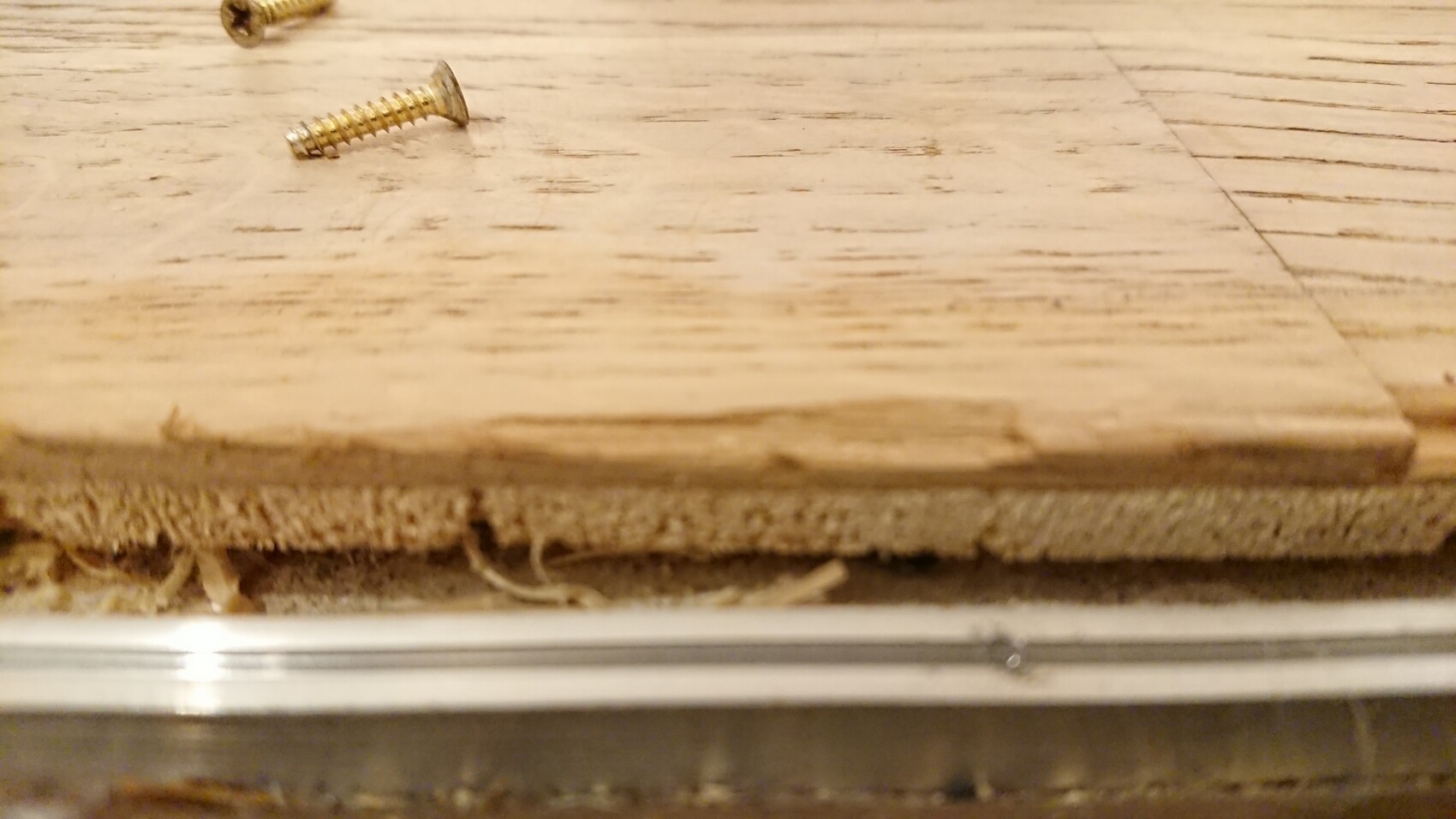
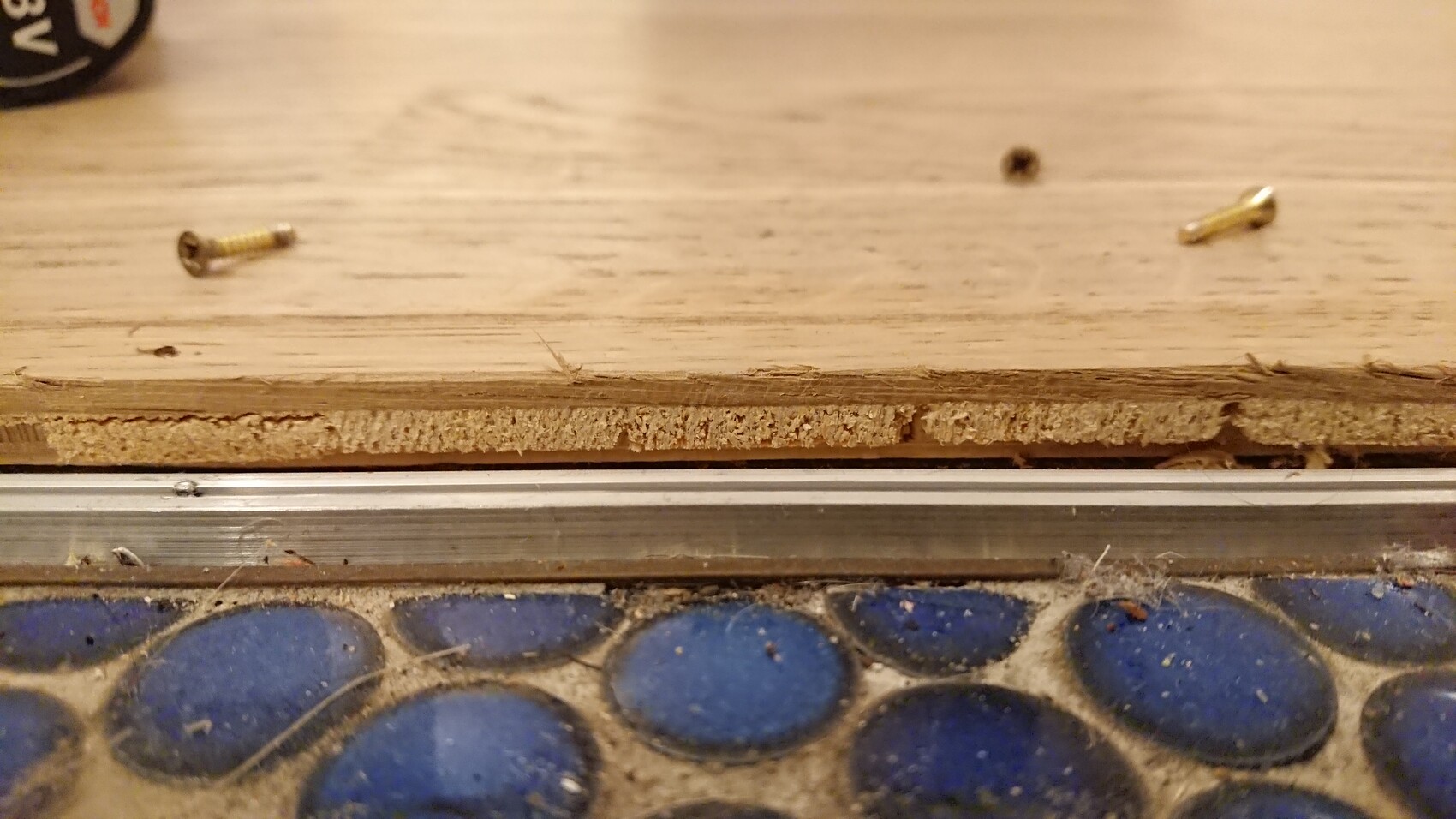
I found a floor in a room of a recently purchased house that I am not happy with in its current condition. Unfortunately, it is inconsistent, with some areas appearing grayish and others showing a nice wood tone. There are no major damages. I assumed it was laminate flooring, so I thought replacement was the only option. Then I removed a profile strip and started to doubt that.
It doesn’t really look like what I would expect from typical laminate flooring. From the cross-section, it seems more like engineered hardwood flooring to me. Unfortunately, I am a complete beginner in this area and can only rely on information from Google.
Would it be possible to sand this floor with fine grit and treat it with hardwax oil to achieve a uniform, attractive appearance again?
Thank you and best regards
H
hampshire13 Jan 2021 00:49I don’t see any deep damage. Color haze usually disappears. Go for it if you basically like wooden floors. Equipment rental companies will provide you with the right grit for the first and second sanding. I prefer oil treatment over wax – but that’s a matter of taste.
Thank you! In this case, I assume a random orbital sander is sufficient? Otherwise, it is often recommended to do 3-4 sanding passes. K60 and K120 grit, or should I start with a coarser grit?
When applying hard wax oil, should you polish after each coat or not? General guides often mention it, but manufacturers (e.g., Saicos) just say to apply twice, let dry, and that’s it?!
When applying hard wax oil, should you polish after each coat or not? General guides often mention it, but manufacturers (e.g., Saicos) just say to apply twice, let dry, and that’s it?!
P
Pinkiponk13 Jan 2021 20:51hampshire schrieb:
Sanding is quick to do, creates a lot of dust, and never ceases to amaze how beautiful an old floor can become. We used a sanding machine with a dust bag attachment that sucked the dust directly into the bag. 🙂 And you're right, the floor looked amazingly beautiful afterwards. I would always recommend trying to preserve and restore solid wood flooring first.
P
pagoni202013 Jan 2021 21:37RAL5018 schrieb:
Thank you for the responses. In its current state, I definitely don’t like the floor. I will try to work on it and report back on the result. It will certainly take some effort, but renting equipment for one day is still manageable. If it doesn’t work out, I can always stop and redo it.
The idea of decorative wax also sounds interesting. So, for example, I could brush on oak-colored decorative wax. Then, as recommended, apply a layer of clear hardwax oil. Would that work without sanding? As mentioned, there are no major damages visible… but if the surface is uneven before finishing (partly grayish, partly more like beech) – can I even out these differences with decorative wax, or would they still show through? Ultimately, it also depends on what you want to achieve and what you will be satisfied with. Sanding also requires skill – it can go very quickly and leave dents!
If you work with coloured oil or wax afterward, sanding is risky because the floor will absorb pigments unevenly. I did something like this years ago with a professional machine… the edges, etc., were sanded by hand as the expert recommended. The clear finish looked great, but the uneven absorption of darker pigments made it look like the room had experienced a fire. In the middle, it looked fantastic, but the places where I had to switch machines due to corners and such were a nightmare.
Result: I ended up covering everything with opaque Osmo decorative wax, then it didn’t matter anymore and I liked it.
Depending on the situation, I could also imagine you cleaning the floor thoroughly and then sanding it lightly by hand using fine-grit sandpaper. For example, hardwax oil from Osmo can even be applied without sanding.
Only if you want to remove deep grooves or scratches would I recommend using a big floor sander, as that costs money, time, and nerves, and carries the risk for amateurs that something might go wrong—not to mention the dust.
Idea: first try this simple and affordable solution, and if you don’t like it, you can still go for the full machine sanding. I imagine it will look really good. I’ve always used Osmo on floors and I like it because it’s easy to work with.
ypg schrieb:
Could it be that you are more disappointed to find hardwood flooring instead of the laminate you expected? Definitely not. I’m not eager to install a new floor. Otherwise, I could just go ahead and do it anyway.
I’m just a bit unsure about how to proceed with the repairs because there are so many options and uncertainties.
Maybe I’m overthinking it and should just try something. A clear recommendation, as I was hoping for, doesn’t seem to be emerging here. Perhaps that was naive to expect, given all the possibilities.
Similar topics