
Hello everyone,
I would like some help with my parquet floor. It was sanded with 100 grit and then oiled. Now it has some blotches.
How can I improve the appearance of the floor? I’m attaching photos.
Thank you in advance
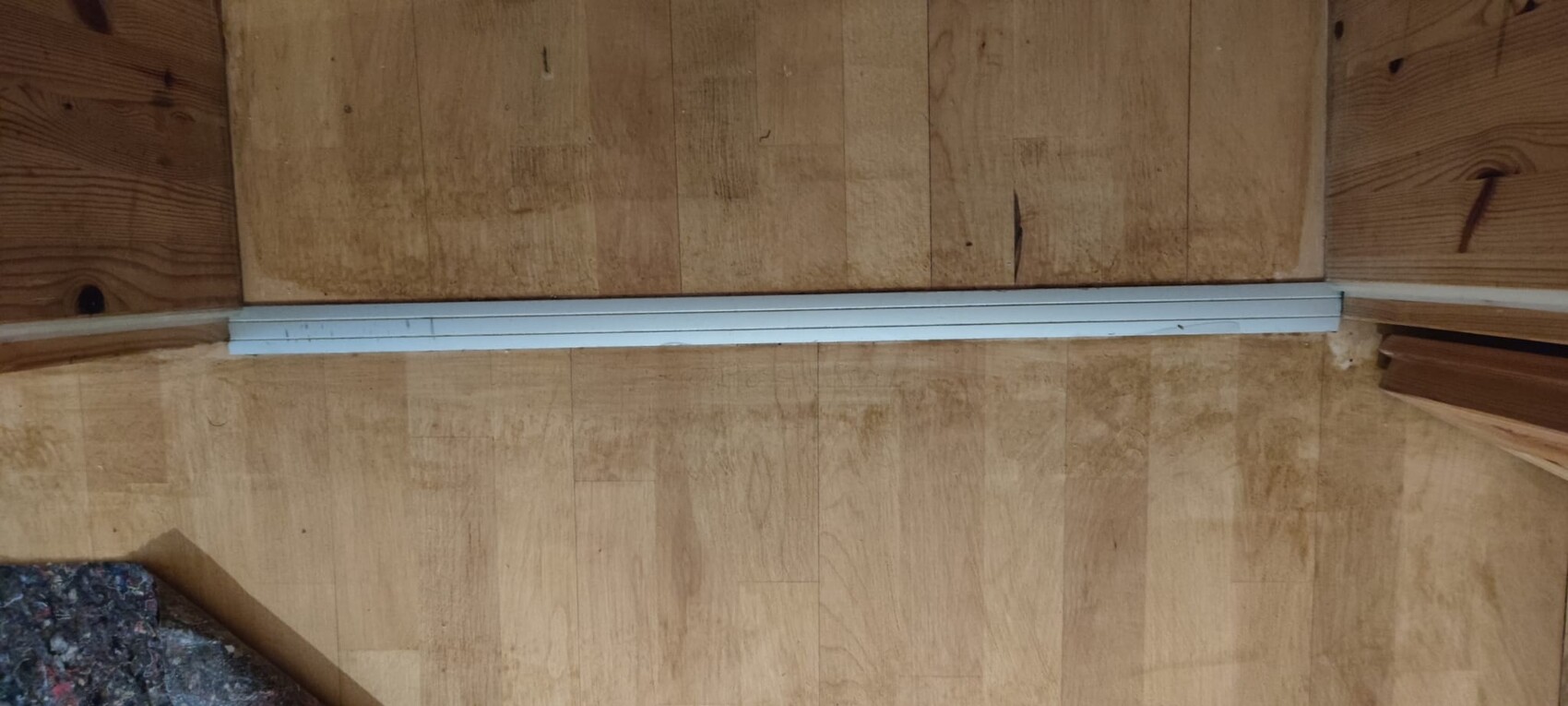
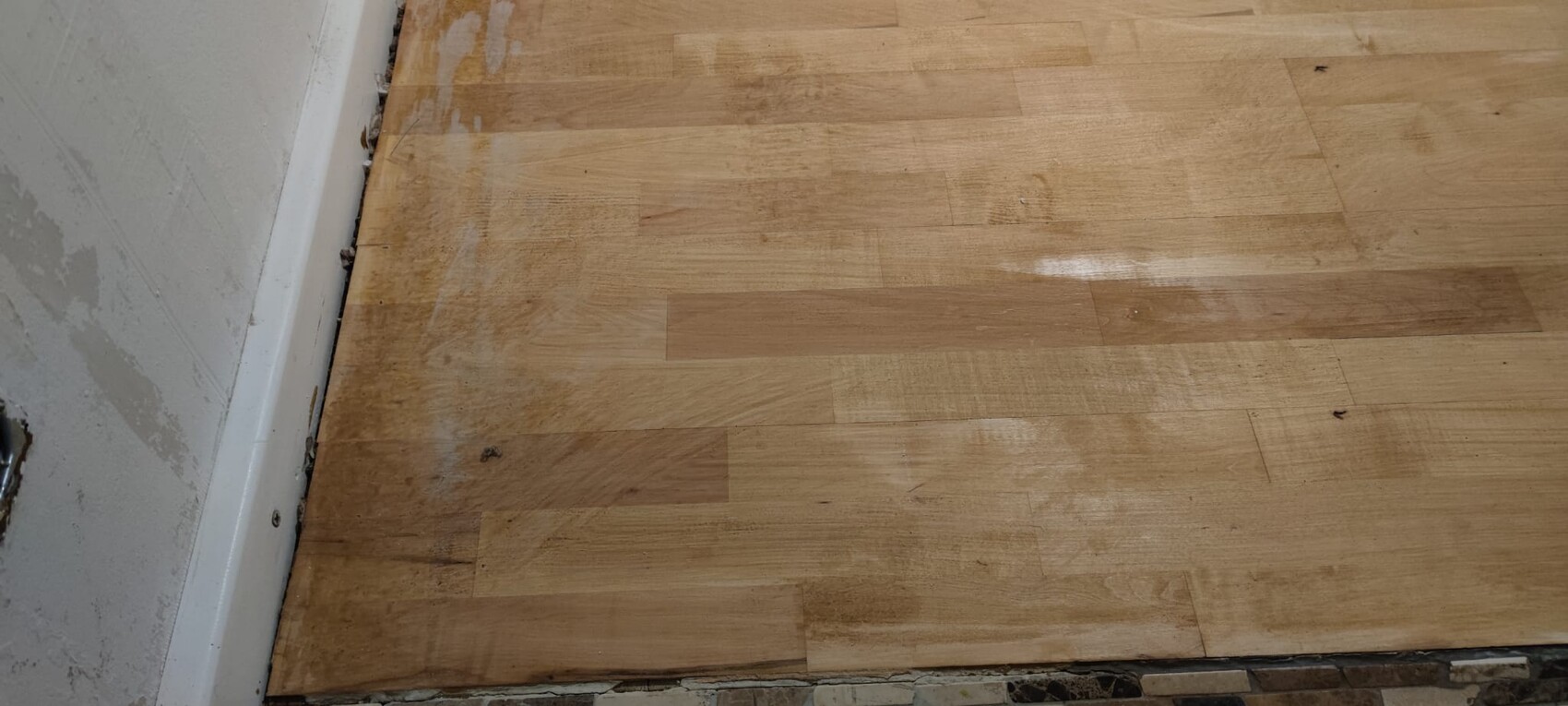
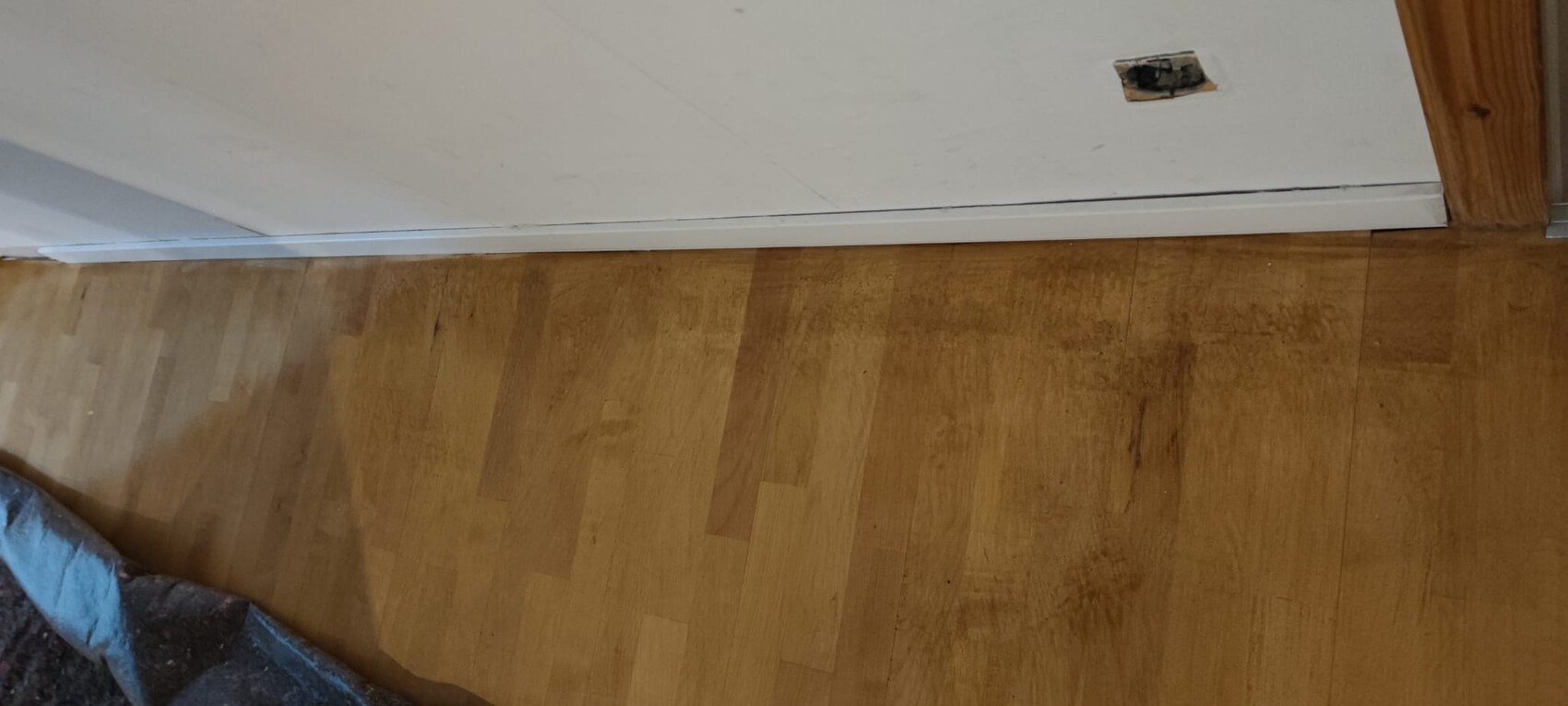
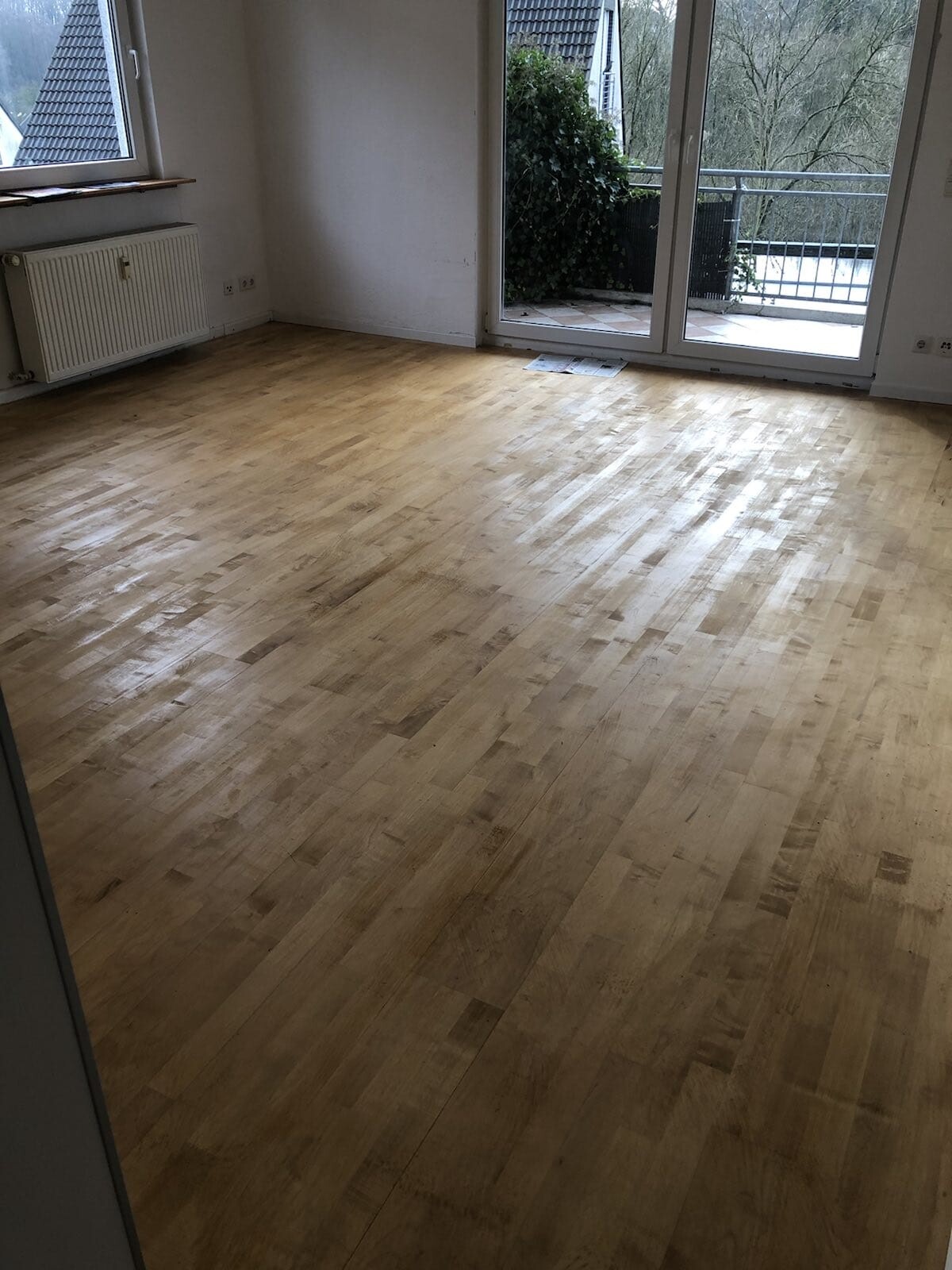
I would like some help with my parquet floor. It was sanded with 100 grit and then oiled. Now it has some blotches.
How can I improve the appearance of the floor? I’m attaching photos.
Thank you in advance
P
pagoni202011 Jan 2022 14:18A long time ago, I tried the same approach with a floor. The problem is that a hand sander creates a different sanding pattern, which becomes visible after oiling. If you add color pigments, it becomes even more noticeable.
Do everything by hand again?
I think you’d need to go over it one more time with a 150–180mm (6–7 inch) machine, but even if you sand everything manually, you’ll still see the differences.
We just went through this with pre-sanded solid wood planks. In the end, we decided not to sand anymore and to keep the machine-sanded surface as it was, without sanding by hand. Since the floor has a dark color, it looks quite rustic, so the dents and "imperfections" don’t matter—they look intentional.
Maybe you should let go of the idea of a flawless floor and experiment a bit. We tried many options, and in the end, it was still somewhat a matter of luck.
Regarding Osmo: They also have different products. For example, we coated our wooden bathroom panels twice with Remmers hardwax oil but ended up wanting to try Osmo hardwax oil or decorative wax instead. With Remmers, every water drop or cup ring shows immediately, which I don’t recall happening with Osmo.
So, I don’t really have a definitive solution for you, but I also don’t believe that just the product choice or hand sanding alone will solve the “problem.”
Looking forward to seeing how it develops...
Do everything by hand again?
I think you’d need to go over it one more time with a 150–180mm (6–7 inch) machine, but even if you sand everything manually, you’ll still see the differences.
We just went through this with pre-sanded solid wood planks. In the end, we decided not to sand anymore and to keep the machine-sanded surface as it was, without sanding by hand. Since the floor has a dark color, it looks quite rustic, so the dents and "imperfections" don’t matter—they look intentional.
Maybe you should let go of the idea of a flawless floor and experiment a bit. We tried many options, and in the end, it was still somewhat a matter of luck.
Regarding Osmo: They also have different products. For example, we coated our wooden bathroom panels twice with Remmers hardwax oil but ended up wanting to try Osmo hardwax oil or decorative wax instead. With Remmers, every water drop or cup ring shows immediately, which I don’t recall happening with Osmo.
So, I don’t really have a definitive solution for you, but I also don’t believe that just the product choice or hand sanding alone will solve the “problem.”
Looking forward to seeing how it develops...

Real wood is not laminate with 100% visual similarity.
Wood lives with and shows marks and signs of floor use.
This is how you can tell it is genuine wood/parquet/floorboards and not just wood-look tiles.
Do it well enough so that you are satisfied with the result, and then enjoy it for a long time.
Wood lives with and shows marks and signs of floor use.
This is how you can tell it is genuine wood/parquet/floorboards and not just wood-look tiles.
Do it well enough so that you are satisfied with the result, and then enjoy it for a long time.
P
pagoni202011 Jan 2022 14:40When I ruined the pine floor by sanding it back then, I eventually decided to move away from the stain towards an opaque paint finish. In the end, it stayed like that for 10 years until the sale and is probably still the same today. I had done it with a decorative wax opaque finish, and I liked it. That’s what really matters.
B
BLÜMCHEN12315 Jan 2022 15:30Hello everyone,
Thank you very much for your contributions. The apartment is being rented out, so hopefully others can enjoy it now.
I sanded the grid manually, and it looks quite decent. It no longer shines and has a shabby appearance. Only the sanding machine streaks in some spots are a bit unfortunate. But it’s fine overall—once furniture is in place or carpets are laid down, you won’t notice it as much.
Thank you very much for your help!
Thank you very much for your contributions. The apartment is being rented out, so hopefully others can enjoy it now.
I sanded the grid manually, and it looks quite decent. It no longer shines and has a shabby appearance. Only the sanding machine streaks in some spots are a bit unfortunate. But it’s fine overall—once furniture is in place or carpets are laid down, you won’t notice it as much.
Thank you very much for your help!
Similar topics