
Hello,
We moved into our house last year and I sowed grass seed, which has established well. During the cold season, it was and is necessary for me to walk over the lawn to get to the shed. As I have already read, this is particularly harmful to the grass when there is frost. The blades bend and rot (see picture).
Now my question: Will these areas stay brown, or will they recover?
Regards
Freedark
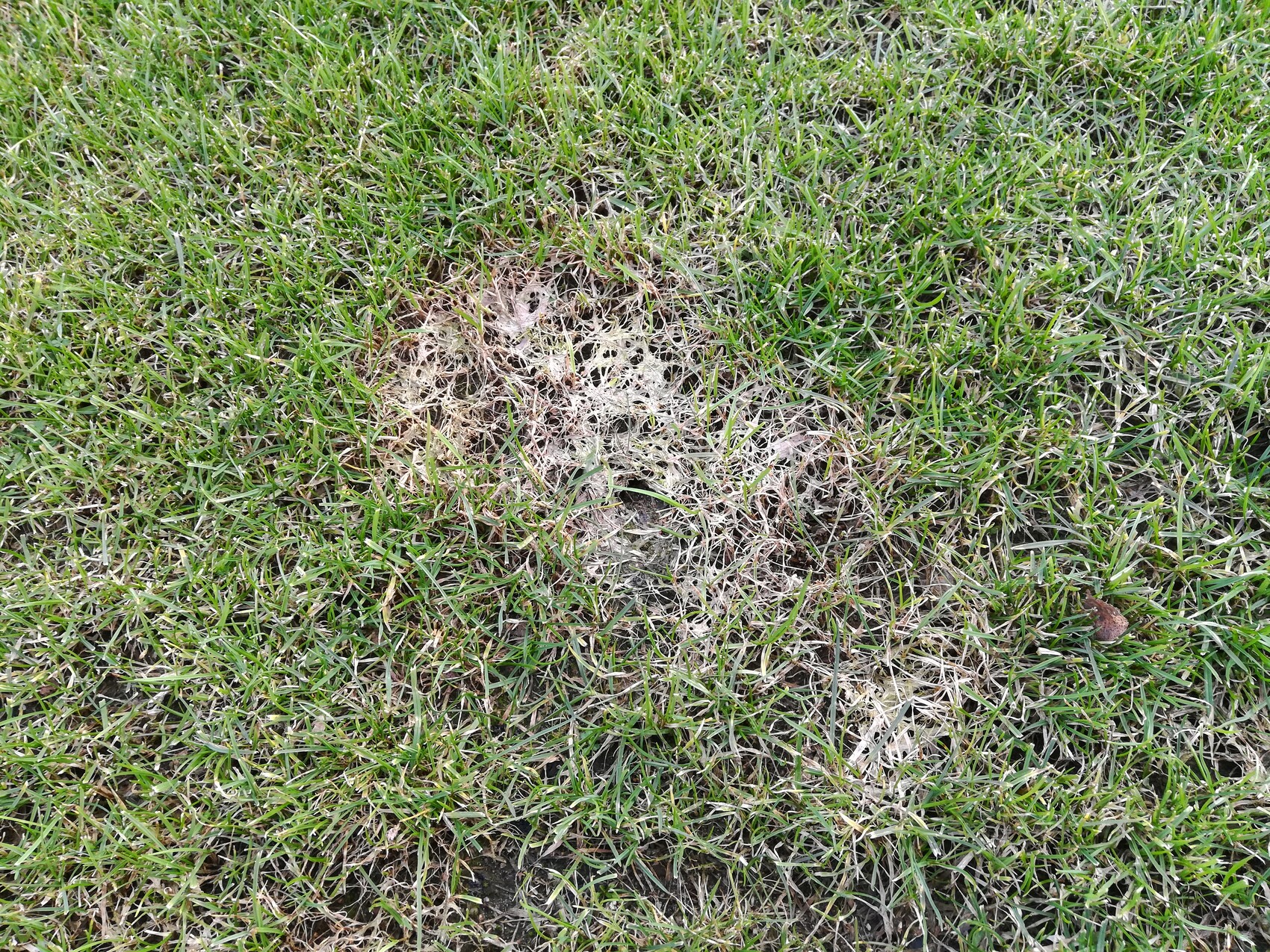
We moved into our house last year and I sowed grass seed, which has established well. During the cold season, it was and is necessary for me to walk over the lawn to get to the shed. As I have already read, this is particularly harmful to the grass when there is frost. The blades bend and rot (see picture).
Now my question: Will these areas stay brown, or will they recover?
Regards
Freedark
If you need to dig up the soil anyway, test the pH level first using the Neudorff test strip and, if necessary, incorporate a bag of lime while digging. Use 10 kg for 100-200 m² (1,076-2,153 sq ft) depending on the pH level. This loosens the soil, promotes earthworm activity, and prevents moss. k.
Thank you.
The soil is good topsoil, and the grass has established well.
Unfortunately, the water does not drain.
Beneath the topsoil is soil that hasn’t seen light for 80 years or more. There are no earthworms at all.
My cousin suggests making slits (which is also done on football fields).
Then I might as well apply lime.
The soil is good topsoil, and the grass has established well.
Unfortunately, the water does not drain.
Beneath the topsoil is soil that hasn’t seen light for 80 years or more. There are no earthworms at all.
My cousin suggests making slits (which is also done on football fields).
Then I might as well apply lime.
Our land used to be conventionally farmed arable soil, alternating between wheat and canola. It’s good soil but quite compacted due to the large tractors, with few earthworms. However, this improves surprisingly quickly with the right gardening approach. Earthworms are now doing well under our lawn. Lawns, however, require a lot of nitrogen, so using a balanced NPK fertilizer is beneficial — but not before May! Before sowing the grass, I worked the soil once with a traditional hand hoe (rheinische Feldhacke), which is quite a workout but introduces a lot of air into the soil. The land was left fallow over the first winter. In spring 2018, I cultivated it again, then used a rototiller before sowing the grass. I only lightly raked it in, did not roll it. Keeping it well moist resulted in a super lawn, comparable to turf standard. K.
We sowed in October and did not roll the soil. The ground was loosened before seeding. The problem is that the layer underneath is too compacted. It was also loosened before being refilled, but the clay content seems to have compacted again.
The soil is still frozen, only the top 4-5 cm (1.5-2 inches) have thawed. I can’t do anything yet anyway.
Hopefully, earthworms will settle in soon.
The soil is still frozen, only the top 4-5 cm (1.5-2 inches) have thawed. I can’t do anything yet anyway.
Hopefully, earthworms will settle in soon.
Nordlys schrieb:
This evening, it was already light until half past five, with a milky sun and a hint of spring in the air. I was already about to start it, but she stopped me and said if I turned that thing on now, someone would come to get me... so I still have to wait a bit. But the bag of lime was delivered today, so it’s going to be a nice weekend.Although it is already quite warm here, we still can’t think about spreading lime or even mowing the lawn. Between 50cm and 1m (20 to 40 inches) of snow still needs to melt first. So we continue to use the time for skiing, cross-country skiing, or snowshoeing.
Similar topics