
Hello,
We moved into our house last year and I sowed grass seed, which has established well. During the cold season, it was and is necessary for me to walk over the lawn to get to the shed. As I have already read, this is particularly harmful to the grass when there is frost. The blades bend and rot (see picture).
Now my question: Will these areas stay brown, or will they recover?
Regards
Freedark
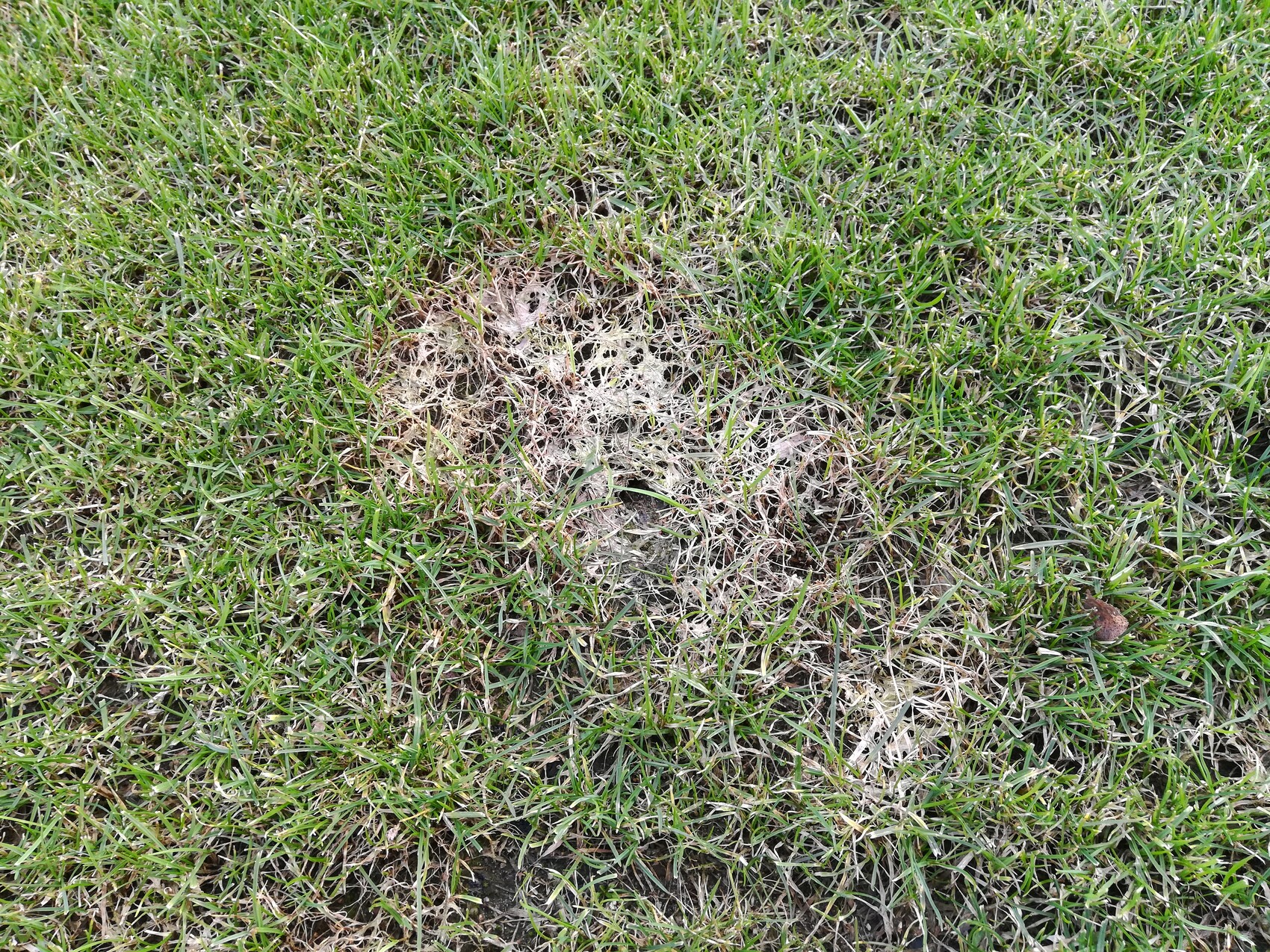
We moved into our house last year and I sowed grass seed, which has established well. During the cold season, it was and is necessary for me to walk over the lawn to get to the shed. As I have already read, this is particularly harmful to the grass when there is frost. The blades bend and rot (see picture).
Now my question: Will these areas stay brown, or will they recover?
Regards
Freedark


When the weather warms up, around the end of April, give it a dose of Blaukorn N fertilizer, spreading it evenly by hand with a smooth swinging motion, like a Viennese waltz. Order soil test strips from Neudorff in February; if your soil is acidic, you should lime it at the beginning of March. For this, get a sack of dolomite lime—10 kg (22 lbs) is enough for 100 sqm (1,076 sq ft) of grassland. Apply the dolomite lime just before rain using gentle swinging motions from the hip. Gardening keeps you agile and attractive. The upcoming rain will quickly dissolve the lime, making the soil more alkaline. This makes the grass greener, earthworms happy, moss miserable, and the blades of grass suddenly stand upright—let’s say, perfectly straight. By May, you will have a top-quality lawn, but you will need to mow it twice a week because it grows fast and becomes thicker. Neither thistles nor dandelions, moss, ground elder, nor horsetail will have any chance. K.
Similar topics