
Hello everyone,
we are currently building our detached house. We have a waterproof concrete basement with basement windows. Our construction company installed ACO window wells and windows. These were placed on top of the perimeter insulation.
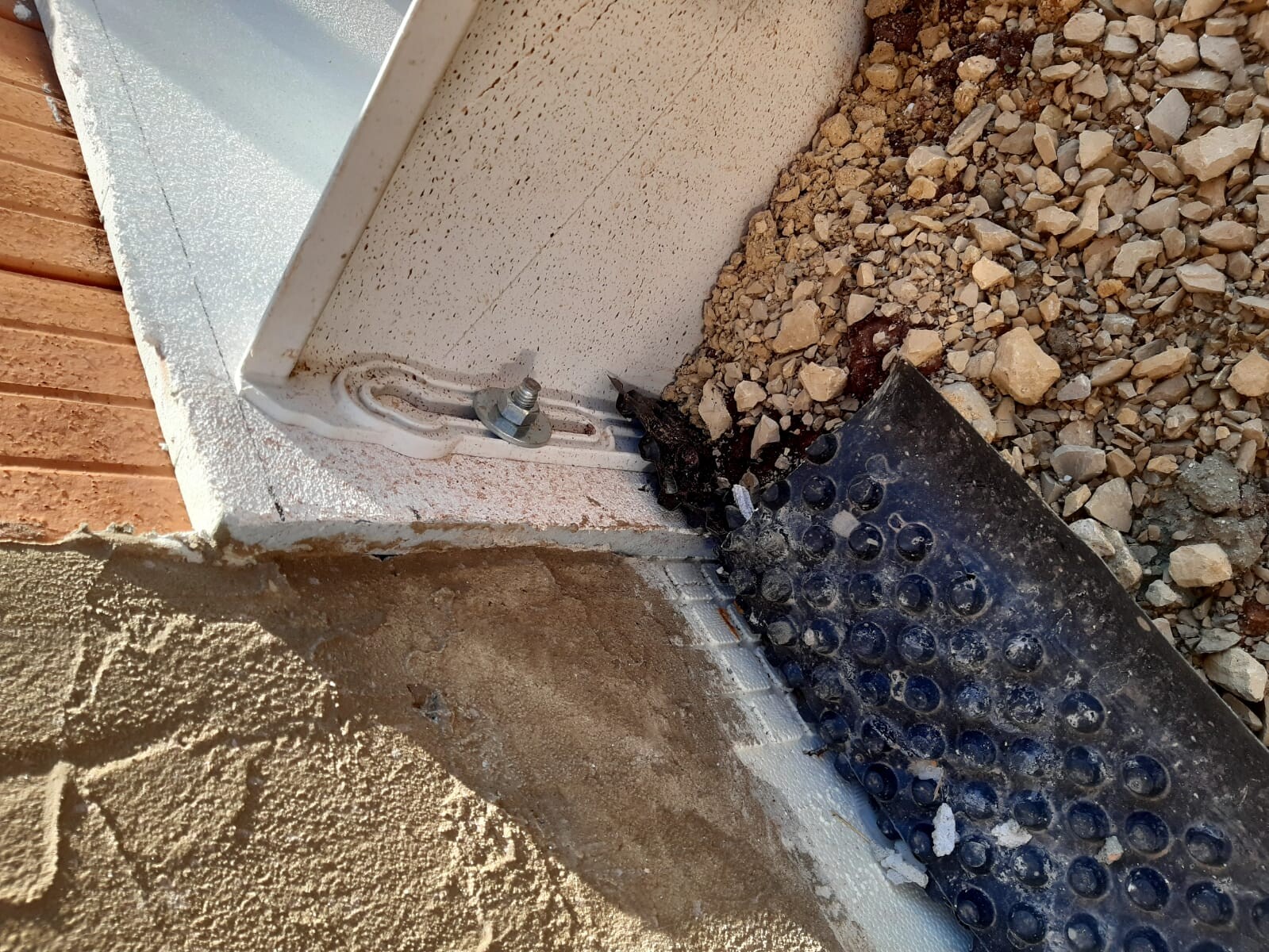
Now, during the first heavy rainstorm, water entered the basement directly. The water pushed its way between the window well, insulation, and concrete wall—not coming in from above. The window wells are connected to a drainage pipe, but this leads only to a “soakaway gravel bed” in the ground, not to the sewer system, and the water took four days to fully drain away.
I am quite concerned that this will keep happening whenever it rains heavily. The soil here is very clayey, and water tends to stay standing for a long time. So a waterproof concrete basement doesn’t help me much either. According to the construction company, everything was done correctly, and they recommend laying gravel around the house to keep water away from it.
Does anyone have experience with these types of window wells?
What also honestly surprises me is that the window wells extend above the concrete slab floor. If I later lay gravel and paving stones at the same height as the window wells, water will then be right against the exterior wall.
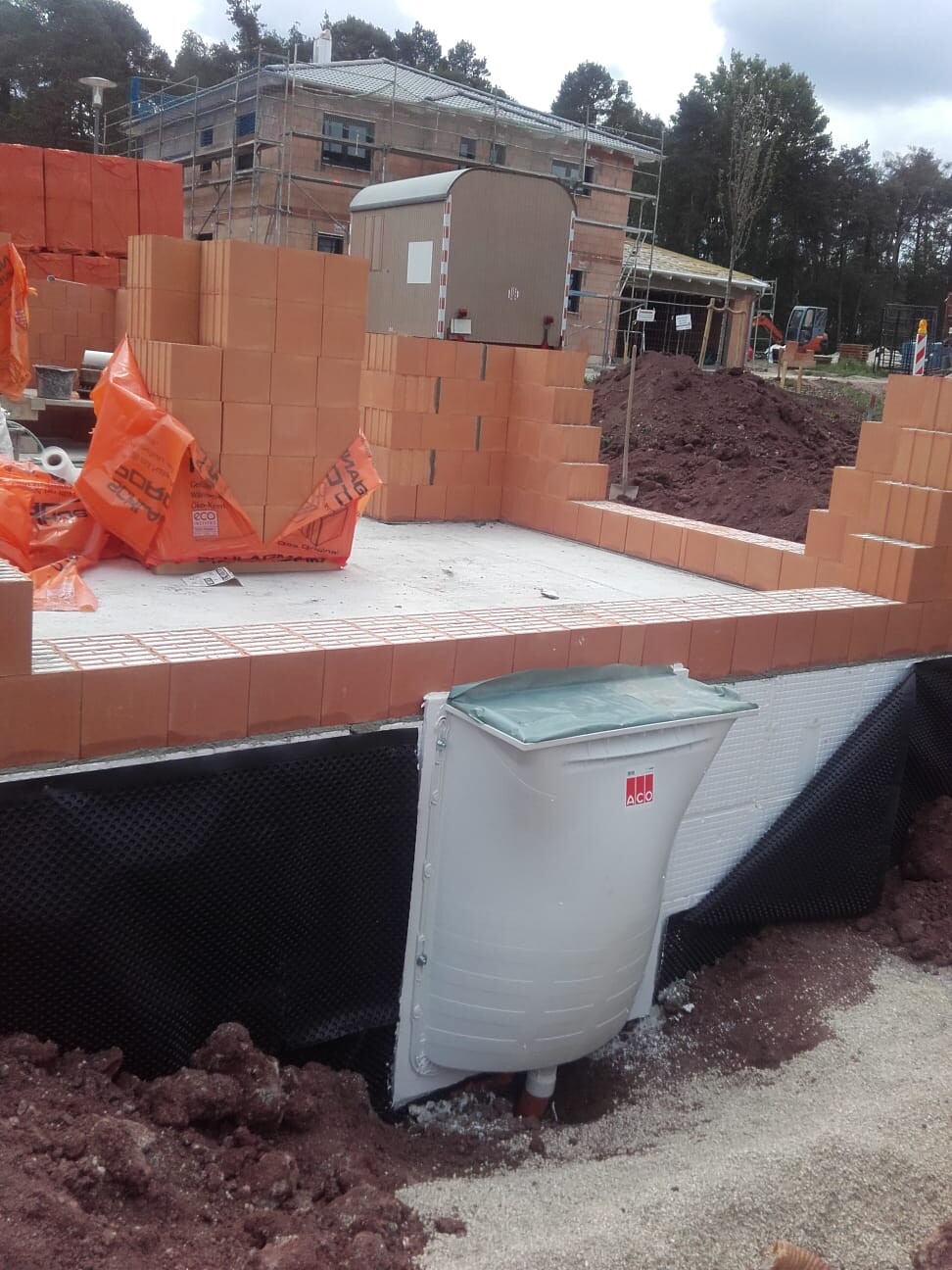
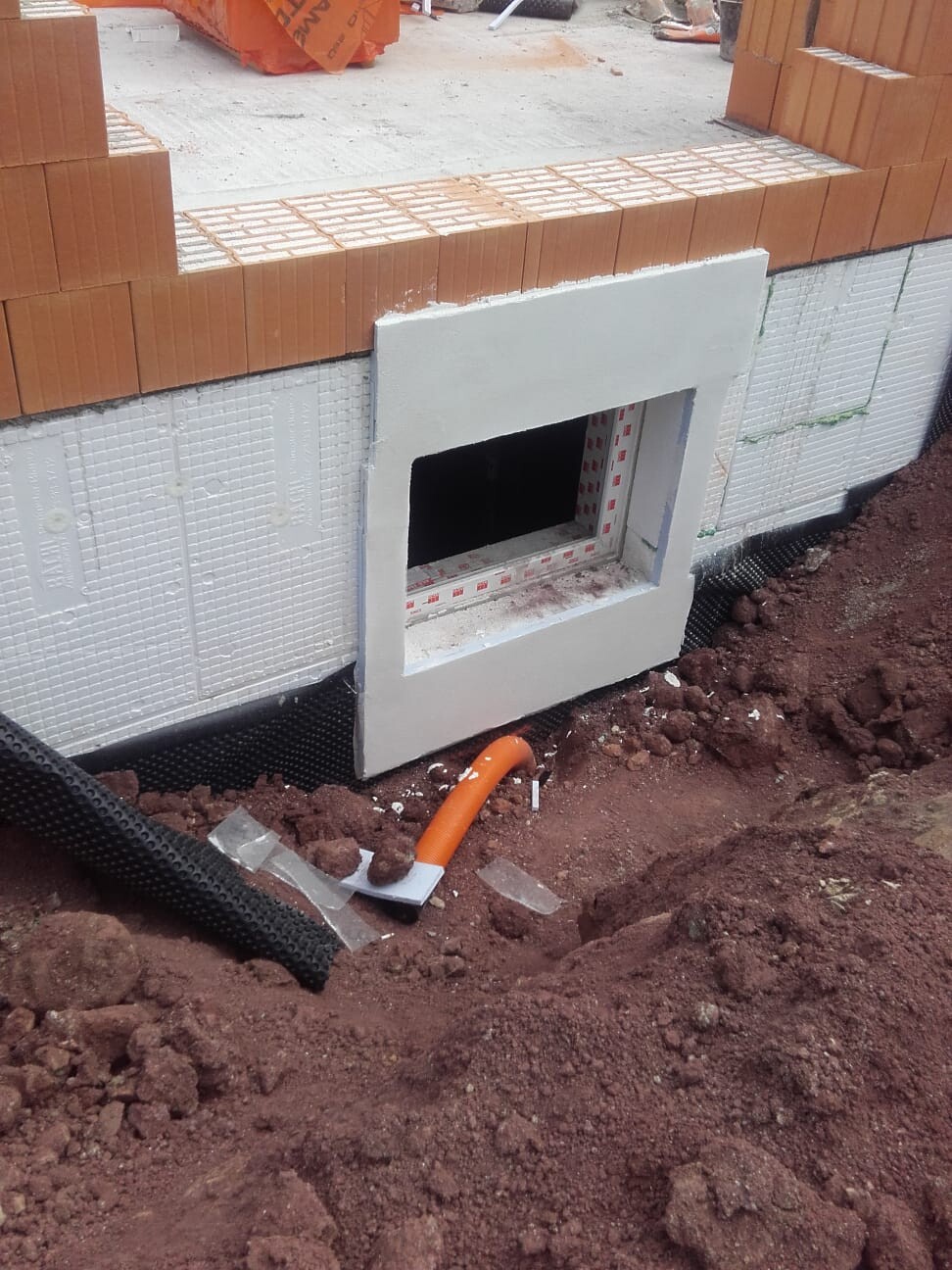
we are currently building our detached house. We have a waterproof concrete basement with basement windows. Our construction company installed ACO window wells and windows. These were placed on top of the perimeter insulation.
Now, during the first heavy rainstorm, water entered the basement directly. The water pushed its way between the window well, insulation, and concrete wall—not coming in from above. The window wells are connected to a drainage pipe, but this leads only to a “soakaway gravel bed” in the ground, not to the sewer system, and the water took four days to fully drain away.
I am quite concerned that this will keep happening whenever it rains heavily. The soil here is very clayey, and water tends to stay standing for a long time. So a waterproof concrete basement doesn’t help me much either. According to the construction company, everything was done correctly, and they recommend laying gravel around the house to keep water away from it.
Does anyone have experience with these types of window wells?
What also honestly surprises me is that the window wells extend above the concrete slab floor. If I later lay gravel and paving stones at the same height as the window wells, water will then be right against the exterior wall.

@Sisali86
You have clay soil and groundwater/rainwater. We have the same conditions, which is why we built without a basement. Our neighbors with basements are handling it as follows.
During construction, they place a submersible pump in the deepest puddle to pump the water far away. When there is heavy rain, water flows off the ground slab and into the basement. This happens until the downspouts are connected to the cistern. The windows are not watertight against hydrostatic pressure—they are not waterproof under pressure. A drainage element also works in reverse: when groundwater rises, it also rises in the light well, no matter how well sealed it is against the house wall.
After construction, lay drainage around the house and install a sump pit down to the slab depth, then place an automatic submersible pump there—done. Have a concrete cistern installed for the rainwater/groundwater. The problem was known; otherwise, you wouldn’t have a waterproof basement. Have all utility lines that pass through the tank sealed against hydrostatic pressure.
Regards, Nida
You have clay soil and groundwater/rainwater. We have the same conditions, which is why we built without a basement. Our neighbors with basements are handling it as follows.
During construction, they place a submersible pump in the deepest puddle to pump the water far away. When there is heavy rain, water flows off the ground slab and into the basement. This happens until the downspouts are connected to the cistern. The windows are not watertight against hydrostatic pressure—they are not waterproof under pressure. A drainage element also works in reverse: when groundwater rises, it also rises in the light well, no matter how well sealed it is against the house wall.
After construction, lay drainage around the house and install a sump pit down to the slab depth, then place an automatic submersible pump there—done. Have a concrete cistern installed for the rainwater/groundwater. The problem was known; otherwise, you wouldn’t have a waterproof basement. Have all utility lines that pass through the tank sealed against hydrostatic pressure.
Regards, Nida
Hello Nida,
thanks for your feedback. We have a cistern, and all the pipes from the roof run into it.
A drainage system was planned, but the construction company decided during the build that it wasn’t necessary and technically too complex, since the connection for rainwater to the sewer is too high.
Supposedly, the light wells have a backflow prevention system, but that is useless if the area in front of the window is not waterproof...
The basement pit itself was dry when excavated. The recent problems only occurred due to the heavy rain and runoff from the undeveloped neighboring plots.
We do have an external staircase with a basement door... but it stayed dry even during the heavy rain.
Apparently, we also didn’t need a waterproof concrete structure (“white tank”).
thanks for your feedback. We have a cistern, and all the pipes from the roof run into it.
A drainage system was planned, but the construction company decided during the build that it wasn’t necessary and technically too complex, since the connection for rainwater to the sewer is too high.
Supposedly, the light wells have a backflow prevention system, but that is useless if the area in front of the window is not waterproof...
The basement pit itself was dry when excavated. The recent problems only occurred due to the heavy rain and runoff from the undeveloped neighboring plots.
We do have an external staircase with a basement door... but it stayed dry even during the heavy rain.
Apparently, we also didn’t need a waterproof concrete structure (“white tank”).
Similar topics