
ᐅ Floor-to-ceiling windows: Persistent drafts at the base area despite repairs
Created on: 11 Nov 2025 21:48
M
MelCRoe
Hello everyone,
Since the installation of my floor-to-ceiling windows five years ago, I have been struggling with significant drafts in the lower connection area, especially near the floor and corners. At first, the airflow was so strong that it could even be heard whistling. I constantly feel cold air around my feet, and in summer, insects/ants even get inside.
Measures taken by the company so far:
I would appreciate any feedback.
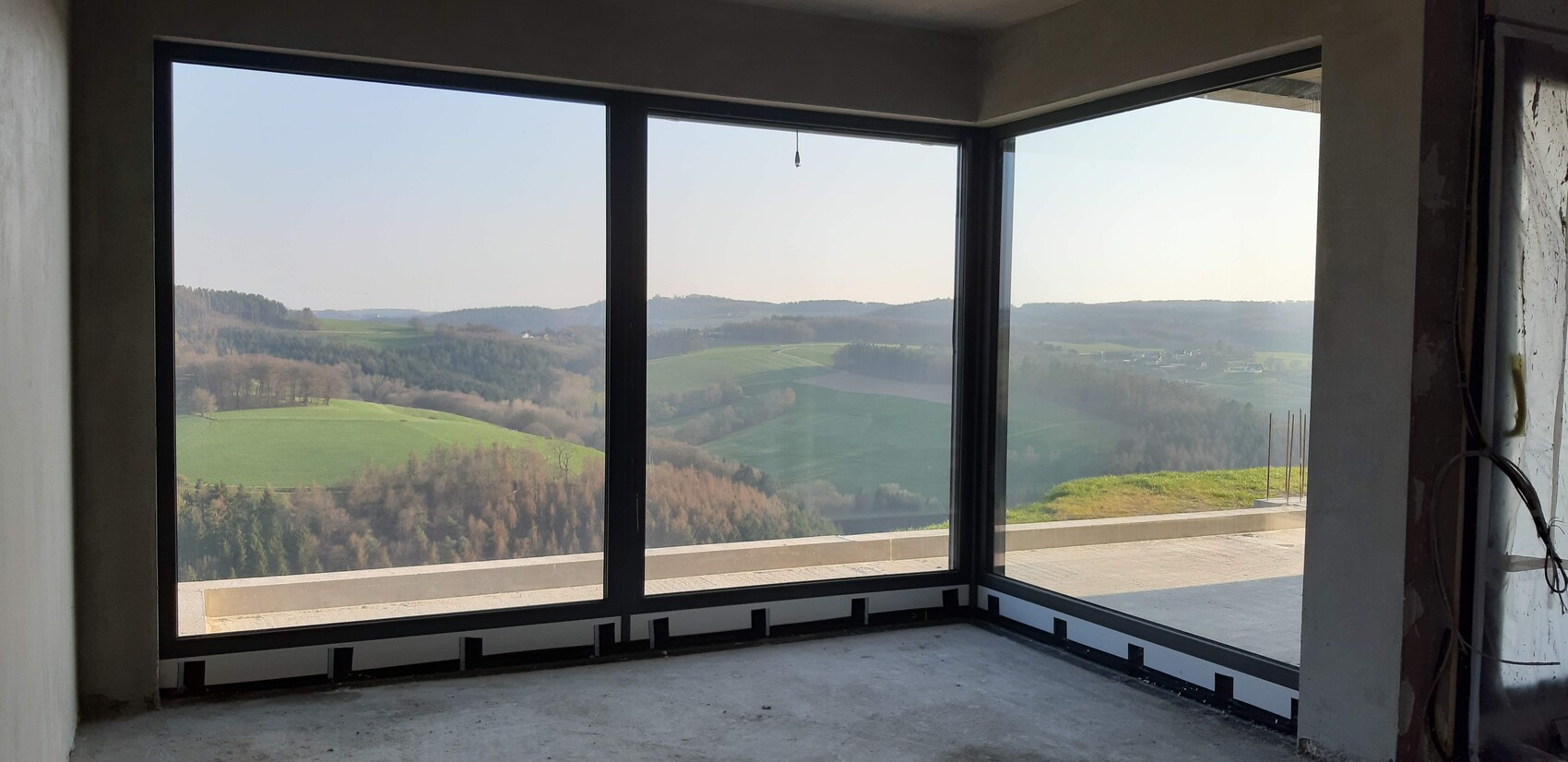
Since the installation of my floor-to-ceiling windows five years ago, I have been struggling with significant drafts in the lower connection area, especially near the floor and corners. At first, the airflow was so strong that it could even be heard whistling. I constantly feel cold air around my feet, and in summer, insects/ants even get inside.
Measures taken by the company so far:
- Annual repairs (reglazing, additional seals)
- Drilling into the frame from mid-height and injecting sealing compound
- Applying a blue sealing compound in the corners
- The base sealing was applied over the anchoring brackets, not underneath or behind them
- Despite all measures, the sealing is still not permanently airtight
- How should the sealing in the base area be professionally executed?
- What measures are permanently effective if the sealing is applied over the brackets?
- Could the drilling in the frame or injected sealing compound have caused damage?
- Are there standardized methods or materials to permanently eliminate the drafts?
I would appreciate any feedback.
The recognized technical standards (e.g., DIN 4108-7, RAL installation guidelines) require continuous airtightness on the warm side; otherwise, there will be thermal losses and drafts. However, the problem in this case is that the window manufacturer placed the sealing over the corner profiles. This effectively creates a break in the airtight layer. The standards specify a clear layering sequence, and the practical order (airtight on the inside, vapor-permeable on the outside) is fixed.
As far as I know, there are no standards that uniformly specify how "fixing brackets" must be sealed on concrete ceilings for all permitted waterproofing methods.
An unacceptable break in the airtight sealing layer on the interior side, for example, occurs when the waterproofing is not carried out properly or cannot be carried out properly.
An unacceptable break in the airtight sealing layer on the interior side, for example, occurs when the waterproofing is not carried out properly or cannot be carried out properly.
profil65 schrieb:
Hello,
my guess is that:
- no blower door test was conducted during the construction phase.
- the blower door test was carried out on the completed, inhabited house (as I understand your text) after the draft/air leak was reported.
- the blower door technician may have explained the situation in specialist German in a way that was hard to understand for laypeople. In short, houses/windows are never 100% airtight for various reasons(!); standards define how “airtight” they need to be and which leaks are acceptable.
- the blower door test did not find any unacceptable leaks at the construction joint.
- there is no airtight sealing between profiles/thresholds/base profiles/... which could explain why the “unsuccessful” repair by injecting sealant was attempted.
- it is possible that real, measurable leaks detected by the blower door test indicate that the waterproofing on the exterior (another trade/planning/site management/...) is also leaking and/or not professionally done.
- thermal bridges and/or floor-to-ceiling windows and/or such corner windows can create cold zones/room corners which users perceive as drafts.
Notes:
- according to blower door testing norms for standard residential buildings, functional joints within windows/doors/sliding doors between sash and frame/thresholds should not be included in the measurement/evaluation. However, this is often done anyway, because it helps identify suspicious areas, such as missing exterior seals or missing seals between profiles.
Hi,thank you very much for your message. Yes, no blower door test was done during construction; it was only done after we noticed drafts … and after some “repair” was done with that Illbruck stuff (drilling holes into the profiles and injecting sealant).
Regarding your point 3: I made the blower door technician aware of a leak; the cold draft was clearly noticeable, which prompted his comment.
About point 5: I attached a sample photo showing the final sealing from the interior side. Our expert immediately noticed that tape was applied over the corners and suspects this is causing the leaks. Yes, and the injection was the attempted repair – which didn’t work :-(
I have also heard that such discomfort can occur with floor-to-ceiling windows. It may be that the sensation of drafts is intensified by this phenomenon, but the fact remains that when carefully checked, air is definitely entering at the known corners.
By chance, I also noticed at this coupling piece (see photo above) that air is entering from the top as well. It’s really getting worse :-(
Regarding your note: Apparently, there are test methods that measure only the airtightness of the window units themselves; but honestly, we won’t be doing anything else here. The deadline is December 11, then we will involve a lawyer.
profil65 schrieb:
Why?.... the generally accepted technical standards require an airtight seal on the room side.... nothing more, how this is done in detail can be debated..... our expert also said that it should be a continuous seal ..... which could have been achieved if the area beneath the angle had been taped first ...Hello Nauer,
could you please explain the situation with the screed installer in more detail? What exactly is their role concerning the internal waterproofing?
Our expert didn’t mention anything about this. From their point of view, based on our photo documentation, the situation was already quite clear. As mentioned before, large numbers of ants were crawling into some of the affected corners during the summer :-(
At least it was proposed that the installation would follow RAL standards, with precise details on the sealing materials used. But what good is the best material if it is not applied correctly?
Apparently, the window company’s expert advised making these drill holes... no guarantees or potential impacts were discussed. We were really naive about this :-( ... and thought we had to give them the chance to fix the issue their way. When such advice even comes from an “expert,” as a non-professional, you just stay quiet at first.
So far, we have not noticed any moisture issues...
I’ve done a lot of research over the last few days and found that drilling holes into the profiles was not a very smart action by the window manufacturer. This has caused unpredictable damage. The frames should actually be replaced.
The deadline expired on 11.12.; I am curious to see whether the window company will cooperate.
could you please explain the situation with the screed installer in more detail? What exactly is their role concerning the internal waterproofing?
Our expert didn’t mention anything about this. From their point of view, based on our photo documentation, the situation was already quite clear. As mentioned before, large numbers of ants were crawling into some of the affected corners during the summer :-(
At least it was proposed that the installation would follow RAL standards, with precise details on the sealing materials used. But what good is the best material if it is not applied correctly?
Apparently, the window company’s expert advised making these drill holes... no guarantees or potential impacts were discussed. We were really naive about this :-( ... and thought we had to give them the chance to fix the issue their way. When such advice even comes from an “expert,” as a non-professional, you just stay quiet at first.
So far, we have not noticed any moisture issues...
I’ve done a lot of research over the last few days and found that drilling holes into the profiles was not a very smart action by the window manufacturer. This has caused unpredictable damage. The frames should actually be replaced.
The deadline expired on 11.12.; I am curious to see whether the window company will cooperate.
I hope the deadline is not coincidentally the end of the statutory warranty period (5 years) according to the Building Code... if it is, make sure to consult a lawyer beforehand to avoid missing the deadline!
Your lawyer will explain why 1 to multiple(?) corrections by the client should never be refused... so you haven’t done anything wrong in this regard! You do not have a say in how the contractor (i.e., the window company) carries out the corrections... you can only refuse to accept the corrected windows afterward if there are major defects. Your lawyer should have informed you of all this, hopefully in a timely manner.
Your lawyer will explain why 1 to multiple(?) corrections by the client should never be refused... so you haven’t done anything wrong in this regard! You do not have a say in how the contractor (i.e., the window company) carries out the corrections... you can only refuse to accept the corrected windows afterward if there are major defects. Your lawyer should have informed you of all this, hopefully in a timely manner.
Similar topics