
ᐅ Waterproofing of Garden Wall Adjacent to Neighbor's Property
Created on: 13 May 2021 12:14
T
ti-mar90Dear all,
We have been living in our semi-detached house from the developer for about six months now—handed over fully finished. It includes a small garden and is located in an established residential area. Since the plots have different ground levels relative to the street, there is a height difference between our property and the neighboring ones.
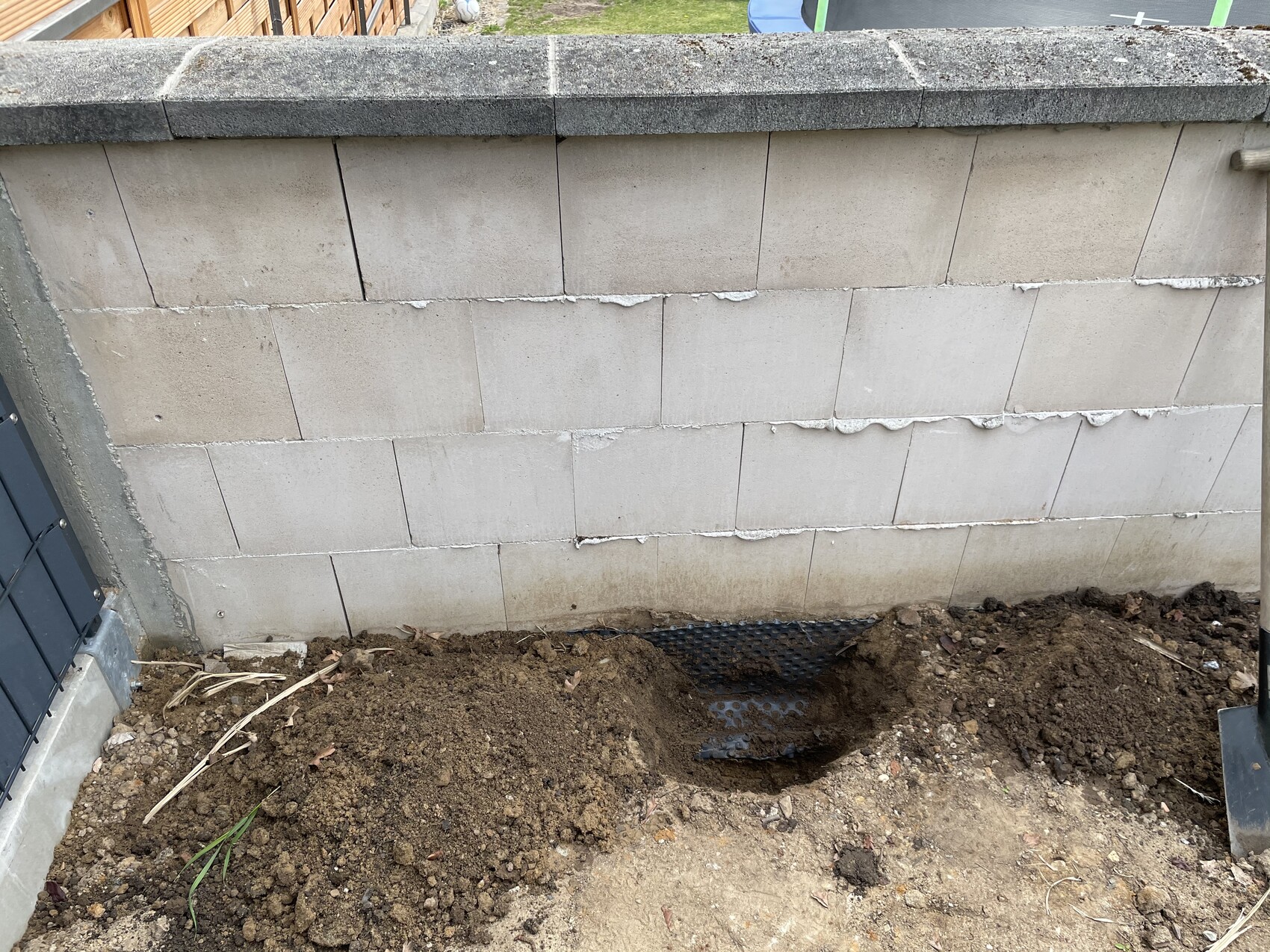
At the back, next to the neighbor, there was already a stone wall on a concrete foundation (probably made of sand-lime bricks) before construction started—as seen from a bit farther away in the first photo. Unfortunately, I don’t have a better picture.
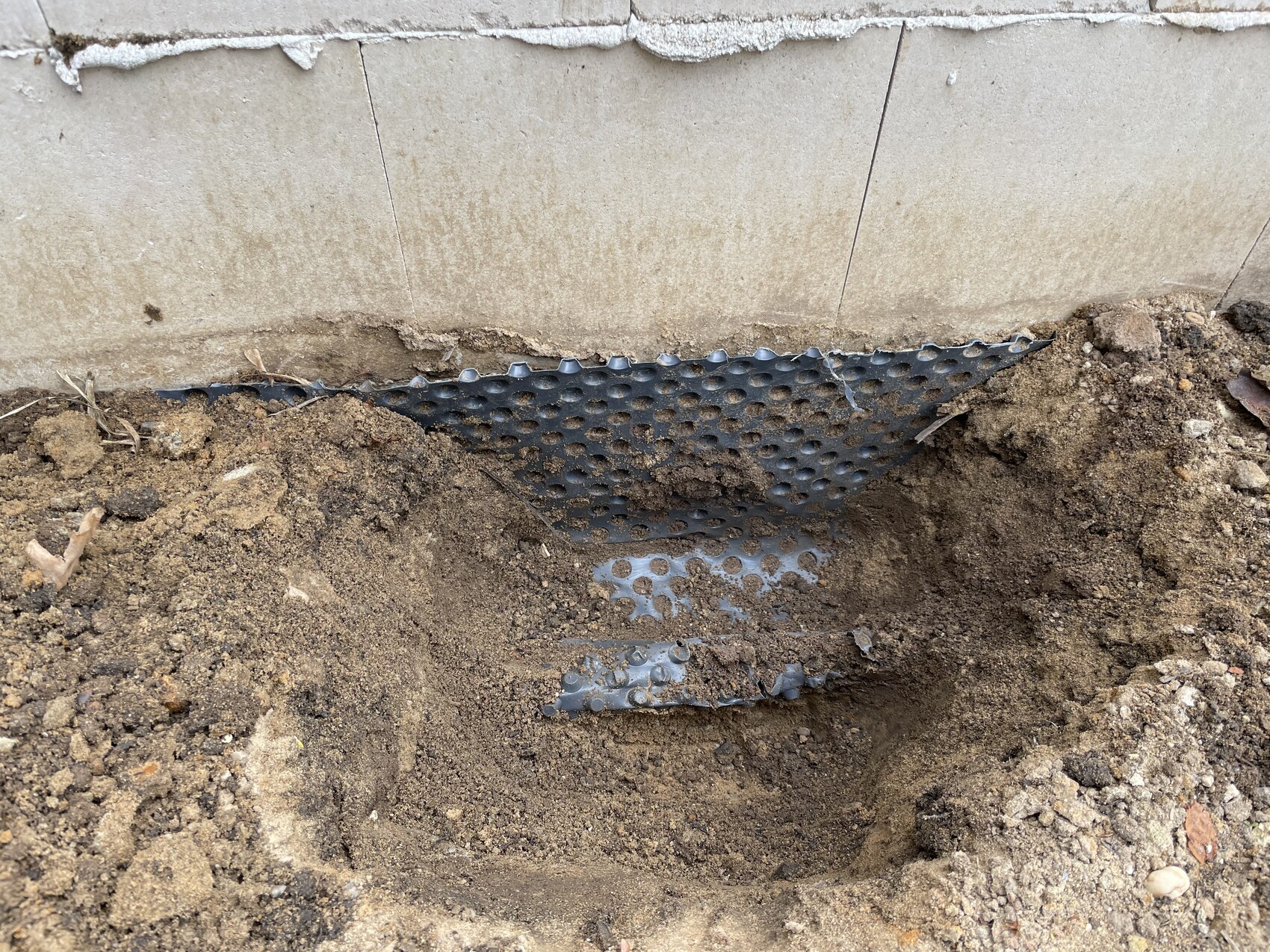
During the construction phase, soil was simply piled up against the wall to raise the level on our side. Before adding the topsoil, a dimpled membrane was installed against the lowest row of stones, but only up to the start of the foundation—see another photo.
The neighbor now claims that the wall is inadequately sealed on our side and that efflorescence is appearing on her side.
Could this be related? The wall was obviously exposed to weather before as well. Is sealing necessary here, or can it be legally required? What would proper waterproofing look like in this case?
Our developer insists that everything was done correctly and denies any responsibility.
For what it’s worth: about one-third of the wall stands on our property.
Any tips or advice would be greatly appreciated!
Happy Father’s Day / Men’s Day to everyone!


We have been living in our semi-detached house from the developer for about six months now—handed over fully finished. It includes a small garden and is located in an established residential area. Since the plots have different ground levels relative to the street, there is a height difference between our property and the neighboring ones.
At the back, next to the neighbor, there was already a stone wall on a concrete foundation (probably made of sand-lime bricks) before construction started—as seen from a bit farther away in the first photo. Unfortunately, I don’t have a better picture.
During the construction phase, soil was simply piled up against the wall to raise the level on our side. Before adding the topsoil, a dimpled membrane was installed against the lowest row of stones, but only up to the start of the foundation—see another photo.
The neighbor now claims that the wall is inadequately sealed on our side and that efflorescence is appearing on her side.
Could this be related? The wall was obviously exposed to weather before as well. Is sealing necessary here, or can it be legally required? What would proper waterproofing look like in this case?
Our developer insists that everything was done correctly and denies any responsibility.
For what it’s worth: about one-third of the wall stands on our property.
Any tips or advice would be greatly appreciated!
Happy Father’s Day / Men’s Day to everyone!
Hello,
yes, the situation can indeed change over time. Previously, the water was able to drain away, but now it collects against the wall after rain. The dimpled membrane is meant to promote water drainage, so it is correct in principle.
However, if water is standing there, it can only diffuse towards the neighbor’s side, which then causes efflorescence.
Furthermore, she can basically demand that you take appropriate measures there, since you are the cause of her problem—in other words, just because you are backfilling, she has a defect.
At this point, it’s unclear whether the efflorescence really only appeared after your work, but of course no one wants a dispute.
My suggestion for you would be to remove the soil there again, allow the wall to dry out, and apply a mineral-based sealing slurry. Then reinstall the dimpled membrane (preferably with a fleece backing) and replace the soil.
From the general contractor’s side, nothing was initially done wrong. They could have informed you beforehand so that the damage wouldn’t have occurred—the risk and financial responsibility, however, lie with the property owner.
You mentioned earlier that you bought the house from a developer—so he owned the land and built the house on it, which you then purchased together with the land? In that case, the risk related to the land was his prior to your purchase and therefore the obligation to protect this wall lies with him.
I think it is at least worth trying to approach the developer with a claim.
If you need help with wording, I would be glad to assist.
yes, the situation can indeed change over time. Previously, the water was able to drain away, but now it collects against the wall after rain. The dimpled membrane is meant to promote water drainage, so it is correct in principle.
However, if water is standing there, it can only diffuse towards the neighbor’s side, which then causes efflorescence.
Furthermore, she can basically demand that you take appropriate measures there, since you are the cause of her problem—in other words, just because you are backfilling, she has a defect.
At this point, it’s unclear whether the efflorescence really only appeared after your work, but of course no one wants a dispute.
My suggestion for you would be to remove the soil there again, allow the wall to dry out, and apply a mineral-based sealing slurry. Then reinstall the dimpled membrane (preferably with a fleece backing) and replace the soil.
From the general contractor’s side, nothing was initially done wrong. They could have informed you beforehand so that the damage wouldn’t have occurred—the risk and financial responsibility, however, lie with the property owner.
You mentioned earlier that you bought the house from a developer—so he owned the land and built the house on it, which you then purchased together with the land? In that case, the risk related to the land was his prior to your purchase and therefore the obligation to protect this wall lies with him.
I think it is at least worth trying to approach the developer with a claim.
If you need help with wording, I would be glad to assist.
Thank you for your detailed response! It mostly aligns with my thoughts and expectations. Yes, we purchased the house including the plot of land (with, among other things, 20cm (8 inches) of fresh topsoil) as a whole from the developer.
Since we have had no issues with the neighbors so far and have discussed things politely, we want to find a reasonable and long-term solution here out of our own interest. Ideally, this should be done before we properly plant the beds in front of the wall.
What would be considered an appropriate type of waterproofing or sealing in this case? Our developer is unlikely to come up with a solution on their own...
Thanks again!
Since we have had no issues with the neighbors so far and have discussed things politely, we want to find a reasonable and long-term solution here out of our own interest. Ideally, this should be done before we properly plant the beds in front of the wall.
What would be considered an appropriate type of waterproofing or sealing in this case? Our developer is unlikely to come up with a solution on their own...
Thanks again!

A few more points came to my mind.
- Why is the wall built on one-third of your property?
- The wall should not remain that unsightly. Walls facing inhabited areas usually need to be designed in a visually "acceptable" way, at least if there are complaints.
The last point could be discussed with the neighbor, and together you could develop a technically sound and visually appealing solution, then fairly share the costs. Is that what you call a win-win situation? 😉
- Why is the wall built on one-third of your property?
- The wall should not remain that unsightly. Walls facing inhabited areas usually need to be designed in a visually "acceptable" way, at least if there are complaints.
The last point could be discussed with the neighbor, and together you could develop a technically sound and visually appealing solution, then fairly share the costs. Is that what you call a win-win situation? 😉
i_b_n_a_n schrieb:
A few points came to mind.
- Why does the wall stand one-third on your property?
- The wall "should not" remain that unattractive. Walls facing occupied areas usually have to be at least visually "acceptable," especially if there are complaints. According to the neighbor, the wall was already there when they bought the house a few years ago. I wouldn’t make a big deal over a few centimeters (inches). We plan to put some kind of trellis or similar in front of it eventually anyway.
But if the wall needs to be “presentable,” that leaves some room for compromise, especially if the developer doesn’t do anything further.
The only remaining question is what proper sealing would look like in this case, and how deep it should be.
Jann St schrieb:
My suggestion would be to remove the floor there, let the wall dry out, and apply a mineral-based waterproof slurry. Then install a dimple membrane (preferably with a fleece backing) and put the floor back in place.I just read this now. I had feared something along those lines. How deep would you waterproof in that case: just the masonry up to a few centimeters (inches) above the concrete base, or also the concrete base itself?
Let’s see what the builder says. The neighbor apparently already contacted the builder directly during construction, but received no response.
On top of that, in the end this will not only affect us but also the neighbors in the other semi-detached house. They just haven’t moved in yet...
Similar topics