
ᐅ Waterproofing of Garden Wall Adjacent to Neighbor's Property
Created on: 13 May 2021 12:14
T
ti-mar90
Dear all,
We have been living in our semi-detached house from the developer for about six months now—handed over fully finished. It includes a small garden and is located in an established residential area. Since the plots have different ground levels relative to the street, there is a height difference between our property and the neighboring ones.
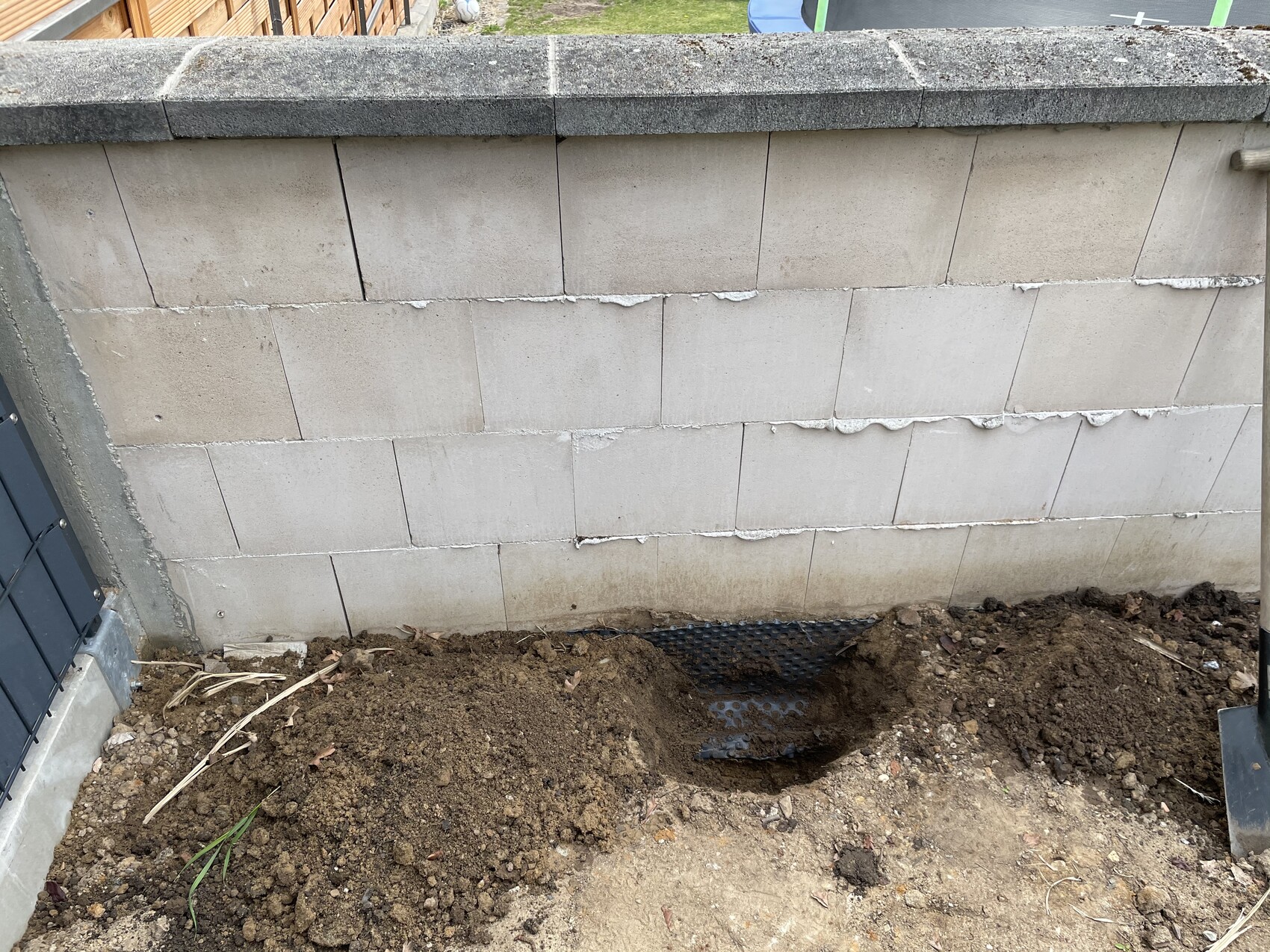
At the back, next to the neighbor, there was already a stone wall on a concrete foundation (probably made of sand-lime bricks) before construction started—as seen from a bit farther away in the first photo. Unfortunately, I don’t have a better picture.
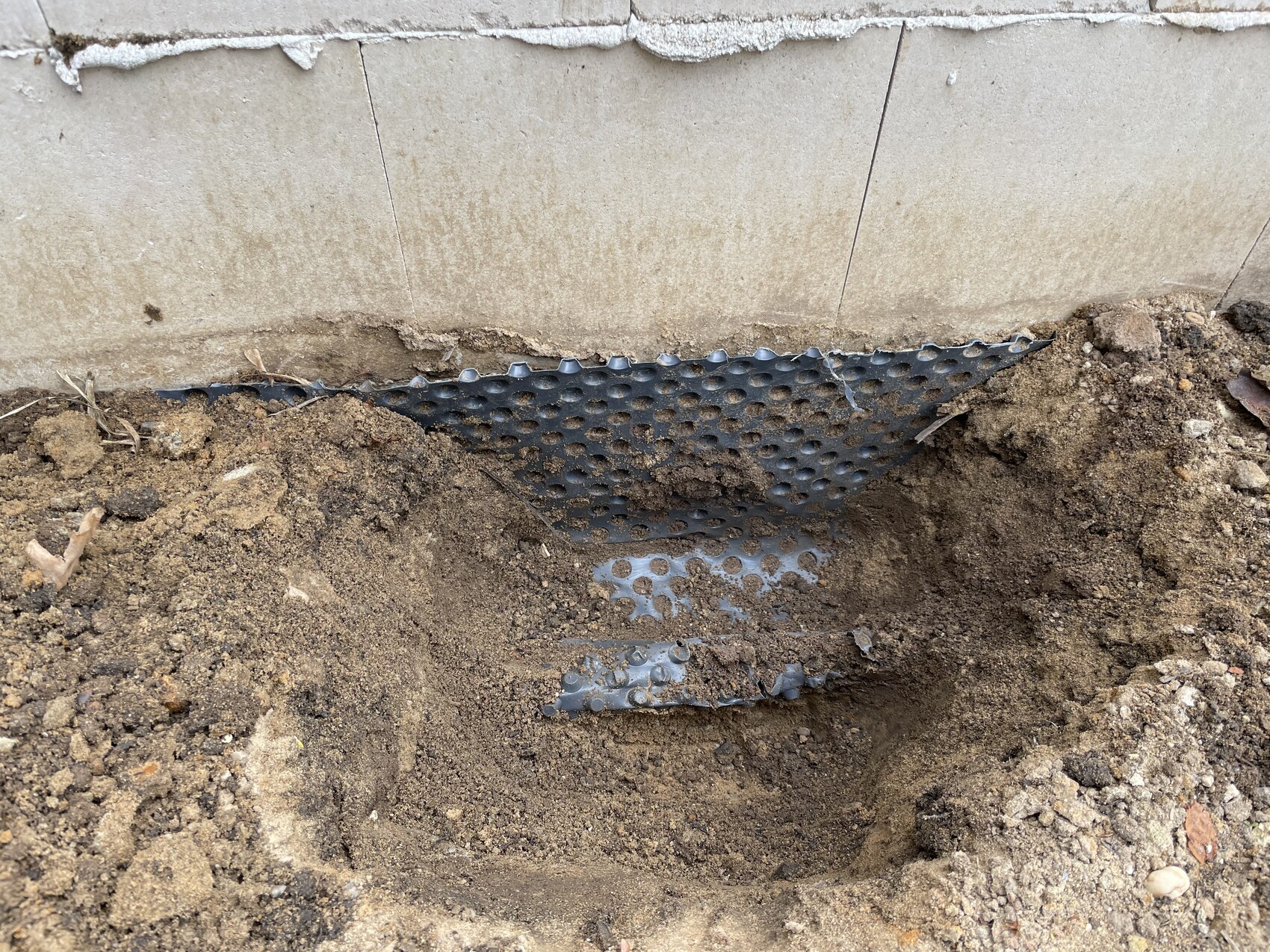
During the construction phase, soil was simply piled up against the wall to raise the level on our side. Before adding the topsoil, a dimpled membrane was installed against the lowest row of stones, but only up to the start of the foundation—see another photo.
The neighbor now claims that the wall is inadequately sealed on our side and that efflorescence is appearing on her side.
Could this be related? The wall was obviously exposed to weather before as well. Is sealing necessary here, or can it be legally required? What would proper waterproofing look like in this case?
Our developer insists that everything was done correctly and denies any responsibility.
For what it’s worth: about one-third of the wall stands on our property.
Any tips or advice would be greatly appreciated!
Happy Father’s Day / Men’s Day to everyone!


We have been living in our semi-detached house from the developer for about six months now—handed over fully finished. It includes a small garden and is located in an established residential area. Since the plots have different ground levels relative to the street, there is a height difference between our property and the neighboring ones.
At the back, next to the neighbor, there was already a stone wall on a concrete foundation (probably made of sand-lime bricks) before construction started—as seen from a bit farther away in the first photo. Unfortunately, I don’t have a better picture.
During the construction phase, soil was simply piled up against the wall to raise the level on our side. Before adding the topsoil, a dimpled membrane was installed against the lowest row of stones, but only up to the start of the foundation—see another photo.
The neighbor now claims that the wall is inadequately sealed on our side and that efflorescence is appearing on her side.
Could this be related? The wall was obviously exposed to weather before as well. Is sealing necessary here, or can it be legally required? What would proper waterproofing look like in this case?
Our developer insists that everything was done correctly and denies any responsibility.
For what it’s worth: about one-third of the wall stands on our property.
Any tips or advice would be greatly appreciated!
Happy Father’s Day / Men’s Day to everyone!
I would check the elevation level at your neighbor’s property. The concrete should already have been “below ground” there, even in the previous situation. Therefore, I believe the area that has been built up is sufficient.
You can apply the material with a brush; it’s a task anyone can do and relatively inexpensive. I don’t think you can expect more for this kind of wall. I mean, on your side, the adhesive is still oozing out, so that should definitely be enough.
If you want to spend a little more, you can use a polymer-modified slurry. I can look up a data sheet at work on Monday. I think it was about 40€ per bag.
You can apply the material with a brush; it’s a task anyone can do and relatively inexpensive. I don’t think you can expect more for this kind of wall. I mean, on your side, the adhesive is still oozing out, so that should definitely be enough.
If you want to spend a little more, you can use a polymer-modified slurry. I can look up a data sheet at work on Monday. I think it was about 40€ per bag.
Jann St schrieb:
I would check the height level at your neighbor’s property. The concrete there, and in the previous situation, should already have been “below ground level.” Therefore, I think that area is sufficient for the fill that was added.
You could apply the material with a brush; it’s a task anyone can do and relatively inexpensive. I don’t think more is expected for a wall like that. I mean, on your side, the adhesive is still oozing out, so this should definitely be enough.
If you want to spend a bit more, you can use a slurry that is polymer-modified. I can dig up a datasheet at work on Monday. It cost around 40€ per bag, I believe. The base/concrete foundation at the neighbor’s is exposed about 30-40cm (12-16 inches). It was the same way on our side before construction started. I zoomed in on the only photo from that time and attached it.
I really don’t know what exactly is under the stones?! They could also be prefabricated slightly trapezoidal concrete base blocks? Would those need to be waterproofed too if they were previously exposed and are now backfilled? Then I would have to waterproof down to 60-70cm (24-28 inches) deep, which would be much more complicated than just the bottom row of stones.
Regarding reaching an agreement if the builder doesn’t want to contribute, I’m not worried at all.
H
hanghaus200015 May 2021 13:301. Why do people sometimes unnecessarily fill the ground?
2. Why don’t they apply waterproofing before installing the dimple membrane?
Solution: Excavate down to 20cm (8 inches) below the foundation stones, then apply a smooth leveling coat. Next, apply a cold-applied waterproofing layer up to the top of the ground level, followed by a fleece and then the dimple membrane. After that, the wall should be plastered (work done by the neighbor).
2. Why don’t they apply waterproofing before installing the dimple membrane?
Solution: Excavate down to 20cm (8 inches) below the foundation stones, then apply a smooth leveling coat. Next, apply a cold-applied waterproofing layer up to the top of the ground level, followed by a fleece and then the dimple membrane. After that, the wall should be plastered (work done by the neighbor).
Similar topics