
ᐅ How to Properly Install a Studded Membrane, Base Waterproofing, and Drainage?
Created on: 24 Nov 2018 01:10
Z
zizzi
Hello everyone,
We have a bungalow with the following wall construction:
1. Sand-lime brick, bitumen coating, rigid foam insulation in the base area around windows and doors, otherwise mineral wool
2. Air gap
3. Facing brick with a double layer of bitumen membrane in the base area.
No basement; rainwater must infiltrate on the property (soil is sandy).
A dimple membrane is intended to protect the house wall from moisture coming from the ground (I am not using a gravel bed because the bungalow has a 50 cm (20 inches) roof overhang).
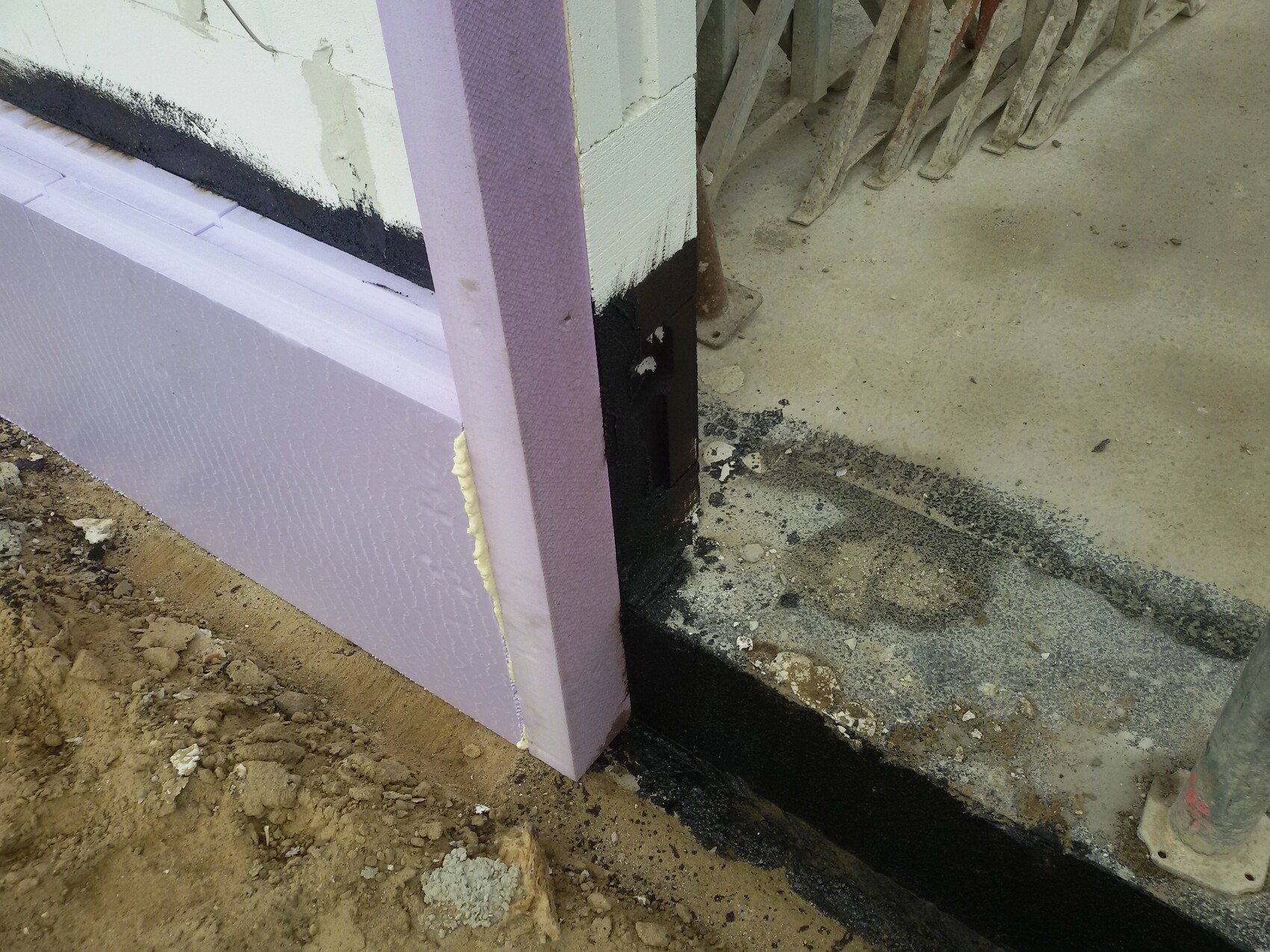
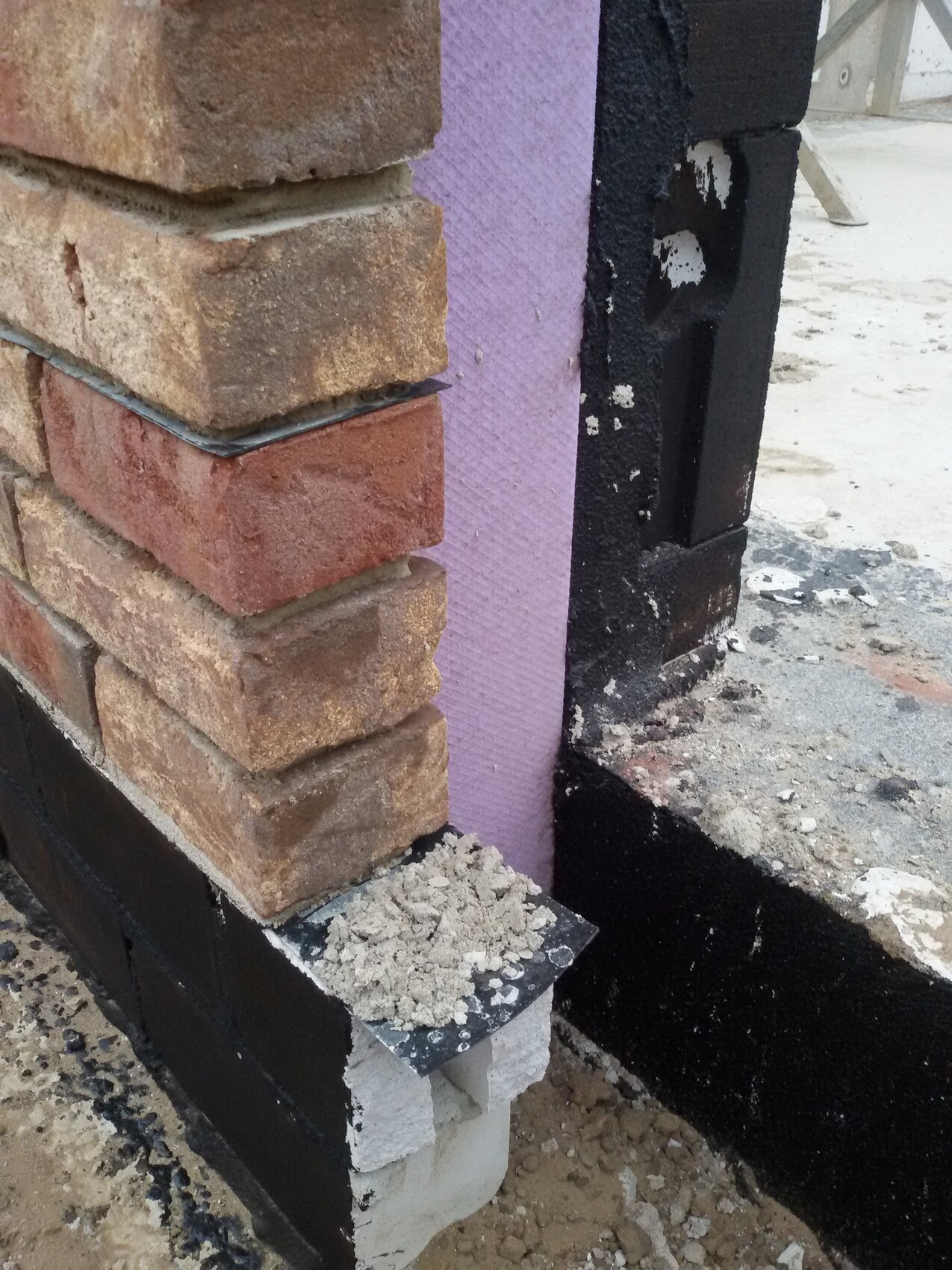
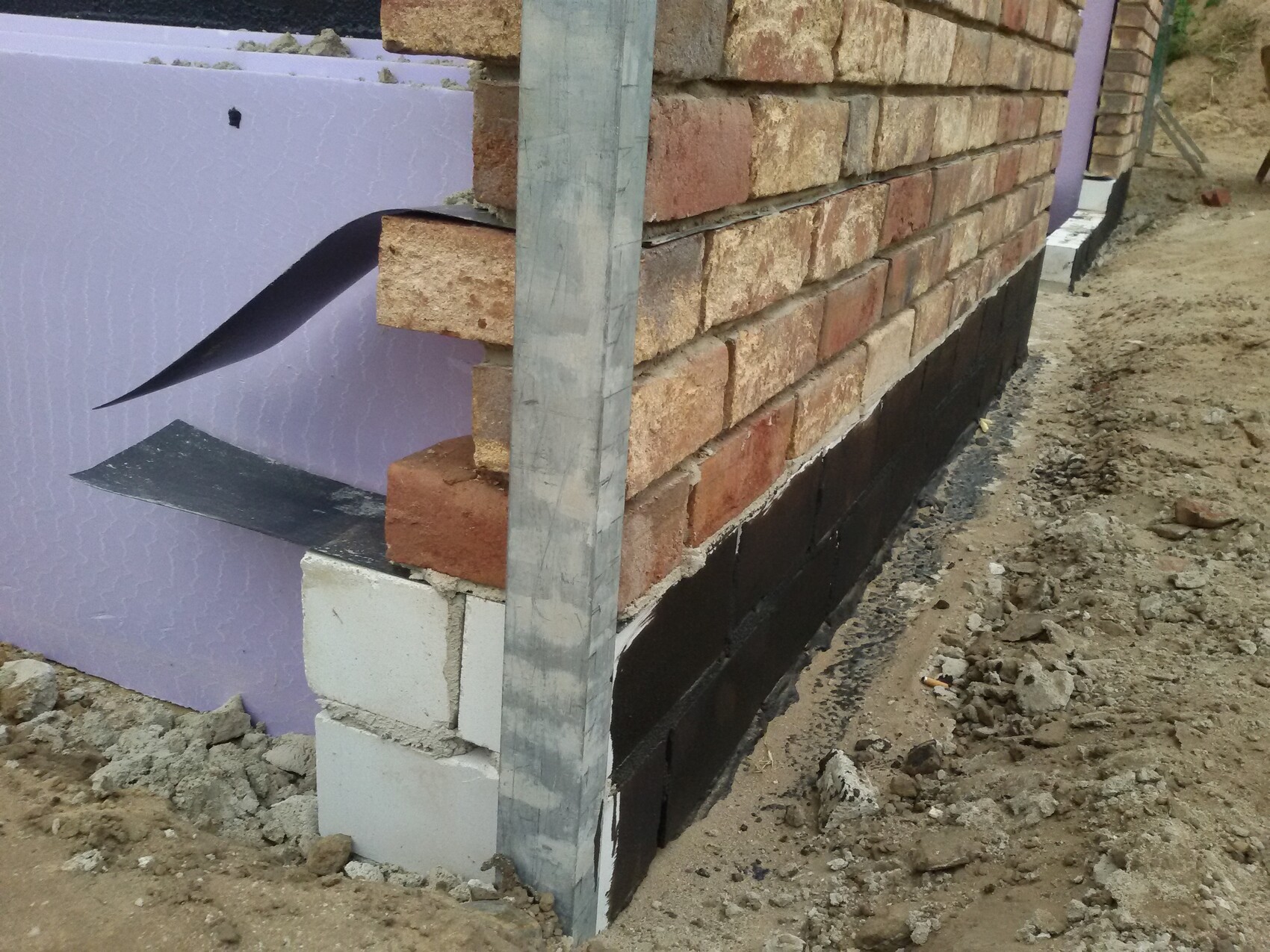
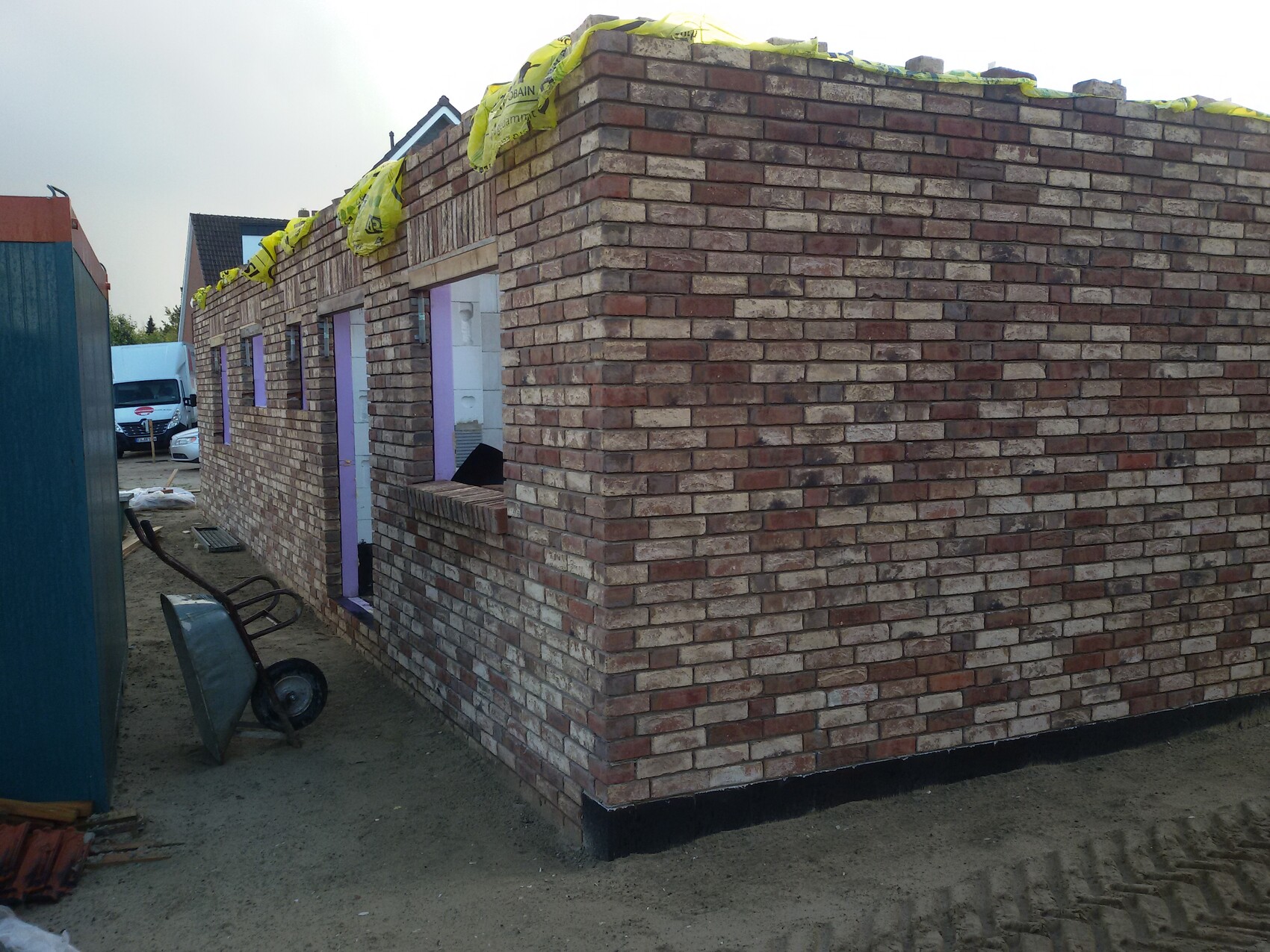
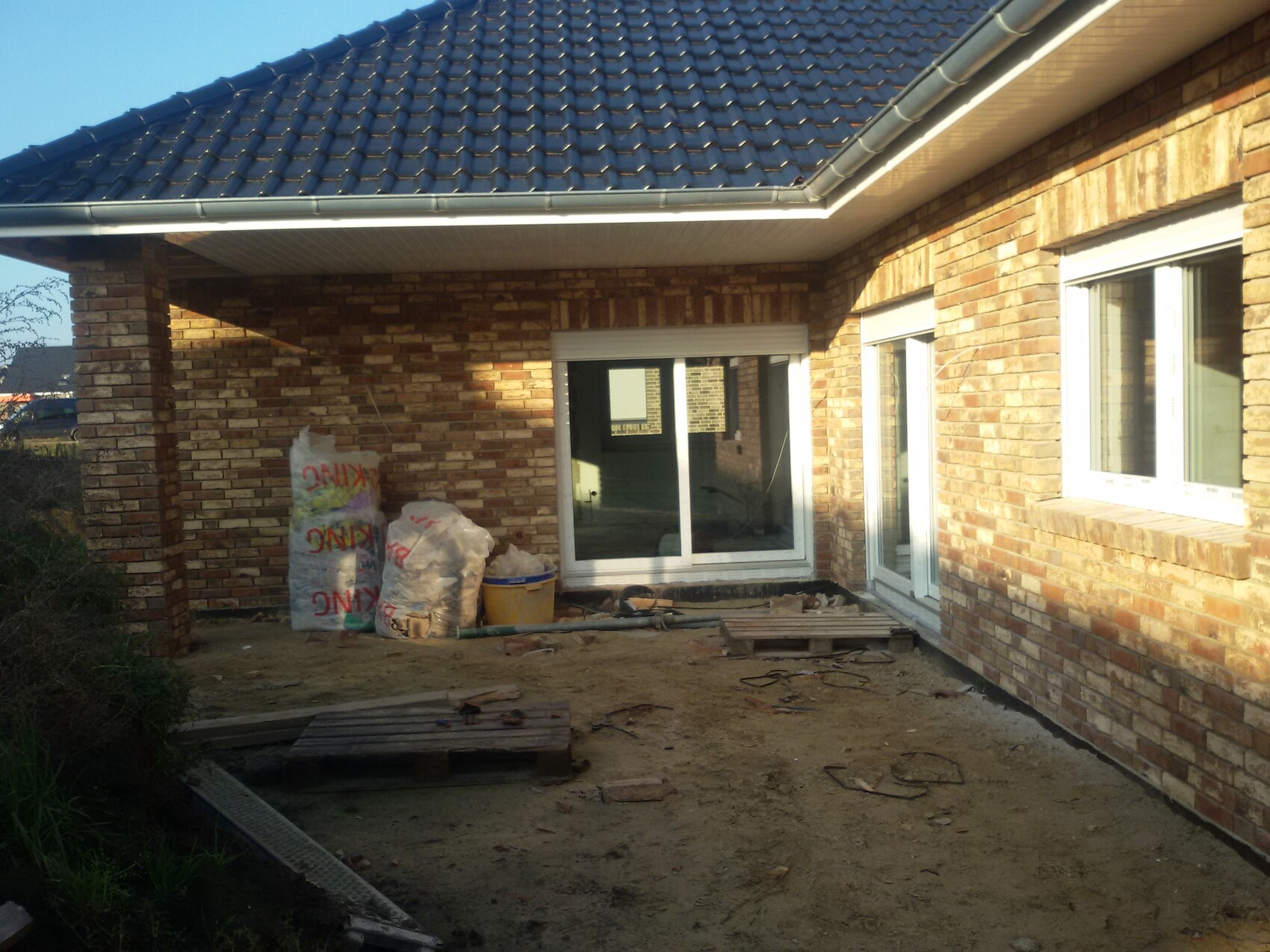
How should this dimple membrane be installed correctly?
Which side should face which way?
Is drainage necessary? Should gravel be placed below or above the drainage? What happens at the beginning and end of the drainage system? Should it be connected to the rainwater downpipe or…?
Geotextile fabric?
How have you done it? (maybe a sketch?)
Best regards
We have a bungalow with the following wall construction:
1. Sand-lime brick, bitumen coating, rigid foam insulation in the base area around windows and doors, otherwise mineral wool
2. Air gap
3. Facing brick with a double layer of bitumen membrane in the base area.
No basement; rainwater must infiltrate on the property (soil is sandy).
A dimple membrane is intended to protect the house wall from moisture coming from the ground (I am not using a gravel bed because the bungalow has a 50 cm (20 inches) roof overhang).
How should this dimple membrane be installed correctly?
Which side should face which way?
Is drainage necessary? Should gravel be placed below or above the drainage? What happens at the beginning and end of the drainage system? Should it be connected to the rainwater downpipe or…?
Geotextile fabric?
How have you done it? (maybe a sketch?)
Best regards
I wanted to share something: I looked at 6-7 houses in a new development area that are in almost the same construction phase as ours. I didn’t see a single house sealed in the way Mr. Wetzel described in "The Forgotten Connection" (see photo).
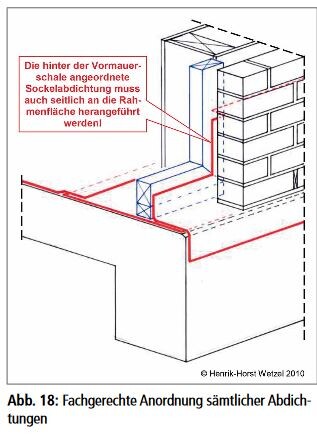
They either looked like our house or had waterproofing applied later on top of the facing brick! The picture clearly shows how it should be done, but no one seems to know or do it!
How is it for you?
They either looked like our house or had waterproofing applied later on top of the facing brick! The picture clearly shows how it should be done, but no one seems to know or do it!
How is it for you?
Hello Zizzi!
Sealing the clinker brick afterwards is shoddy work!
You definitely should not accept that. Unfortunately, this issue is still often overlooked by many builders (especially prefab house suppliers) with the attitude: No one will notice anyway!
Water ingress can occur there, and you often don’t see it immediately but only when it’s too late (I’ve seen it myself). It can cause severe damage under the screed and to the rising walls. I’m happy to send you pictures of how it was sealed in our case.
Also relevant is the expert article by Wetzel, "Not Basemented Yet Still Damp?"
Please, please do not give in and insist on proper sealing of the floor-to-ceiling elements according to the recognized rules of technology, if agreed.
Addendum: The window installer should have raised concerns as well. You might want to involve them for warranty purposes.
Best regards
Sealing the clinker brick afterwards is shoddy work!
You definitely should not accept that. Unfortunately, this issue is still often overlooked by many builders (especially prefab house suppliers) with the attitude: No one will notice anyway!
Water ingress can occur there, and you often don’t see it immediately but only when it’s too late (I’ve seen it myself). It can cause severe damage under the screed and to the rising walls. I’m happy to send you pictures of how it was sealed in our case.
Also relevant is the expert article by Wetzel, "Not Basemented Yet Still Damp?"
Please, please do not give in and insist on proper sealing of the floor-to-ceiling elements according to the recognized rules of technology, if agreed.
Addendum: The window installer should have raised concerns as well. You might want to involve them for warranty purposes.
Best regards
J
julius95312 Sep 2019 10:52Hello everyone,
Attached is a terrace of a townhouse. My question concerns the dimpled membrane behind the side curbstones. The slabs were laid on 20cm (8 inches) of gravel and 3cm (1 inch) of sand. Is a dimpled membrane between the curb/foundation and the house wall considered standard practice? Or is it only necessary in the area of the gravel layer to address settlement movement?
Thank you in advance!
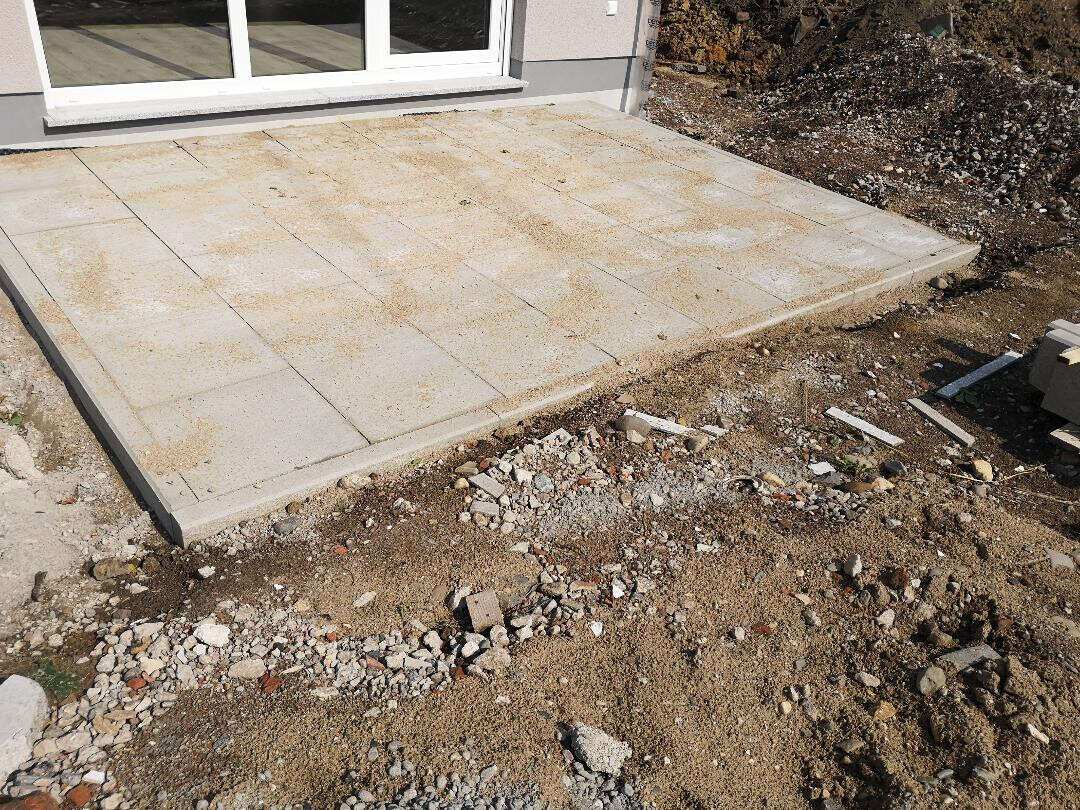
Attached is a terrace of a townhouse. My question concerns the dimpled membrane behind the side curbstones. The slabs were laid on 20cm (8 inches) of gravel and 3cm (1 inch) of sand. Is a dimpled membrane between the curb/foundation and the house wall considered standard practice? Or is it only necessary in the area of the gravel layer to address settlement movement?
Thank you in advance!
Similar topics