
Hello everyone,
I am new to the forum and would like to briefly introduce myself. I am 36 years old, from southern Germany, and currently renovating our house, built in 1969.
At the moment, I am working on renovating the basement. We excavated all the old concrete, paving, and natural ground. A new concrete slab was then poured (10-15cm thick) and connected to the foundation with steel bars. On top of that, a polyethylene vapor barrier was installed, followed by a concrete screed (industrial quality). The individual rooms and walls were separated from the screed by perimeter insulation strips.
Now I want to create a cove fillet on the wall with epoxy resin and then coat the entire floor with epoxy resin.
I have heard that the cove fillet should be applied onto the edge insulation strip. However, I have the problem that the edge insulation strip and the tile covering are already flush, and I do not want the cove fillet to protrude. In addition, the edge insulation strip is damaged in some places due to grinding the concrete.
Can I cut off the edge insulation strip and install a new strip with lower thickness to separate the cove fillet, floor, and walls, so that the cove fillet is flush with the tiles? What material should this strip be made of so that the epoxy mortar bonds well?
Can the strip be glued to the wall? If yes, what adhesive should I use?
Or do you have any other suggestions? I would be very grateful for your tips!
Best regards
Bulli
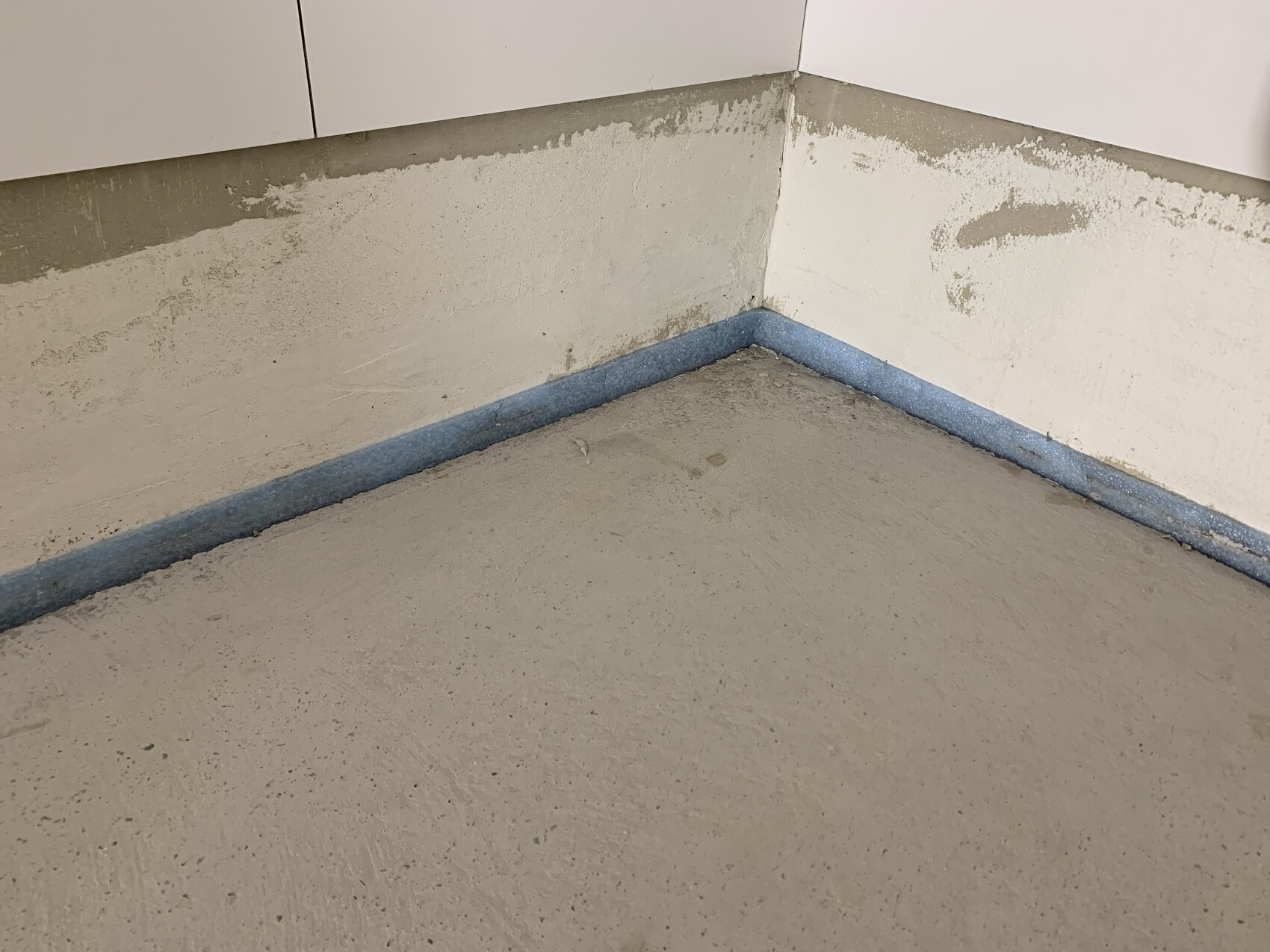
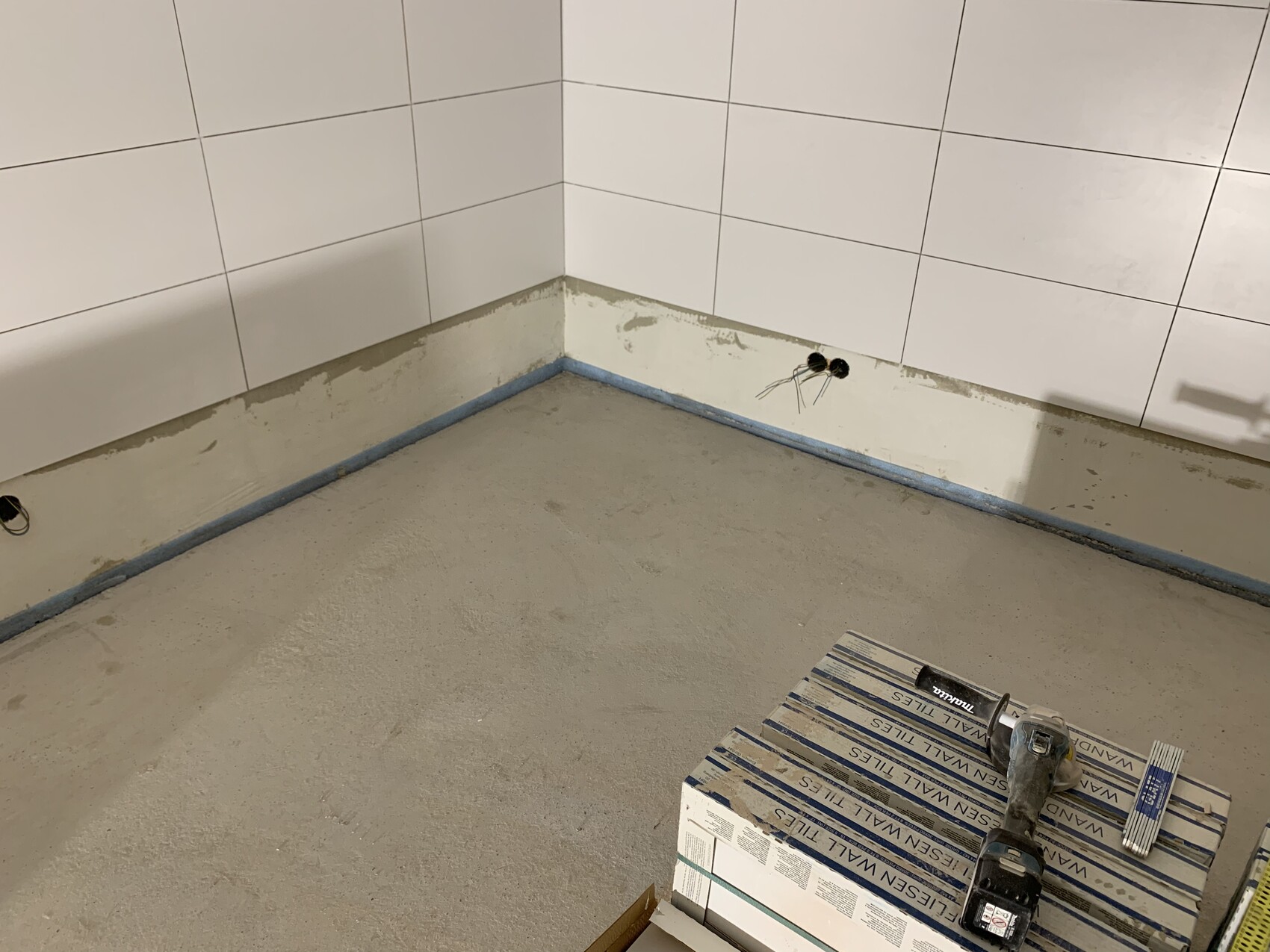
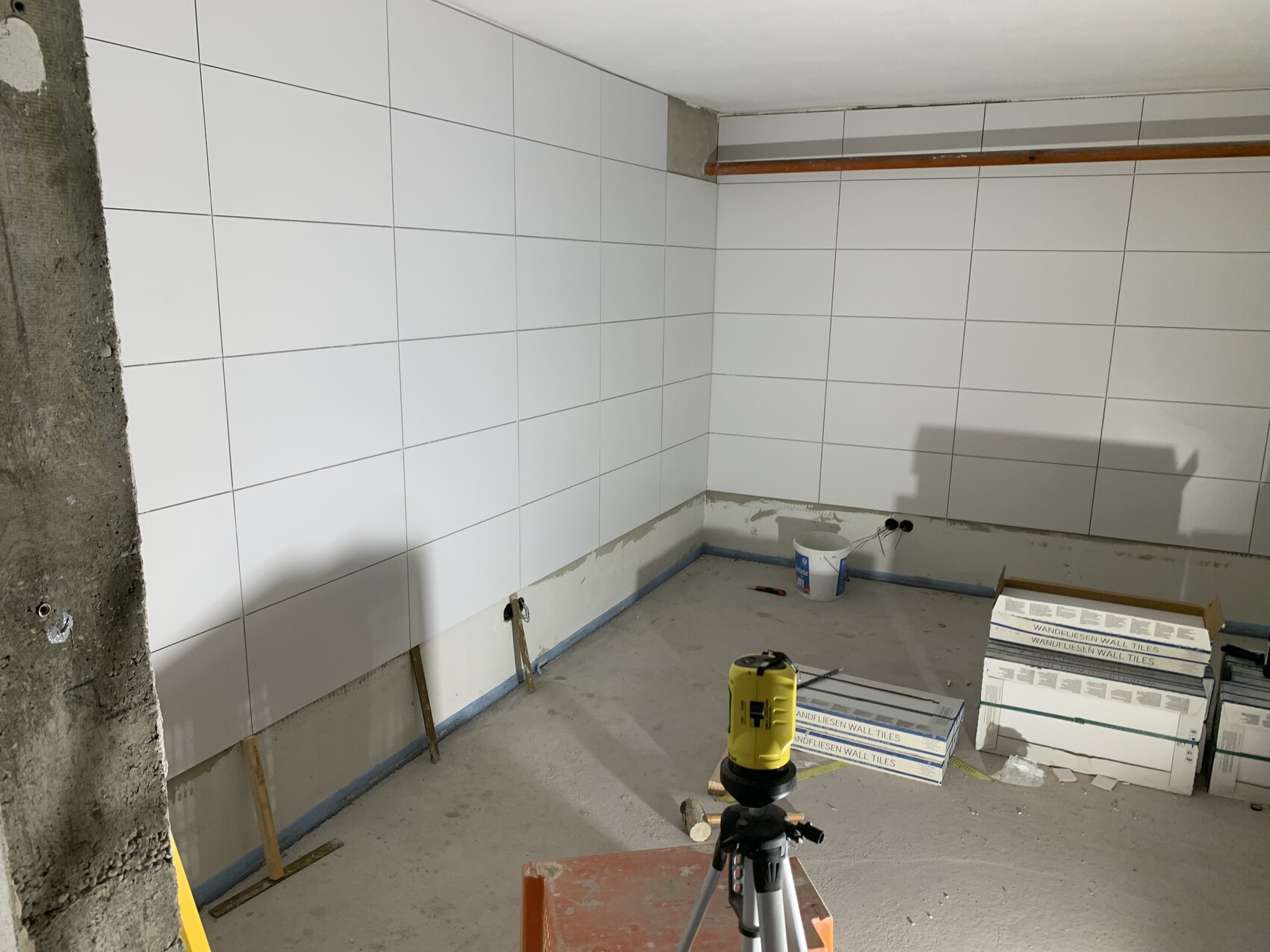
I am new to the forum and would like to briefly introduce myself. I am 36 years old, from southern Germany, and currently renovating our house, built in 1969.
At the moment, I am working on renovating the basement. We excavated all the old concrete, paving, and natural ground. A new concrete slab was then poured (10-15cm thick) and connected to the foundation with steel bars. On top of that, a polyethylene vapor barrier was installed, followed by a concrete screed (industrial quality). The individual rooms and walls were separated from the screed by perimeter insulation strips.
Now I want to create a cove fillet on the wall with epoxy resin and then coat the entire floor with epoxy resin.
I have heard that the cove fillet should be applied onto the edge insulation strip. However, I have the problem that the edge insulation strip and the tile covering are already flush, and I do not want the cove fillet to protrude. In addition, the edge insulation strip is damaged in some places due to grinding the concrete.
Can I cut off the edge insulation strip and install a new strip with lower thickness to separate the cove fillet, floor, and walls, so that the cove fillet is flush with the tiles? What material should this strip be made of so that the epoxy mortar bonds well?
Can the strip be glued to the wall? If yes, what adhesive should I use?
Or do you have any other suggestions? I would be very grateful for your tips!
Best regards
Bulli
Hello there,
thank you for your reply. Does that mean I completely cover the cove (5cm high and 5cm deep) with acrylic? Can this then also be smoothed out using a cove trowel? I thought this was usually done with a mixture of quartz sand and epoxy resin as a preformed cove.
thank you for your reply. Does that mean I completely cover the cove (5cm high and 5cm deep) with acrylic? Can this then also be smoothed out using a cove trowel? I thought this was usually done with a mixture of quartz sand and epoxy resin as a preformed cove.
Why should it be 5cm (2 inches)? Is that really your intention? Just apply an acrylic sealant there, like you would with a tile baseboard, which you can simply paint over with the resin.
I am not familiar with the method using sand and resin, but of course that doesn’t mean it’s not valid.
I am not familiar with the method using sand and resin, but of course that doesn’t mean it’s not valid.
Similar topics