
ᐅ Drain pipe should not be installed beneath the screed (cement floor layer).
Created on: 14 Jul 2019 17:14
M
M4rvin
Hi!
Shouldn't the drain pipe (kitchen) actually be located under the screed? This metal clamp also protrudes quite a bit! How am I supposed to install my tiles properly with this?
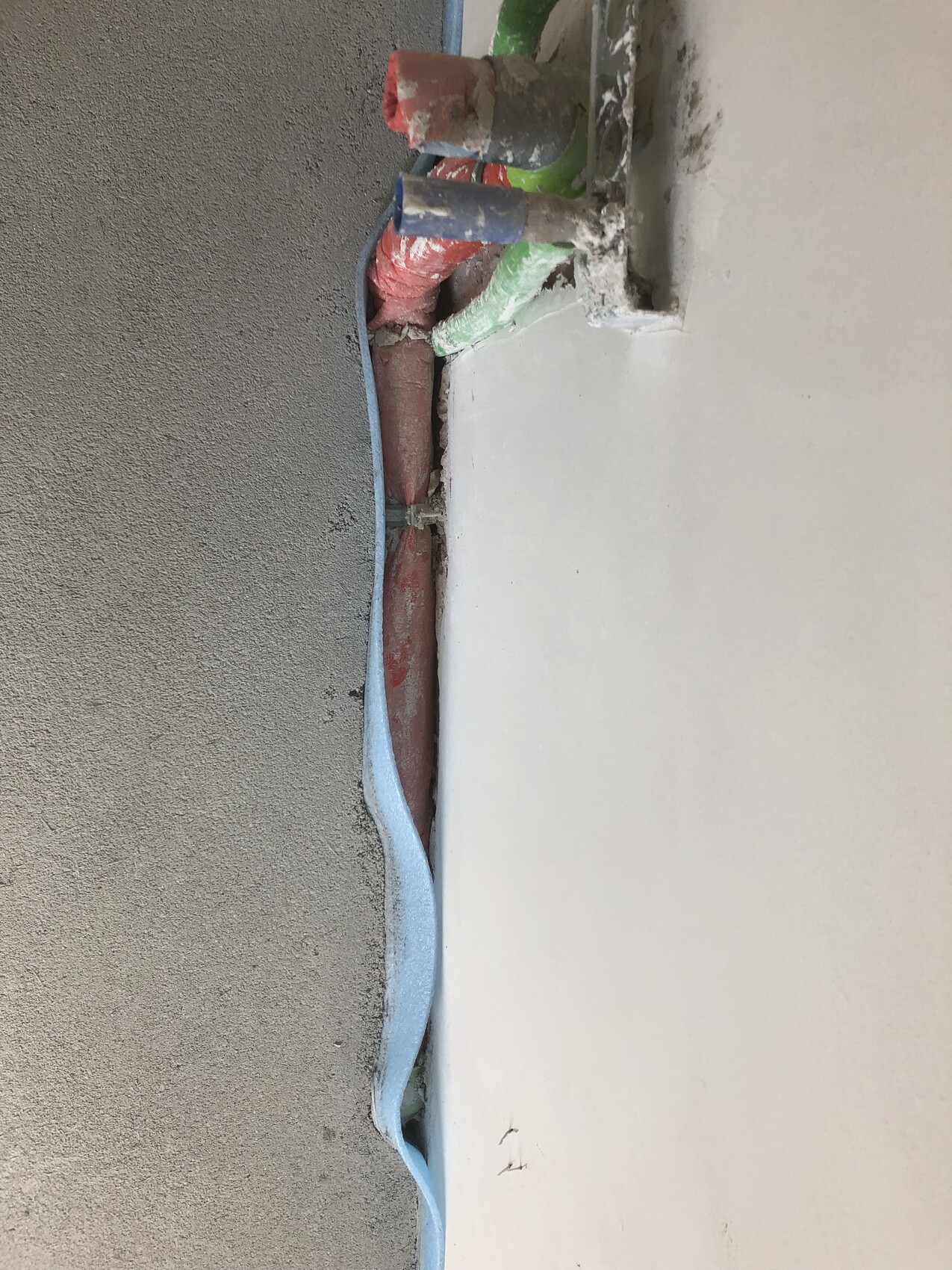
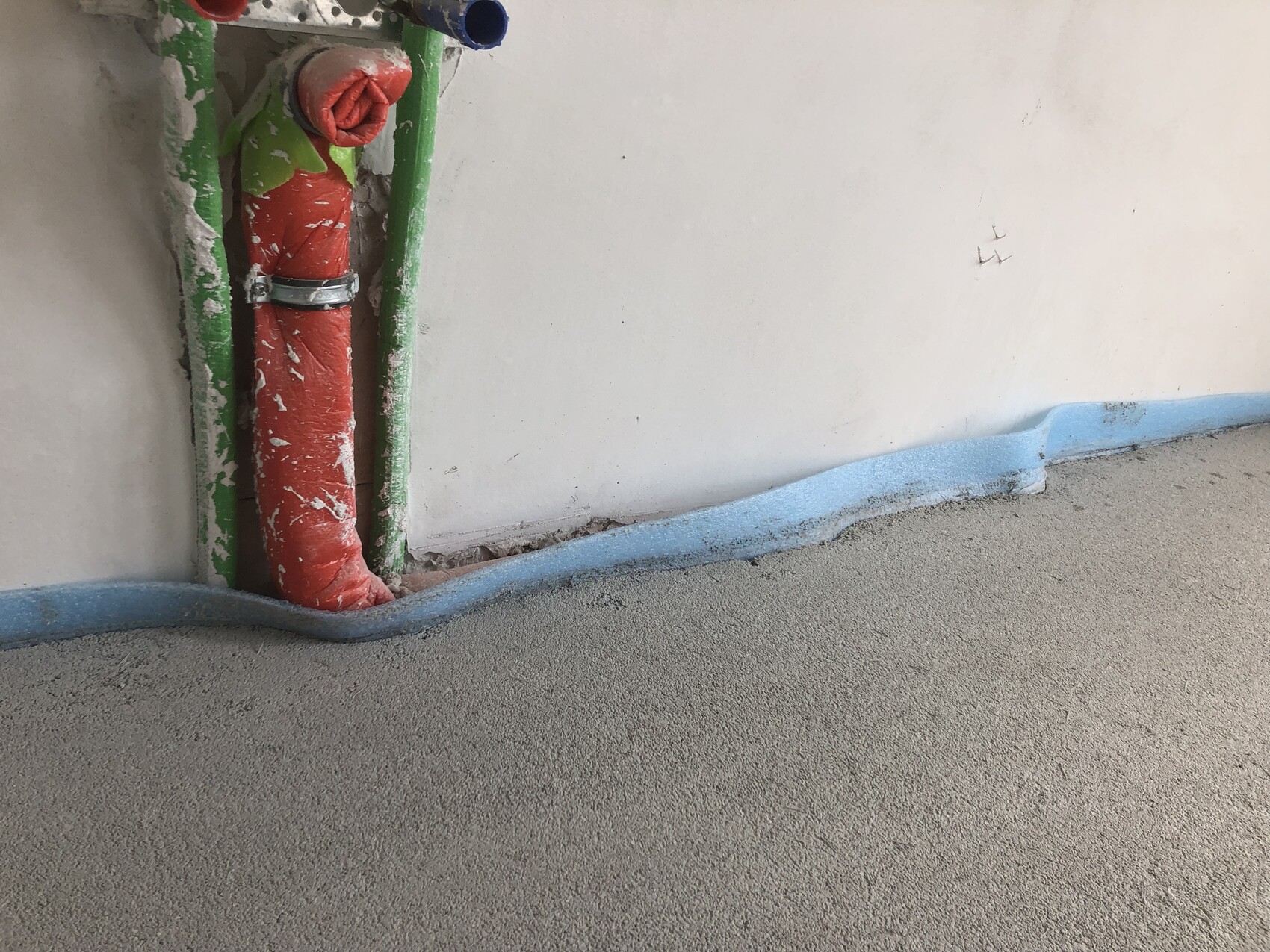
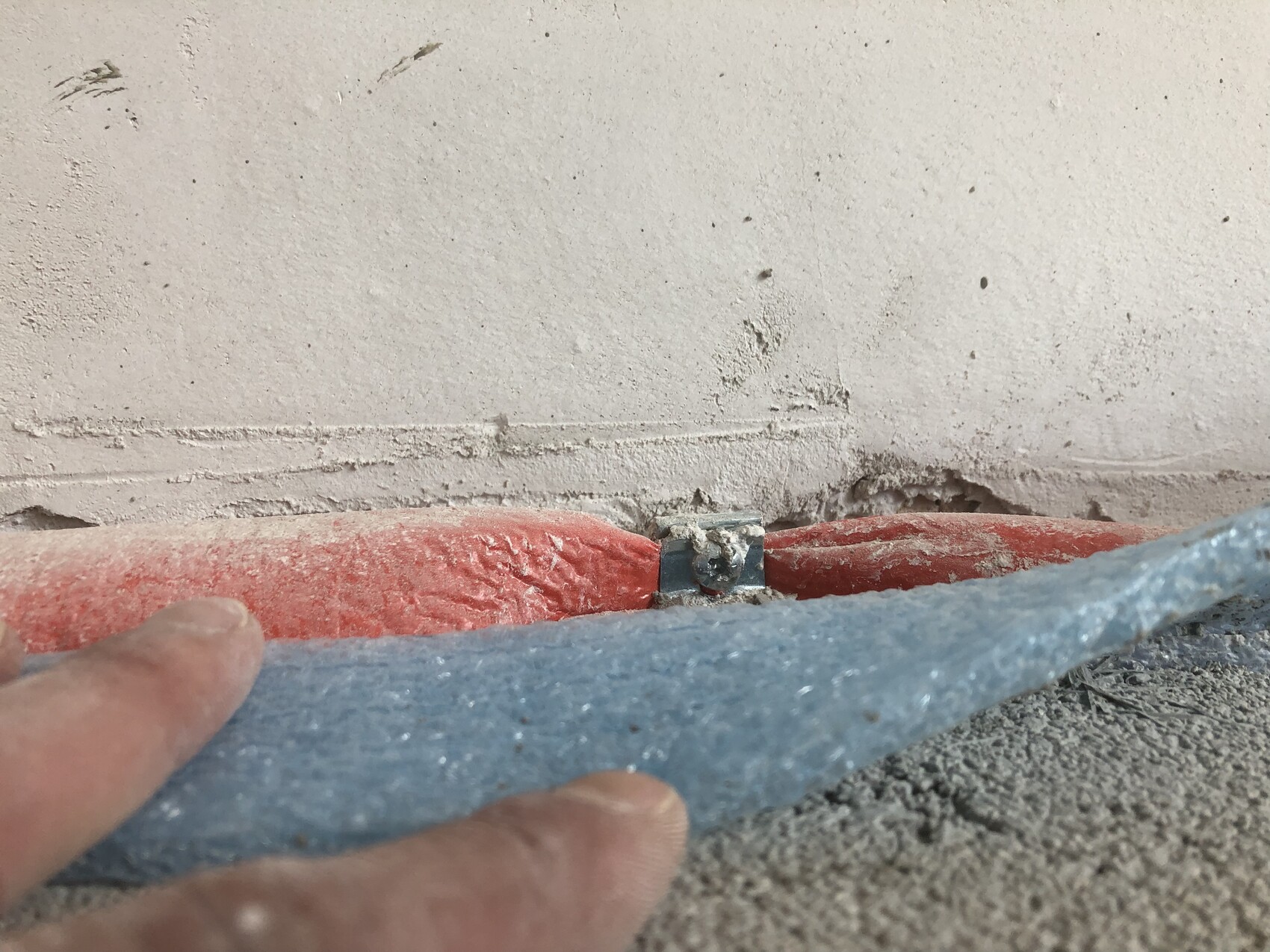
Shouldn't the drain pipe (kitchen) actually be located under the screed? This metal clamp also protrudes quite a bit! How am I supposed to install my tiles properly with this?
I also think the connection was simply forgotten and later added afterwards. Anyway, maybe because the plumber didn’t have the kitchen layout?
In any case, check the kitchen plan/floor plan to see if you still have 10cm (4 inches) of clearance. Then just move the base cabinets 10cm (4 inches) away from the installation/wall and have a deeper countertop installed. Discuss this additional cost with the general contractor and come to an agreement.
In any case, check the kitchen plan/floor plan to see if you still have 10cm (4 inches) of clearance. Then just move the base cabinets 10cm (4 inches) away from the installation/wall and have a deeper countertop installed. Discuss this additional cost with the general contractor and come to an agreement.

Wow, so many replies! I’ve been on the road a lot!
The plumber was here at the beginning of May. I don’t really understand why the drain pipe goes so far to the right through the slab...
He’s coming back on Wednesday because he needs to relocate something in the utility room. Maybe we’ll catch him then and ask about it.
Regarding the bathroom and underfloor heating, I once started a nice thread here. That seemed to fit reasonably well. (Here’s an updated photo of the shower)
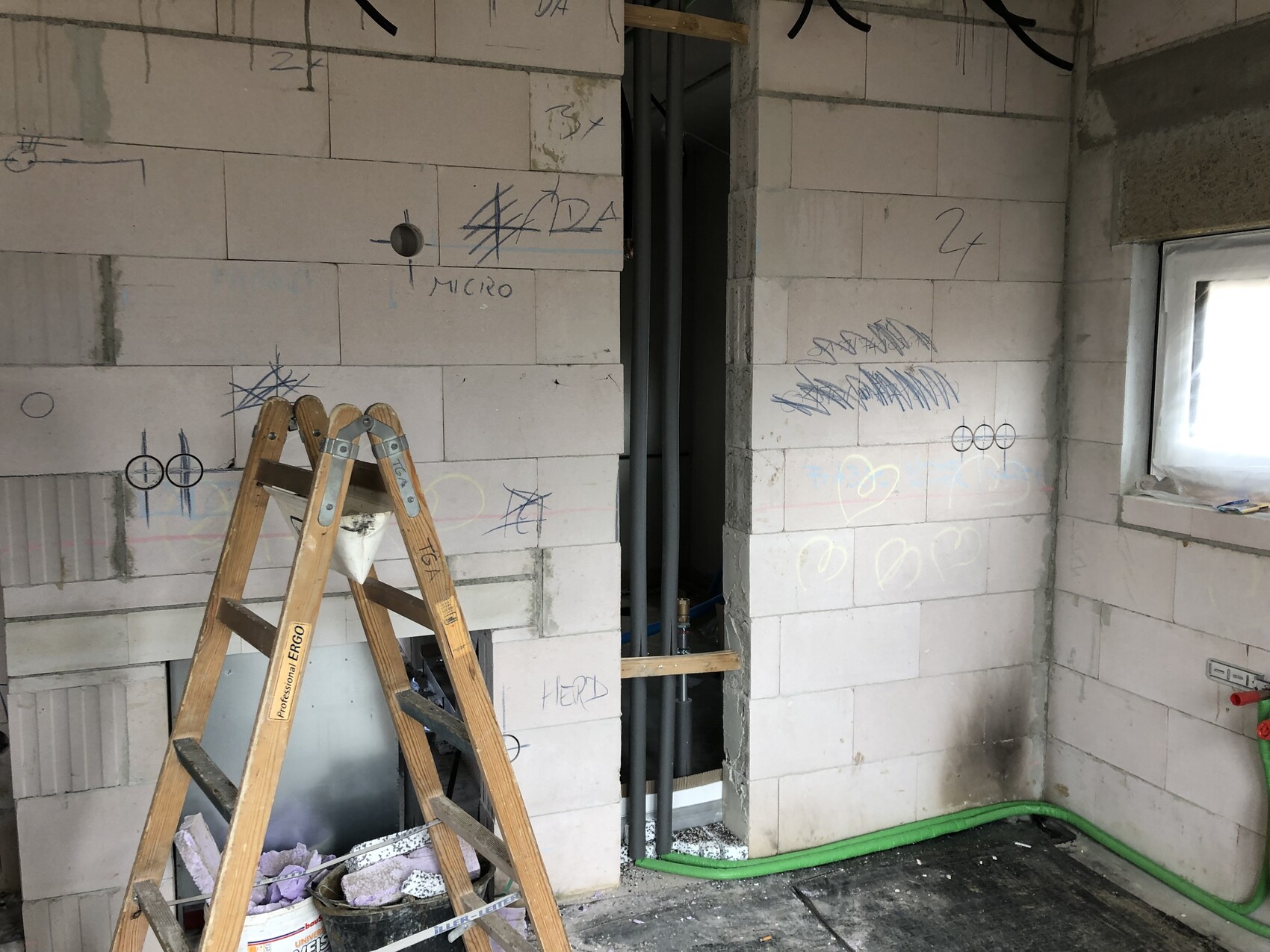
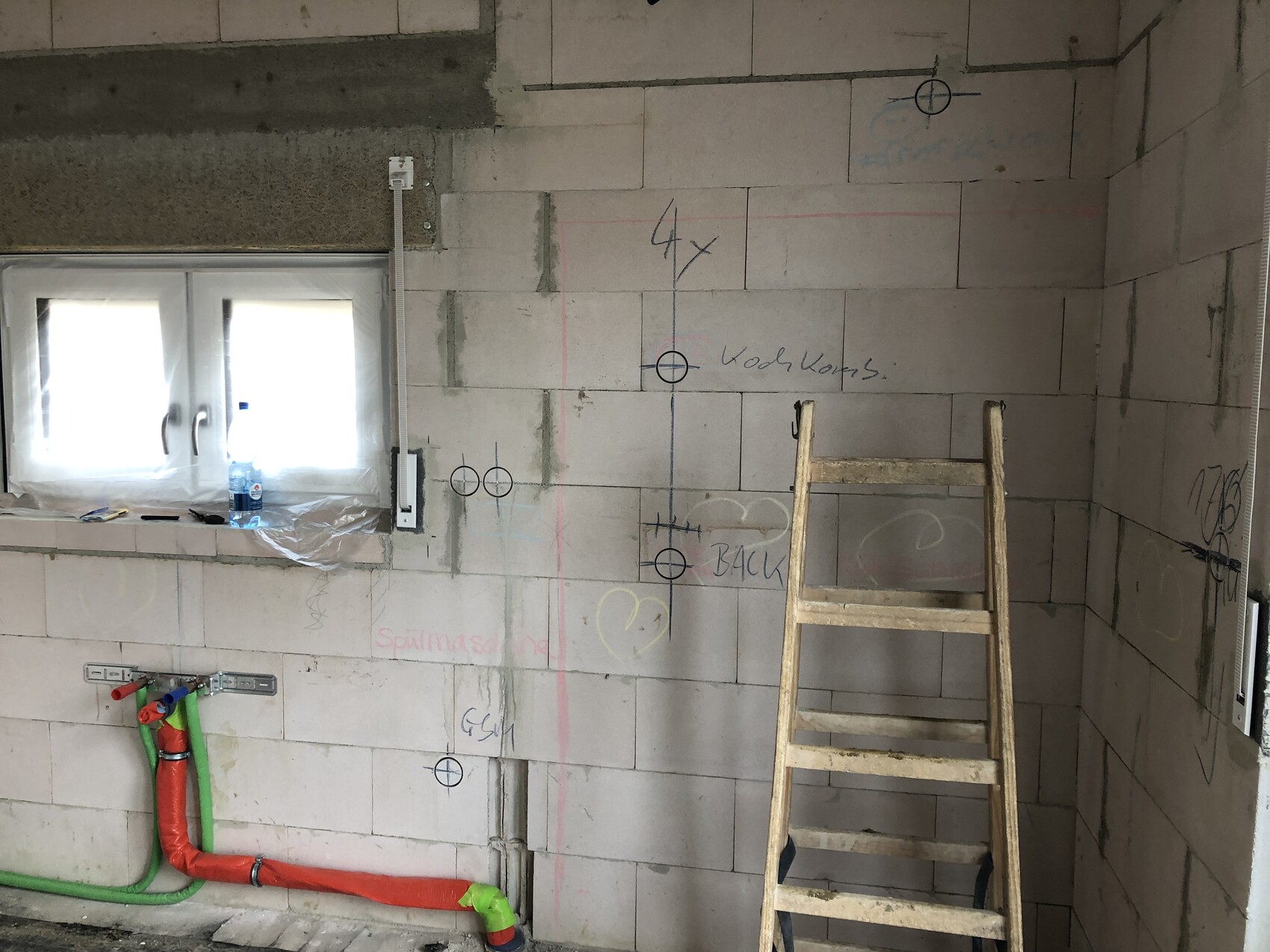
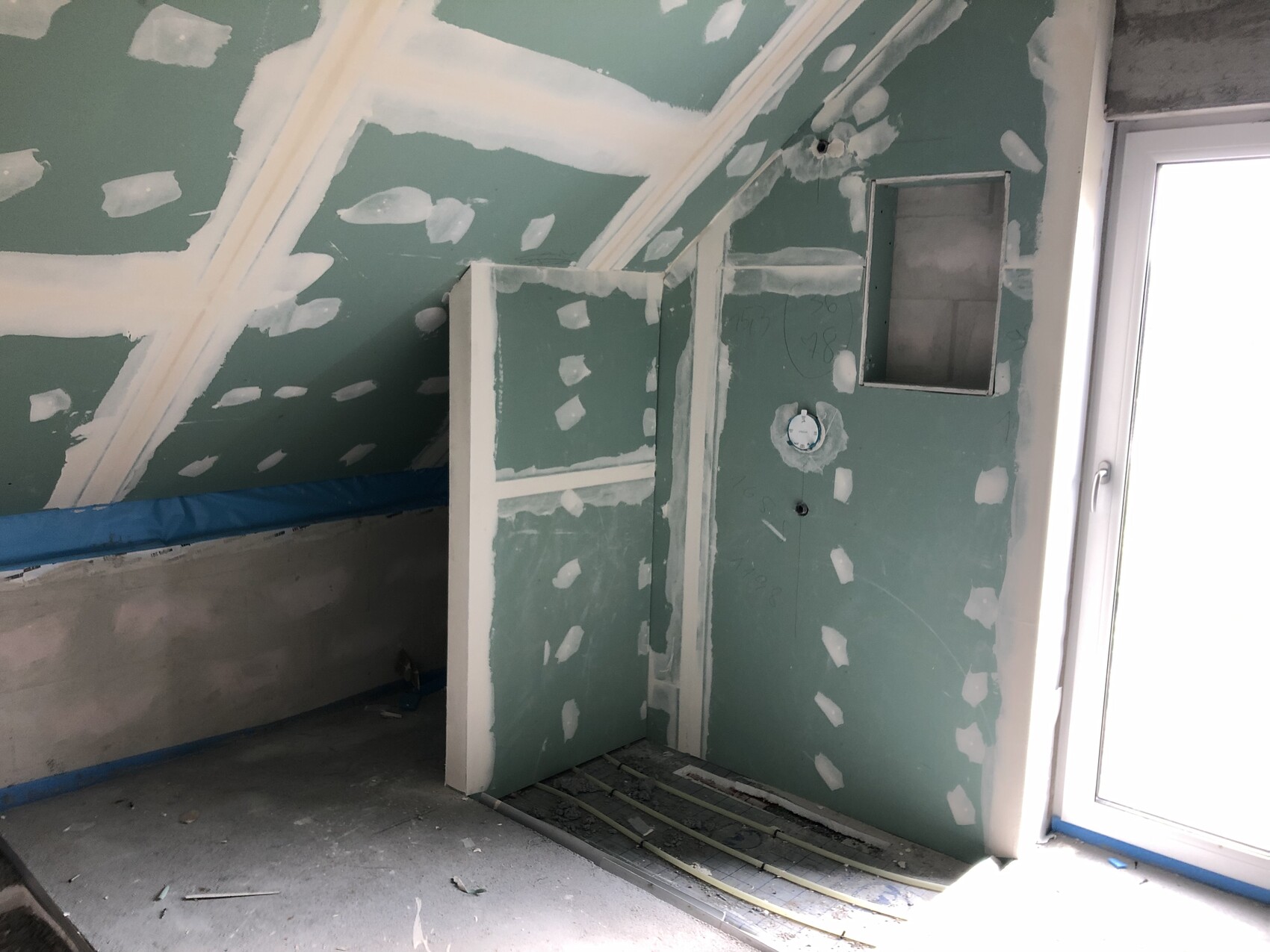
The plumber was here at the beginning of May. I don’t really understand why the drain pipe goes so far to the right through the slab...
He’s coming back on Wednesday because he needs to relocate something in the utility room. Maybe we’ll catch him then and ask about it.
Regarding the bathroom and underfloor heating, I once started a nice thread here. That seemed to fit reasonably well. (Here’s an updated photo of the shower)

What type of masonry is this? I would guess that the sand-lime brick skin is simply not thick enough to allow for chases of this size.
And presumably, the floor build-up height was insufficient to install the pipe under the screed. You don’t just have to fit the pipe, but also ensure a proper slope and somehow make the bend to the drain pipe.
Personally, I don’t see it as a problem since the kitchen cabinet will be installed there anyway.
I would rather question what the blue foil on the knee wall is (photo shower). Such polyethylene (PE) foils as vapor barriers are generally no longer used because they are too impermeable. A small installation mistake can cause moisture to enter the construction, which then has difficulty drying out due to this foil.
And presumably, the floor build-up height was insufficient to install the pipe under the screed. You don’t just have to fit the pipe, but also ensure a proper slope and somehow make the bend to the drain pipe.
Personally, I don’t see it as a problem since the kitchen cabinet will be installed there anyway.
I would rather question what the blue foil on the knee wall is (photo shower). Such polyethylene (PE) foils as vapor barriers are generally no longer used because they are too impermeable. A small installation mistake can cause moisture to enter the construction, which then has difficulty drying out due to this foil.
After consulting with the general contractor, we still don’t have much clearer information. Since they didn’t have a kitchen plan, they apparently just placed the pipe “somewhere,” meaning where the sink of the “sample layout” was marked.
The screed is currently being heated with the underfloor heating system. I’ve noticed two things I’d like to get your opinions on:
1) Is it normal for expansion joints not to be continuous and to have a kind of predetermined breaking point?
2) The corners are not very even; is it our responsibility (electrician tiling) to sand them down?
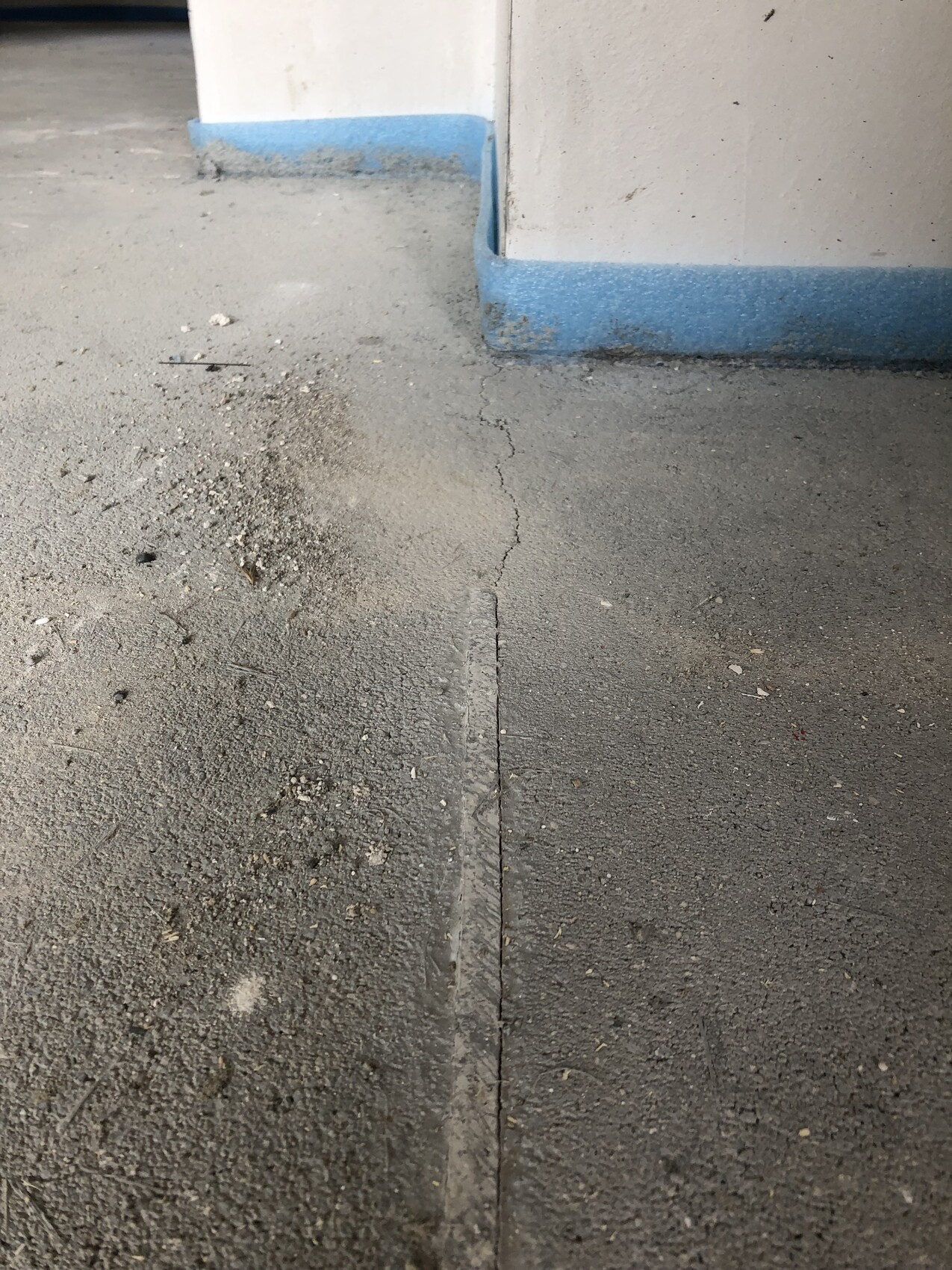
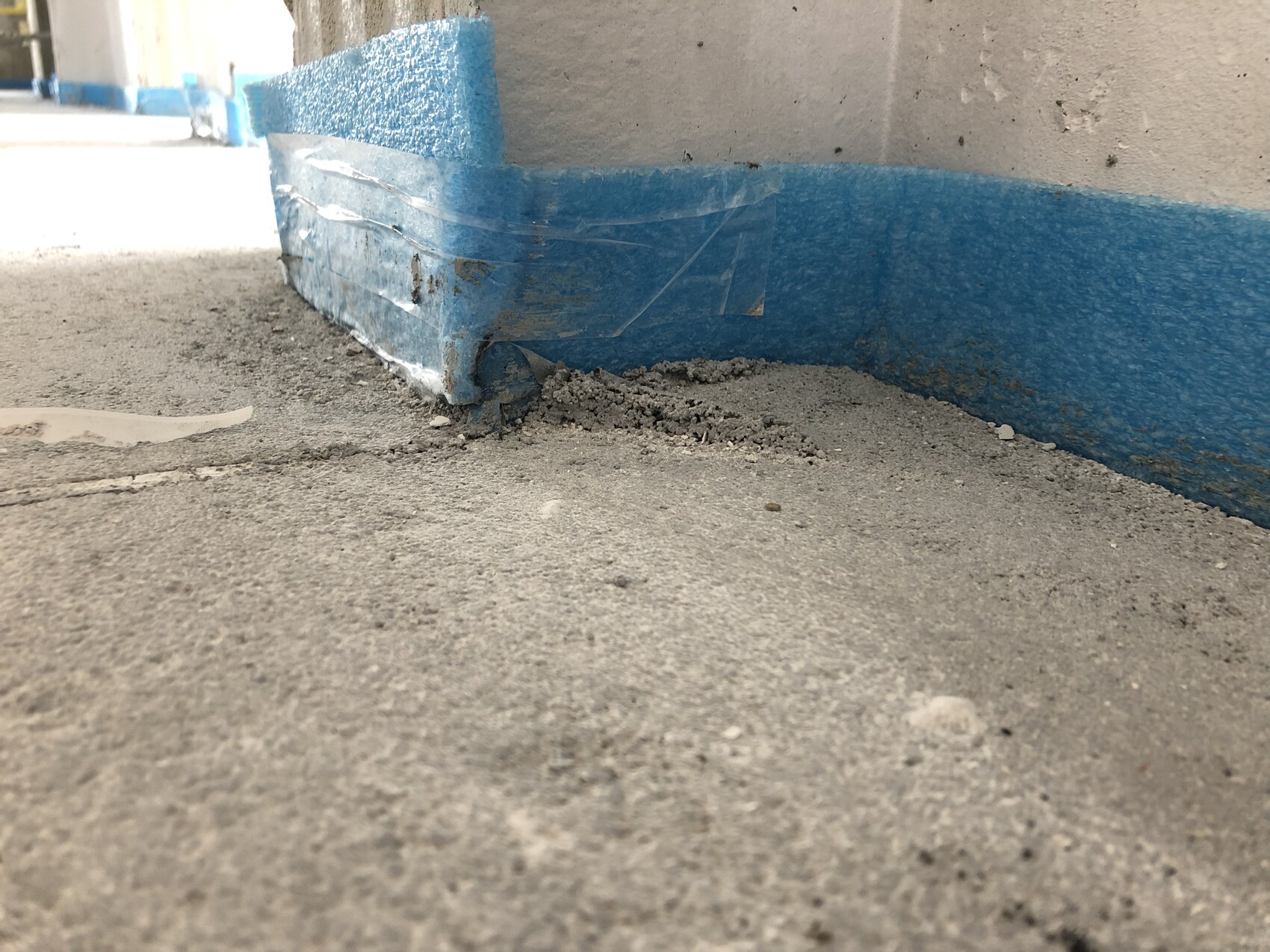
The screed is currently being heated with the underfloor heating system. I’ve noticed two things I’d like to get your opinions on:
1) Is it normal for expansion joints not to be continuous and to have a kind of predetermined breaking point?
2) The corners are not very even; is it our responsibility (electrician tiling) to sand them down?
Regarding point 1) I already told you that your tradespeople are not working cleanly enough. I find the expansion joint less problematic than the corners where the cement screed was installed carelessly. Are you planning to lay the tiles yourself? If so, why are you asking such questions?
Regarding point 2) If you didn’t commission it, then grinding the screed is your responsibility. But it’s only about 2 hours with the floor grinder.
Regarding point 2) If you didn’t commission it, then grinding the screed is your responsibility. But it’s only about 2 hours with the floor grinder.
Similar topics