
ᐅ Outdoor area has screed – how to seal expansion joints without a baseboard?
Created on: 11 May 2018 12:52
K
Kaspatoo
Hello,
I have a solid room outside the house with masonry and concrete walls and a concrete ceiling.
The size is 6 x 4 meters (20 x 13 feet). It has a screed floor without any pipes or cables underneath.
The room is used like a garden shed.
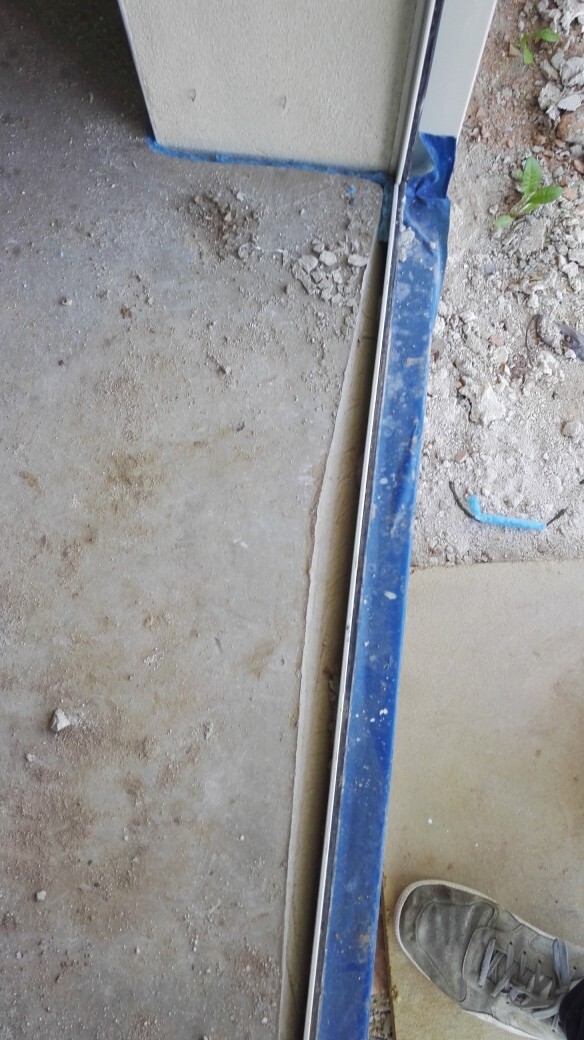
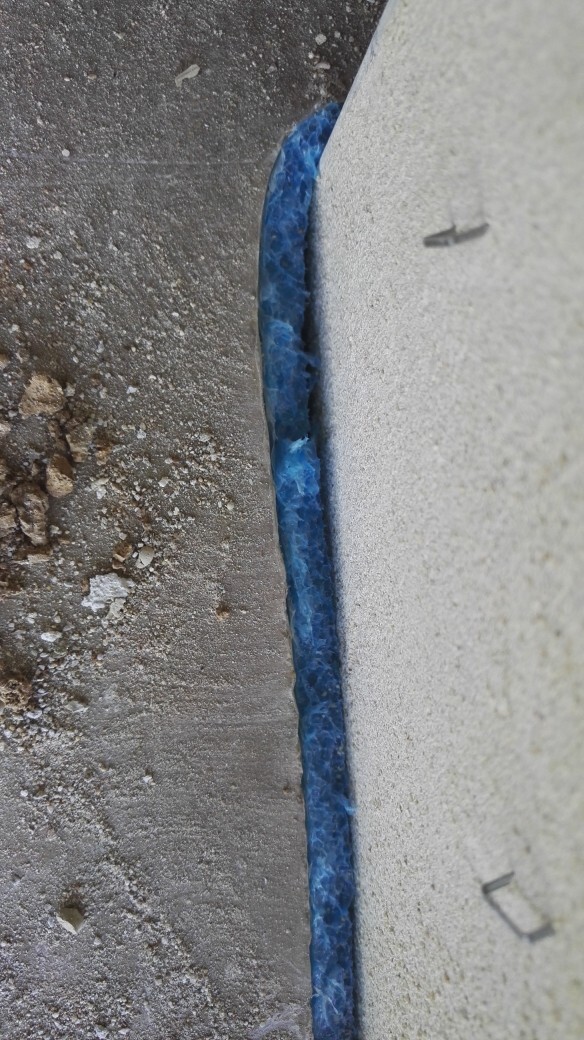
Around the screed, as common in house construction, a (blue) foam strip was installed as an expansion joint. In house construction, this is usually covered by the floor covering or baseboards.
In my case, I simply want to apply a special concrete coating directly onto the screed.
This is generally possible and not in question. I do not want to use tiles.
However, the problem is that the edge strip isn’t solid but made of plastic. I cannot just pour the coating over it.
I also don’t want to apply a full surface leveling compound to create an entire new floor layer, as the screed is already nicely flat and smooth.
Now I wonder if I could simply pour some quick-setting screed at the edges and smooth it out with the regular screed.
But I am concerned that the substrate might not support it well enough and that the edges could become brittle over time.
Does anyone have an opinion on this?
Here are a few pictures showing the edge strip as well as a gap at the door.
I have a solid room outside the house with masonry and concrete walls and a concrete ceiling.
The size is 6 x 4 meters (20 x 13 feet). It has a screed floor without any pipes or cables underneath.
The room is used like a garden shed.
Around the screed, as common in house construction, a (blue) foam strip was installed as an expansion joint. In house construction, this is usually covered by the floor covering or baseboards.
In my case, I simply want to apply a special concrete coating directly onto the screed.
This is generally possible and not in question. I do not want to use tiles.
However, the problem is that the edge strip isn’t solid but made of plastic. I cannot just pour the coating over it.
I also don’t want to apply a full surface leveling compound to create an entire new floor layer, as the screed is already nicely flat and smooth.
Now I wonder if I could simply pour some quick-setting screed at the edges and smooth it out with the regular screed.
But I am concerned that the substrate might not support it well enough and that the edges could become brittle over time.
Does anyone have an opinion on this?
Here are a few pictures showing the edge strip as well as a gap at the door.
K
Knallkörper11 May 2018 13:41You can either install a transition profile or a coving profile all around. These are available in plastic, for example from Korte. You then apply your screed topping over it. Alternatively, you would need to seal the edges all around, preferably with polyurethane, while forming a coving.
I assume you want the joint to be watertight — otherwise, any liquid will immediately seep into the gap.
That definitely won’t work!
I assume you want the joint to be watertight — otherwise, any liquid will immediately seep into the gap.
Kaspatoo schrieb:
Now I’m wondering if I could just pour some fast-setting screed all around the edge and smooth it out with the regular screed.
That definitely won’t work!
At the building materials supplier, I was advised to simply apply a thick layer of acrylic and then paint over it. Is that bad advice?
Of the options mentioned here, the baseboard would be the closest fit for me, but it would also be somewhat inconvenient for flush mounting of (heavy-duty) shelves, etc.
Of the options mentioned here, the baseboard would be the closest fit for me, but it would also be somewhat inconvenient for flush mounting of (heavy-duty) shelves, etc.
Similar topics