
Hello
we are planning a new semi-detached house.
We want to install a photovoltaic system later on.
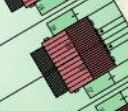
We will get the right half shown in the photo. Orientation is southwest.
The photovoltaic system will of course be installed on the southwest side facing the garden.
The black area is the 3x5 m (10x16 ft) terrace, which will later be covered with a fixed terrace roof measuring 4 m (13 ft) deep and 5.5 m (18 ft) wide.
My question is whether it will still be possible to install a photovoltaic system on the roof once the fixed terrace roof is there?
If the terrace roof is on the southwest side in the garden, it will no longer be possible to set up scaffolding.
For maintenance or in case of problems, access to the photovoltaic system will be necessary later on (is access without scaffolding not possible?)
Or can the photovoltaic system be installed without scaffolding?
The house will have a gable roof and 2.5 full stories.
we are planning a new semi-detached house.
We want to install a photovoltaic system later on.
We will get the right half shown in the photo. Orientation is southwest.
The photovoltaic system will of course be installed on the southwest side facing the garden.
The black area is the 3x5 m (10x16 ft) terrace, which will later be covered with a fixed terrace roof measuring 4 m (13 ft) deep and 5.5 m (18 ft) wide.
My question is whether it will still be possible to install a photovoltaic system on the roof once the fixed terrace roof is there?
If the terrace roof is on the southwest side in the garden, it will no longer be possible to set up scaffolding.
For maintenance or in case of problems, access to the photovoltaic system will be necessary later on (is access without scaffolding not possible?)
Or can the photovoltaic system be installed without scaffolding?
The house will have a gable roof and 2.5 full stories.

D
Deliverer16 Sep 2021 12:39hampshire schrieb:
With a purchase price of 27 cents minus 11 cents feed-in tariff, that equals 693 * 0.16, roughly €110.Minus 130 x €0.11 = €14.3 loss due to storage losses. That results in just under €300 savings per year from the 8 kWh (8.8 kWh) battery (if you can fully charge it even in winter). If it operates without issues for 20 years, that amounts to €7,200 (neglecting degradation and inflation). That would be a very, very good value. What was the total cost including installation?
H
hampshire16 Sep 2021 12:47Hangman schrieb:
I assume you have to divide the "discharged" value by the capacity (not the "charged" value) Why?
hampshire schrieb:
Addendum:
In the four months mentioned above, I withdrew 693 kWh from the batteries.
With an electricity purchase price of 27 cents minus 11 cents feed-in tariff, that is 693 * 0.16, about €110. With a feed-in tariff for a new system registered today of 7.25 cents, that would be 693 * 0.1975, about €137. There is a small calculation mistake here; the lost feed-in tariff must of course be calculated from the charged value. So, revised figures:
Electricity replaced by own use: 693 kWh at 27 cents = €187.11
Lost feed-in tariff from charged electricity: 920 kWh at 11 cents = €101.20
That leaves €85.91.
For a new registration today, the feed-in tariff would be 7.25 cents – equivalent to €66.70.
That leaves €120.41.
Conclusion: Profitability still strongly depends on subsidies.
H
hampshire16 Sep 2021 12:50Deliverer schrieb:
Minus 130 x €0.11 = €14.3 loss due to storage inefficiencies. That’s not quite €300 savings per year from the 8 kWh battery (if you can keep it charged during winter). If it runs perfectly for 20 years, that amounts to €7,200 (neglecting degradation and inflation). That would be a very, very good value.
How much did it cost including installation?Since I made some sort of compensation deal, it’s hard to say exactly. The system is premium and costs around €9,000 gross, and it can do more than it does for me, but I still have a few experiments planned with it.hampshire schrieb:
Why?On one hand, as @halmi correctly pointed out, you would end up with more full cycles than days. In theory, that could work if you also discharge the battery during the day, but I find that hard to believe. On the other hand, most system losses occur outside the battery (in the inverter), meaning that power lost in the inverter never actually reaches the battery and thus doesn’t affect its charge/discharge cycles. At least that’s my guess as a non-expert 😉
Otherwise, I calculated with my numbers from post #38 (period from January 1 to September 15):
Battery charge = 1,181 kWh
Battery discharge = 943 kWh
Battery gross capacity = 9.8 kWh
Battery net capacity = 9.3 kWh (according to datasheet)
This results in 943 / 9.3 = 101 full cycles during the mentioned period. Since the depth of discharge at night increases toward winter, I estimate 160-170 cycles per year for us.
We receive just under 9 cents per kWh feed-in tariff, so the difference to the retail electricity price can be approximated at around 20 cents. That results in a €189 "saving" until mid-September, and a forecast of €260-280 for the whole year. Strictly speaking, VAT on self-consumption should also be considered here, so €153 until mid-September and a forecast of €210-225 for the entire year. After accounting for the approximately 20% system losses, around €130 until mid-September and €180-200 for the full year remain.
We paid €6,500, minus €2,000 direct subsidy, so a 'net' cost of €4,500. With some luck and no repairs, it will be roughly break-even over 20 years...
H
hampshire16 Sep 2021 14:07Hangman schrieb:
In theory, that could work by discharging the battery during the day as well, but I’m not quite convinced of that. There are many days when the battery is partially discharged during the day. This effect is likely even more pronounced during the transitional period in spring.
Similar topics