
ᐅ Exterior plaster is uneven, window sills are too short, insulation system is not airtight.
Created on: 30 Dec 2020 23:02
H
Hemingway84
Preface:
We are building a 190 sqm (2,045 sq ft) city villa to KfW 55 energy efficiency standard with a large general contractor (GC) from Königslutter in the Berlin metropolitan area. The GC uses various subcontractors, who in turn work with their own subcontractors (some of whom also hire further subcontractors). So far, several construction defects have occurred. Serious defects were only prevented through our intervention (for example, the formwork for the intermediate ceiling was several centimeters too low and was literally raised five minutes before the concrete was poured). Unfortunately, the site manager is incompetent, thin-skinned, and unobservant. From day one, he has only offered pointless comments and a lack of motivation. He has never recognized defects on his own and has only reluctantly addressed those we reported, often trying to downplay them with standardized phrases.
As a result, we are on site as often as possible because we are constantly on high alert due to the defects encountered so far. Our involvement has already improved or, from our perspective, salvaged many situations. We have also hired a construction supervisor who has occasionally added value, although his passion seems more for photographing the construction than for identifying defects. Sometimes, a simple tape measure or spirit level helps—at least for us.
Our building project is further complicated by the fact that my wife was diagnosed with cancer a few months after purchasing the land and signing the construction contract. A cruel blow of fate, with chemotherapy and all related side effects, framed by the external circumstances of the ongoing COVID-19 pandemic. The loss of income is unfortunate but was anticipated in the financing—albeit as possible parental leave rather than a long-term illness. Nevertheless, it all makes the situation more stressful than it would have been otherwise.
Main section:
We are approaching the completion of the build; the screed drying will finish next week (the scheduled handover is at the end of January, so we just miss out on the VAT reduction). Ninety percent of the house price has already been paid; only the final invoice, expected in the coming weeks, remains outstanding.
At the end of November, the exterior render was applied. At that time and for the days following, outside temperatures did not exceed 5°C (41°F), with some nights dropping below freezing. According to the render manufacturer (Alsecco), the silicate render used may only be applied at temperatures above 5°C (41°F), and temperatures must remain above this threshold in the following days. If not, the render cannot cure properly, which may lead to issues with strength and durability.
One day before the rendering work began, we sent an informal notice of concern to the GC and their construction manager regarding the weather forecast. The subcontractor responded that there was no need to worry and voluntarily offered an additional one year warranty.
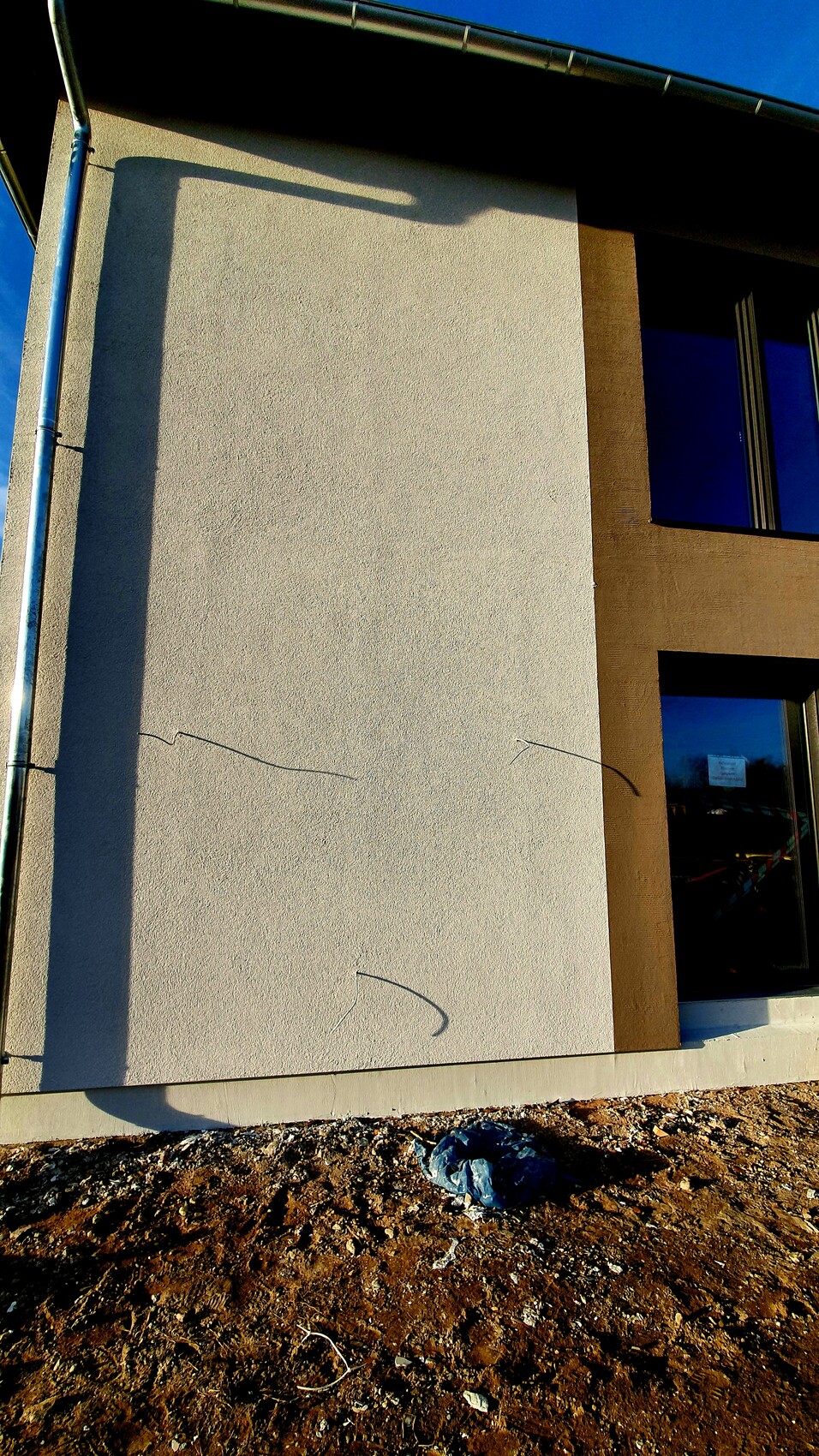
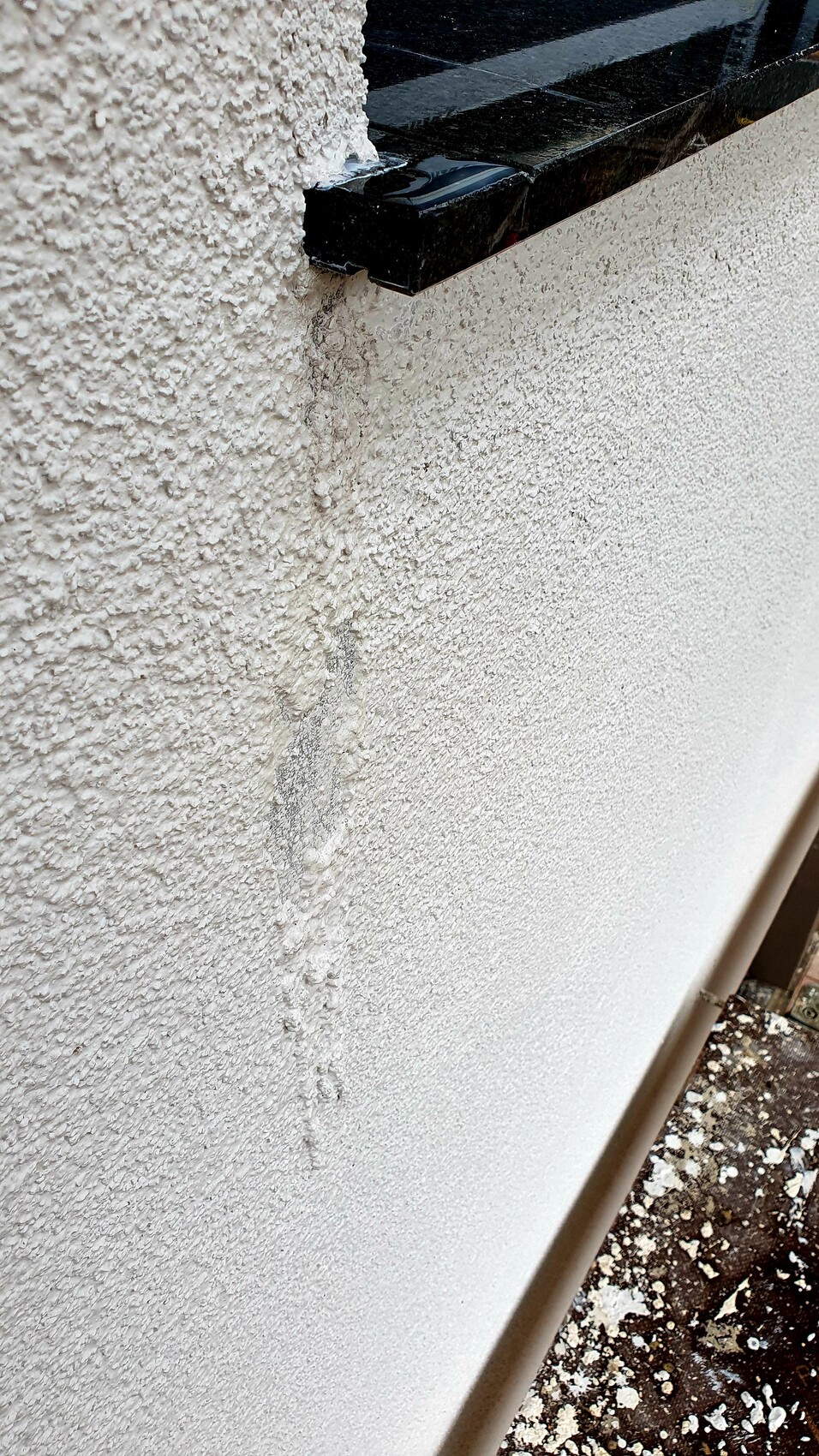
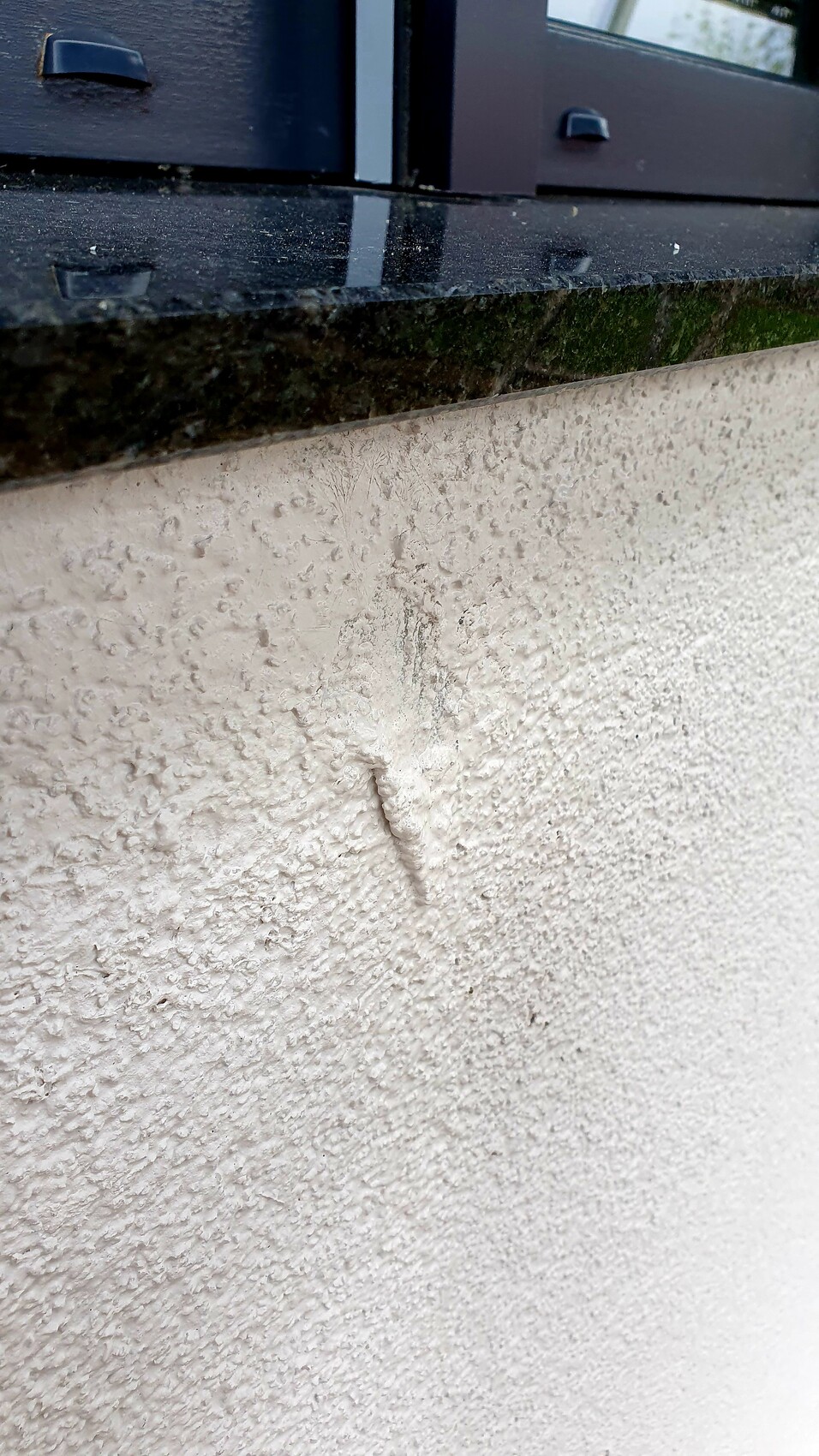
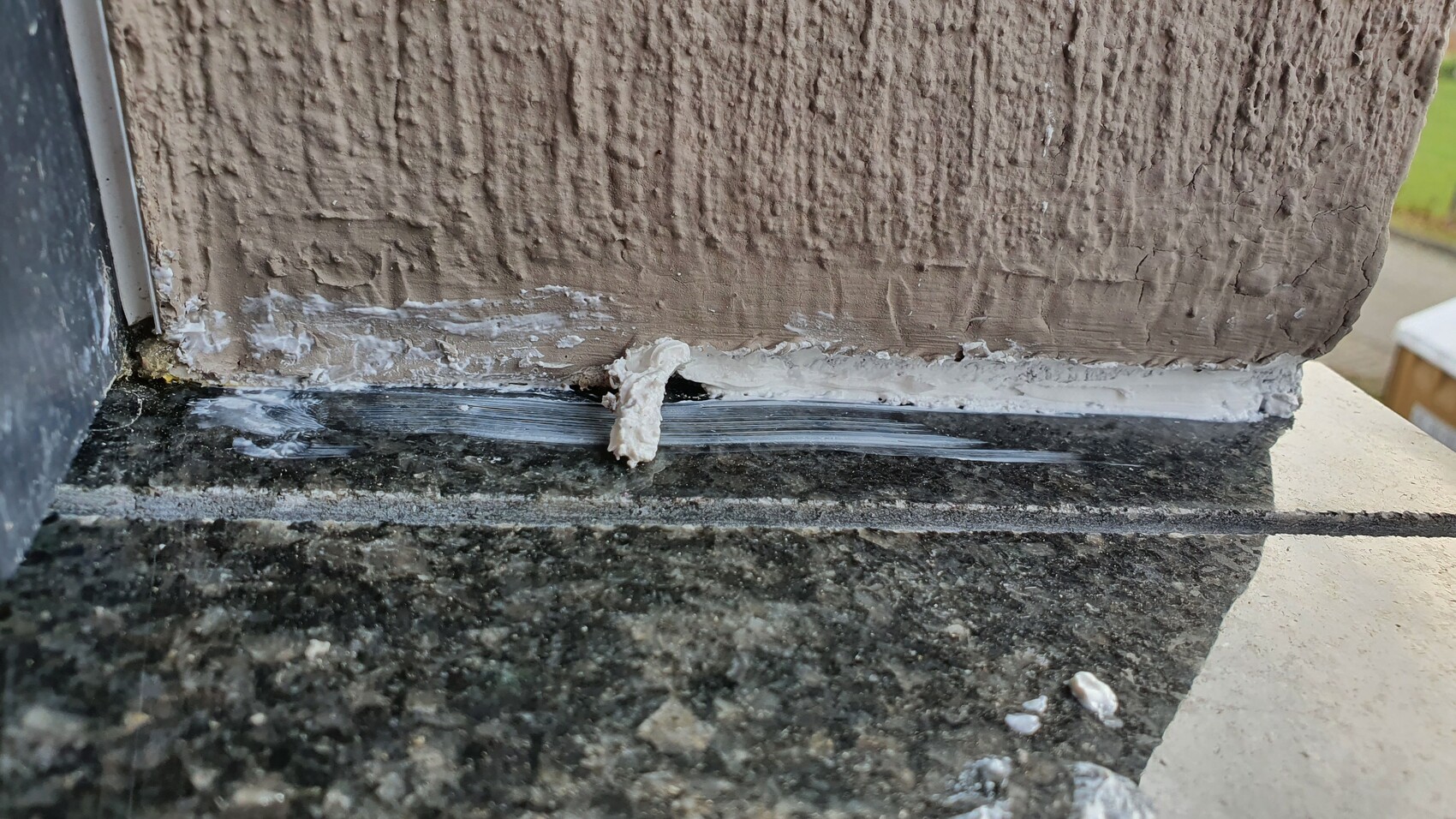
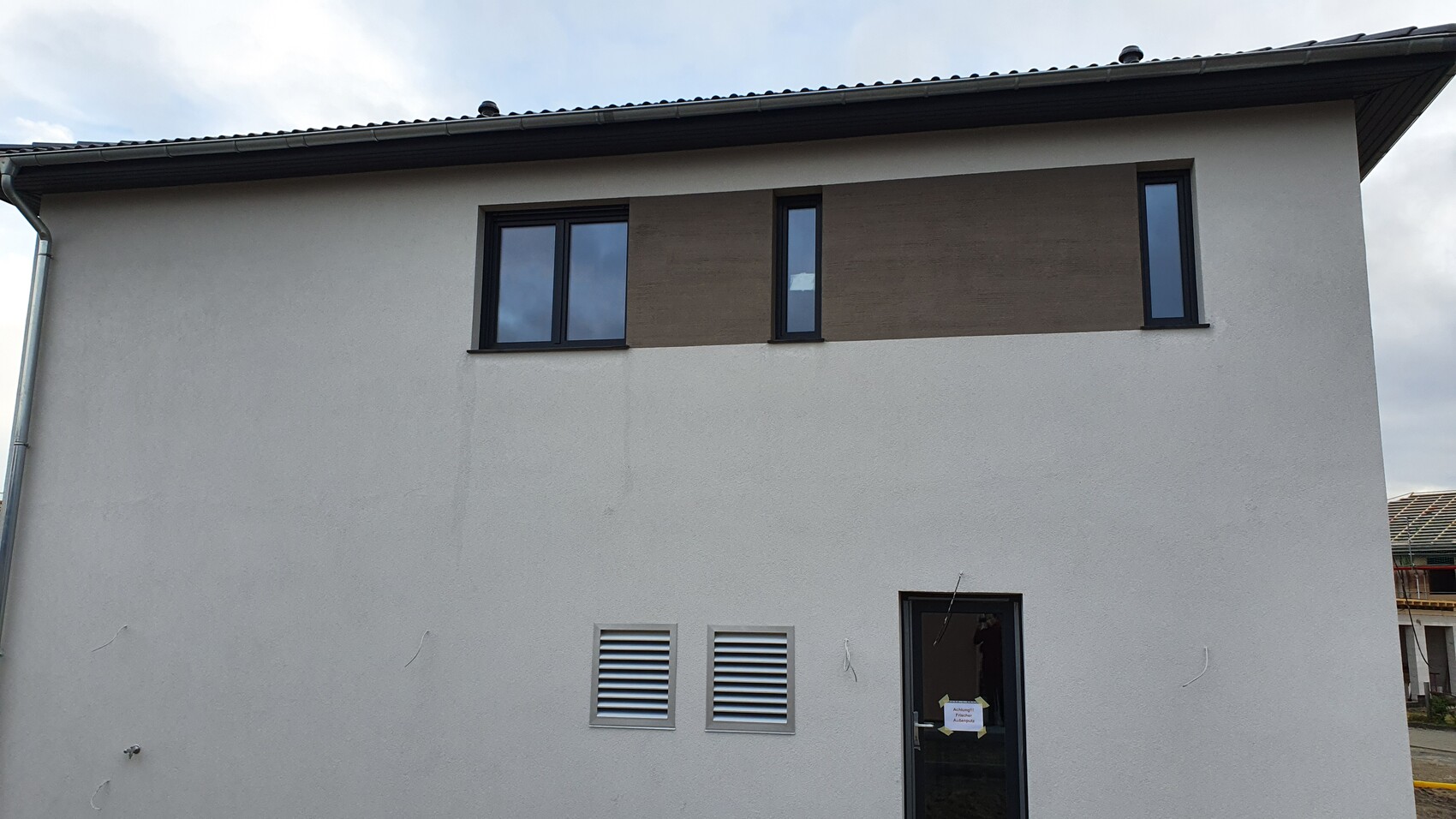
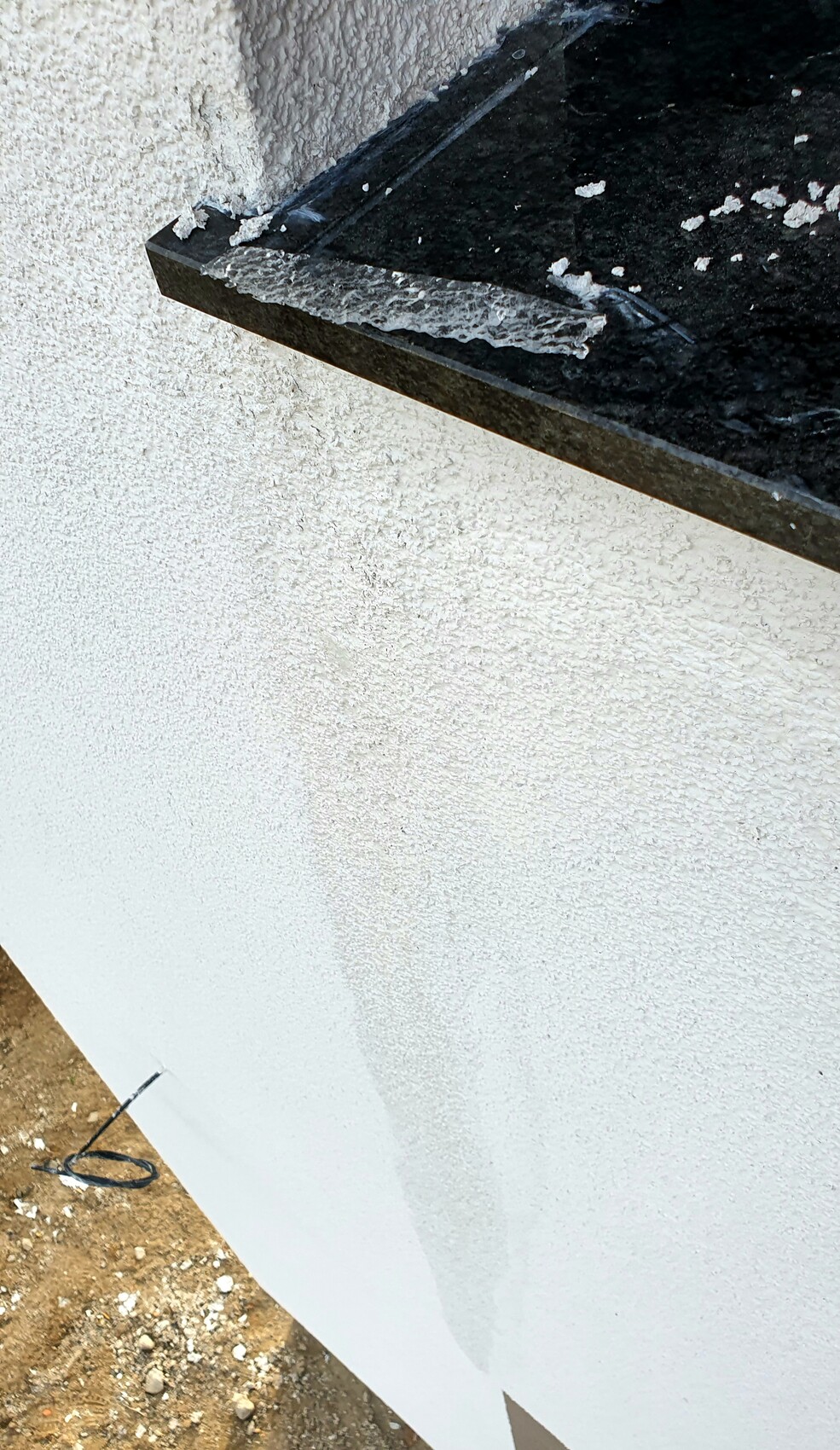
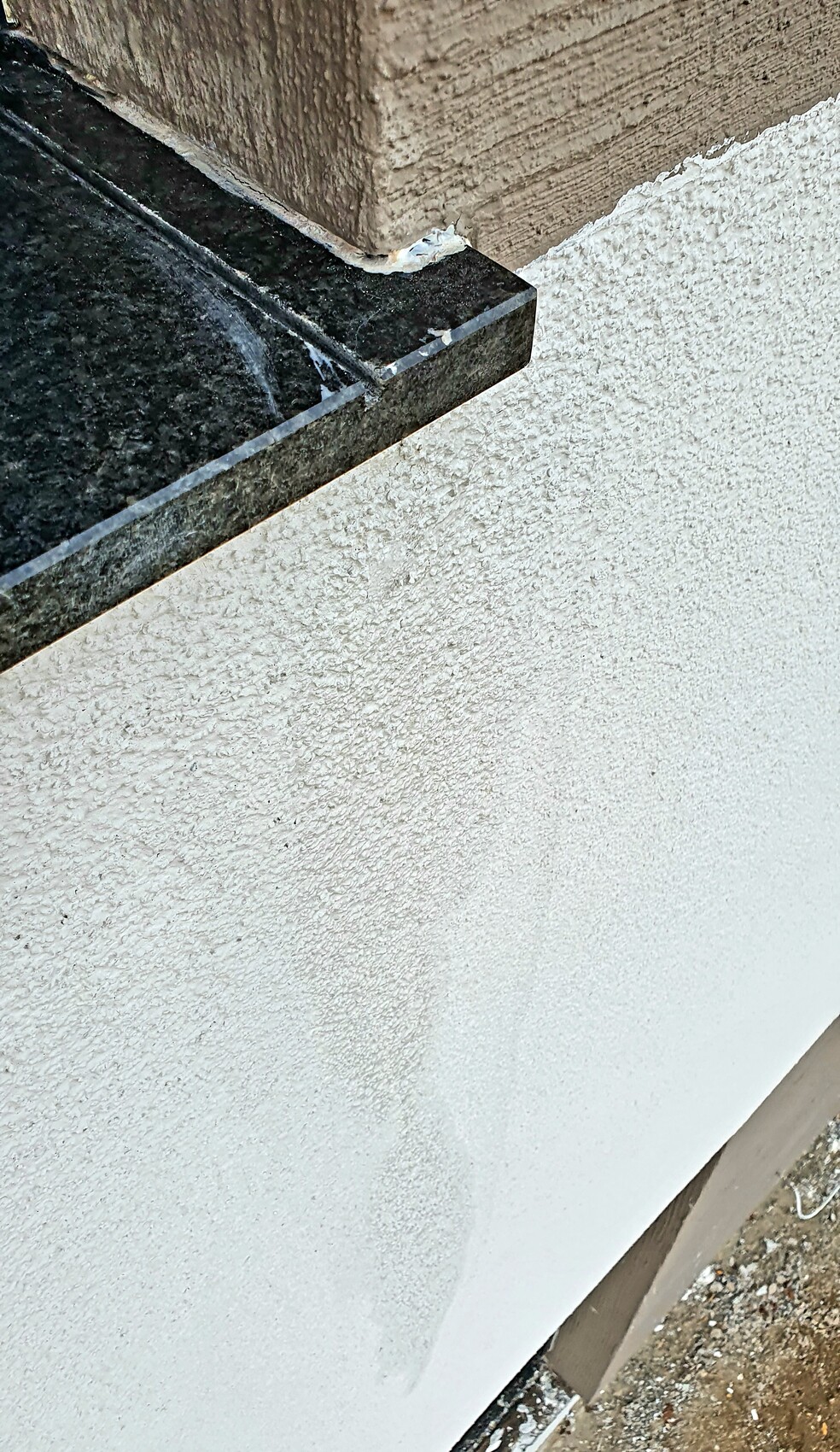
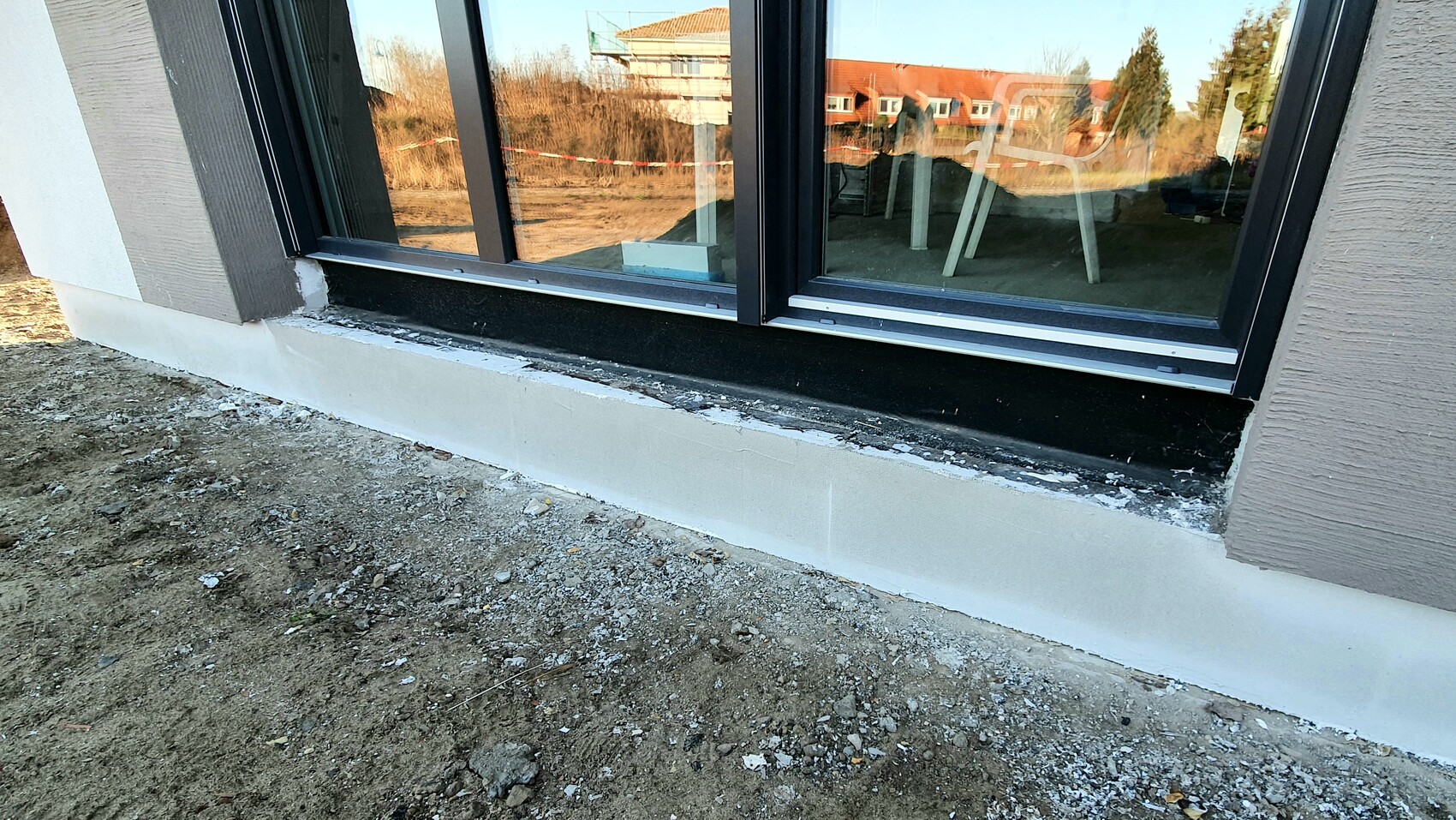
The rendering was completed, but even after one week, the exterior render was still soft. In some areas, it “slid,” particularly on the window sills. Please refer to the attached photos for details.
The same subcontractor who applied the external render installed the window sills shortly before (but only after installing the external thermal insulation composite system (ETICS) and the facade reinforcement). The window sills are crooked and uneven. Some also appear to be too short. On average, they protrude only 2–3 cm (1 inch) from the facade. Some are more uneven, for example with one side 1.5 cm (0.6 inch) and the other side 3 cm (1.2 inches). The drip groove on the underside is often flush with the facade. During installation, alcohol was consumed on site, as evidenced by several dozen small drink containers scattered near the scaffolding. It was also apparently easier to cut our up to 3 m (10 ft) long window sills with an angle grinder to fit them into a car, but sealing the joints afterward was forgotten.
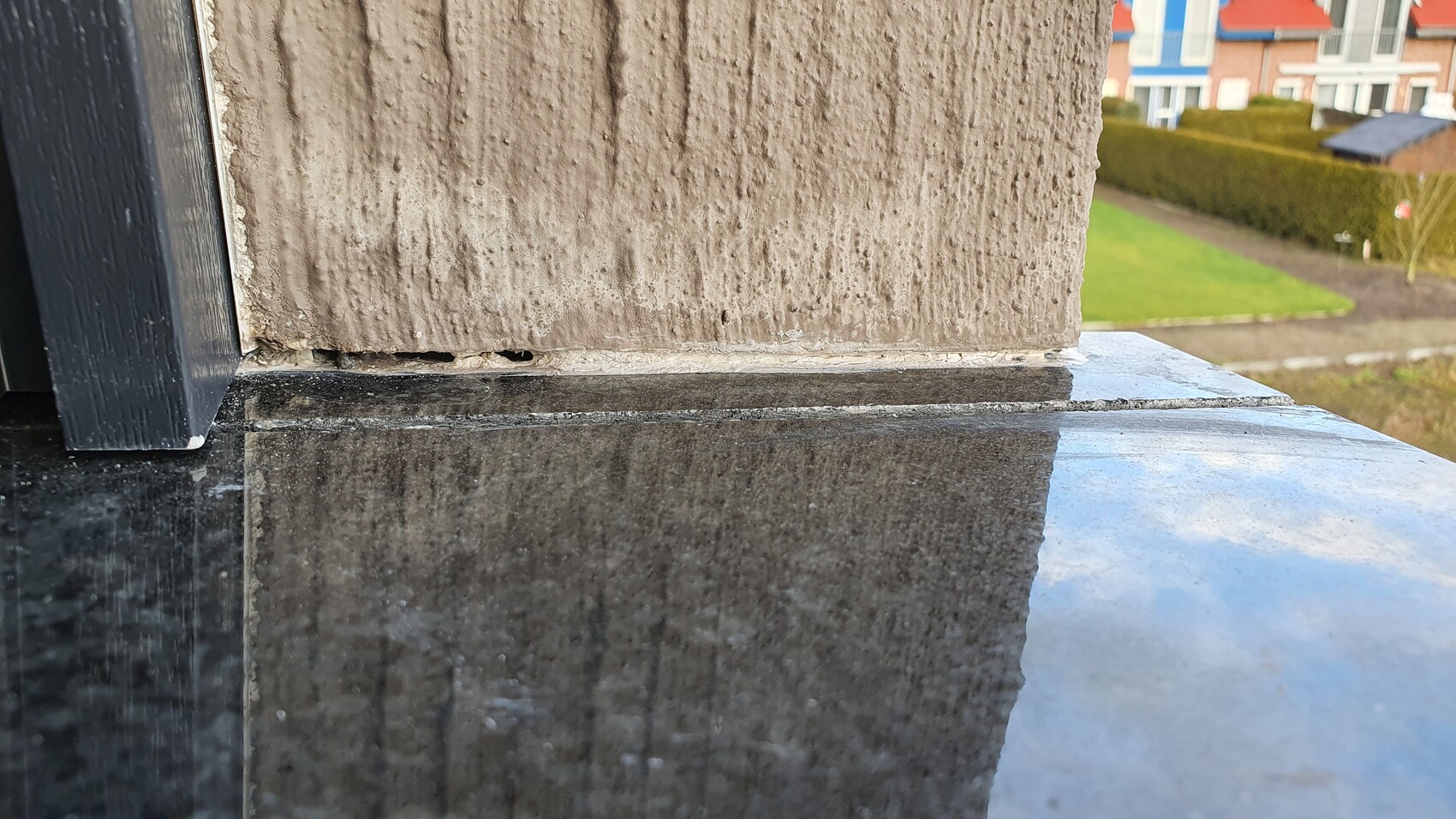
The window sills show no visible sealing. According to trade associations, with an ETICS system, there should be two layers of sealing at the window sills. We can see none. It also seems strange that the window sills were cut into the ETICS. The unnecessarily large gaps created were either left unfilled or only filled with silicone or similar, which after more than four weeks remains soft and uncured.
Water constantly accumulates at the edges of the window sills, running down the facade, further softening the render and freezing in places with the render. Where does this water come from? The screed heating program is still running inside, providing warmth. Could this be a sign of leakage around the windows? Indoor humidity is being actively controlled with three drying units, currently below 40% relative humidity. We suspect leakage because at the most affected window corner inside, we found significant residual moisture along with slight bulging of the interior plaster. Elsewhere, the interior plaster appears superficially dry.
The house base was also poorly finished by the same subcontractor. A very thinly scratched-on reinforcing plaster cannot be the waterproof rendering against moisture as specified in the contract. The layer is simply too thin and, according to photos, remains damp even without rain.
Outlook:
What happens next? The defects have been reported, documented with photos, and recorded. Should we still carry out a conditional acceptance with these defects, or refuse acceptance entirely? We would like to move in by the end of February, as my wife begins her follow-up treatment after chemotherapy in March and does not want the stress of moving to undo all her recovery. The potential double burden is not insignificant.
The render is visibly deteriorated and crumbly, patchy, and simply poorly done. In our opinion, it must be completely removed and redone. The window sills should also be removed and replaced because they are too short and partially cut with an angle grinder without technical necessity. We are particularly worried about the sealing and possible damage to the ETICS. Who knows what will happen in a few years.
Next week, at our own expense, we will engage a publicly appointed expert in painting and decorating to assess the severity of the damage and necessary repairs. From our experience, we expect little or no support from the GC or site manager. We intend to stand firm and will not accept repair work or financial compensation. At this point, we only see one solution: starting over completely. This would be very expensive and could become particularly interesting regarding payment of the final invoice.
The GC has only provided us with a 5% retention guarantee for completion, which likely would not cover a full re-execution of the defective work (and according to the contract text, may only be retained after handover for serious defects). Referring to this guarantee, he has already indicated that he insists on full payment upon acceptance, as we have this guarantee as security and it could be increased or extended.
Any advice, comments, ideas, or suggestions are welcome. I just needed to vent a bit. Sometimes you really feel helpless and lost as a client.

We are building a 190 sqm (2,045 sq ft) city villa to KfW 55 energy efficiency standard with a large general contractor (GC) from Königslutter in the Berlin metropolitan area. The GC uses various subcontractors, who in turn work with their own subcontractors (some of whom also hire further subcontractors). So far, several construction defects have occurred. Serious defects were only prevented through our intervention (for example, the formwork for the intermediate ceiling was several centimeters too low and was literally raised five minutes before the concrete was poured). Unfortunately, the site manager is incompetent, thin-skinned, and unobservant. From day one, he has only offered pointless comments and a lack of motivation. He has never recognized defects on his own and has only reluctantly addressed those we reported, often trying to downplay them with standardized phrases.
As a result, we are on site as often as possible because we are constantly on high alert due to the defects encountered so far. Our involvement has already improved or, from our perspective, salvaged many situations. We have also hired a construction supervisor who has occasionally added value, although his passion seems more for photographing the construction than for identifying defects. Sometimes, a simple tape measure or spirit level helps—at least for us.
Our building project is further complicated by the fact that my wife was diagnosed with cancer a few months after purchasing the land and signing the construction contract. A cruel blow of fate, with chemotherapy and all related side effects, framed by the external circumstances of the ongoing COVID-19 pandemic. The loss of income is unfortunate but was anticipated in the financing—albeit as possible parental leave rather than a long-term illness. Nevertheless, it all makes the situation more stressful than it would have been otherwise.
Main section:
We are approaching the completion of the build; the screed drying will finish next week (the scheduled handover is at the end of January, so we just miss out on the VAT reduction). Ninety percent of the house price has already been paid; only the final invoice, expected in the coming weeks, remains outstanding.
At the end of November, the exterior render was applied. At that time and for the days following, outside temperatures did not exceed 5°C (41°F), with some nights dropping below freezing. According to the render manufacturer (Alsecco), the silicate render used may only be applied at temperatures above 5°C (41°F), and temperatures must remain above this threshold in the following days. If not, the render cannot cure properly, which may lead to issues with strength and durability.
One day before the rendering work began, we sent an informal notice of concern to the GC and their construction manager regarding the weather forecast. The subcontractor responded that there was no need to worry and voluntarily offered an additional one year warranty.
The rendering was completed, but even after one week, the exterior render was still soft. In some areas, it “slid,” particularly on the window sills. Please refer to the attached photos for details.
The same subcontractor who applied the external render installed the window sills shortly before (but only after installing the external thermal insulation composite system (ETICS) and the facade reinforcement). The window sills are crooked and uneven. Some also appear to be too short. On average, they protrude only 2–3 cm (1 inch) from the facade. Some are more uneven, for example with one side 1.5 cm (0.6 inch) and the other side 3 cm (1.2 inches). The drip groove on the underside is often flush with the facade. During installation, alcohol was consumed on site, as evidenced by several dozen small drink containers scattered near the scaffolding. It was also apparently easier to cut our up to 3 m (10 ft) long window sills with an angle grinder to fit them into a car, but sealing the joints afterward was forgotten.
The window sills show no visible sealing. According to trade associations, with an ETICS system, there should be two layers of sealing at the window sills. We can see none. It also seems strange that the window sills were cut into the ETICS. The unnecessarily large gaps created were either left unfilled or only filled with silicone or similar, which after more than four weeks remains soft and uncured.
Water constantly accumulates at the edges of the window sills, running down the facade, further softening the render and freezing in places with the render. Where does this water come from? The screed heating program is still running inside, providing warmth. Could this be a sign of leakage around the windows? Indoor humidity is being actively controlled with three drying units, currently below 40% relative humidity. We suspect leakage because at the most affected window corner inside, we found significant residual moisture along with slight bulging of the interior plaster. Elsewhere, the interior plaster appears superficially dry.
The house base was also poorly finished by the same subcontractor. A very thinly scratched-on reinforcing plaster cannot be the waterproof rendering against moisture as specified in the contract. The layer is simply too thin and, according to photos, remains damp even without rain.
Outlook:
What happens next? The defects have been reported, documented with photos, and recorded. Should we still carry out a conditional acceptance with these defects, or refuse acceptance entirely? We would like to move in by the end of February, as my wife begins her follow-up treatment after chemotherapy in March and does not want the stress of moving to undo all her recovery. The potential double burden is not insignificant.
The render is visibly deteriorated and crumbly, patchy, and simply poorly done. In our opinion, it must be completely removed and redone. The window sills should also be removed and replaced because they are too short and partially cut with an angle grinder without technical necessity. We are particularly worried about the sealing and possible damage to the ETICS. Who knows what will happen in a few years.
Next week, at our own expense, we will engage a publicly appointed expert in painting and decorating to assess the severity of the damage and necessary repairs. From our experience, we expect little or no support from the GC or site manager. We intend to stand firm and will not accept repair work or financial compensation. At this point, we only see one solution: starting over completely. This would be very expensive and could become particularly interesting regarding payment of the final invoice.
The GC has only provided us with a 5% retention guarantee for completion, which likely would not cover a full re-execution of the defective work (and according to the contract text, may only be retained after handover for serious defects). Referring to this guarantee, he has already indicated that he insists on full payment upon acceptance, as we have this guarantee as security and it could be increased or extended.
Any advice, comments, ideas, or suggestions are welcome. I just needed to vent a bit. Sometimes you really feel helpless and lost as a client.
 Wolkensieben5 Jan 2021 15:11
Hausbau0815 schrieb:
he shut down his LLC and started two new ones. He still lives exactly where he lived before and carries on as if nothing happened. Crazy.
No, ours moved away. I wouldn’t be surprised if he eventually goes down for good.
The early warning system worked well here; the defrauded contractors showed up at his construction sites, and the working contractors then either stopped working or only accepted payment in advance.
 Hausbau08155 Jan 2021 15:39
It’s actually a good thing if you want to visit him again. 😉 That way you know where he lives.
Wolkensieben5 Jan 2021 22:25Hausbau0815 schrieb:
But it’s actually good if you want to visit him again. 😉 So you know where he lives.No thanks. I’m glad if I never have to see him again.H
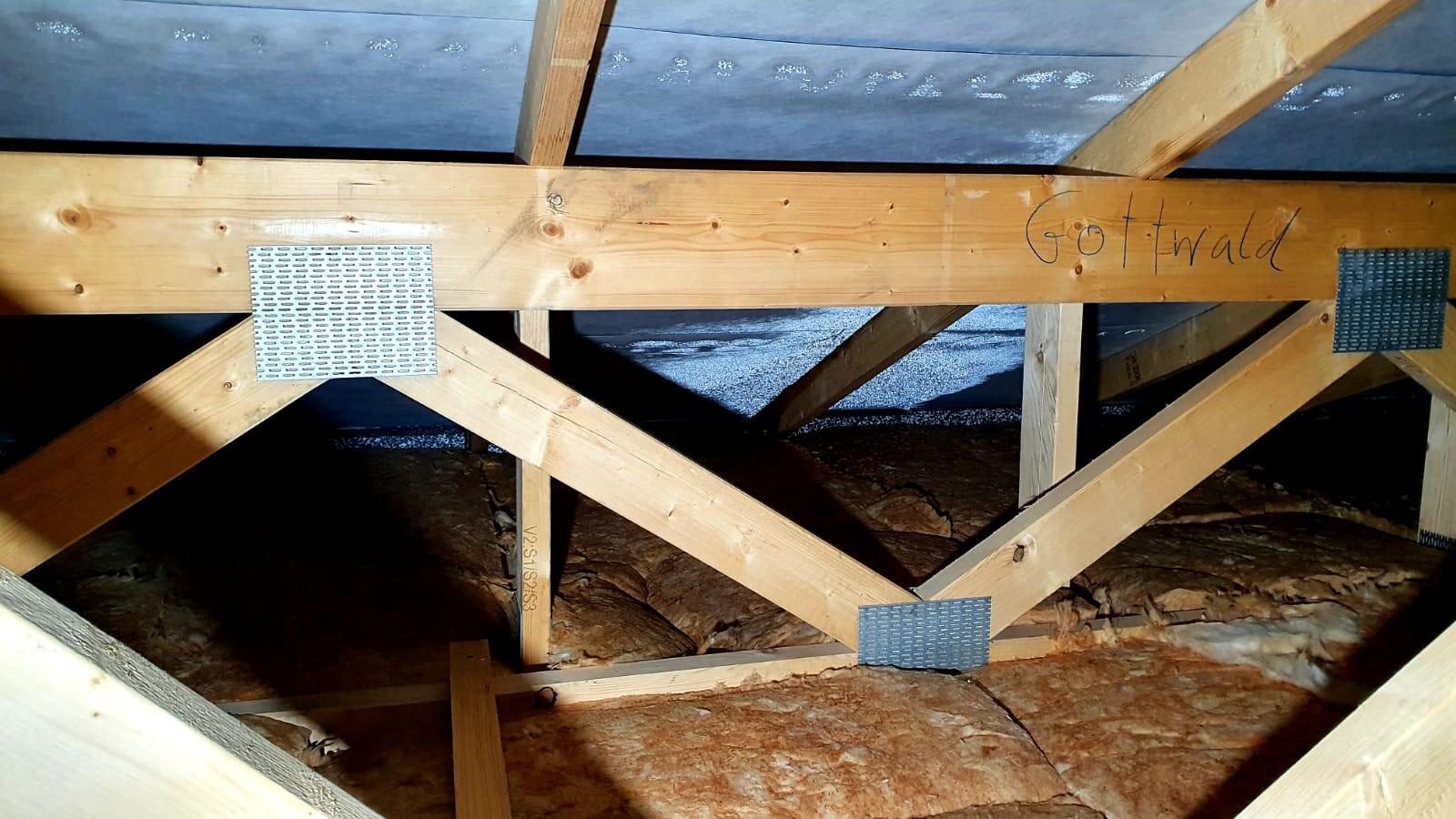
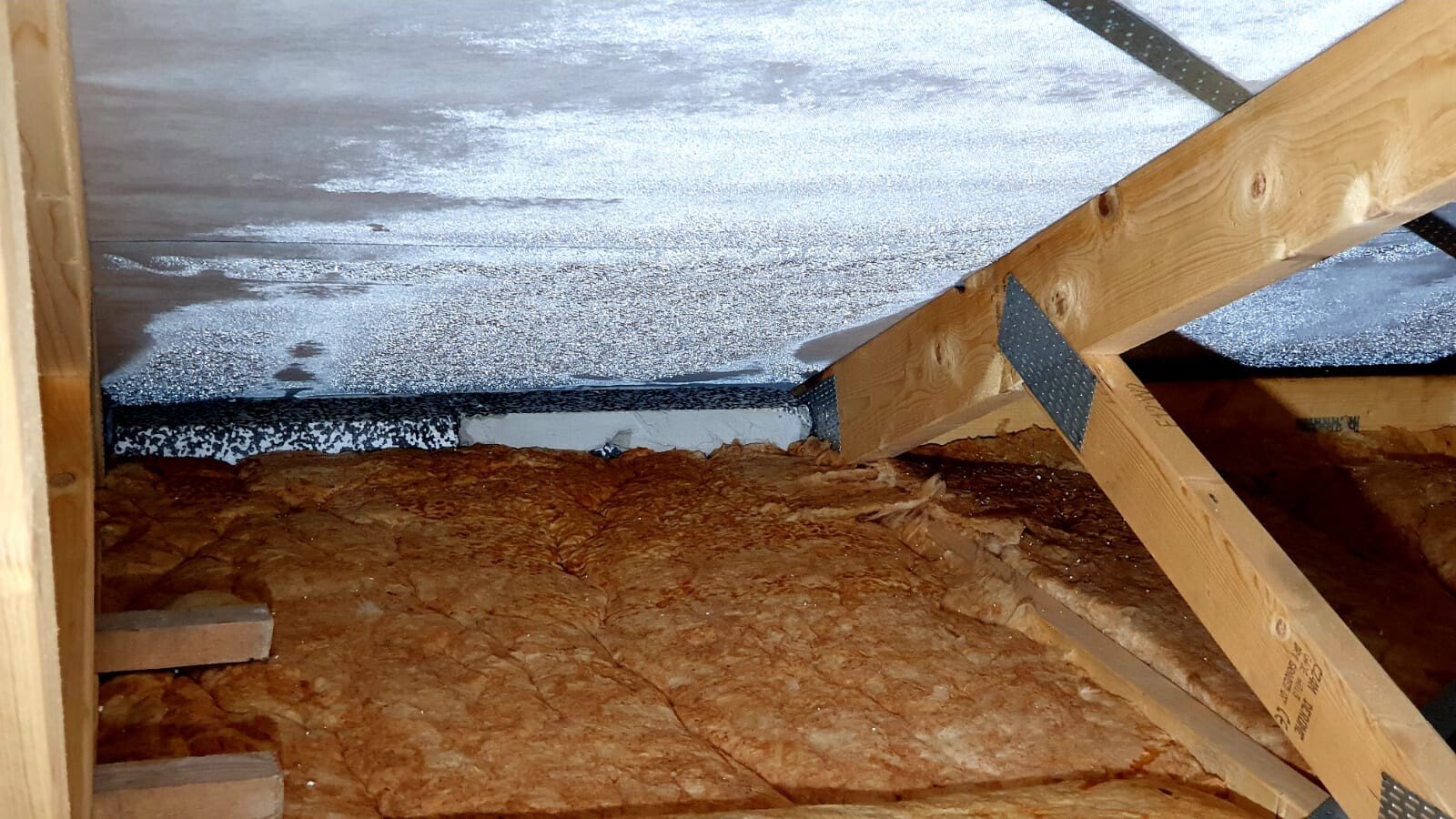
Hemingway847 Jan 2021 21:20Today I went up to the roof with the drywall installer and took some pictures. There are several large areas of dampness all around, mainly near the roof edge and the eaves. Towards the top, it’s mostly dry.
The drywall installer said that the insulation of the ETICS (external thermal insulation composite system) was applied too high. In other words, it ends flush with the roofing membrane, which means almost no air can circulate through the cold attic space via the eaves. Could this really be the sole reason?
Ultimately, the vapor retarder (not a vapor barrier) must also be leaking in multiple places, which explains the various moisture hotspots.
So it’s probably a combination of leaks and the lack of air circulation in the cold roof.
The drywall installer mentioned that the insulation would need to be upgraded and the eaves have to be removed since, due to the sharp angle, it’s barely possible to access the insulation boards from inside even with children’s hands.
I’m actually glad I wasn’t able to cover the attic floor in time because of a back spasm. Otherwise, it would be impossible to reach the insulation now, or I would have had to tear it open again.
The drywall installer originally planned to finish the ceilings on the upper floor by next Tuesday. That probably won’t happen before getting to the bottom of the moisture issue. I would have liked to get it done… but honestly, I’m really frustrated with all this. The tile setter is coming Monday, money keeps going in, and I don’t even know if it’s still worth it.
Feeling the urge to start smoking again after all these years…


The drywall installer said that the insulation of the ETICS (external thermal insulation composite system) was applied too high. In other words, it ends flush with the roofing membrane, which means almost no air can circulate through the cold attic space via the eaves. Could this really be the sole reason?
Ultimately, the vapor retarder (not a vapor barrier) must also be leaking in multiple places, which explains the various moisture hotspots.
So it’s probably a combination of leaks and the lack of air circulation in the cold roof.
The drywall installer mentioned that the insulation would need to be upgraded and the eaves have to be removed since, due to the sharp angle, it’s barely possible to access the insulation boards from inside even with children’s hands.
I’m actually glad I wasn’t able to cover the attic floor in time because of a back spasm. Otherwise, it would be impossible to reach the insulation now, or I would have had to tear it open again.
The drywall installer originally planned to finish the ceilings on the upper floor by next Tuesday. That probably won’t happen before getting to the bottom of the moisture issue. I would have liked to get it done… but honestly, I’m really frustrated with all this. The tile setter is coming Monday, money keeps going in, and I don’t even know if it’s still worth it.
Feeling the urge to start smoking again after all these years…
Hausbau08158 Jan 2021 07:21Hemingway84 schrieb:
Feeling the urge to start smoking again after all these years...Don’t do it. It won’t make things any better. I tried alcohol myself when things were really bad. Luckily, I don’t like the taste. Another time, I took two LMAA pills before a very unpleasant appointment and completely screwed up because I almost fell asleep.
I think it’s time to bring in an expert who can look at the whole situation comprehensively.
Not only an expert but also a lawyer... Writing letters at the beginning doesn't cost much and has a completely different impact compared to sending your endlessly long layman texts... nobody takes those seriously.
We were just lucky back then that we actually contested an invoice for quite different reasons... you definitely have to be careful not to accidentally accept the tradework!
We were just lucky back then that we actually contested an invoice for quite different reasons... you definitely have to be careful not to accidentally accept the tradework!
Similar topics