
ᐅ Exterior plaster is uneven, window sills are too short, insulation system is not airtight.
Created on: 30 Dec 2020 23:02
H
Hemingway84
Preface:
We are building a 190 sqm (2,045 sq ft) city villa to KfW 55 energy efficiency standard with a large general contractor (GC) from Königslutter in the Berlin metropolitan area. The GC uses various subcontractors, who in turn work with their own subcontractors (some of whom also hire further subcontractors). So far, several construction defects have occurred. Serious defects were only prevented through our intervention (for example, the formwork for the intermediate ceiling was several centimeters too low and was literally raised five minutes before the concrete was poured). Unfortunately, the site manager is incompetent, thin-skinned, and unobservant. From day one, he has only offered pointless comments and a lack of motivation. He has never recognized defects on his own and has only reluctantly addressed those we reported, often trying to downplay them with standardized phrases.
As a result, we are on site as often as possible because we are constantly on high alert due to the defects encountered so far. Our involvement has already improved or, from our perspective, salvaged many situations. We have also hired a construction supervisor who has occasionally added value, although his passion seems more for photographing the construction than for identifying defects. Sometimes, a simple tape measure or spirit level helps—at least for us.
Our building project is further complicated by the fact that my wife was diagnosed with cancer a few months after purchasing the land and signing the construction contract. A cruel blow of fate, with chemotherapy and all related side effects, framed by the external circumstances of the ongoing COVID-19 pandemic. The loss of income is unfortunate but was anticipated in the financing—albeit as possible parental leave rather than a long-term illness. Nevertheless, it all makes the situation more stressful than it would have been otherwise.
Main section:
We are approaching the completion of the build; the screed drying will finish next week (the scheduled handover is at the end of January, so we just miss out on the VAT reduction). Ninety percent of the house price has already been paid; only the final invoice, expected in the coming weeks, remains outstanding.
At the end of November, the exterior render was applied. At that time and for the days following, outside temperatures did not exceed 5°C (41°F), with some nights dropping below freezing. According to the render manufacturer (Alsecco), the silicate render used may only be applied at temperatures above 5°C (41°F), and temperatures must remain above this threshold in the following days. If not, the render cannot cure properly, which may lead to issues with strength and durability.
One day before the rendering work began, we sent an informal notice of concern to the GC and their construction manager regarding the weather forecast. The subcontractor responded that there was no need to worry and voluntarily offered an additional one year warranty.
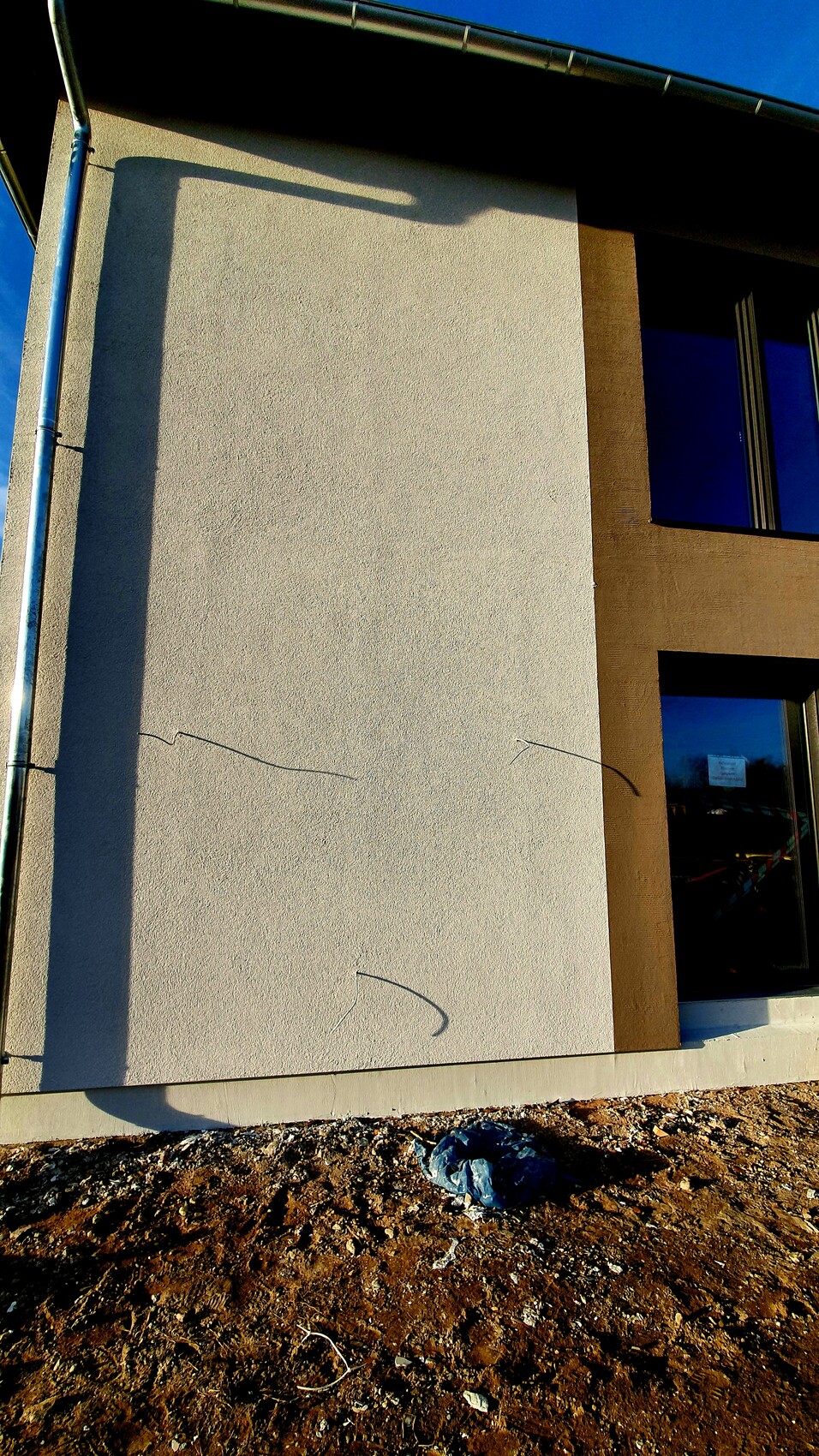
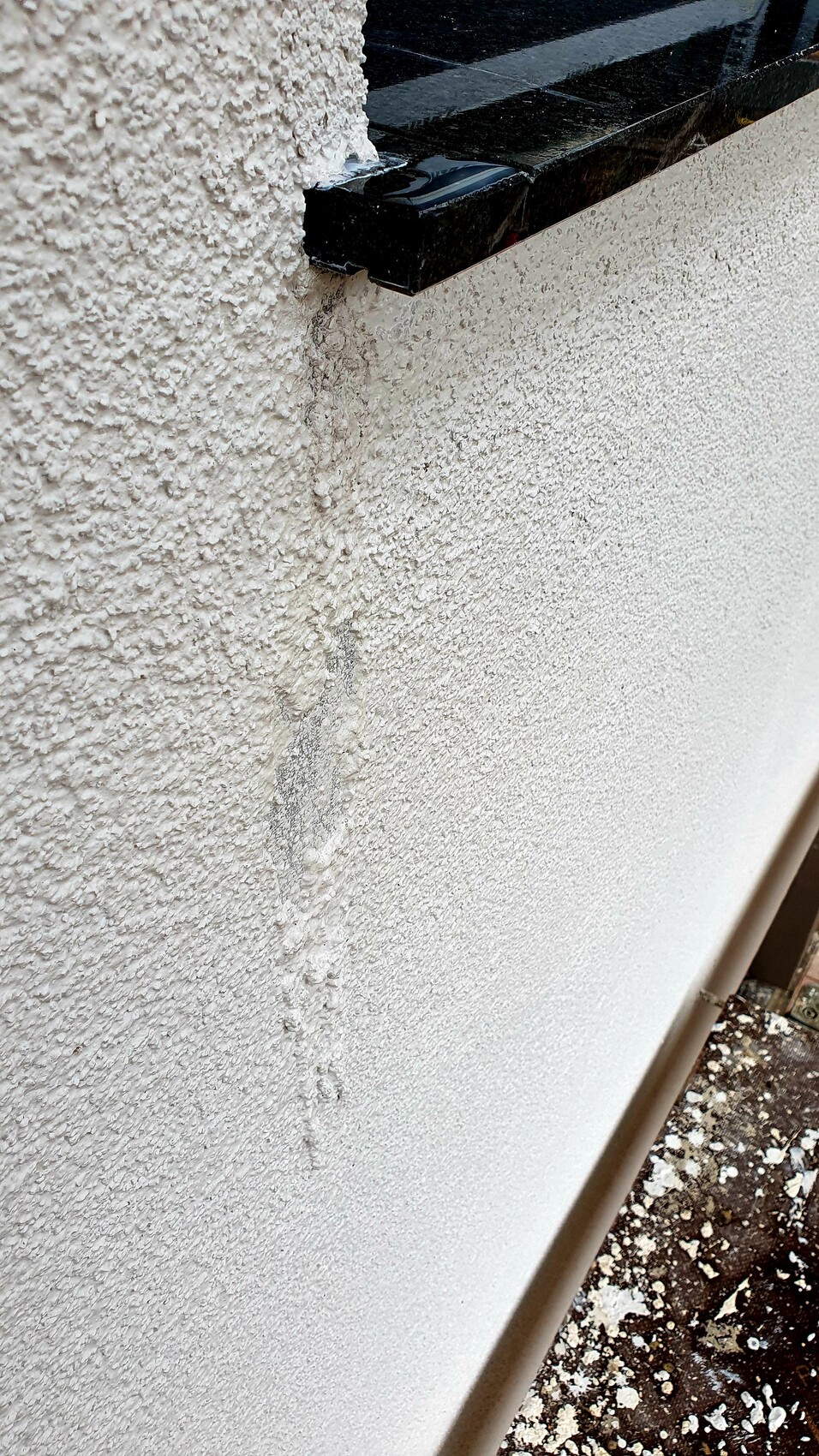
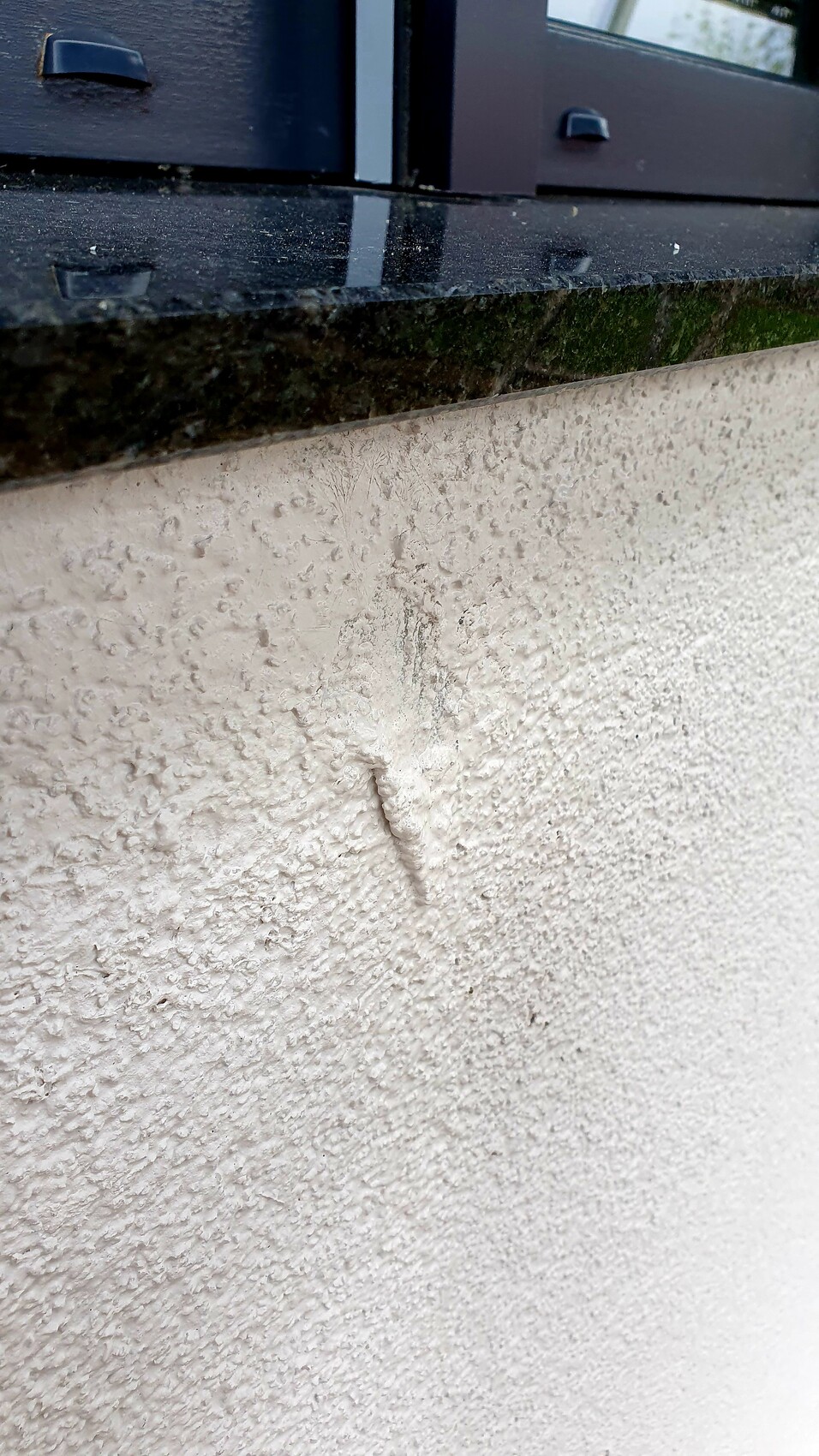
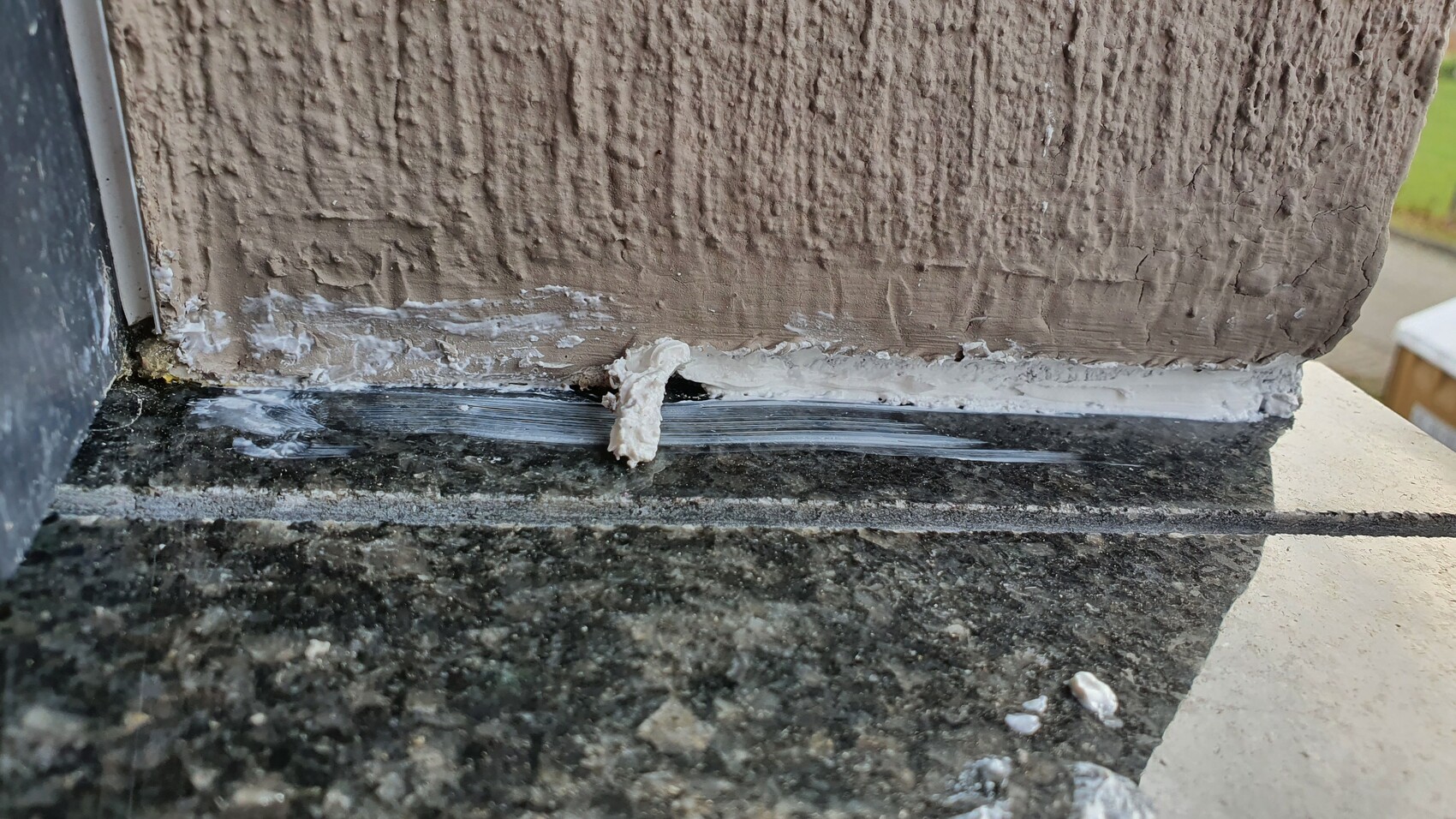
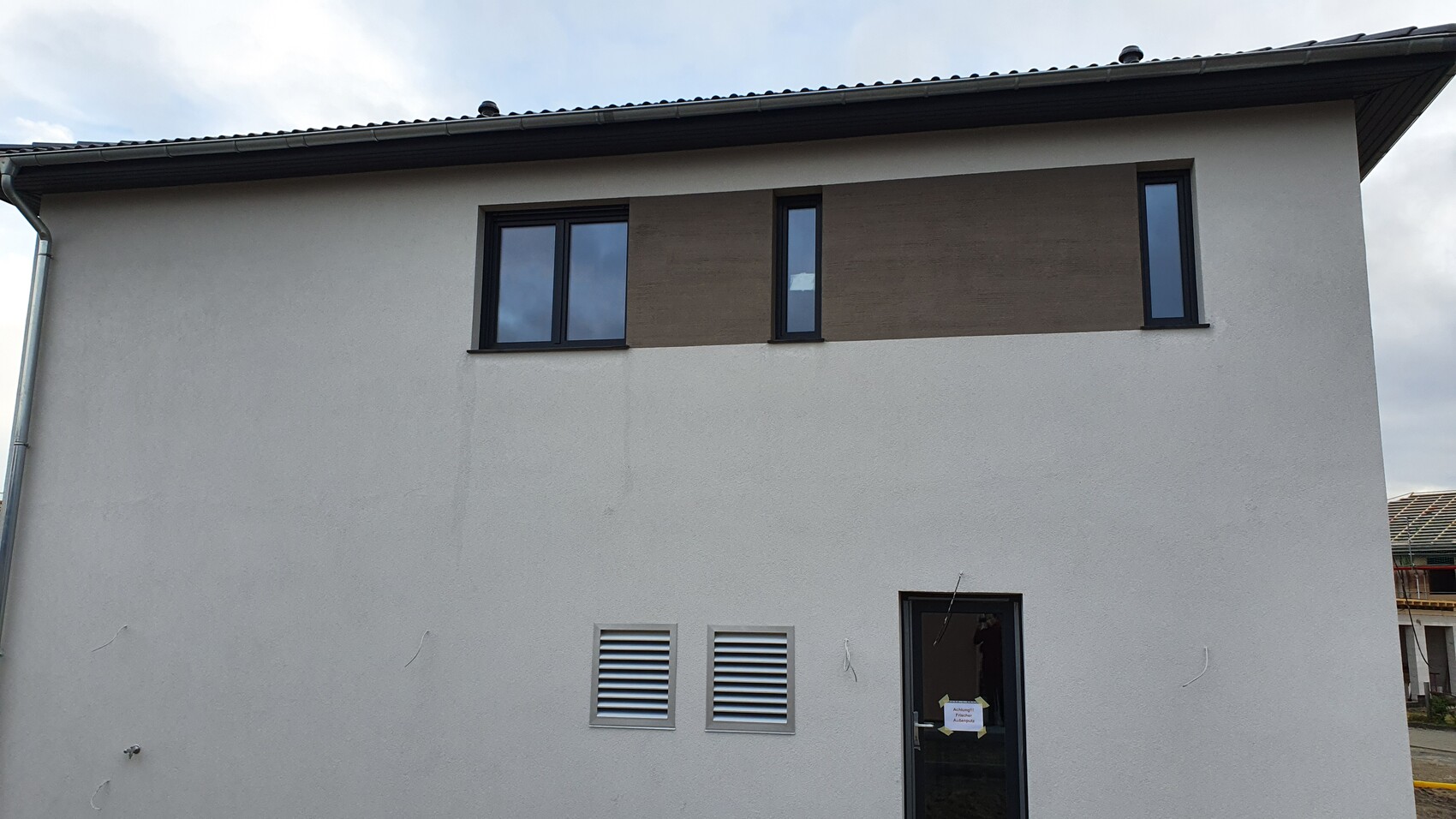
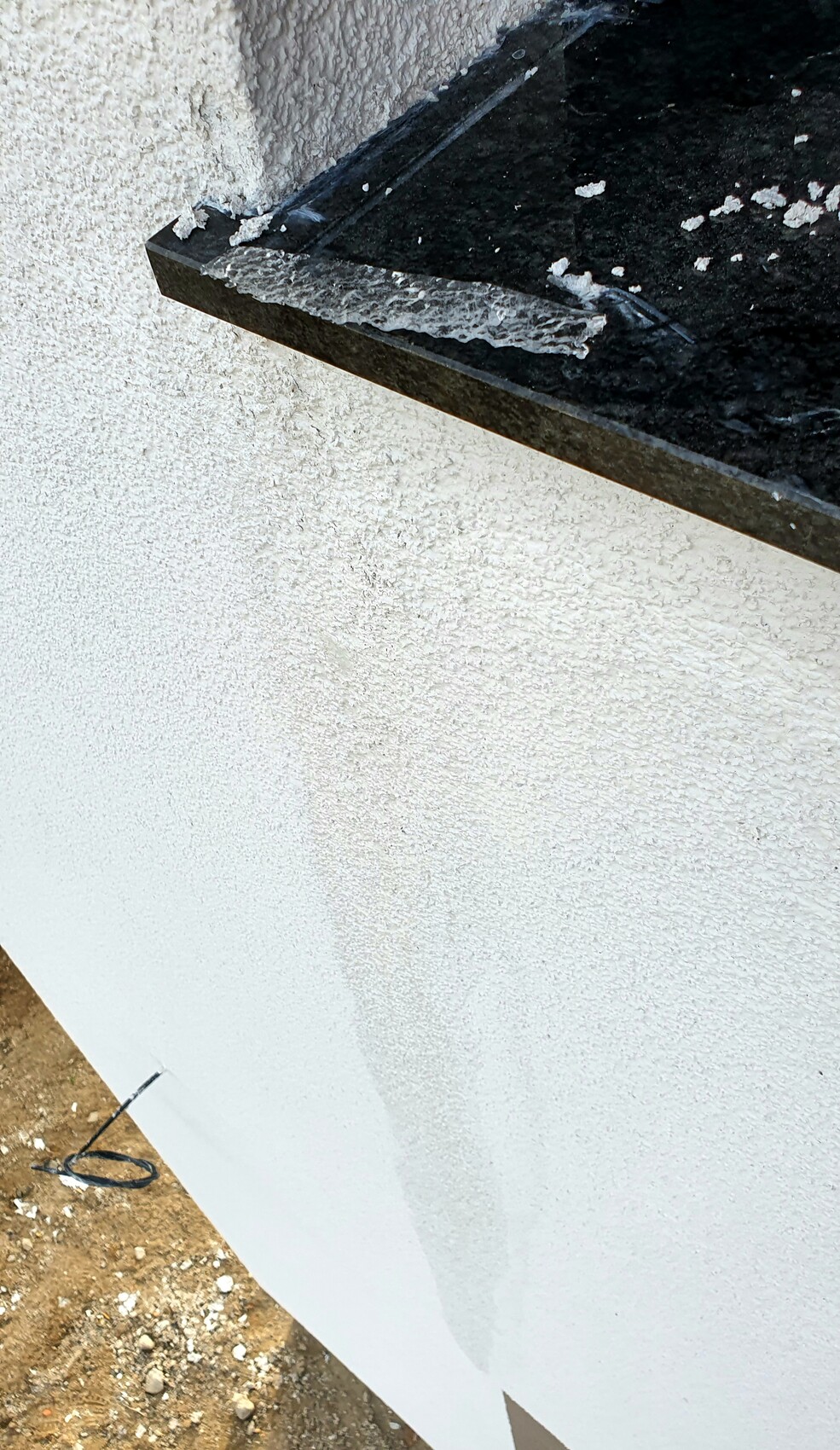
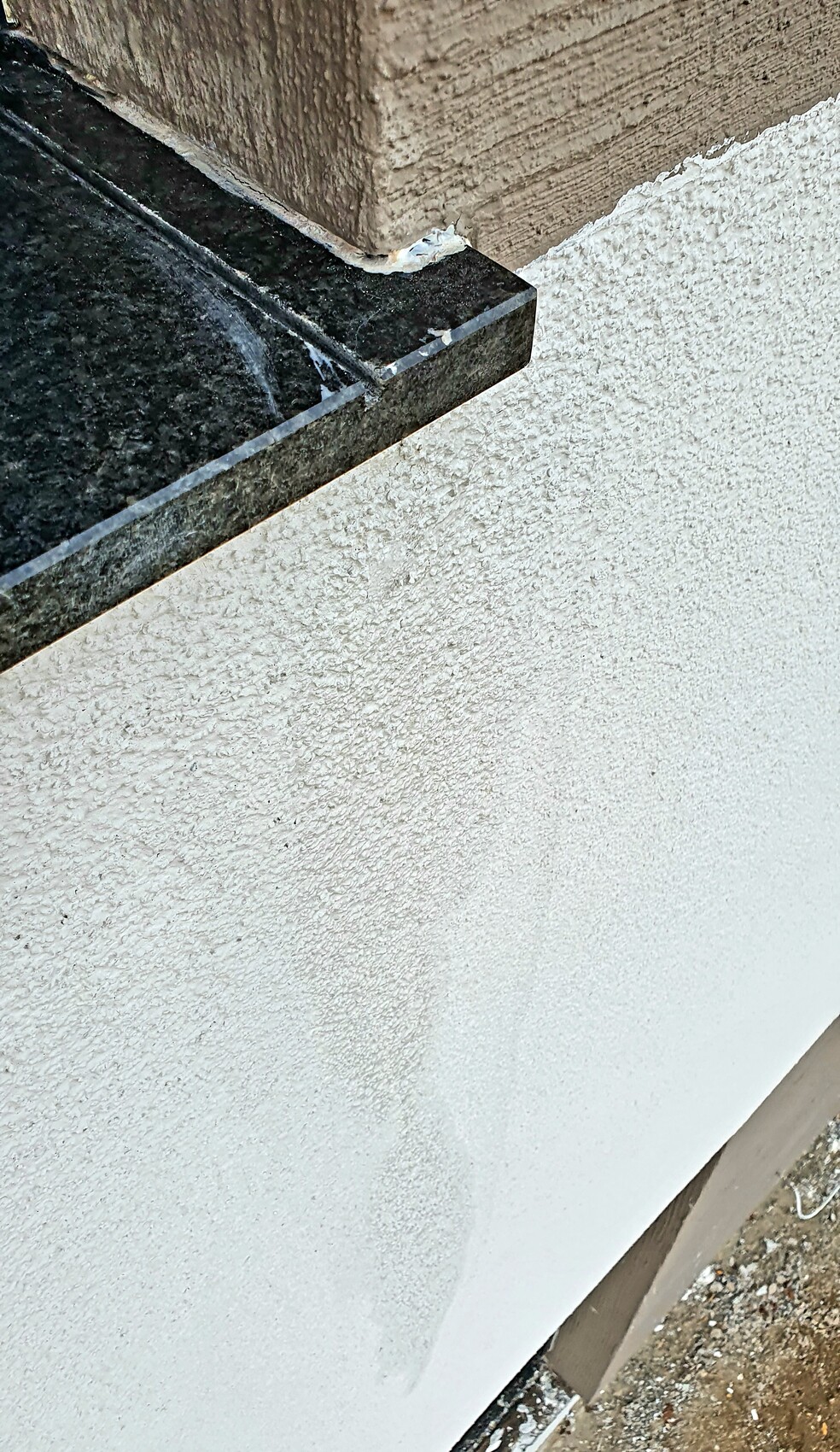
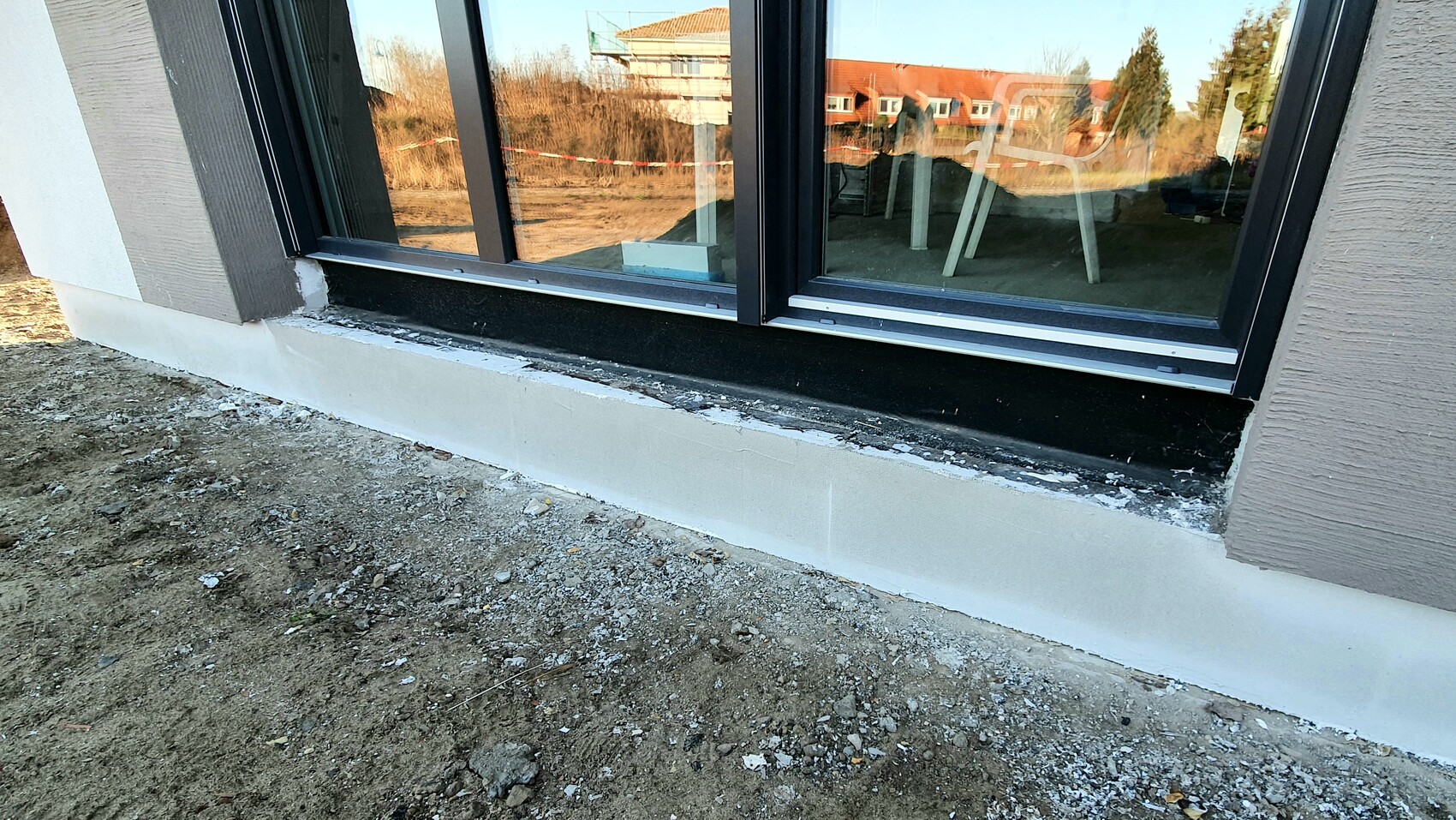
The rendering was completed, but even after one week, the exterior render was still soft. In some areas, it “slid,” particularly on the window sills. Please refer to the attached photos for details.
The same subcontractor who applied the external render installed the window sills shortly before (but only after installing the external thermal insulation composite system (ETICS) and the facade reinforcement). The window sills are crooked and uneven. Some also appear to be too short. On average, they protrude only 2–3 cm (1 inch) from the facade. Some are more uneven, for example with one side 1.5 cm (0.6 inch) and the other side 3 cm (1.2 inches). The drip groove on the underside is often flush with the facade. During installation, alcohol was consumed on site, as evidenced by several dozen small drink containers scattered near the scaffolding. It was also apparently easier to cut our up to 3 m (10 ft) long window sills with an angle grinder to fit them into a car, but sealing the joints afterward was forgotten.
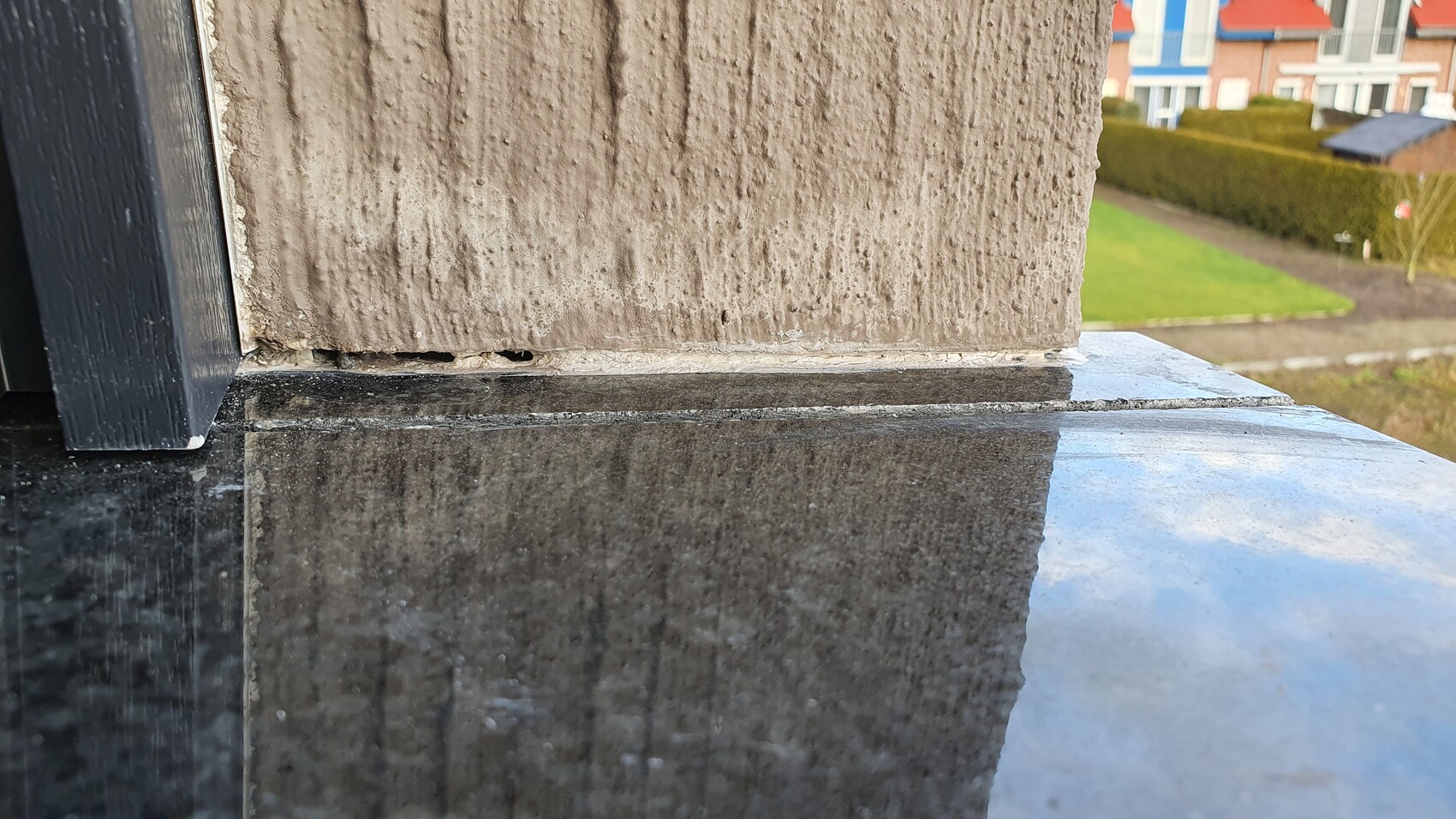
The window sills show no visible sealing. According to trade associations, with an ETICS system, there should be two layers of sealing at the window sills. We can see none. It also seems strange that the window sills were cut into the ETICS. The unnecessarily large gaps created were either left unfilled or only filled with silicone or similar, which after more than four weeks remains soft and uncured.
Water constantly accumulates at the edges of the window sills, running down the facade, further softening the render and freezing in places with the render. Where does this water come from? The screed heating program is still running inside, providing warmth. Could this be a sign of leakage around the windows? Indoor humidity is being actively controlled with three drying units, currently below 40% relative humidity. We suspect leakage because at the most affected window corner inside, we found significant residual moisture along with slight bulging of the interior plaster. Elsewhere, the interior plaster appears superficially dry.
The house base was also poorly finished by the same subcontractor. A very thinly scratched-on reinforcing plaster cannot be the waterproof rendering against moisture as specified in the contract. The layer is simply too thin and, according to photos, remains damp even without rain.
Outlook:
What happens next? The defects have been reported, documented with photos, and recorded. Should we still carry out a conditional acceptance with these defects, or refuse acceptance entirely? We would like to move in by the end of February, as my wife begins her follow-up treatment after chemotherapy in March and does not want the stress of moving to undo all her recovery. The potential double burden is not insignificant.
The render is visibly deteriorated and crumbly, patchy, and simply poorly done. In our opinion, it must be completely removed and redone. The window sills should also be removed and replaced because they are too short and partially cut with an angle grinder without technical necessity. We are particularly worried about the sealing and possible damage to the ETICS. Who knows what will happen in a few years.
Next week, at our own expense, we will engage a publicly appointed expert in painting and decorating to assess the severity of the damage and necessary repairs. From our experience, we expect little or no support from the GC or site manager. We intend to stand firm and will not accept repair work or financial compensation. At this point, we only see one solution: starting over completely. This would be very expensive and could become particularly interesting regarding payment of the final invoice.
The GC has only provided us with a 5% retention guarantee for completion, which likely would not cover a full re-execution of the defective work (and according to the contract text, may only be retained after handover for serious defects). Referring to this guarantee, he has already indicated that he insists on full payment upon acceptance, as we have this guarantee as security and it could be increased or extended.
Any advice, comments, ideas, or suggestions are welcome. I just needed to vent a bit. Sometimes you really feel helpless and lost as a client.

We are building a 190 sqm (2,045 sq ft) city villa to KfW 55 energy efficiency standard with a large general contractor (GC) from Königslutter in the Berlin metropolitan area. The GC uses various subcontractors, who in turn work with their own subcontractors (some of whom also hire further subcontractors). So far, several construction defects have occurred. Serious defects were only prevented through our intervention (for example, the formwork for the intermediate ceiling was several centimeters too low and was literally raised five minutes before the concrete was poured). Unfortunately, the site manager is incompetent, thin-skinned, and unobservant. From day one, he has only offered pointless comments and a lack of motivation. He has never recognized defects on his own and has only reluctantly addressed those we reported, often trying to downplay them with standardized phrases.
As a result, we are on site as often as possible because we are constantly on high alert due to the defects encountered so far. Our involvement has already improved or, from our perspective, salvaged many situations. We have also hired a construction supervisor who has occasionally added value, although his passion seems more for photographing the construction than for identifying defects. Sometimes, a simple tape measure or spirit level helps—at least for us.
Our building project is further complicated by the fact that my wife was diagnosed with cancer a few months after purchasing the land and signing the construction contract. A cruel blow of fate, with chemotherapy and all related side effects, framed by the external circumstances of the ongoing COVID-19 pandemic. The loss of income is unfortunate but was anticipated in the financing—albeit as possible parental leave rather than a long-term illness. Nevertheless, it all makes the situation more stressful than it would have been otherwise.
Main section:
We are approaching the completion of the build; the screed drying will finish next week (the scheduled handover is at the end of January, so we just miss out on the VAT reduction). Ninety percent of the house price has already been paid; only the final invoice, expected in the coming weeks, remains outstanding.
At the end of November, the exterior render was applied. At that time and for the days following, outside temperatures did not exceed 5°C (41°F), with some nights dropping below freezing. According to the render manufacturer (Alsecco), the silicate render used may only be applied at temperatures above 5°C (41°F), and temperatures must remain above this threshold in the following days. If not, the render cannot cure properly, which may lead to issues with strength and durability.
One day before the rendering work began, we sent an informal notice of concern to the GC and their construction manager regarding the weather forecast. The subcontractor responded that there was no need to worry and voluntarily offered an additional one year warranty.
The rendering was completed, but even after one week, the exterior render was still soft. In some areas, it “slid,” particularly on the window sills. Please refer to the attached photos for details.
The same subcontractor who applied the external render installed the window sills shortly before (but only after installing the external thermal insulation composite system (ETICS) and the facade reinforcement). The window sills are crooked and uneven. Some also appear to be too short. On average, they protrude only 2–3 cm (1 inch) from the facade. Some are more uneven, for example with one side 1.5 cm (0.6 inch) and the other side 3 cm (1.2 inches). The drip groove on the underside is often flush with the facade. During installation, alcohol was consumed on site, as evidenced by several dozen small drink containers scattered near the scaffolding. It was also apparently easier to cut our up to 3 m (10 ft) long window sills with an angle grinder to fit them into a car, but sealing the joints afterward was forgotten.
The window sills show no visible sealing. According to trade associations, with an ETICS system, there should be two layers of sealing at the window sills. We can see none. It also seems strange that the window sills were cut into the ETICS. The unnecessarily large gaps created were either left unfilled or only filled with silicone or similar, which after more than four weeks remains soft and uncured.
Water constantly accumulates at the edges of the window sills, running down the facade, further softening the render and freezing in places with the render. Where does this water come from? The screed heating program is still running inside, providing warmth. Could this be a sign of leakage around the windows? Indoor humidity is being actively controlled with three drying units, currently below 40% relative humidity. We suspect leakage because at the most affected window corner inside, we found significant residual moisture along with slight bulging of the interior plaster. Elsewhere, the interior plaster appears superficially dry.
The house base was also poorly finished by the same subcontractor. A very thinly scratched-on reinforcing plaster cannot be the waterproof rendering against moisture as specified in the contract. The layer is simply too thin and, according to photos, remains damp even without rain.
Outlook:
What happens next? The defects have been reported, documented with photos, and recorded. Should we still carry out a conditional acceptance with these defects, or refuse acceptance entirely? We would like to move in by the end of February, as my wife begins her follow-up treatment after chemotherapy in March and does not want the stress of moving to undo all her recovery. The potential double burden is not insignificant.
The render is visibly deteriorated and crumbly, patchy, and simply poorly done. In our opinion, it must be completely removed and redone. The window sills should also be removed and replaced because they are too short and partially cut with an angle grinder without technical necessity. We are particularly worried about the sealing and possible damage to the ETICS. Who knows what will happen in a few years.
Next week, at our own expense, we will engage a publicly appointed expert in painting and decorating to assess the severity of the damage and necessary repairs. From our experience, we expect little or no support from the GC or site manager. We intend to stand firm and will not accept repair work or financial compensation. At this point, we only see one solution: starting over completely. This would be very expensive and could become particularly interesting regarding payment of the final invoice.
The GC has only provided us with a 5% retention guarantee for completion, which likely would not cover a full re-execution of the defective work (and according to the contract text, may only be retained after handover for serious defects). Referring to this guarantee, he has already indicated that he insists on full payment upon acceptance, as we have this guarantee as security and it could be increased or extended.
Any advice, comments, ideas, or suggestions are welcome. I just needed to vent a bit. Sometimes you really feel helpless and lost as a client.
 Hausbau08159 Jan 2021 13:30
However, you first need to find a lawyer who is willing to take on the case.

Hausbau0815 schrieb:
But first, you have to find a lawyer who is willing to take it on.Oh, you can usually find one from another jurisdiction. It should be an administrative law specialist.https://www.instagram.com/11antgmxde/
https://www.linkedin.com/company/bauen-jetzt/

Hemingway84 schrieb:
You mentioned that it ends with the roofing membrane, and there is little to no air circulation through the roof soffit in the cold roof cavity. Could that really be the sole reason?
In the end, the vapor retarder (not a vapor barrier) must still have multiple leaks, as indicated by the various moisture hotspots. With all due respect to @Hausbau0815, back to the topic.
I would have thought that humidity condenses most where it is cold—in your case, where air circulates under the roof—unless I am mistaken?
My general contractor always warned us that the cold roof would lead to exactly the consequences you are seeing. Whenever I go upstairs through the pull-down attic ladder during winter, a lot of condensation forms on the ceilings. Our vapor retarder/vapor barrier will be located on the ceiling of the upper floor roof space, and the attic ladder is sealed. Is it something like that, or have I misunderstood?
What about the blower door test? Were there any drafts detected?
H
Hemingway849 Jan 2021 19:54OWLer schrieb:
With all due sympathy for @Hausbau0815, back to the topic.
I would have thought that humidity condenses most where it is cold—in your case, where air circulates under the roof—or am I mistaken?
My general contractor (GC) always warned us that the cold roof would lead to exactly the kind of issues you are seeing. Every time I go upstairs through the attic hatch in winter, there is heavy condensation on the ceilings. Our vapor barrier/vapor retarder will be installed at the roof level of the upper floor, and the attic hatch will be sealed. Is it something like this, or have I misunderstood?
What does the blower door test say? Was there any air leakage detected anywhere?Our building supervisor thinks that the external thermal insulation composite system (ETICS) panels were installed too high (they meet the roofing membrane). They should have actually stopped inside the roof soffit. The ventilated soffit is currently only ventilating itself, not the cold roof. The moisture simply cannot escape. He also recommended replacing the insulation wool above the vapor retarder, because once it gets wet, it no longer performs its insulation function and creates a thermal bridge. A roofer who is a friend of a friend said they usually cut the underlay membrane at the ridge to prevent moisture buildup.
The blower door test hasn’t been done yet. Apparently, the GC plans to do it only at the very end, just before handover. Which is nonsense. Ideally, it should be done after window and front door installation and sealing of the vapor barrier. At this stage, it becomes increasingly complicated to fix leaks. We have urged the GC to carry out the test as soon as possible.
Additionally, there is a damp spot on the wall that is growing larger in the room where the first bubble appeared on the ceiling (now there’s another one in a different room)—see photo. Behind the wall, there is no plumbing or ductwork, just the exterior masonry. Moisture from the attic shouldn’t penetrate here either, since the ring beam seals the Poroton blocks. Or is migrating moisture behind the sheathing of the ring beam possible, moving behind the interior plaster?
Furthermore, more than half of the window sealing tapes on the inside are leaking or partially detached. At least there is noticeable airflow. Combined with the unsealed exterior window sill, this is not good. Our building supervisor believes that properly plastering the interior window sills will sufficiently seal the windows?
I’m curious when someone from the GC will show up to decide on measures. As clients, we are not allowed to interfere with the construction process but have nevertheless made it clear to the drywall installer not to board the ceiling towards the roof for now. At least until proper sealing is in place and there are no more puddles.
Oh, and the ventilation grilles of the heat pump installed indoors freeze around the edges (where the system is leaking), which is also damaging the exterior plaster.
Hemingway84 schrieb:
Additionally, there is a damp spot on the wall in the room with the first water bubble on the ceiling (now there is another one in a different room) that is steadily growing – see the picture. [...] Furthermore, the window sealing tapes on the interior side are leaking or partially detached in more than half of the cases. I hope it also helps you that, in my opinion, you document the defects quite thoroughly (especially the dated outline around the damp spot!).
The improper use of branded adhesive tapes would almost be funny if it weren’t such a tragedy. Instead of “Würth,” the tapes could just as “usefully” yet impressively say “Calvin Klein” or “Veuve Cliquot” :-(
https://www.instagram.com/11antgmxde/
https://www.linkedin.com/company/bauen-jetzt/
 Wolkensieben10 Jan 2021 14:54
Hemingway84 schrieb:
The blower door test has not been carried out yet. Apparently, the general contractor plans to do it only at the very end, just before handover. Which is obviously nonsense. Ideally, it should be done after installing the windows and front door and completing the vapor retarder. It gets increasingly difficult to fix air leaks later on. We have asked the general contractor to perform the test as soon as possible.I feel so sorry for you, this is a disaster. Even you, as a layperson, know when it should be done.Similar topics