
ᐅ Exterior plaster is uneven, window sills are too short, insulation system is not airtight.
Created on: 30 Dec 2020 23:02
H
Hemingway84
Preface:
We are building a 190 sqm (2,045 sq ft) city villa to KfW 55 energy efficiency standard with a large general contractor (GC) from Königslutter in the Berlin metropolitan area. The GC uses various subcontractors, who in turn work with their own subcontractors (some of whom also hire further subcontractors). So far, several construction defects have occurred. Serious defects were only prevented through our intervention (for example, the formwork for the intermediate ceiling was several centimeters too low and was literally raised five minutes before the concrete was poured). Unfortunately, the site manager is incompetent, thin-skinned, and unobservant. From day one, he has only offered pointless comments and a lack of motivation. He has never recognized defects on his own and has only reluctantly addressed those we reported, often trying to downplay them with standardized phrases.
As a result, we are on site as often as possible because we are constantly on high alert due to the defects encountered so far. Our involvement has already improved or, from our perspective, salvaged many situations. We have also hired a construction supervisor who has occasionally added value, although his passion seems more for photographing the construction than for identifying defects. Sometimes, a simple tape measure or spirit level helps—at least for us.
Our building project is further complicated by the fact that my wife was diagnosed with cancer a few months after purchasing the land and signing the construction contract. A cruel blow of fate, with chemotherapy and all related side effects, framed by the external circumstances of the ongoing COVID-19 pandemic. The loss of income is unfortunate but was anticipated in the financing—albeit as possible parental leave rather than a long-term illness. Nevertheless, it all makes the situation more stressful than it would have been otherwise.
Main section:
We are approaching the completion of the build; the screed drying will finish next week (the scheduled handover is at the end of January, so we just miss out on the VAT reduction). Ninety percent of the house price has already been paid; only the final invoice, expected in the coming weeks, remains outstanding.
At the end of November, the exterior render was applied. At that time and for the days following, outside temperatures did not exceed 5°C (41°F), with some nights dropping below freezing. According to the render manufacturer (Alsecco), the silicate render used may only be applied at temperatures above 5°C (41°F), and temperatures must remain above this threshold in the following days. If not, the render cannot cure properly, which may lead to issues with strength and durability.
One day before the rendering work began, we sent an informal notice of concern to the GC and their construction manager regarding the weather forecast. The subcontractor responded that there was no need to worry and voluntarily offered an additional one year warranty.
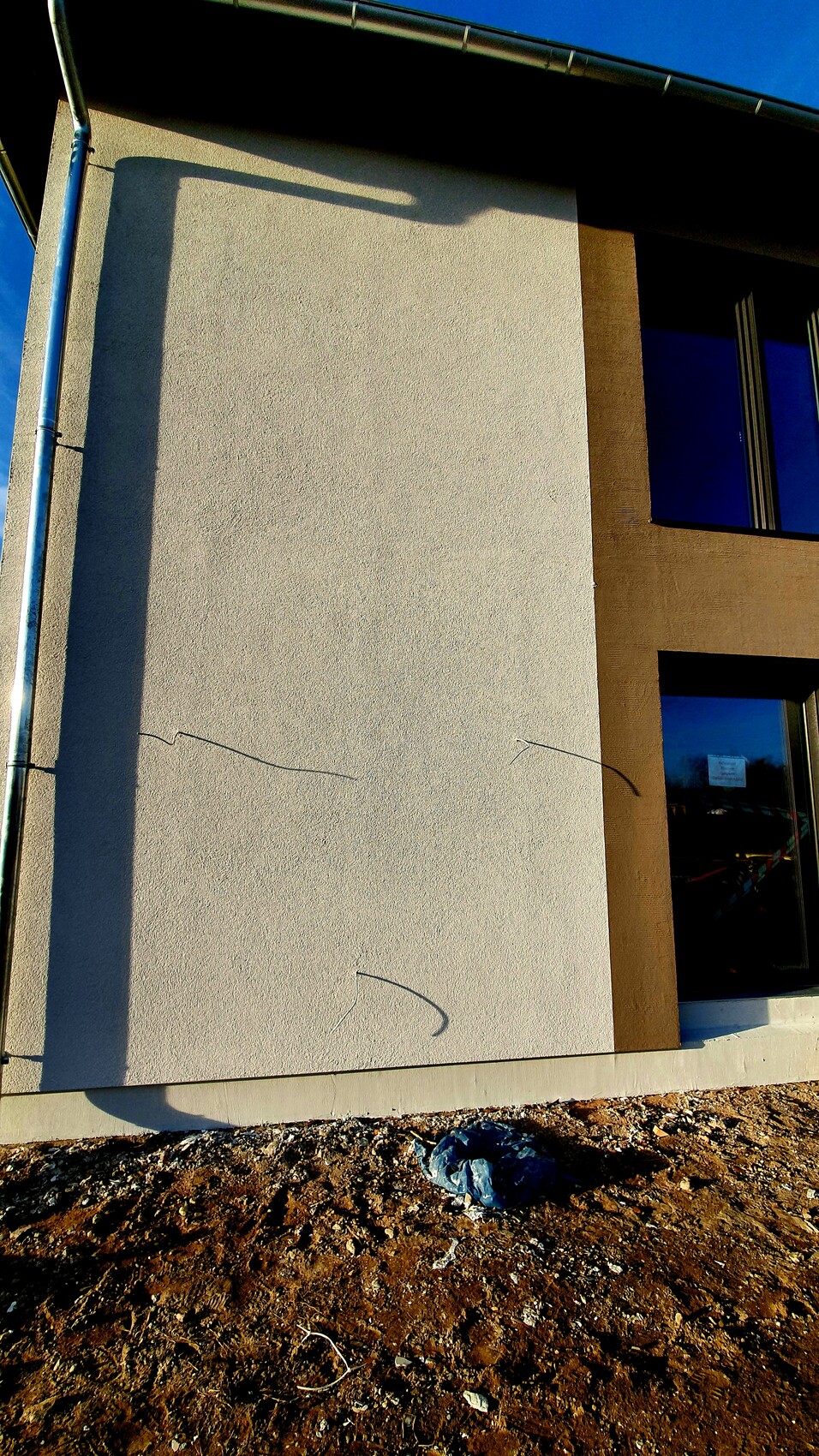
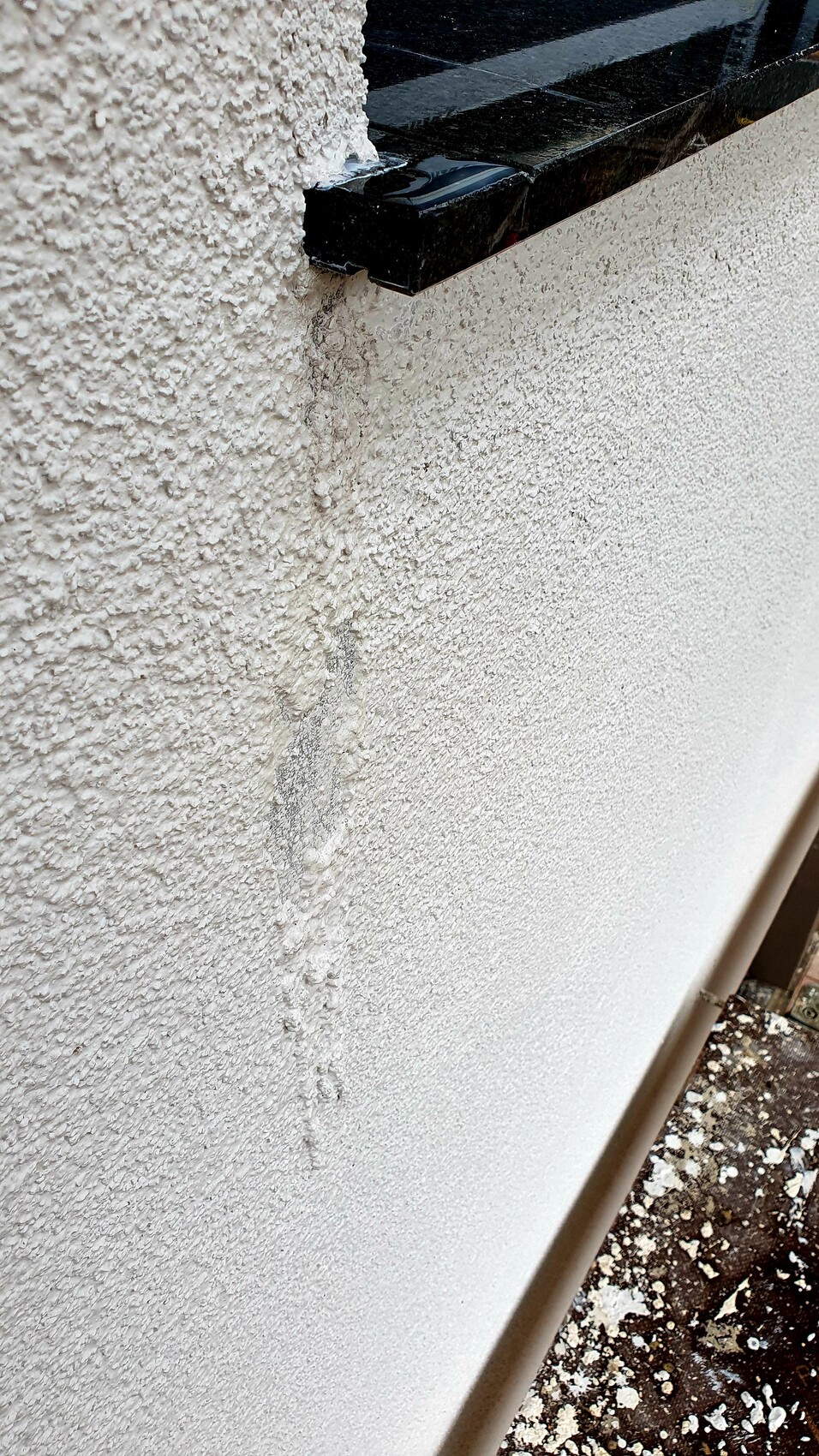
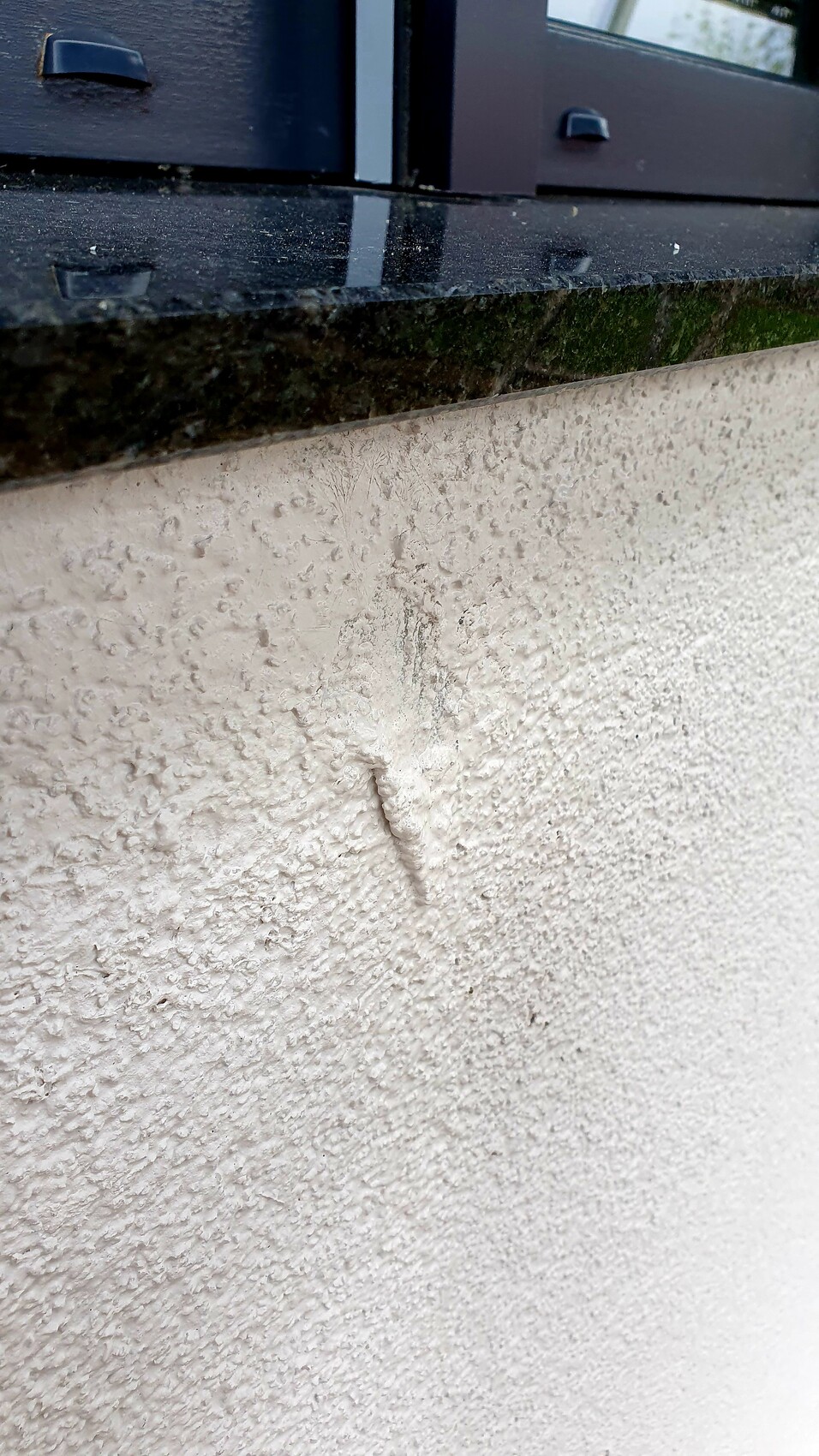
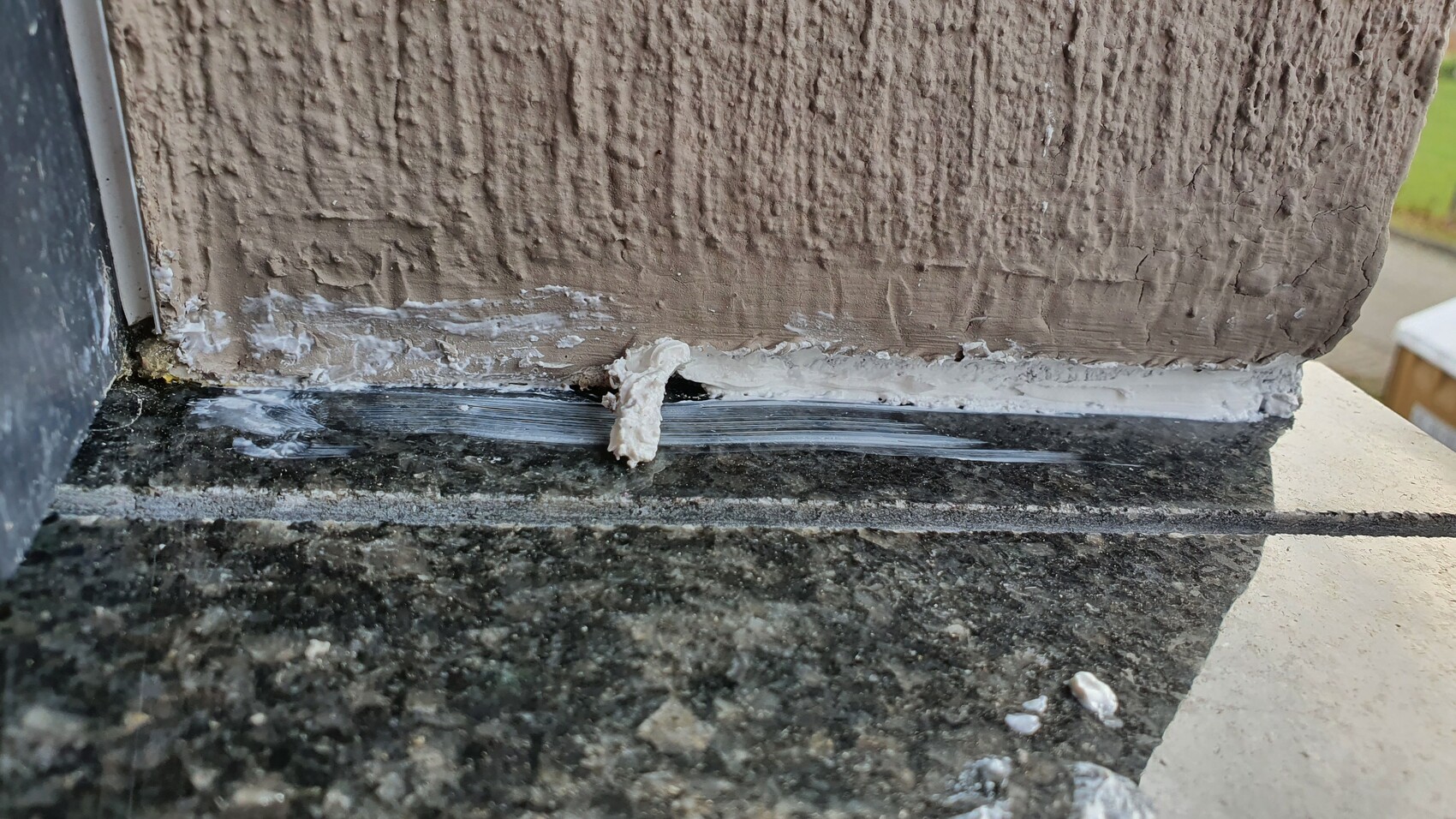
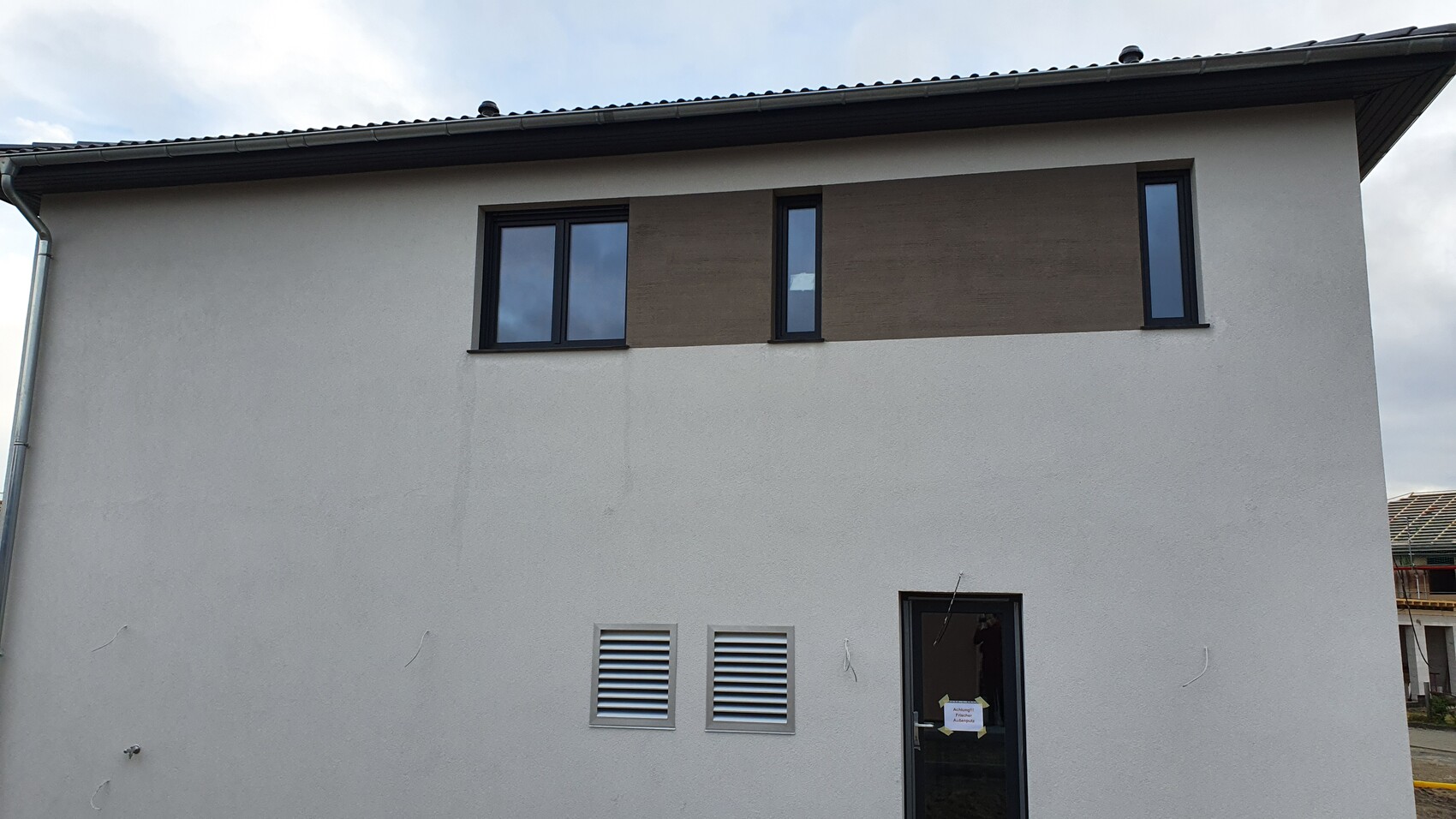
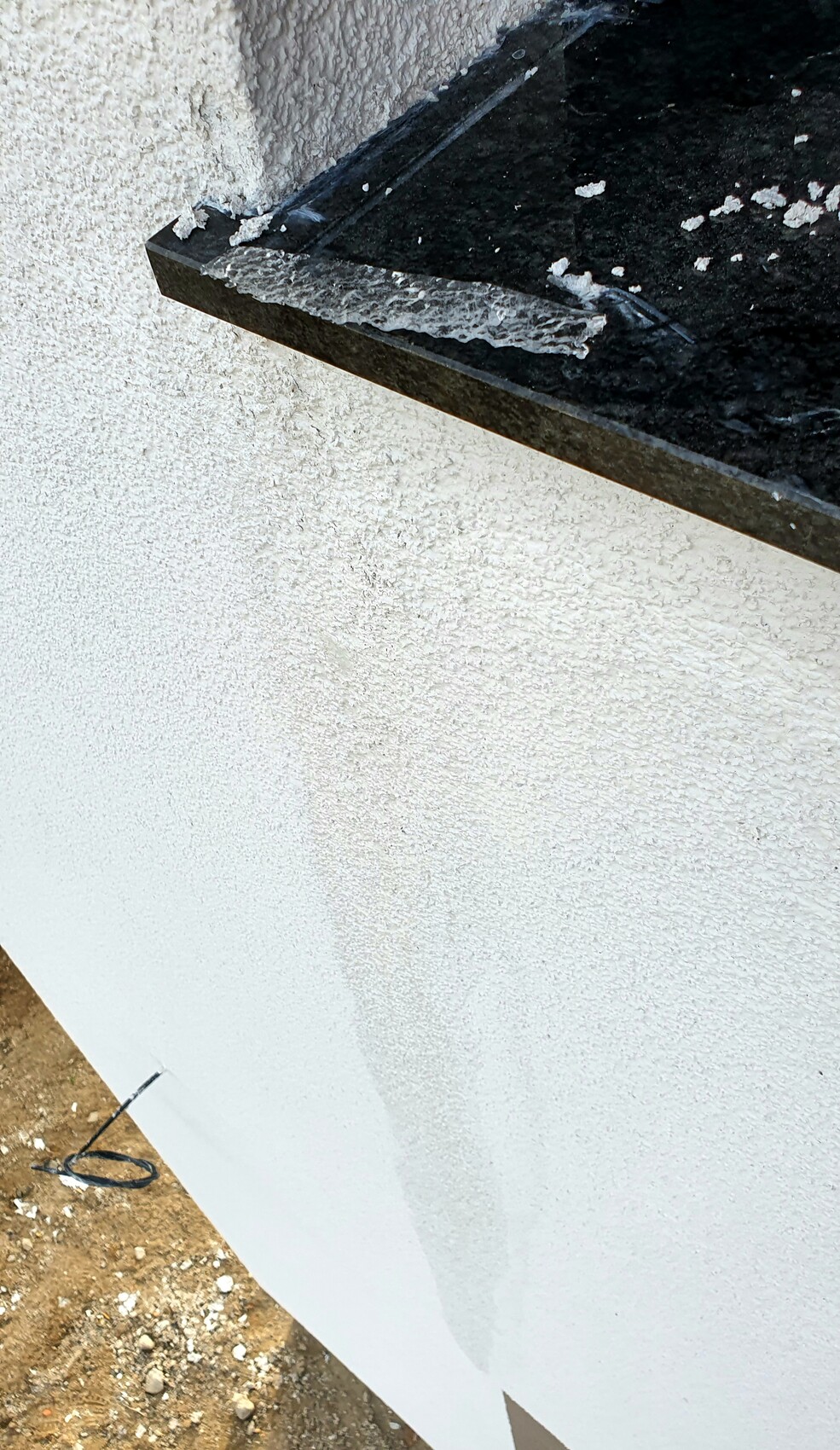
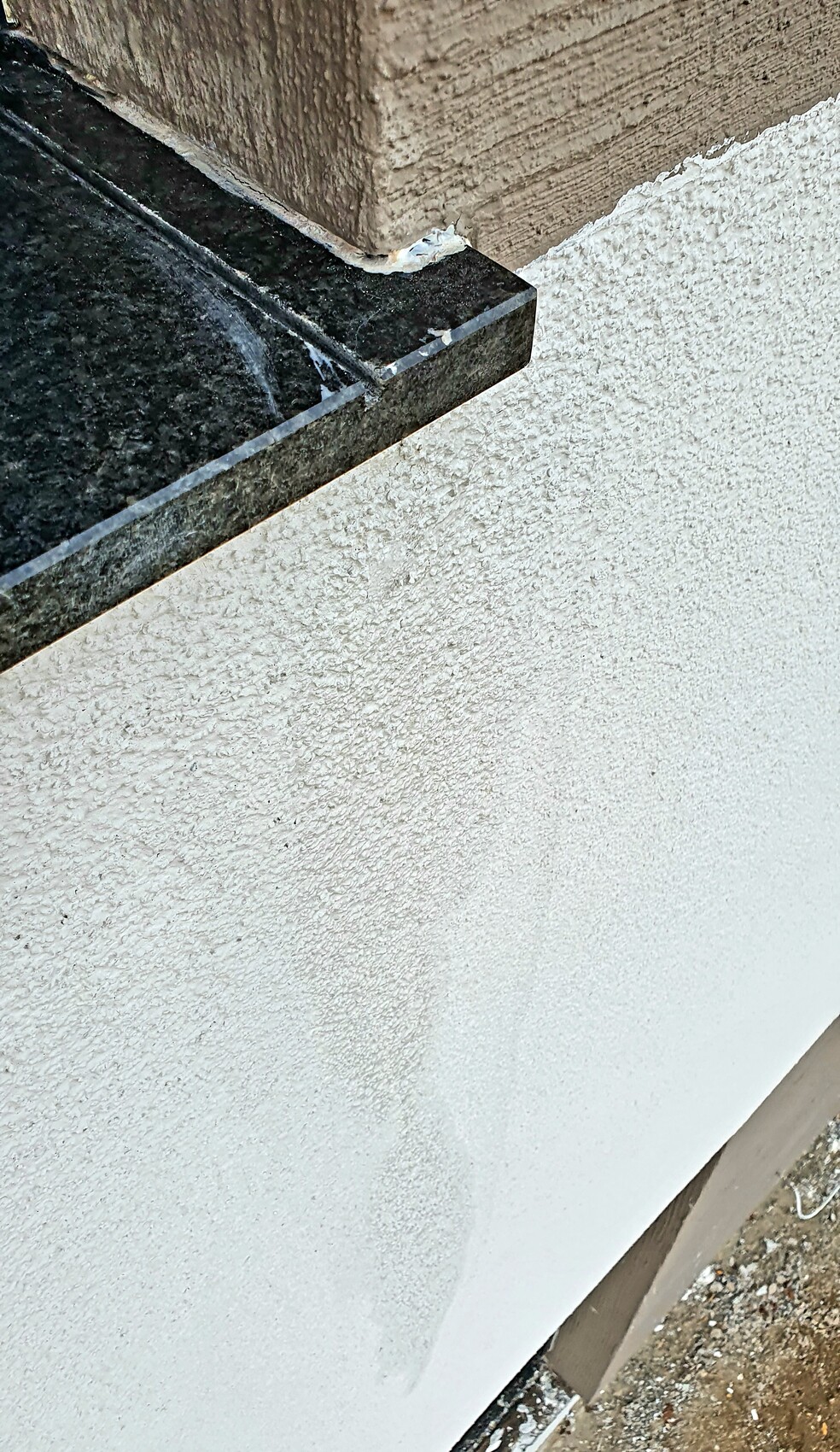
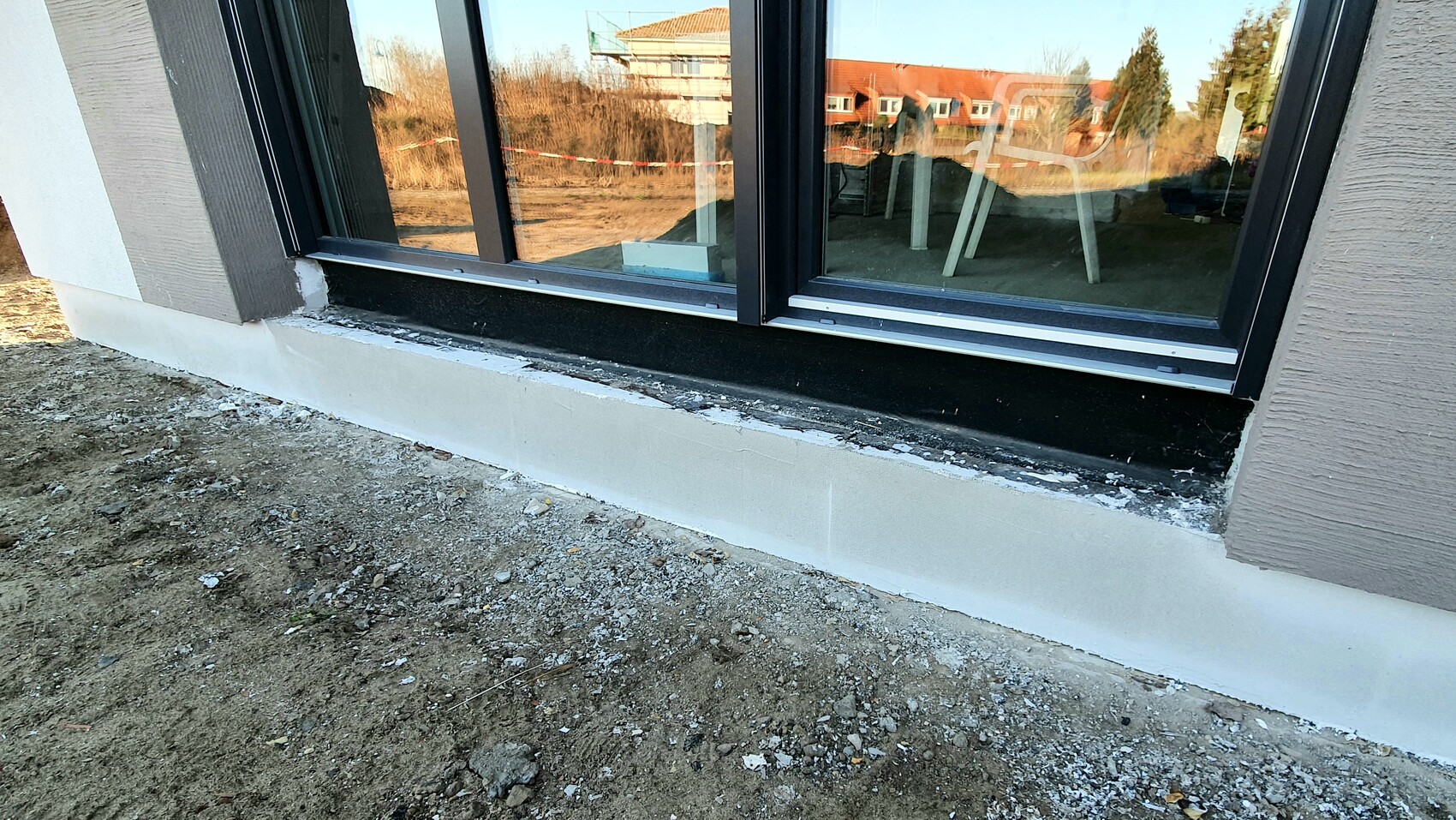
The rendering was completed, but even after one week, the exterior render was still soft. In some areas, it “slid,” particularly on the window sills. Please refer to the attached photos for details.
The same subcontractor who applied the external render installed the window sills shortly before (but only after installing the external thermal insulation composite system (ETICS) and the facade reinforcement). The window sills are crooked and uneven. Some also appear to be too short. On average, they protrude only 2–3 cm (1 inch) from the facade. Some are more uneven, for example with one side 1.5 cm (0.6 inch) and the other side 3 cm (1.2 inches). The drip groove on the underside is often flush with the facade. During installation, alcohol was consumed on site, as evidenced by several dozen small drink containers scattered near the scaffolding. It was also apparently easier to cut our up to 3 m (10 ft) long window sills with an angle grinder to fit them into a car, but sealing the joints afterward was forgotten.
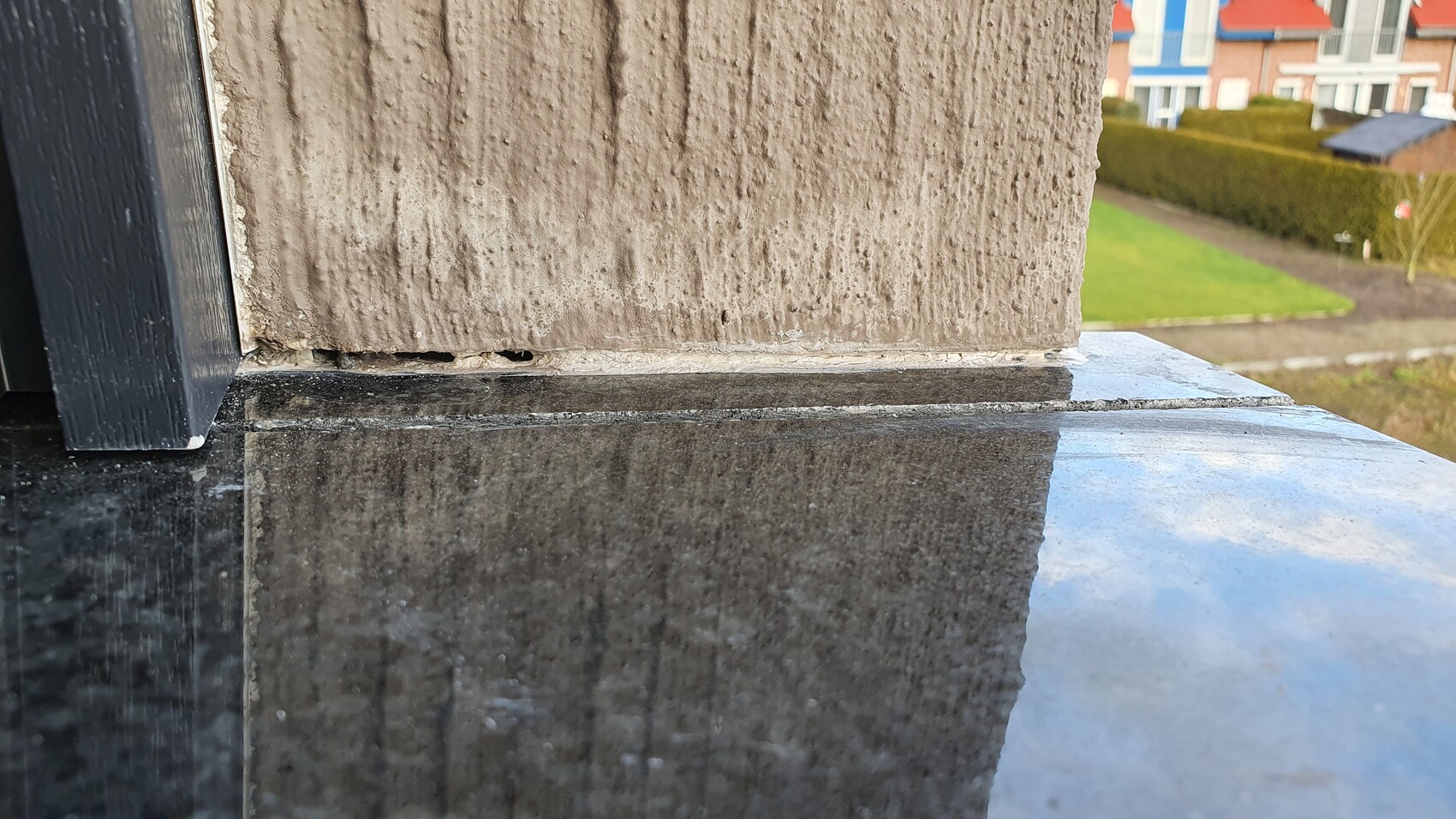
The window sills show no visible sealing. According to trade associations, with an ETICS system, there should be two layers of sealing at the window sills. We can see none. It also seems strange that the window sills were cut into the ETICS. The unnecessarily large gaps created were either left unfilled or only filled with silicone or similar, which after more than four weeks remains soft and uncured.
Water constantly accumulates at the edges of the window sills, running down the facade, further softening the render and freezing in places with the render. Where does this water come from? The screed heating program is still running inside, providing warmth. Could this be a sign of leakage around the windows? Indoor humidity is being actively controlled with three drying units, currently below 40% relative humidity. We suspect leakage because at the most affected window corner inside, we found significant residual moisture along with slight bulging of the interior plaster. Elsewhere, the interior plaster appears superficially dry.
The house base was also poorly finished by the same subcontractor. A very thinly scratched-on reinforcing plaster cannot be the waterproof rendering against moisture as specified in the contract. The layer is simply too thin and, according to photos, remains damp even without rain.
Outlook:
What happens next? The defects have been reported, documented with photos, and recorded. Should we still carry out a conditional acceptance with these defects, or refuse acceptance entirely? We would like to move in by the end of February, as my wife begins her follow-up treatment after chemotherapy in March and does not want the stress of moving to undo all her recovery. The potential double burden is not insignificant.
The render is visibly deteriorated and crumbly, patchy, and simply poorly done. In our opinion, it must be completely removed and redone. The window sills should also be removed and replaced because they are too short and partially cut with an angle grinder without technical necessity. We are particularly worried about the sealing and possible damage to the ETICS. Who knows what will happen in a few years.
Next week, at our own expense, we will engage a publicly appointed expert in painting and decorating to assess the severity of the damage and necessary repairs. From our experience, we expect little or no support from the GC or site manager. We intend to stand firm and will not accept repair work or financial compensation. At this point, we only see one solution: starting over completely. This would be very expensive and could become particularly interesting regarding payment of the final invoice.
The GC has only provided us with a 5% retention guarantee for completion, which likely would not cover a full re-execution of the defective work (and according to the contract text, may only be retained after handover for serious defects). Referring to this guarantee, he has already indicated that he insists on full payment upon acceptance, as we have this guarantee as security and it could be increased or extended.
Any advice, comments, ideas, or suggestions are welcome. I just needed to vent a bit. Sometimes you really feel helpless and lost as a client.

We are building a 190 sqm (2,045 sq ft) city villa to KfW 55 energy efficiency standard with a large general contractor (GC) from Königslutter in the Berlin metropolitan area. The GC uses various subcontractors, who in turn work with their own subcontractors (some of whom also hire further subcontractors). So far, several construction defects have occurred. Serious defects were only prevented through our intervention (for example, the formwork for the intermediate ceiling was several centimeters too low and was literally raised five minutes before the concrete was poured). Unfortunately, the site manager is incompetent, thin-skinned, and unobservant. From day one, he has only offered pointless comments and a lack of motivation. He has never recognized defects on his own and has only reluctantly addressed those we reported, often trying to downplay them with standardized phrases.
As a result, we are on site as often as possible because we are constantly on high alert due to the defects encountered so far. Our involvement has already improved or, from our perspective, salvaged many situations. We have also hired a construction supervisor who has occasionally added value, although his passion seems more for photographing the construction than for identifying defects. Sometimes, a simple tape measure or spirit level helps—at least for us.
Our building project is further complicated by the fact that my wife was diagnosed with cancer a few months after purchasing the land and signing the construction contract. A cruel blow of fate, with chemotherapy and all related side effects, framed by the external circumstances of the ongoing COVID-19 pandemic. The loss of income is unfortunate but was anticipated in the financing—albeit as possible parental leave rather than a long-term illness. Nevertheless, it all makes the situation more stressful than it would have been otherwise.
Main section:
We are approaching the completion of the build; the screed drying will finish next week (the scheduled handover is at the end of January, so we just miss out on the VAT reduction). Ninety percent of the house price has already been paid; only the final invoice, expected in the coming weeks, remains outstanding.
At the end of November, the exterior render was applied. At that time and for the days following, outside temperatures did not exceed 5°C (41°F), with some nights dropping below freezing. According to the render manufacturer (Alsecco), the silicate render used may only be applied at temperatures above 5°C (41°F), and temperatures must remain above this threshold in the following days. If not, the render cannot cure properly, which may lead to issues with strength and durability.
One day before the rendering work began, we sent an informal notice of concern to the GC and their construction manager regarding the weather forecast. The subcontractor responded that there was no need to worry and voluntarily offered an additional one year warranty.
The rendering was completed, but even after one week, the exterior render was still soft. In some areas, it “slid,” particularly on the window sills. Please refer to the attached photos for details.
The same subcontractor who applied the external render installed the window sills shortly before (but only after installing the external thermal insulation composite system (ETICS) and the facade reinforcement). The window sills are crooked and uneven. Some also appear to be too short. On average, they protrude only 2–3 cm (1 inch) from the facade. Some are more uneven, for example with one side 1.5 cm (0.6 inch) and the other side 3 cm (1.2 inches). The drip groove on the underside is often flush with the facade. During installation, alcohol was consumed on site, as evidenced by several dozen small drink containers scattered near the scaffolding. It was also apparently easier to cut our up to 3 m (10 ft) long window sills with an angle grinder to fit them into a car, but sealing the joints afterward was forgotten.
The window sills show no visible sealing. According to trade associations, with an ETICS system, there should be two layers of sealing at the window sills. We can see none. It also seems strange that the window sills were cut into the ETICS. The unnecessarily large gaps created were either left unfilled or only filled with silicone or similar, which after more than four weeks remains soft and uncured.
Water constantly accumulates at the edges of the window sills, running down the facade, further softening the render and freezing in places with the render. Where does this water come from? The screed heating program is still running inside, providing warmth. Could this be a sign of leakage around the windows? Indoor humidity is being actively controlled with three drying units, currently below 40% relative humidity. We suspect leakage because at the most affected window corner inside, we found significant residual moisture along with slight bulging of the interior plaster. Elsewhere, the interior plaster appears superficially dry.
The house base was also poorly finished by the same subcontractor. A very thinly scratched-on reinforcing plaster cannot be the waterproof rendering against moisture as specified in the contract. The layer is simply too thin and, according to photos, remains damp even without rain.
Outlook:
What happens next? The defects have been reported, documented with photos, and recorded. Should we still carry out a conditional acceptance with these defects, or refuse acceptance entirely? We would like to move in by the end of February, as my wife begins her follow-up treatment after chemotherapy in March and does not want the stress of moving to undo all her recovery. The potential double burden is not insignificant.
The render is visibly deteriorated and crumbly, patchy, and simply poorly done. In our opinion, it must be completely removed and redone. The window sills should also be removed and replaced because they are too short and partially cut with an angle grinder without technical necessity. We are particularly worried about the sealing and possible damage to the ETICS. Who knows what will happen in a few years.
Next week, at our own expense, we will engage a publicly appointed expert in painting and decorating to assess the severity of the damage and necessary repairs. From our experience, we expect little or no support from the GC or site manager. We intend to stand firm and will not accept repair work or financial compensation. At this point, we only see one solution: starting over completely. This would be very expensive and could become particularly interesting regarding payment of the final invoice.
The GC has only provided us with a 5% retention guarantee for completion, which likely would not cover a full re-execution of the defective work (and according to the contract text, may only be retained after handover for serious defects). Referring to this guarantee, he has already indicated that he insists on full payment upon acceptance, as we have this guarantee as security and it could be increased or extended.
Any advice, comments, ideas, or suggestions are welcome. I just needed to vent a bit. Sometimes you really feel helpless and lost as a client.
H
Hemingway843 Jan 2021 01:00Patricck schrieb:
What does the site manager say about this?
If things start like this, the house will probably need major repairs in a few years. I wouldn’t pay the 10% final payment at all until the house is free of defects.The site manager says the house has not yet been handed over and that they still have time to fix these defects, if there are any.
For the meeting where we reported and documented the defects, we actually invited the subcontractor and a representative from the plaster manufacturer Alsecco as well, to avoid miscommunication and to agree on measures together. But both were suddenly uninvited by the general contractor (GC), who said he wanted to inspect it with us first. Nothing productive came out of the meeting itself. The promised report has, of course, not been sent to us so far. They said they would get back to us in early January and that they have many other construction sites, and we shouldn’t take ourselves so seriously. Remarks like this almost provoke me to lose my temper in a really unprofessional way. Unfortunately, that only helps temporarily and doesn’t move things forward.
Because construction contracts nowadays are supposedly very consumer-friendly (haha), we had to provide a 10% final payment guarantee when signing the contract. In other words, if we don’t pay, the GC can use this guarantee. Regarding this, they probably have us really cornered, depending on how easily the guarantee can be triggered. We wanted it removed, but there was no way around it. The GC also had the classic undisclosed exclusive rights on the land.
Hausbau0815 schrieb:
I’ve been through all that. But unfortunately, there are no alternatives (at least I don’t know any). Either you take action, which can cost money and involves risks, or you do nothing and accept the poor workmanship. If you accept the handover, you usually lose the chance to fix anything later.We now have 8 weeks left until the planned move-in. Still somewhat inexperienced, I hope to carry out a handover with a reservation regarding the major defect of the exterior facade. Only then would they request their money (10% = 37,000 EUR). For me, that is only acceptable if they increase the completion guarantee to twice the potential damage amount, from 18,500 EUR to 74,000 EUR, and at the same time acknowledge and admit the severity of the defect, committing in writing with a clear schedule for its rectification with deadlines. I want this clearly settled beforehand, not just vaguely or informally noted in the acceptance report.
Hausbau0815 schrieb:
The TÜV expert was also appointed and paid by the GC but really didn’t take any position in the matter—in fact, quite the opposite. You don’t need a court-certified expert in the first step because the court will appoint one later anyway. Besides, there aren’t that many available and they often have waiting times of up to 3 months. And if you commission a good one yourself, that expert is “burned” for court appointment, meaning they can’t be used later by the court. I really looked into this thoroughly.We have a publicly appointed expert for painting and decorating less than 500m (about 1,600 feet) from the construction site. Pure coincidence, since they are really rare.
I already spoke with him; he himself mentioned the issue of being “burned” for court appointments. He offered to first prepare a sort of light report (400 EUR net), so that we have a somewhat credible damage quantification on his official letterhead to show the GC. It’s hard for me to just throw around numbers on my own.
Our usual construction supervisor isn’t qualified enough for this and suggested involving a master painter friend, but I’d prefer to go with the light expert report from the specialist, right?
bauenmk2020 schrieb:
Is a TÜV/DEKRA "acceptance inspection" part of the GC contract?Not in our contract. However, the GC now advertises this for new projects. I will refer to this and ask them to involve TÜV, especially since their own site manager is useless.
Hausbau0815 schrieb:
Why do you want an expert specialized only in painting and decorating? Get one without restrictions, otherwise you’ll just duplicate work. It’s a shame my thread was deleted; apparently someone didn’t like it. I shared my building experiences with our duplex. The window sealing was redone four times and is now okay. Right now, the entire drywall of 400 sqm (about 4,300 square feet) is being removed because 1) the vapor barrier wasn’t correctly sealed and 2) the substructure was installed terribly. It hurts to see the waste containers fill up, but better now than after moving in. One ceiling panel was even held up by just one screw—that’s madness. It would have fallen down at the latest during painting. You can only ask yourself if this is professional incompetence or malicious intent. Don’t move in thinking acceptance has been made. Our planned move-in was November 2020.As mentioned above, we already have a general construction supervisor. Another one would cost too much. Since a publicly appointed expert for painting and decorating lives nearby, it’s worth considering. We just need to credibly quantify the possible damage, and he seems the right person for this. The 400 EUR net seems fair.
Our battle plan starting Monday:
(1) Add to the existing defect report noting that water stains are growing and freezing, along with concerns about potential consequences for the external thermal insulation composite system (ETICS / WDVS). Is there possibly water behind it as well?
(2) Demand that the GC promptly remove the window sills and at least temporarily ensure proper sealing to prevent further or consequential damage to the ETICS. At the same time, request inspection of the interior window seals where it is continuously wet. All with a 14-calendar-day deadline.
(3) Request the GC to involve TÜV, since they now promote this anyway, which could provide security for both parties.
(4) Contact a construction law firm near our home/construction site (Köpenick, Königs Wusterhausen) to clarify how and whether a move-in with a clear reservation of major defects can be agreed upon. If not, we want to understand how and in what amount we can claim damages if the agreed final completion date (end of February) is not met. We want to avoid mistakes; formally, we are still in a good position before acceptance.
(5) Any other suggestions?
P.S.: Is it allowed to name the GC and/or site manager? They apparently like to clean up blogs/forums/reviews online. There are always two sides, and the builder quickly faces accusations of defamation, slander, or exaggeration. So I’m cautious. The GC’s location from the first post should indirectly reveal them anyway.
Have a great weekend and thanks again!
 Hausbau08153 Jan 2021 07:05
Hemingway84 schrieb:
P.S.: Is it allowed to mention the name of the main contractor (MC) and/or the site manager? They seem to like cleaning up blogs/forums/reviews online. There are always two perspectives, and the client is quickly accused of defamation or exaggeration. So I am cautious. But from the location of the MC in the first post, people could probably figure it out indirectly.Hello and thanks for your feedback. My comment was not meant to be rude. It’s just frustrating when you want to help and get no response. You are not allowed to mention the name here. That causes trouble. What I did instead was start another thread titled "Who has experience with ......".
It really sounds terrible, almost as bad as our situation. And our second MC was actually a butcher by trade, no joke.
I am currently suing my external site manager because he didn’t recognize the botched work and, after the inspection by the building authority (TÜV), simply stopped showing up and stopped responding, even though the contract was still active. From him, I want a full refund of his fees and all payments he approved, although the defects are clearly documented.
Hemingway84 schrieb:
The site manager says the house has not yet been handed over and they still have time to fix these defects, if they really are defects.He is basically right. That’s just how it is. This is why documenting the defects is so important.
Hemingway84 schrieb:
Because building contracts nowadays are so consumer-friendly (haha), we had to provide a 10% final payment bond at contract signing. In other words, if we don’t pay, the MC can draw on it. Regarding this, they really have us by the short ones, depending on how easy it is to call the bond. We wanted it removed but there was no way around it. The MC also had the classic hidden exclusive rights on the building plot.I’m not familiar with this at all. Definitely get a lawyer to review it.
Hemingway84 schrieb:
We now have 8 weeks left until the planned move-in date. As a layperson, I hope to carry out a conditional acceptance, reserving the serious defect in the exterior facade. Only then would they demand their money (10% = 37,000 EUR). That only works for me if they increase the completion bond to double the potential damage value, from 18,500 EUR to 74,000 EUR, acknowledge and admit the severity of the defect, and commit in writing to a clear plan with deadlines to fix it. I want this properly clarified beforehand, not just something half-baked, unchecked, and handwritten in the acceptance protocol.They definitely won’t increase the bond. Are you sure you mean the completion bond or the warranty bond? The completion bond expires with handover/move-in – you have no access to it after that.
You would have the right to deduct double the cost of defect repair from the final invoice or any outstanding payments, but they short-circuited that with this strange final payment bond.
Hemingway84 schrieb:
Our actual construction supervisor is not qualified enough for this and offered to bring in a master painter friend. But wouldn’t it be better to get a light report from a professional expert, right?If the site manager is already no good, he doesn’t need to bring his friends in. A professional consultant for around 400 EUR is reasonable. A full expert report usually costs about 2,000 EUR, but the MC probably won’t accept that.
Hausbau08153 Jan 2021 07:26Hemingway84 schrieb:
Our plan of action starting Monday:
(1) Addendum to the existing defect report stating that the water stains are increasing in size and freezing. Along with concerns about the impact on the external thermal insulation composite system (ETICS / external wall insulation) – is there possibly water behind it as well?
(2) Request the general contractor (GC) to remove the window sills as soon as possible and at least provide a temporary professional sealing to prevent further damage or consequential damage to the ETICS. At the same time, request an inspection of the window seals on the inside, where it is continuously wet. Set a deadline of 14 calendar days for this.
(3) Request that the GC involves the technical inspection authority (TÜV), as they are now advertising this anyway, and it could provide security for both sides.
(4) Contact a construction law specialist near the place of residence/construction site (Köpenick, Königs Wusterhausen). We need clarity on whether and how it is possible to agree on moving in with a clear reservation of defects. If not, how and to what extent can we claim damages for not meeting the contractually agreed completion deadline (end of February). We don’t want to make mistakes; formally, we are still in a good position before acceptance.
(5) Any other ideas? The plan sounds good.
Regarding points 1 and 2) File the defect report once you have feedback from the painter. Demand a complete list of all defects from your site manager. This way, you may hold them liable later if any defects are “forgotten.” Not just an addendum, but a full listing. Have you arranged a blower door test? It can identify leaks. It costs about 650 € net. I would recommend it.
Regarding point 3) Yes, okay. However, I see a potential conflict of interest here since there appears to be a close collaboration.
Regarding point 4) Definitely get a lawyer; otherwise, nothing will come of it. Question regarding damages: Do you have a penalty clause for late completion in the contract? It should typically be 0.2% of the net contract sum per calendar day, capped at a maximum of 5%.
Have a nice Sunday.
Hausbau08153 Jan 2021 09:21Hausbau0815 schrieb:
If the construction manager is already useless, he doesn’t need to bring along his friends. The technical advisor is fine at 400 € (about $430). A "regular" expert costs around 2000 € (about $2150). But the general contractor will not accept that. I mean “construction consultant.” May I ask how much yours cost? Ours wanted 450 € (about $485) net per week. In return, he came to the site once a week, wrote down the defects I showed him, said about each defect I identified, “Well, that’s unfortunate,” and then left. I had to handle all the correspondence myself, whether defect notifications, deadline settings, etc. When things got critical, he was unreachable for days and now he’s completely gone. I’m suing him now and want my money back.
Hausbau08153 Jan 2021 14:36dab_dab schrieb:
@Hausbau0815: not trying to be provocative, but: how many lawsuits is this currently?Actually, it’s only the second one. The first was against GC1, and this is the second. With GC2, I am still trying to manage without any legal action. But what can you do? There are basically only two options: eat or be eaten when push comes to shove and no amicable solution is possible. That doesn’t necessarily mean winning or losing. In construction lawsuits, unfortunately, even the victor can lose time, money, and nerves. But I quote: “Those who fight can lose; those who don’t fight have already lost.”
Similar topics