
ᐅ Underfloor heating with an air-to-water heat pump. House gets too warm when the sun is shining.
Created on: 4 Dec 2019 14:18
C
chewbacca123
Hello everyone,
I have a general question.
We moved into our new build four months ago. The living area on the ground floor has three large floor-to-ceiling windows facing south. We have underfloor heating and an air-to-water heat pump.
It provides a really comfortable temperature inside the house, but we have a problem – whenever the sun is shining in winter, even if it’s -2°C (28°F) outside, the temperature suddenly rises to 24°C (75°F) in the living room. It gets uncomfortably warm in here, and the underfloor heating can’t be turned down quickly.
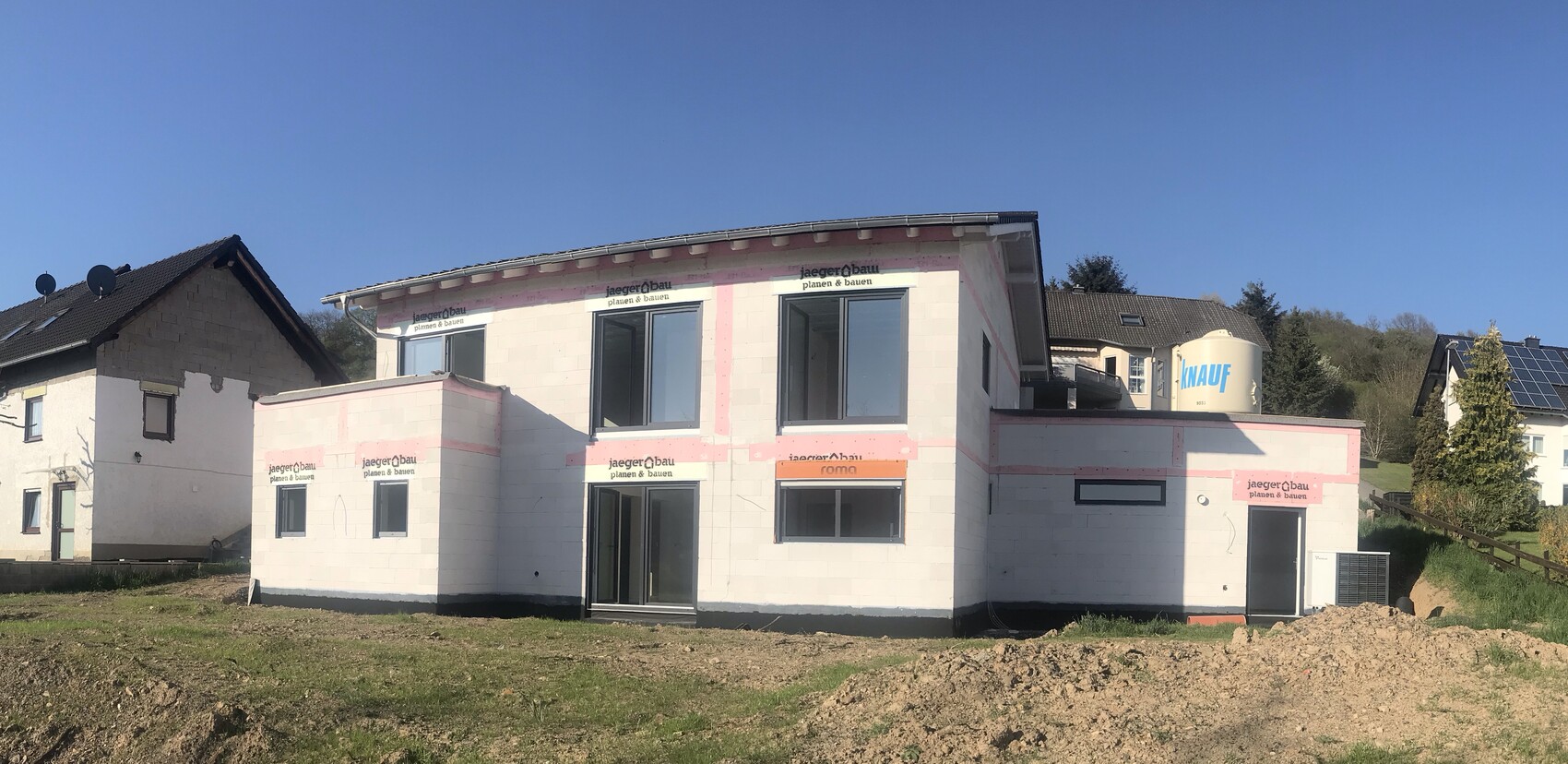
Should we assume that the large floor-to-ceiling windows are responsible for the heat gain? A photo of the south-facing side of the house is attached.
What would you do – always lower all the blinds as soon as sunlight is forecast? That seems quite annoying...
We have motorized blinds controlled by Somfy. Would you consider buying a sensor that automatically lowers the blinds at a certain temperature?
Thanks in advance for your replies.
I have a general question.
We moved into our new build four months ago. The living area on the ground floor has three large floor-to-ceiling windows facing south. We have underfloor heating and an air-to-water heat pump.
It provides a really comfortable temperature inside the house, but we have a problem – whenever the sun is shining in winter, even if it’s -2°C (28°F) outside, the temperature suddenly rises to 24°C (75°F) in the living room. It gets uncomfortably warm in here, and the underfloor heating can’t be turned down quickly.
Should we assume that the large floor-to-ceiling windows are responsible for the heat gain? A photo of the south-facing side of the house is attached.
What would you do – always lower all the blinds as soon as sunlight is forecast? That seems quite annoying...
We have motorized blinds controlled by Somfy. Would you consider buying a sensor that automatically lowers the blinds at a certain temperature?
Thanks in advance for your replies.
Winniefred schrieb:
This seems to be an issue for everyone who has modern houses with huge windows – especially in summer, of course, it becomes even more pressing. I find the idea of an awning very appealing; it blocks the sun sufficiently while still allowing light in, without significantly reducing the outside view. But doesn’t it deteriorate quickly if you use it in winter as well?We have the awning installed directly under the patio roof (guided in tracks)... so there are no problems. Moisture doesn’t reach it even in rain, even if it is extended occasionally. Since the awning is integrated into the smart home system, it retracts automatically in rain or strong wind anyway (although that probably isn’t strictly necessary).
Without a roof... good question, but yes, rain and dirt could make it look pretty bad quite quickly.
 Winniefred4 Dec 2019 17:08
Ah, ok, sure, no problem at all with an overhang. I imagine it would look nice, especially if there’s a terrace underneath.
 chewbacca1234 Dec 2019 17:44
Mycraft schrieb:
Of course, you need to heat all the rooms. You no longer have radiators but a modern low-temperature underfloor heating system, which operates more efficiently and economically when running continuously. Otherwise, the adjacent rooms warm the unheated rooms, and in the end, you don’t gain anything. After all, everything is within the heated building envelope. Okay, thank you very much, we will do that from now on.
chewbacca123 schrieb:
Okay, I think I would come back to this directly. I want to know how to evaluate the heating curve. How can I tell if our heating system is well adjusted and heating the rooms optimally? In a new build, would you generally heat all rooms? Currently, we don’t heat the rooms we don’t use. Thanks 1. Use a USB stick to log data.
2. Read the operating manual, it contains a lot of useful information.
3. Heating:
a) Every room needs to warm up; for this, there must be flow through the underfloor heating.
b) The heating curve should be low; try settings like 28/-21/0.
c) Turn the ERR fully up to maximum in every room, or better, disconnect it.
d) Then fully close the bypass valve.
Always monitor the energy consumption. For me, consumption dropped by 200%.

Bookstar schrieb:
down by 200%.Where is the emoji that’s thoughtfully stroking its chin?Similar topics