
Hello everyone,
We are currently at the shell construction stage and are thinking about how to manage all the waste in the kitchen: plastic, organic waste, paper, glass, and general trash. Our current kitchen is practically full because of this.
We have considered installing a waste chute in the exterior kitchen wall to directly dispose of the waste into the outdoor bins. This would mean having five small openings with pipes in the wall, and outside, the waste bins would be placed under the pipes to be filled directly. You could simply throw the waste into the wall from the kitchen, and it would be gone.
Has anyone had experience with this or built something like it themselves?
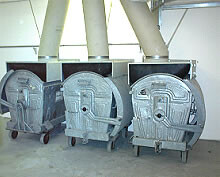
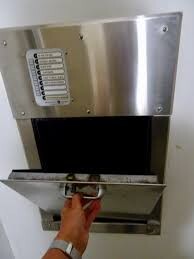
Something like this, just smaller for the kitchen.
We are currently at the shell construction stage and are thinking about how to manage all the waste in the kitchen: plastic, organic waste, paper, glass, and general trash. Our current kitchen is practically full because of this.
We have considered installing a waste chute in the exterior kitchen wall to directly dispose of the waste into the outdoor bins. This would mean having five small openings with pipes in the wall, and outside, the waste bins would be placed under the pipes to be filled directly. You could simply throw the waste into the wall from the kitchen, and it would be gone.
Has anyone had experience with this or built something like it themselves?
Something like this, just smaller for the kitchen.
G
Gartenfreund2 Feb 2020 09:37There are only two bins by the garage: one for paper and a gray one with a red lid.
Paper is collected in a cardboard box, and when it is full, it is emptied into the bin.
Hardly any glass waste is generated.
Unfortunately, plastic and Tetra Pak cartons cannot be completely avoided and end up in the residual waste bin.
Potato peels and similar organic waste go into the compost. If you don’t want to go there every day, especially in winter, you can keep a bucket with a lid on the terrace.
We have always thrown food scraps outside. Mainly the crows took them. One crow (which visited us for about 14 years) eventually became so tame that it didn’t mind if you sat about an arm’s length away reading a newspaper.
Also, you only had to whistle once, and she was usually soon there to get the food scraps.
By the way, the 120-liter (32-gallon) residual waste bin is usually only filled up to about two-thirds by three people, despite including waste that actually belongs in the yellow bin.
In other words, waste reduction saves money and space, also in the kitchen.
Paper is collected in a cardboard box, and when it is full, it is emptied into the bin.
Hardly any glass waste is generated.
Unfortunately, plastic and Tetra Pak cartons cannot be completely avoided and end up in the residual waste bin.
Potato peels and similar organic waste go into the compost. If you don’t want to go there every day, especially in winter, you can keep a bucket with a lid on the terrace.
We have always thrown food scraps outside. Mainly the crows took them. One crow (which visited us for about 14 years) eventually became so tame that it didn’t mind if you sat about an arm’s length away reading a newspaper.
Also, you only had to whistle once, and she was usually soon there to get the food scraps.
By the way, the 120-liter (32-gallon) residual waste bin is usually only filled up to about two-thirds by three people, despite including waste that actually belongs in the yellow bin.
In other words, waste reduction saves money and space, also in the kitchen.
Gartenfreund schrieb:
Unfortunately, plastic and Tetra Paks, etc., can hardly be avoided, but all of it ends up in the general waste bin.As you yourself say, that is not general waste. I find your handling of plastic irresponsible!
H
hampshire2 Feb 2020 11:25Gartenfreund schrieb:
Unfortunately, plastic and Tetra Pak cartons, etc., cannot be completely avoided. That shows a good mindset – avoidance is the best approach.ypg schrieb:
I find your handling of plastic irresponsible!On closer examination, plastic in general waste isn’t always a problem:In areas without a “yellow bag” system (or equivalent separate collection), waste is usually incinerated. The combustion temperature in these plants must meet a minimum level to ensure as clean a process as possible – especially to avoid dioxins and furans.
The introduction of dual systems and paper separation has significantly reduced the calorific value of general waste. As a result, some waste-to-energy plants have added (used) oil to reach the required combustion temperatures. For this reason, some regions have decided against extreme waste separation.
I consider paper and packaging separation an excellent achievement and fully support it. At the same time, there are also modern incineration plants that generate energy from waste while emitting comparatively low levels of pollutants.
For those living in areas with appropriate waste management systems involving incineration plants, plastic in the general waste bin is not a taboo.
What I do find problematic is the practice of mixing fossil fuels into waste incineration.
Similar topics